Ensuring Quality: Your Rubber Manufacturing Polymer BOM Checklist Guide
Published: 12/10/2025 10:00 PM Updated: 12/14/2025 7:52 AM
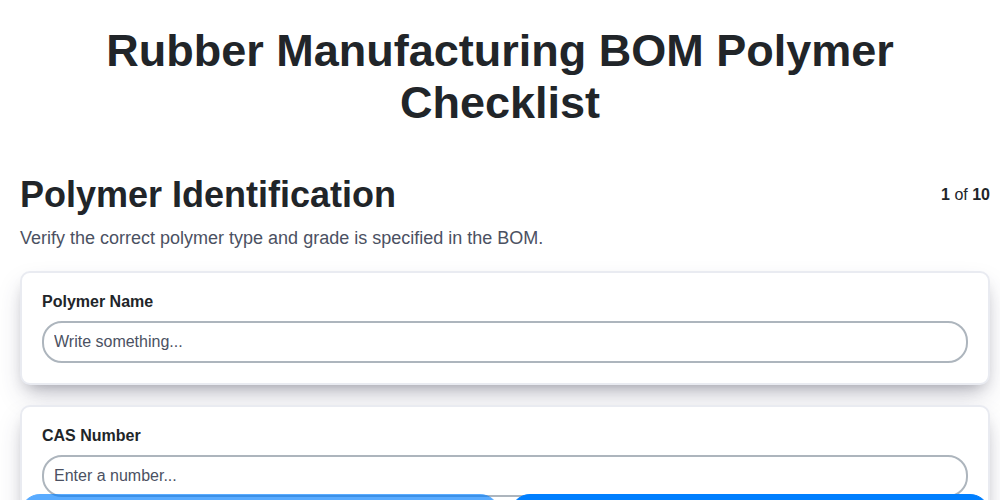
Table of Contents
- Introduction: The Critical Role of Polymers in Rubber Manufacturing
- Understanding the BOM: Polymers at the Core
- Polymer Identification: Knowing What You're Working With
- Supplier Certification: Building a Reliable Supply Chain
- Material Properties: Verifying Performance Characteristics
- Lot Traceability: From Source to Finished Product
- Additive Composition: Precision in Formulation
- Regulatory Compliance: Meeting Industry Standards
- Storage Conditions: Maintaining Polymer Integrity
- Material Safety Data Sheet (MSDS): Prioritizing Safety
- Incoming Inspection Results: Validating Material Quality
- Packaging and Labeling: Clear Identification and Handling
- Best Practices for Polymer BOM Management
- Conclusion: A Checklist for Consistent Rubber Quality
- Resources & Links
TLDR: Making rubber products? This checklist ensures your polymer ingredients (listed on your Bill of Materials - BOM) are top-notch! It covers everything from supplier verification and material properties to regulatory compliance and storage - minimizing defects and maximizing quality in your rubber manufacturing process. Use it to avoid costly mistakes and build reliable products.
Introduction: The Critical Role of Polymers in Rubber Manufacturing
Rubber manufacturing hinges on the consistent and reliable performance of its polymer components. These aren't just ingredients; they're the very foundation of the final product's strength, elasticity, and durability. From tires and seals to hoses and industrial components, the selection and proper handling of polymers directly impact product quality, safety, and longevity. A robust polymer Bill of Materials (BOM) and a comprehensive checklist are, therefore, not optional - they are essential for maintaining quality control, ensuring regulatory compliance, and minimizing costly errors and recalls. This post will delve into the critical elements of a polymer checklist, highlighting why each step is vital to successful rubber manufacturing.
Understanding the BOM: Polymers at the Core
The Bill of Materials (BOM) for rubber manufacturing is far more than just a list of parts. It's the blueprint for your final product, and when it comes to rubber, polymers form the very foundation. A robust and detailed polymer section within your BOM is critical for consistent quality, regulatory adherence, and efficient production. Let's break down why each element is so important.
Think of the BOM as a detailed recipe. Substituting ingredients without understanding their impact can ruin the dish. Similarly, using incorrect or unverified polymers can lead to failed parts, production delays, and potentially costly recalls. This isn't just about the type of rubber - it's about ensuring every aspect, from its origin to its properties, is meticulously documented and controlled. That's why a dedicated polymer checklist, integrated into your BOM, is non-negotiable for successful rubber manufacturing. It's the difference between a reliably performing product and a costly failure. We'll explore the specific items included in this checklist in the following sections.
Polymer Identification: Knowing What You're Working With
Accurate polymer identification is the bedrock of consistent rubber manufacturing. Simply receiving a rubber shipment isn't enough; you need to know exactly what polymer you're using - its specific grade, formulation, and intended application. This goes far beyond just the general type (e.g., EPDM, SBR, NBR).
Start with the Bill of Materials (BOM). The BOM must clearly define the polymer, including its trade name, manufacturer's part number, and any relevant specifications. Don't rely solely on verbal assurances. Cross-reference this information with the supplier's documentation, including their technical data sheets (TDS).
Visual inspection can offer some clues - color, physical state (solid, liquid, dispersion) - but this is unreliable for definitive identification. Chemical analysis, such as Fourier-Transform Infrared Spectroscopy (FTIR) or Differential Scanning Calorimetry (DSC), performed by your quality control team, provides the most reliable verification.
Document the identification process meticulously. Record the method used, the results obtained, and the date of identification. This record becomes a critical part of your traceability system and allows for investigation should any quality issues arise. Ignoring this step can lead to unpredictable processing, compromised product performance, and potential regulatory non-compliance.
Supplier Certification: Building a Reliable Supply Chain
In rubber manufacturing, the quality of your polymers directly impacts the performance and lifespan of your finished products. Relying on inconsistent or unverified materials can lead to costly production delays, scrap, and ultimately, compromised product integrity. That's where robust supplier certification becomes absolutely critical.
This isn't just about receiving a delivery; it's about establishing a partnership with suppliers who adhere to stringent quality standards and can consistently provide materials that meet your exact specifications. Our polymer checklist includes a dedicated section on Supplier Certification, and here's why it's so vital:
- Verification of Quality Management Systems: We require suppliers to demonstrate a robust Quality Management System (QMS), often evidenced by certifications like ISO 9001 or equivalent. This shows a commitment to continuous improvement and documented processes.
- Regular Audits & Assessments: Periodic audits, either conducted by our team or a third-party, verify the supplier's adherence to our requirements and identify areas for improvement.
- Performance History Review: We analyze historical performance data, including delivery times, quality issues, and responsiveness to feedback, to assess the supplier's reliability.
- Contractual Agreements: Clearly defined contracts outlining quality requirements, specifications, and responsibilities ensure mutual understanding and accountability.
- Risk Mitigation: Supplier certification helps proactively identify and mitigate potential risks associated with material inconsistencies or supply chain disruptions.
By prioritizing supplier certification, we build a resilient and reliable supply chain, ensuring consistent polymer quality and protecting our reputation for producing high-performance rubber products.
Material Properties: Verifying Performance Characteristics
Ensuring the rubber compound meets the required performance standards is paramount in consistent product quality. This isn't just about confirming the polymer type; it's about validating its inherent characteristics under anticipated operating conditions. Our checklist mandates rigorous assessment of material properties, going beyond simple specifications.
Specifically, we require documented evidence verifying:
- Tensile Strength & Elongation: Critical for assessing the rubber's ability to withstand pulling forces and stretching without failure. Records must show values meeting or exceeding design requirements.
- Hardness (Durometer): Determines the rubber's resistance to indentation; a crucial factor for sealing and vibration dampening applications.
- Compression Set: Measures the rubber's ability to recover its original shape after being compressed - vital for long-term performance and sealing effectiveness.
- Specific Gravity: While often a simple parameter, it impacts product weight and overall system design.
- Heat Aging: Demonstrates stability and performance degradation over time at elevated temperatures, a key indicator of long-term durability.
- Fluid Resistance: If the rubber will be exposed to oils, solvents, or other fluids, resistance tests are essential. This includes specifying the fluids tested and acceptable degradation limits.
- Rheological Properties (e.g., Mooney Viscosity, Cure Rate): These properties dictate the processing characteristics during molding and extrusion. Deviations can lead to production issues.
All material property data must be accompanied by a traceable lab report from an accredited testing facility. The report must clearly identify the material batch, test methods used (ASTM, ISO, etc.), and date of testing. Our internal engineering team reviews these reports to ensure compliance and identify any potential concerns before releasing the material for production.
Lot Traceability: From Source to Finished Product
In rubber manufacturing, maintaining impeccable lot traceability isn't just good practice - it's crucial for quality assurance, regulatory compliance, and swift problem resolution. A comprehensive Polymer BOM (Bill of Materials) checklist must prioritize this. Each polymer lot used in your rubber compound should be treated as a unique entity, with a clear lineage documented throughout the entire process.
This begins with meticulous record-keeping from the supplier. Your checklist should require the supplier to provide a Certificate of Analysis (CoA) that clearly identifies the polymer grade, batch number, and manufacturing date. This information forms the foundation of your own tracking system.
Beyond the initial receipt, your internal tracking system needs to link the polymer lot to every stage of production. This includes:
- Compounding Records: Which specific batch was used in each mixing run?
- Molding Records: Which lot contributed to each mold cycle?
- Finished Product Records: Which polymer lot is linked to each finished product batch?
This detailed mapping allows you to quickly identify the origin of a potential issue, whether it's a quality defect or a performance concern. In the event of a recall, comprehensive lot traceability enables pinpoint accuracy, minimizing impact and protecting your brand reputation. Regular audits of your lot tracking system, along with supplier verification, are essential to ensure data integrity and ongoing compliance.
Additive Composition: Precision in Formulation
The performance of rubber compounds hinges critically on the precise and controlled incorporation of additives. This isn't just about adding something; it's about meticulously defining what, how much, and in what order each additive is introduced. Our Polymer BOM checklist mandates a granular review of this critical component.
We require complete documentation detailing the type and percentage of each additive used in the polymer formulation. This includes, but isn't limited to: accelerators, antioxidants, anti-ozonants, fillers, plasticizers, and pigments. Simply stating accelerator isn't sufficient - the specific chemical name and CAS number must be provided.
Furthermore, the method of incorporation must be documented (e.g., pre-dispersed in oil, dry blend). Variations in mixing techniques and sequence can significantly impact dispersion and final polymer properties. The checklist ensures this information is traceable and consistent batch-to-batch, minimizing the risk of undesirable variations in the final rubber product's performance characteristics like tensile strength, elongation, and aging resistance. Regular audits of additive supplier specifications and internal blending records are essential for maintaining this level of precision.
Regulatory Compliance: Meeting Industry Standards
The rubber manufacturing industry faces a complex web of regulatory oversight. Ensuring polymer compliance isn't just about quality; it's about adhering to legal requirements and protecting end-user safety. Our Polymer BOM (Bill of Materials) checklist explicitly addresses this critical aspect.
Specifically, this section of the checklist requires verification of compliance with relevant standards like REACH (Registration, Evaluation, Authorisation and Restriction of Chemicals), RoHS (Restriction of Hazardous Substances), FDA regulations (where applicable for food contact applications), and any region-specific directives. We demand documentation proving adherence to these regulations from our suppliers, including updated certifications and declarations. This includes verifying that the polymers used are free from restricted substances, meet specified limits for heavy metals and other hazardous materials, and are appropriately registered or authorized for their intended use.
Furthermore, the checklist requires tracking of any changes in regulatory status for the polymers, ensuring ongoing compliance throughout the manufacturing process. Regular audits and updates to supplier certifications are vital to maintaining this vigilance and demonstrating a commitment to responsible polymer usage. Failure to adhere to these regulations can lead to significant legal repercussions and damage to brand reputation, making this checklist item paramount.
Storage Conditions: Maintaining Polymer Integrity
Polymer integrity is heavily reliant on proper storage. Improper conditions can lead to degradation, discoloration, and a significant reduction in material performance - ultimately impacting the quality of your finished rubber products. Here's a breakdown of crucial storage considerations:
Temperature Control: Heat accelerates polymer degradation. Ideally, polymers should be stored in a cool, dry environment, typically between 15°C (59°F) and 32°C (90°F). Exceeding this range can lead to oxidation, chain scission, and changes in molecular weight.
Humidity Management: Moisture absorption is a common concern. Many polymers, especially those used in rubber compounds, are hygroscopic, meaning they readily absorb moisture from the air. This can affect their processing characteristics and final product properties. Maintain a humidity level below 65% whenever possible.
UV Light Exposure: Ultraviolet (UV) light causes photo-degradation. Store polymers away from direct sunlight and other sources of UV radiation. Opaque containers are highly recommended.
Cleanliness: Contamination from dust, dirt, or other chemicals can compromise material purity. Ensure the storage area is clean and well-ventilated.
Stacking and Pressure: Avoid excessive stacking pressure, which can cause deformation or damage to the polymer granules or bales. Distribute weight evenly if stacking is unavoidable.
Container Integrity: Regularly inspect storage containers for damage (cracks, leaks, etc.) that could allow moisture or contaminants to enter.
First-In, First-Out (FIFO): Implement a FIFO system to ensure older material is used before newer material, minimizing the risk of prolonged storage and potential degradation.
Always refer to the specific polymer's Material Safety Data Sheet (MSDS) for detailed storage recommendations.
Material Safety Data Sheet (MSDS): Prioritizing Safety
In rubber manufacturing, handling polymers safely isn't just a best practice - it's a legal and ethical imperative. The Material Safety Data Sheet (MSDS), now often referred to as a Safety Data Sheet (SDS) under the Globally Harmonized System (GHS), is your primary resource for this. It's the document providing critical information about the hazards associated with each polymer used in your process.
Don't treat the MSDS as just another piece of paperwork. It's a lifeline for your team. It details potential health hazards (acute and chronic), flammability, reactivity, and required personal protective equipment (PPE). Knowing how to properly interpret and utilize the MSDS helps prevent accidents, injuries, and long-term health complications.
What to Look For:
- Hazard Identification: Clearly understand the potential risks - is the polymer flammable, corrosive, or a respiratory irritant?
- First-Aid Measures: Know the immediate steps to take in case of exposure.
- Handling and Storage: Proper handling and storage recommendations are critical to prevent accidents and maintain material integrity.
- Exposure Controls/Personal Protection: This section specifies the necessary PPE (gloves, respirators, eye protection) to minimize exposure risks.
- Stability and Reactivity: Understanding potential reactions with other chemicals is vital for process safety.
Making it a Living Document:
- Ensure readily accessible MSDS/SDS copies are available for all employees working with polymers.
- Provide regular training on how to understand and utilize the information contained within them.
- Keep MSDS/SDS updated as new information becomes available from suppliers.
Incoming Inspection Results: Validating Material Quality
The Incoming Inspection Results section of the Polymer BOM checklist is arguably one of the most crucial. It represents the final verification step before a polymer lot is released for production. This isn't just about ticking a box; it's about proactively safeguarding the quality and consistency of your rubber products.
The inspection process should encompass a comprehensive suite of tests designed to confirm the polymer's adherence to the specified requirements outlined in the BOM. This can include, but isn't limited to, visual inspection for foreign matter and discoloration, density testing, Mooney viscosity measurement, and potentially more specialized tests based on the polymer type and application (e.g., tensile strength, elongation, hardness).
Detailed records of these inspection results must be meticulously documented, including tester identification, date, time, and any deviations from the specified limits. Any discrepancies should trigger a non-conformance investigation, involving the supplier and potentially quality engineering, to determine root cause and corrective actions. Simply rejecting the material isn't enough; understanding why it failed allows for preventative measures to avoid future issues. The results should be readily accessible and linked to the polymer's Lot Traceability records for full audit trail capabilities. A consistently high-quality incoming inspection program minimizes scrap, rework, and ultimately, customer dissatisfaction.
Packaging and Labeling: Clear Identification and Handling
Proper packaging and labeling are crucial for maintaining polymer integrity and ensuring safe handling throughout the rubber manufacturing process. Ambiguous or missing information can lead to errors, delays, and potentially compromised product quality.
Our checklist mandates stringent requirements for packaging and labeling, including:
- Polymer Identification: Each package must clearly display the exact polymer grade and type. This includes the full product name as defined by the supplier and as listed on the Bill of Materials (BOM).
- Lot Number: Prominently displayed lot numbers are essential for complete traceability. This links the material directly back to its origin and manufacturing records.
- Supplier Information: The supplier's name and contact information should be visible, providing a readily accessible resource for any questions or concerns.
- Handling Instructions: Clear visual cues and text indicating handling requirements, such as Keep Dry, Protect from Sunlight, or Handle with Care, are mandatory.
- Weight/Volume: Accurate weight or volume information ensures proper dispensing and mixing during the manufacturing process.
- Date of Manufacture: While ideally, "Best By" dates aren't applicable to polymers, the date of manufacture must be clearly marked for quality tracking purposes.
- Compliance Markings: Any relevant regulatory compliance markings, such as REACH or RoHS, must be present.
- Damage Indicators: Packaging should incorporate visual indicators to show if it has been compromised during transit.
Failure to adhere to these labeling requirements results in rejection of the incoming material, emphasizing the importance of consistent and accurate identification throughout the supply chain.
Best Practices for Polymer BOM Management
Managing polymers within a Bill of Materials (BOM) for rubber manufacturing isn't just about listing components; it's about ensuring consistent quality, traceability, and regulatory adherence. A robust polymer BOM checklist is paramount to achieving these goals. Here's a breakdown of essential elements to include and best practices for their management:
The Polymer BOM Checklist - A Detailed Approach
A comprehensive polymer BOM should go beyond simple identification. Each polymer entry needs detailed information, verifiable and readily accessible. Consider this checklist a foundation:
- Polymer Identification: Precise designation (e.g., SBR 1502, EPDM M-G). This includes CAS number where applicable. Avoid ambiguous names.
- Supplier Certification: Confirm the supplier's quality management system is certified (e.g., ISO 9001, IATF 16949). Document certification expiry dates and renewal status.
- Material Properties: Specify key properties like Mooney viscosity, tensile strength, elongation, hardness, and density. Include target ranges and acceptable tolerances. Reference testing methods (e.g., ASTM standards).
- Lot Traceability: Establish a clear lot numbering system that links the material back to its production batch, supplier, and relevant documentation. This is vital for recalls and quality investigations.
- Additive Composition: Detail all additives, including their concentration and purpose (e.g., antioxidants, plasticizers, accelerators). Specify supplier and grade for each additive.
- Regulatory Compliance: Document compliance with relevant regulations (e.g., REACH, RoHS, FDA). Maintain updated certificates and declarations.
- Storage Conditions: Define specific storage requirements (temperature, humidity, light exposure) to prevent degradation and maintain material integrity.
- Material Safety Data Sheet (MSDS): Ensure the latest MSDS is readily available and accessible to all personnel handling the polymer.
- Incoming Inspection Results: Record inspection data for each incoming lot, including visual inspection, physical property testing, and any deviations from specifications.
- Packaging and Labeling: Verify proper packaging and labeling according to supplier recommendations and regulatory requirements. Confirm accurate product identification on labels.
Beyond the Checklist: Proactive Management
- Regular Audits: Periodically audit supplier quality systems and material documentation.
- Material Change Notifications (MCNs): Implement a formal process for managing material changes and assessing their impact on product performance.
- Training: Provide comprehensive training to personnel involved in material handling, inspection, and processing.
- Digital BOM Management: Utilizing a digital BOM system streamlines data access, improves accuracy, and facilitates real-time tracking of material status.
Conclusion: A Checklist for Consistent Rubber Quality
Ultimately, consistent rubber quality in manufacturing hinges on meticulous material management. Implementing and rigorously adhering to a comprehensive checklist like the one outlined above-covering polymer identification, supplier validation, property verification, traceability, additive composition, regulatory adherence, storage, safety data, inspection results, and packaging - isn't just a best practice; it's a necessity. This checklist provides a framework for proactive quality control, minimizing defects, reducing scrap, and ensuring predictable performance in your final rubber products. By prioritizing these steps, rubber manufacturers can significantly improve operational efficiency and build a reputation for reliability and excellence. Remember, consistent quality isn't achieved by accident; it's the result of deliberate, documented, and consistently followed processes.
Resources & Links
- Rubber Manufacturers of America (RMA): The RMA is the leading trade association for the rubber product manufacturing industry. Their website offers resources, standards, and best practices related to rubber manufacturing, quality, and safety, which is crucial for developing a comprehensive BOM checklist.
- ASTM International: ASTM develops and publishes internationally recognized voluntary consensus standards for materials, products, systems, and services. Many ASTM standards relate to rubber materials and testing methods; useful for understanding material properties and verification techniques mentioned in the BOM checklist.
- International Organization for Standardization (ISO): ISO develops and publishes a wide range of standards, including those relevant to quality management systems (e.g., ISO 9001) and environmental management systems. Implementing such systems helps manage and control the polymer BOM effectively.
- U.S. Food and Drug Administration (FDA): If the rubber products are used in food contact or medical applications, the FDA's website provides regulatory information, guidelines, and resources for material compliance. Understanding relevant regulations is vital for the BOM checklist.
- U.S. Environmental Protection Agency (EPA): The EPA regulates chemicals and materials and provides information on environmental compliance related to polymer usage. Relevant when considering additives and disposal of waste materials.
- Chemical Link: Provides comprehensive information and data on chemicals and polymers, including regulatory updates and material safety data sheets. Helps identify and understand the polymers and additives listed in the BOM.
- M.W. Kellogg Plastics Information: A leading provider of plastics information, including detailed technical data sheets on various polymers. Useful for confirming material properties and specifications detailed in the BOM.
- Underwriters Laboratories (UL): UL provides product safety testing and certification. Relevant if rubber products require UL certification and ensures material safety and performance alignment with UL standards.
- Business Manufacturing and Industrial Guide: This site provides a directory of suppliers to the rubber industry. Useful for finding suppliers for polymers and additives to ensure a reliable supply chain, a key element of a good BOM.
- Specialty Chemical: Offers industry news and technical articles related to specialty chemicals and polymers used in rubber manufacturing. Provides insights into latest developments and best practices for managing polymer BOMs.
- Lab Manager: Provides resources and information for laboratory professionals, covering topics such as material testing, quality control, and analytical techniques. Helpful for understanding incoming inspection results and validation processes.
- Rubberindo: A valuable resource for news, technical information and supplier directory related to rubber and polymer technology.
Frequently Asked Questions
What does BOM stand for in the context of rubber manufacturing?
BOM stands for Bill of Materials. It's a comprehensive list of all the raw materials, components, and sub-assemblies needed to manufacture a specific rubber product.
Why is a detailed BOM crucial for rubber manufacturing?
A detailed BOM ensures accurate material procurement, reduces errors during production, minimizes waste, facilitates cost control, improves traceability, and helps maintain consistent product quality.
What key categories of polymers should be included in a rubber manufacturing BOM?
The BOM should include details on base polymers (e.g., NR, SBR, EPDM, NBR, Silicone), processing aids (e.g., plasticizers, curing agents, accelerators, antioxidants), fillers (e.g., carbon black, silica, calcium carbonate), and any specialized additives required for the specific rubber compound.
Beyond the polymer itself, what other information should be listed for each material in the BOM?
Each material listing should include: supplier details, part numbers, grade/type specifications (including purity and particle size), quantities needed, unit of measure, lot numbers (for traceability), and any relevant safety data sheet (SDS) information.
What's the difference between a 'recommended' and 'mandatory' polymer in the BOM?
'Recommended' polymers are often the preferred choice based on performance and cost but may have acceptable substitutes. 'Mandatory' polymers are essential for the product's functionality and performance and have no acceptable alternatives.
How does lot tracking and traceability fit into a robust polymer BOM?
Each polymer entry should include a designated field for lot numbers. This allows for tracking back to the original supplier and production batch if quality issues arise, enabling quick identification and resolution of problems.
What role do SDS documents play in the BOM checklist?
SDS (Safety Data Sheet) documents provide crucial safety information about each polymer and additive. They must be readily accessible and referenced within the BOM to ensure safe handling and processing procedures are followed.
How often should a rubber manufacturing polymer BOM be reviewed and updated?
BOMs should be reviewed at least annually, or more frequently if there are changes in raw material suppliers, product formulations, regulatory requirements, or identified quality issues. Any changes should be documented with an effective date.
What should be included for custom or proprietary polymer blends in the BOM?
For custom blends, the BOM needs to detail the exact formulation (percentage of each polymer and additive), the manufacturing process used to create the blend, quality control testing performed, and a unique identifier for the blend. The supplier's documentation should be incorporated.
How can digital BOM management systems improve the accuracy and efficiency of the rubber manufacturing process?
Digital BOM systems offer real-time visibility, automated updates, version control, and integration with other business systems (ERP, inventory management), significantly reducing errors, streamlining workflows, and improving overall efficiency.
Found this Article helpful?
Comments
There are no comments yet. Be the first to add one!
BOM - Bill of Materials Management Solution Demo
Struggling with inaccurate BOMs & costly errors? ChecklistGuro provides a centralized BOM Management solution, connecting your design, engineering, & manufacturing teams for improved collaboration and control. Simplify operations & boost efficiency.
Related Articles
Mastering Textiles: Your Fiber Content Checklist for BOM Accuracy
Navigating Medical Device BOM Regulatory Compliance: Your Essential Checklist
Mastering Your BOM: A Comprehensive Checklist Template for Success
Mastering Leather Manufacturing: Your Tannery BOM & Compliance Checklist
Decoding Origins: Your Construction Materials BOM Origin Checklist Guide
The Ultimate Retail BOM Product Definition Checklist: A Step-by-Step Guide
Ensuring Success: Your Oil & Gas BOM Component Approval Checklist Guide
The Ultimate Logistics BOM Packaging Checklist: Ensuring Safe & Efficient Shipments
We can do it Together
Need help with
Bill of Materials (BOM) Management?
Have a question? We're here to help. Please submit your inquiry, and we'll respond promptly.