The Ultimate Corporate Credit Card Audit Checklist: A Step-by-Step Template for Financial Integrity
Published: 07/12/2026 Updated: 07/13/2026
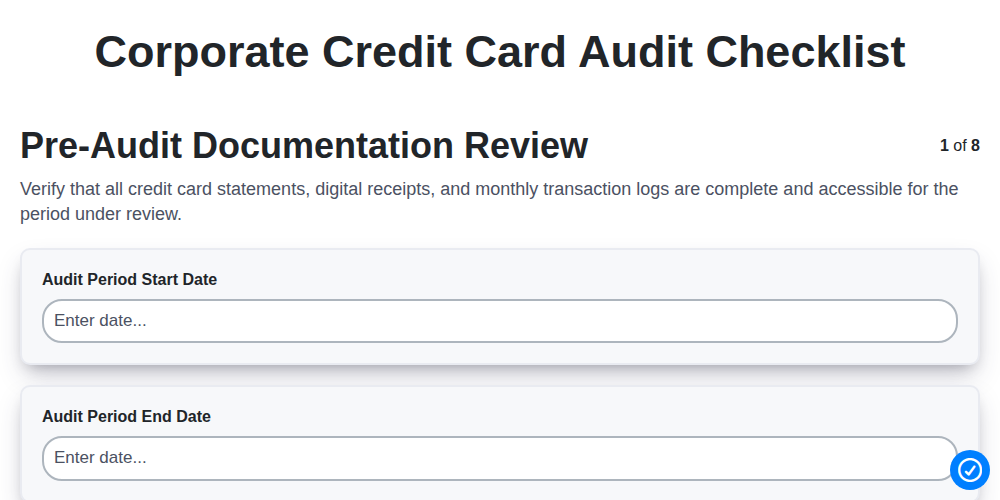
Table of Contents
- Introduction: Why Regular Corporate Credit Card Audits are Essential
- Step 1: Pre-Audit Documentation Review
- Step 2: Transaction Verification & Receipt Matching
- Step 3: Policy Compliance Check
- Step 4: Expense Categorization & Coding
- Step 5: Duplicate & Fraud Detection
- Step 6: Authorization & Approval Audit
- Step 7: Discrepancy Resolution & Follow-up
- Step 8: Final Reconciliation & Reporting
- Best Practices for Maintaining Long-Term Financial Control
- Resources & Links
TLDR: Streamline your financial oversight with this comprehensive guide and template designed to ensure accuracy and prevent fraud. This post provides a step-by-step audit framework-covering everything from documentation review and receipt matching to fraud detection and final reporting-to help finance professionals maintain strict policy compliance and protect company assets.
Introduction: Why Regular Corporate Credit Card Audits are Essential
In the fast-paced world of corporate finance, convenience often comes with-risk. Corporate credit cards are indispensable tools that empower employees to make necessary business purchases without the friction of reimbursement delays. However, this same ease of use can inadvertently create significant blind spots in your company's financial oversight.
Without a structured audit process, company funds become vulnerable to much more than just simple human error. An unmonitored credit card program can lead to hidden budget leaks, unintentional policy violations, and, in the worst-case scenarios, sophisticated fraudulent activity. Beyond the immediate financial risks, a lack of oversight can result in inaccurate financial reporting, making it nearly impossible for leadership to make informed, data-driven decisions.
A regular audit is not about a lack of trust in your team; rather, it is a fundamental pillar of strong internal controls. By implementing a consistent auditing cadence, you transform your credit card program from a potential liability into a transparent, streamlined asset. An effective audit process ensures that every dollar spent is accounted for, every transaction aligns with your company's strategic goals, and your organization remains compliant with both internal policies and external tax regulations.
Step 1: Pre-Audit Documentation Review
Before diving into the granular details of individual transactions, the first and most critical step is to establish a clear baseline for your audit. The Pre-Audit Documentation Review phase is all about gathering the necessary context and ensuring you have the rulebook ready for comparison.
To perform a successful review, you must collect and organize several key elements:
- Company Credit Card Policy: This is your primary source of truth. You need the most recent version of your policy to understand the specific rules regarding spending limits, prohibited merchant categories, and required documentation.
- Cardholder Agreements & Documentation: Gather all signed agreements and lists of active cardholders. This helps you verify who is authorized to use the company's funds.
- Previous Audit Reports: Reviewing past audit findings allows you to identify recurring patterns of non-compliance or red flag areas that require closer scrutiny this time around.
- Bank Statements and Monthly Summaries: Ensure you have the full, unedited statements from the period being audited to serve as the definitive record of all activity.
By thoroughly reviewing this documentation first, you ensure that the audit is grounded in current company standards, preventing any confusion caused by outdated policies or missing information during the more intensive stages of the process.
Step 2: Transaction Verification & Receipt Matching
Once you have gathered your necessary documentation, the next critical phase is the granular inspection of individual line items. Transaction verification and receipt matching is the ground truth phase of your audit; it is where you confirm that what was charged to the company account actually corresponds to a legitimate, documented business expense.
To execute this step effectively, your audit team should follow these three core actions:
- The Three-Way Match: For every transaction appearing on the credit card statement, locate the corresponding digital or physical receipt. The details on the receipt (date, vendor, and total amount) must align perfectly with the statement entry. Even a discrepancy of a few cents can signal a systemic issue with how employees are reporting expenses.
- Identifying Ghost Transactions: Look for charges that lack any supporting documentation. A missing receipt isn't always an indication of fraud-it could simply be employee oversight-but it must be flagged as a compliance breach. Frequent missing documentation suggests a breakdown in your internal expense reporting workflow.
- Verifying Merchant Legitimacy: Scrutinize the vendors listed. Ensure that the merchant name on the statement matches the nature of the expense. This is the time to spot suspicious merchant category codes (MCCs) that don't align with business needs, such as unexpected entertainment or retail spending.
By meticulously matching every penny to a paper trail, you move beyond simply looking at numbers and start verifying the integrity of your corporate spending.
Step 3: Policy Compliance Check
The heart of a successful audit lies in verifying whether spending aligns with your company's established guidelines. A policy compliance check moves beyond simple math to ensure that every transaction adheres to the rules of engagement defined in your corporate travel and expense (T&E) policy.
During this phase, you should specifically look for the following:
- Spending Limits & Thresholds: Check if any individual transactions or daily totals exceeded the pre-approved limits assigned to specific employees or card tiers.
- Prohibited Categories: Scan for out-of-policy expenses, such as alcohol, luxury upgrades, or personal services, that may have been inadvertently or intentionally charged to the corporate account.
- Merchant Category Code (MCC) Verification: Ensure that the types of merchants being used are appropriate for business needs (e.g., ensuring a travel expense isn't actually a charge at a retail clothing store).
- Timeliness of Reporting: Verify that expenses are being submitted within the required timeframe. Late submissions are often a red flag for poor financial oversight and can lead to budget forecasting errors.
By rigorously enforcing these boundaries, you do more than just catch errors; you reinforce a culture of accountability and ensure that company resources are being used solely for their intended business purpose.
Step 4: Expense Categorization & Coding
Once you have verified the transactions and matched them to their respective receipts, the next critical step is ensuring every expense is accurately classified. Expense Categorization & Coding involves assigning each transaction to the correct general ledger (GL) account, department, or project code within your accounting system.
Inaccurate coding is a common pitfall that can lead to distorted financial statements and budgeting errors. During this phase of the audit, you should verify that:
- Departmental Accuracy: Expenses are charged to the correct cost center or department to ensure budget accountability.
- GL Code Alignment: Transactions are mapped to the appropriate expense categories (e.g., travel, office supplies, software subscriptions, or meals) to prevent misrepresentation of company spending.
- Tax Compliance: VAT or sales tax components are correctly identified and separated, which is vital for accurate tax reclamation and audit trails.
- Project Tracking: If your company uses project-based accounting, ensure that all billable expenses are coded to the specific client or project ID to prevent revenue leakage.
Proper categorization during the audit not only ensures that your current books are accurate but also provides the granular data needed for meaningful financial analysis and future forecasting.
Step 5: Duplicate & Fraud Detection
This is perhaps the most critical stage of the audit process, as it involves looking beyond simple errors to identify intentional misuse or systemic vulnerabilities. The goal is to identify patterns that suggest either accidental double-billing or deliberate fraudulent activity.
To conduct an effective detection sweep, focus on these three key areas:
- Identifying Duplicate Transactions: Scrutinize your statements for identical amounts charged by the same vendor on the same or consecutive days. Duplicates often occur due to technical glitches during online checkouts or employees inadvertently submitting the same receipt twice.
- Spotting Anomalous Patterns: Look for out-of-character spending. This includes sudden spikes in transaction volume, large purchases that deviate from historical norms, or spending occurring during unusual hours (e.g., late-night or weekend transactions that don't align with business needs).
- Flagging High-Risk Vendor Categories: Be extra vigilant with transactions involving high-risk categories such as gift cards, luxury retail, or services that are difficult to verify. Fraudulent activity often hides within these fuzzy expense types.
By systematically scanning for these red flags, you can distinguish between simple administrative oversight and more serious issues that may require disciplinary action or a complete overhaul of your internal controls.
Step 6: Authorization & Approval Audit
The goal of this step is to ensure that every transaction processed on a corporate card has gone through the proper chain of command. An audit of authorizations is your primary defense against rogue spending and unauthorized use of company funds. During this stage, you must verify that every expense was vetted by the appropriate department head or manager before the payment was finalized.
To perform an effective authorization audit, cross-reference your transaction logs with your company's internal approval workflows. Specifically, look for the following red flags:
- Unapproved Transactions: Identify any charges that lack a corresponding digital or physical approval signature.
- Threshold Violations: Check if transactions exceeding certain monetary limits bypassed the required higher-level management oversight.
- Out-of-Sequence Approvals: Ensure that approvals were granted before the transaction took place, rather than as an afterthought to cover a cost already incurred.
- Self-Approval Patterns: Inspect for instances where employees have approved their own expenses or bypassed the segregation of duties.
By verifying the integrity of your approval process, you confirm that the responsibility for spending remains distributed and that no single individual has unilateral control over company capital.
Step 7: Discrepancy Resolution & Follow-up
Identifying errors is only half the battle; the true value of an audit lies in how you handle the findings. Once you have flagged inconsistencies-such as missing receipts, unauthorized charges, or coding errors-you must initiate a formal resolution process.
Start by communicating clearly with the relevant cardholder or department head. Present the findings objectively and provide them with a specific window of time to provide missing documentation or justify the discrepancy. In cases where a mistake was made, determine whether it requires a simple correction (like reclassifying an expense) or a more serious intervention (like a formal warning).
The goal of this step is not just to fix the current error, but to close the loop. Once a discrepancy is resolved, document the outcome in your audit trail. This ensures that if the same issue arises in the next audit cycle, you have a historical record of how it was handled, which is essential for maintaining accountability and improving your internal controls over time.
Step 8: Final Reconciliation & Reporting
The final stage of your audit is where all your findings transition from raw data into actionable business intelligence. Once you have identified discrepancies and resolved outstanding issues, the goal shifts from investigation to formal documentation.
This step involves a comprehensive reconciliation of the audit findings against the company's general ledger and bank statements to ensure that every single penny is accounted for. You must ensure that the adjusted totals match your internal records perfectly.
Beyond simple math, this is the stage for Reporting. A robust final report should include:
- A Summary of Findings: An overview of the total spend audited and the volume of transactions reviewed.
- Key Metrics: Identification of common error patterns, such as frequent missing receipts or specific departments exceeding budget limits.
- Risk Assessment: A clear breakdown of any identified fraudulent activities or high-risk spending behaviors.
- Actionable Recommendations: Specific suggestions for updating the Corporate Credit Card Policy or improving the expense management software.
By closing the audit with a detailed report, you aren't just finishing a task-you are providing leadership with the transparency needed to make informed financial decisions and strengthening the company's internal controls for the future.
Best Practices for Maintaining Long-Term Financial Control
To ensure that a corporate credit card audit remains an effective tool rather than just a reactive damage control measure, it must be integrated into your company's core financial DNA. An audit should not be a once-a-year event; it should be a continuous cycle of oversight and refinement.
To maintain long-term financial control, consider implementing these three fundamental practices:
- Establish a Culture of Compliance Through Education: Most discrepancies arise from confusion rather than malice. Regularly train employees on the specific nuances of your expense policy. When staff members understand the why behind spending limits and receipt requirements, compliance rates naturally increase, reducing the burden on the audit process.
- Leverage Automation and Real-Time Monitoring: Moving away from manual spreadsheets toward automated expense management software is the single most effective way to mitigate risk. Modern tools allow for real-time visibility, enabling you to flag out-of-policy transactions the moment they occur, rather than discovering them weeks later during a retrospective review.
- Iterate Based on Audit Findings: Use the results of your audits as a feedback loop. If your Duplicate & Fraud Detection step consistently identifies the same type of error, it is a signal that your internal controls or software configurations need updating. Treat every discrepancy found during an audit as an opportunity to patch a hole in your financial perimeter.
Resources & Links
- Accounting Today: A leading source for news, trends, and best practices in the accounting and financial management industry.
- Association of Certified Fraud Examiners (ACFE): Global organization providing essential resources and standards for fraud detection and prevention techniques.
- COSO: The gold standard for internal control frameworks and enterprise risk management guidance.
- AICPA: Professional resources regarding financial auditing standards, compliance, and corporate governance.
- Forbes Finance Council: Expert insights on corporate financial management, expense management, and operational efficiency.
- Investopedia: Comprehensive definitions and educational guides on financial auditing processes and internal controls.
Frequently Asked Questions
What is a corporate credit card audit and why is it important?
A corporate credit card audit is a systematic review of company-issued card transactions, receipts, and spending patterns. It is essential for maintaining financial integrity, preventing fraud, ensuring compliance with company policy, and identifying opportunities for cost savings.
How often should a company perform a credit card audit?
While the frequency can vary based on the size of the company and the volume of transactions, it is recommended to perform monthly reconciliations and quarterly deep-dive audits to catch discrepancies early.
What are the most common red flags to look for during an audit?
Key red flags include duplicate transactions, transactions made on weekends or holidays without justification, rounded-number expenses, expenses that exceed approved limits, and missing or non-compliant receipts.
What documentation is required for a successful audit?
A complete audit trail requires monthly credit card statements, itemized receipts for every transaction, approved expense reports, and a clear record of the company's official travel and expense (T&E) policy.
Who should be involved in the corporate credit card audit process?
An effective audit typically involves the finance department, internal auditors, and department managers who are responsible for approving their team's specific expenditures.
How can automation improve the corporate card audit process?
Automation can significantly reduce human error by using software to automatically match receipts to transactions, flag policy violations in real-time, and generate comprehensive reports for faster reconciliation.
Comments
There are no comments yet. Be the first to add one!
Accounting Management Solution Demo
Move beyond rigid, one-size-fits-all software. Leverage a fully programmable accounting environment designed to adapt to your unique workflows, complex hierarchies, and evolving business logic.
Related Articles
The Ultimate Financial Data Integrity Audit Checklist: A Step-by-Step Template for Precision and Compliance
The Ultimate Financial Statement Review Checklist: A Step-by-Step Guide to Ensuring Accuracy and Compliance
Mastering Financial Control: The Ultimate Departmental Budget Monitoring Checklist
The Ultimate Accounts Receivable Collections Checklist: A Step-by-Step Guide to Streamlining Your Cash Flow
The Ultimate Payroll Processing & Compliance Checklist: A Step-by-Step Guide to Error-Free Payroll
The Ultimate Year-End Audit Preparation Checklist: A Step-by-Step Guide to a Stress-Free Audit
The Ultimate Software Implementation Checklist for Accounting Teams: A Step-by-Step Guide to a Seamless Transition
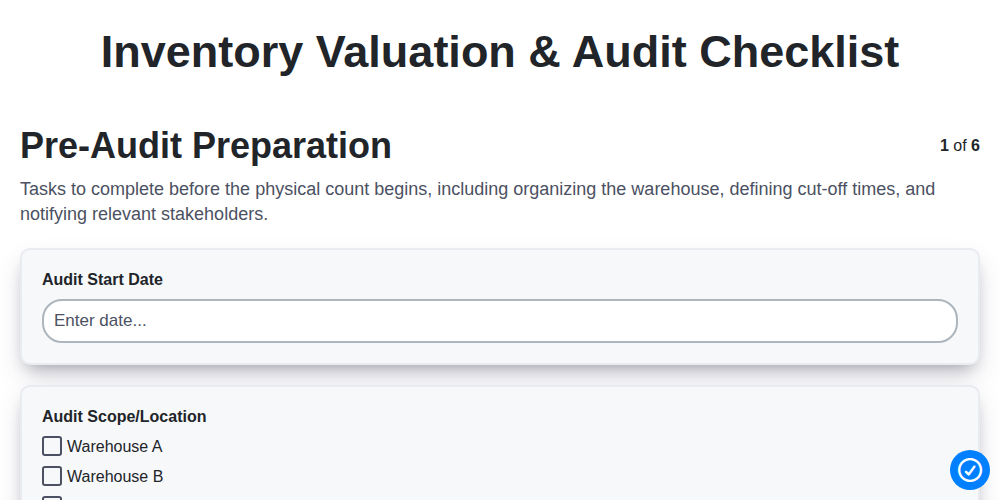
The Ultimate Inventory Valuation & Audit Checklist: A Step-by-Step Guide to Accuracy and Compliance
Need help with
Accounting Management?
Have a question? We're here to help. Please submit your inquiry, and we'll respond promptly.