Mastering Global Consolidation: The Ultimate Intercompany Reconciliation Checklist Template
Published: 07/12/2026 Updated: 10/05/2026
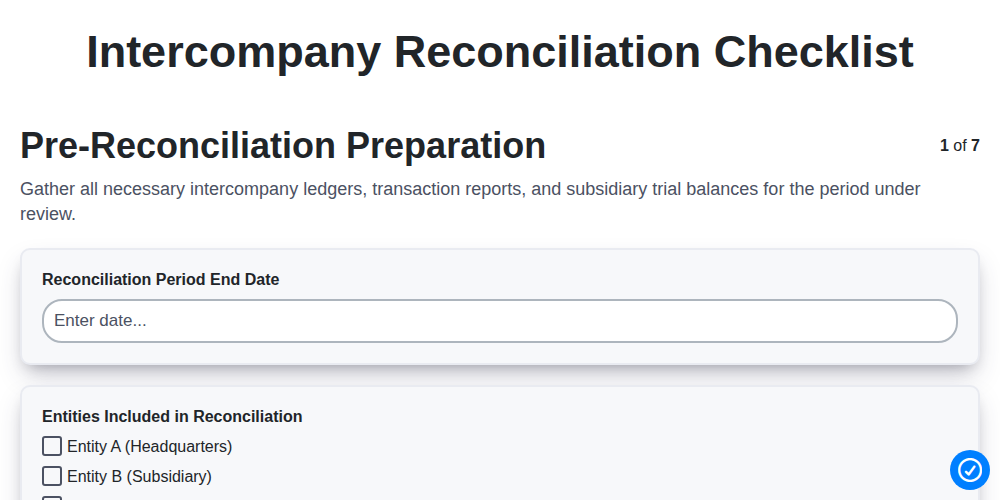
Table of Contents
- Introduction: The Importance of Accurate Intercompany Reconciliation
- Step 1: Pre-Reconciliation Preparation
- Step 2: Transaction Matching & Identification
- Step 3: Discrepancy Investigation
- Step 4: Currency Conversion & FX Adjustment
- Step 5: Dispute Resolution & Settlement
- Step 6: Adjusting Journal Entries
- Step 7: Final Review & Documentation
- Best Practices for Streamlining Your Intercompany Process
- Conclusion
- Resources & Links
TLDR: Streamline your month-end close and eliminate financial discrepancies with our comprehensive Intercompany Reconciliation Checklist. This guide provides a step-by-step framework-from pre-reconciliation preparation to final documentation-to help finance professionals standardize workflows, manage FX adjustments, and ensure accuracy across global entities.
Introduction: The Importance of Accurate Intercompany Reconciliation
In any complex organizational structure, intercompany transactions are an inevitable byproduct of operating multiple legal entities under a single corporate umbrella. Whether it involves managing shared service costs, internal inventory transfers, or intercompany loans, these transactions form the lifeblood of consolidated financial reporting.
However, when these transactions are not meticulously tracked, they can quickly transform from routine administrative tasks into a significant financial risk. Inaccurate intercompany reconciliation is more than just a bookkeeping headache; it can lead to distorted profit and loss statements, inflated asset values, and, most critically, a failure to achieve a clean consolidation during the period-end close. Without a disciplined approach, discrepancies can hide underlying operational issues, create tax compliance risks, and trigger audit red flags that undermine the integrity of your entire financial reporting process.
Effective intercompany reconciliation is the process of ensuring that the due to accounts in one entity perfectly mirror the due from accounts in another. Achieving this equilibrium requires more than just manual oversight-it demands a standardized, systematic framework. By following a structured checklist, finance teams can move away from reactive fire-fighting and toward a proactive, scalable process that ensures every cent is accounted for across the entire enterprise.
Step 1: Pre-Reconciliation Preparation
Before diving into the numbers, the foundation of a successful intercompany reconciliation lies in the preparation phase. Skipping this step often leads to wasted hours chasing missing information mid-process. The goal here is to ensure that all participating entities are aligned on the scope, timing, and data sources being used.
To ensure a smooth reconciliation cycle, start by defining the reconciliation period (e.g., monthly, quarterly, or annually) and ensuring all participating subsidiaries are aware of the upcoming deadline. Next, gather all necessary source documentation, including intercompany invoices, purchase orders, and shipping documents. It is also critical to verify that the master data-such as intercompany entity names, IDs, and account codes-is consistent across all ERP systems. Finally, ensure that all intercompany transactions for the period have been fully posted and that the cut-off period is clearly communicated to prevent transactions from being caught in limbo between two different periods.
Step 2: Transaction Matching & Identification
Once the necessary data has been gathered and prepared, the core of the reconciliation process begins. The goal of this stage is to perform a line-by-line comparison between the intercompany accounts of the two entities involved to ensure that every transaction recorded in one ledger has a corresponding, identical entry in the other.
To execute this step effectively, your team should focus on the following actions:
- Automated vs. Manual Matching: Utilize reconciliation software or Excel VLOOKUPs to quickly pair transactions based on key identifiers such as invoice numbers, purchase order numbers, or transaction IDs.
- Verifying Amounts and Dates: It is not enough to simply match the transaction type; you must confirm that the numerical values and the transaction dates align across both sets of books.
- Identifying Unmatched Items: Carefully flag any orphaned transactions-entries that appear in the sender's ledger but are missing from the receiver's ledger, or vice versa.
- Checking for Partial Matches: Look for instances where a single large transaction in one entity might have been split into multiple smaller payments in another, which can often lead to hidden discrepancies.
This phase is the most labor-intensive part of the process. By systematically identifying which items align and which do not, you create a clear map of discrepancies that will serve as the foundation for the investigation stage.
Step 3: Discrepancy Investigation
Once you have completed the matching process, you will inevitably encounter items that do not align. This is where the heavy lifting begins. The investigation phase is critical because unresolved discrepancies are the primary drivers of inaccurate financial statements and phantom profits or losses.
During this stage, your goal is to move beyond simply identifying a mismatch and start identifying the root cause. To conduct an effective investigation, follow these sub-steps:
- Categorize the Mismatches: Distinguish between simple timing differences (e.g., a payment sent by Entity A but not yet received by Entity B) and actual errors (e.g., incorrect amounts, duplicate entries, or missing invoices).
- Trace the Audit Trail: Retrace the transaction back to the original source documents, such as intercompany invoices, shipping documents, or bank statements. Check for manual entry errors or missed accruals.
- Verify Transaction Completeness: Ensure that all intercompany transactions recorded in the sender's books have a corresponding entry in the receiver's books. A common culprit is a one-sided entry where an expense is recorded in one entity but the related revenue is forgotten in another.
- Check for Cut-off Issues: Examine transactions occurring near the period end. Often, discrepancies arise because one entity recorded a transaction in the current month, while the counterparty recorded it in the following month.
The objective of this step is to transform unreconciled differences into actionable items. By the end of this phase, you should have a clear list of specific errors that require either a correction, a reversal, or a formal dispute resolution.
Step 4: Currency Conversion & FX Adjustment
When dealing with global operations, one of the most significant complexities in intercompany reconciliation is managing multiple currencies. Even if your transactions are recorded accurately in their original denominations, differences in exchange rates can create artificial imbalances between entities.
To ensure a clean reconciliation, follow these critical sub-steps:
- Standardize Exchange Rates: Establish a single, consistent source for exchange rates (such as a monthly middle rate or a specific central bank rate) to be used by all participating subsidiaries. Using different rates across different entities is a primary driver of unreconciled differences.
- Identify FX Gains and Losses: Distinguish between actual transaction discrepancies and paper losses or gains caused by fluctuations in the FX market. This prevents you from wasting time investigating discrepancies that are simply the result of currency volatility.
- Verify Revaluation Accuracy: Ensure that the foreign exchange revaluation process is applied uniformly across all intercompany accounts. Each entity must apply the same year-end or period-end closing rates to their intercompany receivables and payables to ensure the balances mirror each other upon conversion.
- Check for Translation Consistency: Ensure that the process of translating foreign currency balances into the reporting currency (the functional currency of the parent company) is mathematically consistent across all ledger entries.
Step 5: Dispute Resolution & Settlement
Once discrepancies have been identified and investigated, the next critical phase is Dispute Resolution & Settlement. Even with the best processes in place, disagreements between subsidiaries or departments regarding transaction ownership, timing, or amounts are common.
During this stage, the goal is to move from identifying errors to reaching an agreement. The process typically involves:
- Collaborative Review: Engaging with the counterparty (the other entity involved in the intercompany transaction) to present findings and verify the source of the mismatch.
- Reaching Consensus: Negotiating the correction of errors. This may involve deciding which entity will take the hit for a missed entry or determining if a transaction was miscoded.
- Formal Settlement: Once an agreement is reached, the transaction must be formally settled in the ledger. This ensures that both the debit and credit sides of the intercompany account reflect the same settled value.
- Finalizing the Resolution: Ensuring that all agreed-upon adjustments are communicated to the respective accounting teams so that the subsequent journal entries can be executed accurately.
Effective dispute resolution prevents intercompany debt from ballooning and ensures that the reconciliation process leads to a clean, closed period rather than a cycle of recurring errors.
Step 6: Adjusting Journal Entries
Once all discrepancies have been investigated and a resolution has been reached, the final technical step in the reconciliation process is the posting of Adjusting Journal Entries (AJEs). This is where the theoretical reconciliation meets the actual general ledger.
The purpose of these entries is to ensure that the balances on both sides of the intercompany transaction reflect the agreed-upon amounts. If a discrepancy was found to be due to an unrecorded expense, a missed invoice, or an incorrectly applied payment, an entry must be made to correct the books of the respective entities.
When executing this step, keep the following best practices in mind:
- Mirroring Entries: Always ensure that for every debit recorded in one entity, there is a corresponding credit in the related intercompany account of the counterparty entity. This maintains the net-zero integrity of the consolidated group.
- Audit Trail Integrity: Every adjusting entry should be accompanied by clear, descriptive memos. Reference the specific reconciliation period and the unique discrepancy ID or investigation finding that necessitated the adjustment.
- Timeliness: Post adjustments as soon as the dispute resolution is finalized. Delaying entries can lead to revolving discrepancies, where the same error appears in the following month's reconciliation, creating a cycle of manual rework.
- Authorization: Ensure that all adjustments undergo a secondary review. Since intercompany entries impact the financial statements of multiple legal entities, they should be subject to the same rigorous approval workflows as any other significant manual journal entry.
By meticulously handling adjusting entries, you transform the reconciliation from a mere detective process into a corrective one, effectively cleaning up the ledger and ensuring the accuracy of the subsequent month's opening balances.
Step 7: Final Review & Documentation
The final stage of the intercompany reconciliation process is just as critical as the investigation itself. Once all discrepancies have been resolved and adjusting entries have been posted, you must perform a comprehensive review to ensure the integrity of your financial records. This step serves as the ultimate quality control mechanism to prevent errors from flowing into your consolidated financial statements.
During this phase, verify that all intercompany balances between specific entities net to zero and that the consolidated books accurately reflect the corrected figures. A final walkthrough of the reconciliation folder ensures that every discrepancy identified in earlier steps has a clear, documented resolution trail.
Documentation is the backbone of audit readiness. Do not simply close the task; instead, archive a complete audit trail that includes:
- The final reconciled report showing the matched and unmatched balances.
- Supporting evidence for any manual adjustments or FX adjustments made.
- Communication logs or formal approvals regarding dispute resolutions.
- A summary of any lingering, immaterial differences that were deemed acceptable per company policy.
By maintaining rigorous documentation, you transform the reconciliation from a mere monthly task into a robust internal control that protects the organization during year-end audits and provides transparency for stakeholders.
Best Practices for Streamlining Your Intercompany Process
Achieving a seamless intercompany reconciliation process requires moving beyond reactive troubleshooting and toward a proactive, standardized framework. To minimize month-end friction and reduce the risk of manual error, consider implementing these industry best-standard practices:
- Establish a Unified Intercompany Policy: Standardize the rules of engagement across all subsidiaries. This includes defining consistent settlement terms, clear deadlines for transaction reporting, and a uniform approach to dispute escalation. When every entity follows the same playbook, ambiguity is eliminated.
- Automate Transaction Matching: Relying on manual spreadsheets is the primary cause of reconciliation fatigue. Whenever possible, leverage automated reconciliation software that can instantly flag mismatches between intercompany accounts. Automation reduces human error and allows your finance team to focus on investigating discrepancies rather than just finding them.
- Enforce Real-Time Data Entry: The longer the gap between a transaction occurring and its recording, the higher the likelihood of a mismatch. Encourage entities to record intercompany trades and transfers as close to the transaction date as possible to ensure the paper trail is always current.
- Implement a Centralized Intercompany Hub: Centralizing visibility is crucial. By using a single source of truth-whether through a specialized module in your ERP or a centralized dashboard-all controllers can view outstanding balances, pending disputes, and FX impacts in real-time, preventing surprises during the final consolidation.
- Standardize the Dispute Resolution Workflow: Don't let discrepancies linger. Establish a formal process for how disputes are flagged, who is responsible for the investigation, and the timeframe in which they must be resolved. A structured workflow ensures that orphaned transactions don't clutter your balance sheet indefinitely.
- Perform Periodic Mini-Closes: Instead of waiting for the massive pressure of the month-end close, perform lightweight reconciliations weekly or bi-weekly. This continuous accounting approach smooths out the workload and ensures that errors are caught and corrected well before the final reporting deadline.
Conclusion
Mastering your intercompany reconciliation process is not a one-time event, but a continuous commitment to financial accuracy and operational discipline. By implementing this structured checklist, you transform a potentially chaotic month-end burden into a streamlined, predictable workflow. This systematic approach does more than just catch errors; it strengthens your global internal controls, mitigates the risk of significant audit findings, and provides leadership with a single version of truth regarding the company's financial position.
As your organization grows in complexity-whether through new global entities, expanding product lines, or more frequent cross-border transactions-remember that the foundation of a successful reconciliation lies in the rigor of your preparation and the speed of your dispute resolution. Start applying these steps today to reduce month-end friction, eliminate manual errors, and ensure that your intercompany balances remain a source of clarity rather than a source of stress.
Resources & Links
- IFRS Foundation: Official standards and guidelines regarding international accounting principles and consolidation requirements.
- AccountingTools: Comprehensive educational resources and technical articles on intercompany accounting and reconciliation procedures.
- Journal of Accountancy: Industry insights and professional updates regarding financial reporting, audits, and internal controls.
- PwC Insights: Global perspectives on complex financial transformations and managing multi-entity organizational structures.
- SSRC (Financial Reporting): Best practices for managing foreign exchange risks and currency translation during global consolidations.
- Gartner: Analysis of automation tools and software solutions for streamlining enterprise-wide financial processes.
Frequently Asked Questions
What is intercompany reconciliation in the context of global consolidation?
Intercompany reconciliation is the process of verifying and matching transactions between different legal entities within the same corporate group. In global consolidation, this ensures that all internal sales, expenses, and balances offset each other perfectly, preventing inflated revenue or asset figures on the consolidated financial statements.
Why is a checklist template important for global consolidation?
A checklist template provides a standardized framework for finance teams to ensure no transaction type-such as intercompany loans, management fees, or inventory transfers-is overlooked. It promotes consistency across different regions, reduces the risk of manual error, and streamlines the month-end closing process.
What are the most common causes of intercompany discrepancies?
Common discrepancies arise from currency exchange rate fluctuations, timing differences in revenue recognition, missing invoices, incorrect intercompany pricing, and unrecorded intercompany transfers or settlements.
What key elements should be included in an intercompany reconciliation checklist?
A comprehensive checklist should include steps for identifying all intercompany counterparties, verifying transaction amounts, reconciling foreign exchange impacts, checking for completeness of documentation (like intercompany agreements), and establishing a clear workflow for dispute resolution and adjusting entries.
How can automation improve the intercompany reconciliation process?
Automation can significantly reduce manual effort by automatically matching transactions across different ERP systems, flagging discrepancies in real-time, managing multi-currency conversions accurately, and providing a centralized audit trail for global controllers.
Comments
There are no comments yet. Be the first to add one!
Accounting Management Solution Demo
Move beyond rigid, one-size-fits-all software. Leverage a fully programmable accounting environment designed to adapt to your unique workflows, complex hierarchies, and evolving business logic.
Related Articles
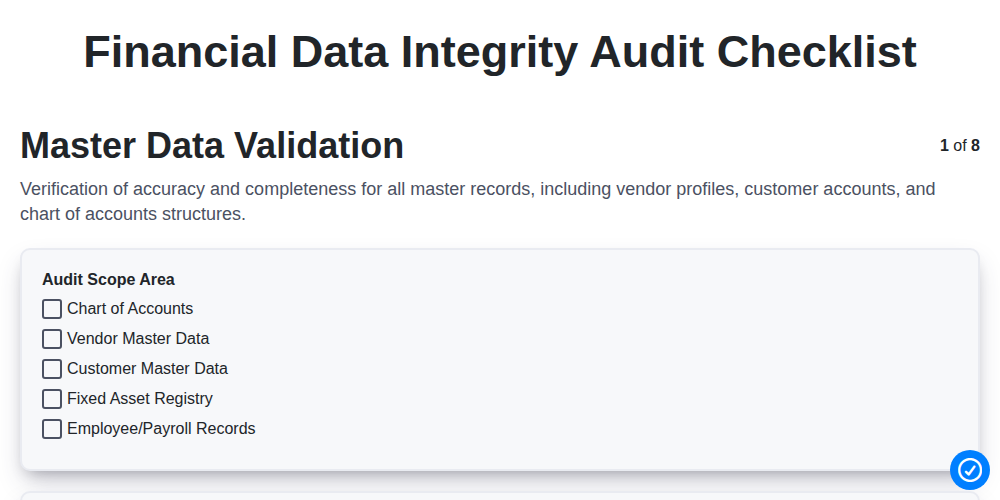
The Ultimate Financial Data Integrity Audit Checklist: A Step-by-Step Template for Precision and Compliance
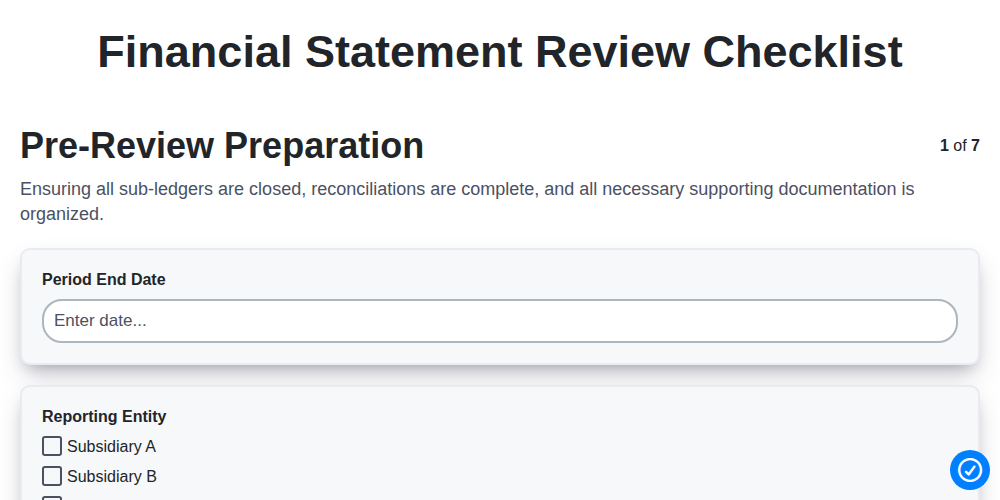
The Ultimate Financial Statement Review Checklist: A Step-by-Step Guide to Ensuring Accuracy and Compliance
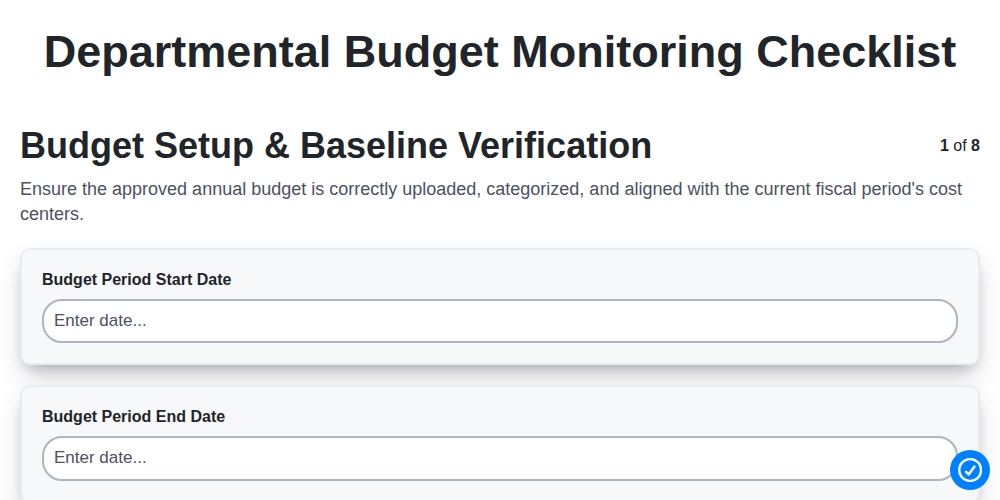
Mastering Financial Control: The Ultimate Departmental Budget Monitoring Checklist
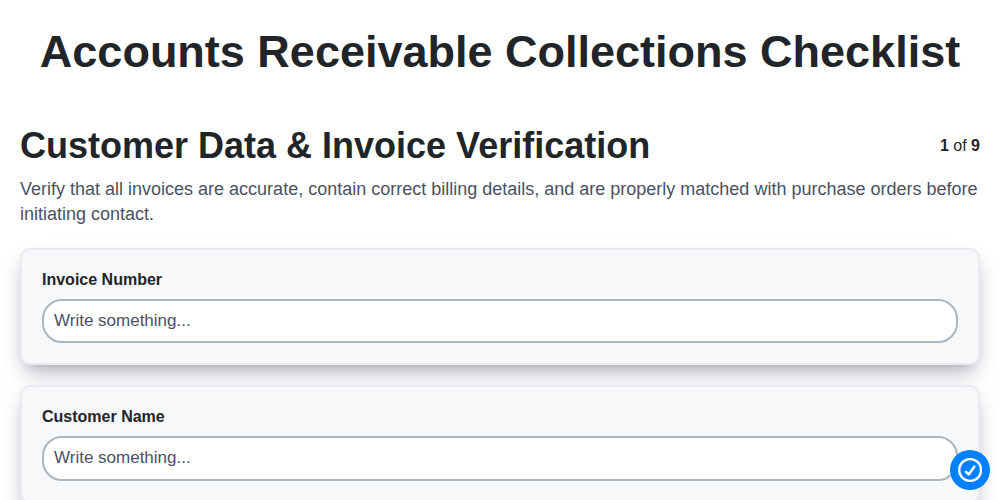
The Ultimate Accounts Receivable Collections Checklist: A Step-by-Step Guide to Streamlining Your Cash Flow
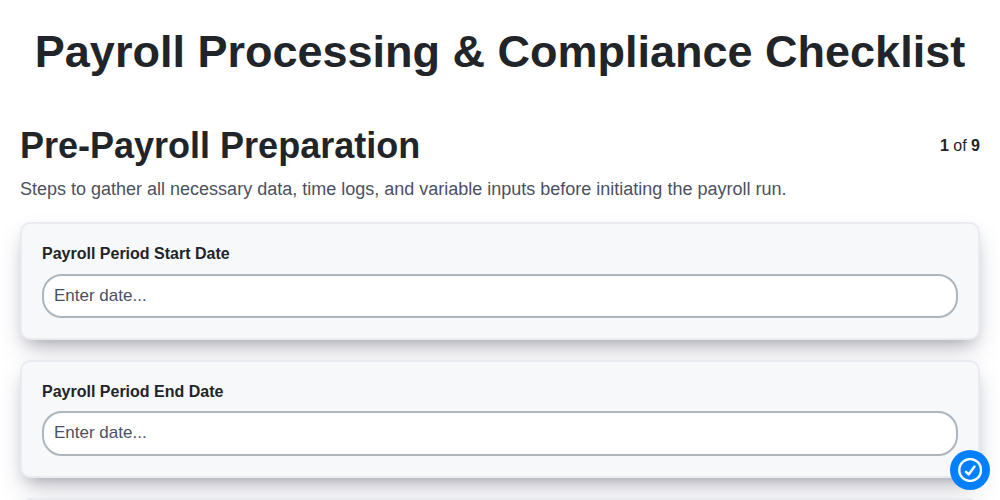
The Ultimate Payroll Processing & Compliance Checklist: A Step-by-Step Guide to Error-Free Payroll
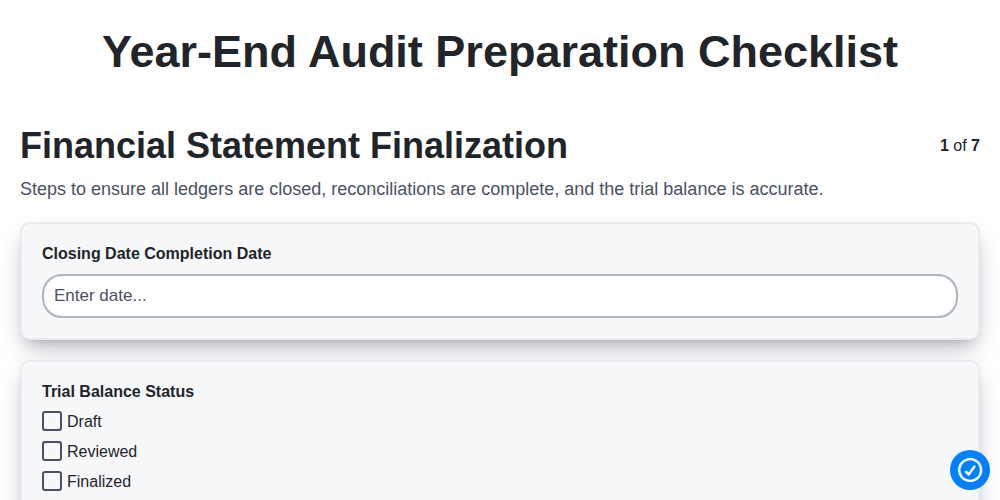
The Ultimate Year-End Audit Preparation Checklist: A Step-by-Step Guide to a Stress-Free Audit
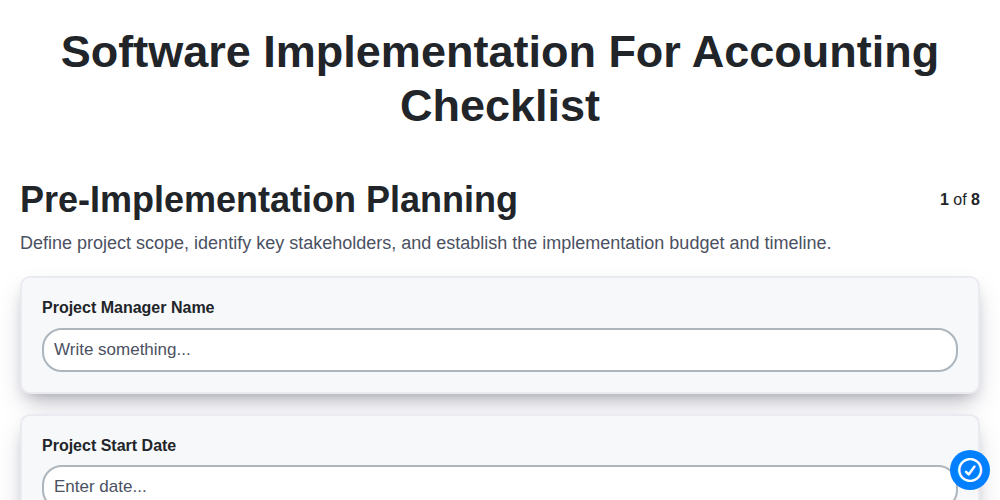
The Ultimate Software Implementation Checklist for Accounting Teams: A Step-by-Step Guide to a Seamless Transition
The Ultimate Inventory Valuation & Audit Checklist: A Step-by-Step Guide to Accuracy and Compliance
We can do it Together
Need help with
Accounting Management?
Have a question? We're here to help. Please submit your inquiry, and we'll respond promptly.