The Ultimate Expense Reimbursement Approval Checklist: A Step-by-Step Guide to Error-Free Processing
Published: 07/12/2026 Updated: 10/05/2026
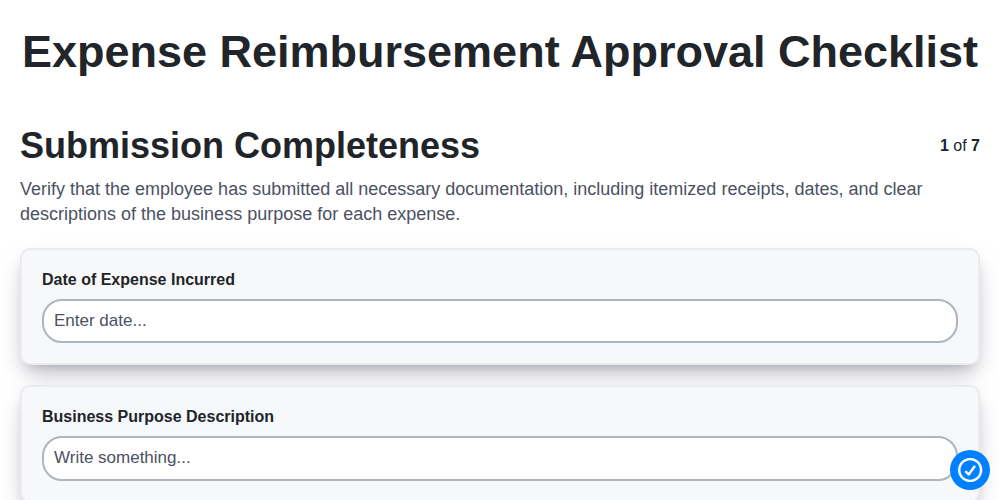
Table of Contents
- Introduction: Why a Standardized Approval Process Matters
- Step 1: Ensuring Submission Completeness
- Step 2: Performing a Rigorous Policy Compliance Check
- Step 3: Accurate Categorization and GL Coding
- Step 4: Implementing Duplicate Detection Protocols
- Step 5: Verifying Managerial Approvals
- Step 6: Tax and VAT Validation for Compliance
- Step 7: Final Audit and Payment Processing
- Conclusion: Best Practices for Maintaining Financial Integrity
- Resources & Links
TLDR: Streamline your finance workflows and eliminate costly payment errors with our comprehensive expense reimbursement checklist. This guide provides a step-by-step framework-covering everything from submission completeness to final tax validation-to help managers and finance teams ensure policy compliance, prevent duplicate payments, and accelerate the approval cycle.
Introduction: Why a Standardized Approval Process Matters
In the fast-paced environment of modern business, managing company expenditures is about much more than simply paying bills. For finance teams and department heads, the expense reimbursement process can quickly become a chaotic whirlwind of scattered receipts, vague descriptions, and manual errors. Without a structured approach, this process becomes a significant drain on productivity and a major risk to your company's bottom line.
A standardized approval process acts as your organization's first line of defense against financial leakage. By implementing a consistent, step-by-step checklist, you move away from a reactive mindset-where you are constantly fixing mistakes after they happen-to a proactive framework that ensures accuracy from the moment a claim is submitted.
Beyond just organization, a standardized workflow provides three critical benefits:
- Enhanced Accountability: It creates a clear audit trail, ensuring every cent spent is documented, justified, and authorized.
- Operational Efficiency: It eliminates the back-and-forth communication loop between employees and finance by setting clear expectations for what a complete submission looks like.
- Risk Mitigation: It protects the company from fraud, duplicate payments, and non-compliance with tax regulations.
By adopting a rigorous checklist, you transform expense management from a tedious administrative burden into a streamlined, transparent, and audit-ready business function.
Step 1: Ensuring Submission Completeness
The foundation of a smooth reimbursement process begins long before an invoice reaches the finance department. The first line of defense is ensuring Submission Completeness. An incomplete claim is the primary driver of administrative bottlenecks, leading to endless back-and-forth communication between employees and accountants.
To prevent delays, every submission must be vetted for the presence of essential elements:
- Valid Proof of Purchase: Every claim must be accompanied by a legible, itemized receipt or invoice. A simple credit card slip is often insufficient as it lacks the breakdown of goods and services required for tax purposes.
- Clear Descriptions: Each expense should include a brief but descriptive note explaining the business purpose (e.g., Client lunch with [Company Name] rather than just Meal).
- Accurate Date and Currency: Ensure the transaction date is clearly visible and that the currency is correctly identified, especially for international travel.
- Complete Employee Information: All necessary metadata, such as the correct cost center, department, and employee ID, must be present to avoid routing errors.
By enforcing a strict complete or rejected rule at the point of submission, you eliminate the ping-pong effect, where claims bounce between departments, significantly reducing the overall processing cycle time.
Step 2: Performing a Rigorous Policy Compliance Check
Once you have confirmed that all necessary receipts and forms are present, the next critical stage is the Policy Compliance Check. This step is the frontline of defense against budget leakage and unauthorized spending.
The goal here is to move beyond mere completeness and evaluate the content of the expenses against your company's established travel and expense (T&E) policy. A submission might be complete in terms of documentation, but it could still be non-compliant. During this phase, your team should be scrutinizing several key areas:
- Spending Limits: Are the individual meal allowances, hotel rates, or mileage claims within the predefined thresholds set by the company?
- Prohibited Expenses: Does the claim include items specifically flagged as non-reimbursable, such as alcohol, entertainment without prior authorization, or personal grooming services?
- Temporal Alignment: Do the dates of the expenses align with the employee's business trip or the specific project period?
- Authorization Pre-approvals: For larger expenses, such as international flights or high-end client dinners, was the necessary pre-approval obtained before the transaction took place?
By enforcing a rigorous compliance check, you ensure that the company's financial boundaries are respected and that every cent reimbursed is a legitimate, pre-authorized business cost. Failing to catch these discrepancies at this stage often leads to much more difficult-and costly-corrections during the final audit.
Step 3: Accurate Categorization and GL Coding
Once an expense report has been verified for completeness and compliance, the next critical step is ensuring every transaction is assigned to the correct account. Categorization and GL (General Ledger) coding is the bridge between an individual's reimbursement and the company's financial reporting.
Properly coding expenses is not just about bookkeeping; it is about maintaining the integrity of your budget tracking. If a meal expense is incorrectly coded as Office Supplies, your department's budget reports will become unreliable, leading to distorted financial insights and poor decision-making.
To master this step, your checklist should include:
- Matching Expenses to Cost Centers: Ensure the expense is charged to the specific department or project responsible for the cost.
- Standardized Account Mapping: Use a consistent set of GL codes (e.g., Travel, Meals, Software Subscriptions, Logistics) to prevent fragmentation.
- Project-Based Tracking: For companies managing multiple clients or internal initiatives, verify that the expense is tagged to the correct project code for accurate job costing.
- Consistency Check: Verify that the category selected aligns with the nature of the receipt (e.g., ensuring a Fuel expense isn't accidentally categorized under Maintenance).
By enforcing rigorous coding standards during the approval process, you ensure that your month-end closing is seamless and that your financial statements reflect the true pulse of your business operations.
Step 4: Implementing Duplicate Detection Protocols
One of the most common pitfalls in expense management is the accidental or intentional submission of duplicate claims. Without a rigorous verification process, companies often find themselves paying for the same meal, taxi ride, or hotel stay twice-once through an individual receipt and again through a corporate credit card statement or a second, slightly altered submission.
To effectively implement duplicate detection protocols, your checklist should include the following layers of scrutiny:
- Cross-Referencing Metadata: Beyond just looking at the total amount, your system should flag entries with identical dates, vendors, and amounts. A slight change in the decimal point or a different currency conversion should not be enough to bypass this check.
- Receipt Image Analysis: Modern OCR (Optical Character Recognition) technology can assist in identifying if the same receipt image has been uploaded under different descriptions or by different employees.
- Transaction Reconciliation: Periodically compare submitted expense reports against corporate card feeds. If a transaction appears on a credit card statement but is also submitted as an out-of-pocket reimbursement, the system should trigger an immediate alert.
- Vendor-Specific Audits: Pay close attention to high-frequency vendors. If a specific restaurant or hotel appears multiple times within a very short window for the same employee, it warrants a secondary manual review to ensure it isn't a duplicated entry.
By establishing these protocols, you transform your approval process from a reactive task into a proactive defense mechanism, significantly reducing leaky expenses and preserving your company's bottom line.
Step 5: Verifying Managerial Approvals
Once a claim has passed the initial screening for accuracy and compliance, the next critical gatekeeper is the management layer. Verifying managerial approval is not merely about checking for a signature; it is about ensuring that the person authorizing the expense has the appropriate authority and has reviewed the business justification for the spend.
During this stage, the approver must confirm that the expense is not only within policy but is also aligned with the specific department's budget and the actual business necessity of the trip or purchase. From an auditing perspective, this step involves verifying that the approval follows the company's established hierarchy-ensuring that no employee is approving their own expenses and that all high-value claims have been escalated to the necessary senior leadership. Proper verification at this stage prevents budget creep and ensures that every dollar leaving the company has been vetted by someone accountable for the department's bottom line.
Step 6: Tax and VAT Validation for Compliance
Ensuring that every expense report is tax-compliant is one of the most critical-yet often overlooked-steps in the reimbursement process. Tax and VAT (Value Added Tax) validation is not just about internal bookkeeping; it is a legal necessity for accurate financial reporting and tax reclamation.
During this stage, the goal is to verify that all submitted receipts contain the necessary information required by local tax authorities to justify a tax deduction or credit. This includes checking for a valid tax ID, a clearly stated tax amount, and a breakdown of the tax rate applied.
Failing to validate these details can lead to significant consequences, such as:
- Inability to reclaim VAT: If the receipt lacks proper documentation, your company cannot legally claim back the tax paid on business expenses.
- Audit Risks: Discrepancies between reported expenses and tax-compliant documentation can trigger red flags during a formal tax audit.
- Inaccurate Financial Statements: Incorrectly accounting for tax components can distort your company's true operational costs and profit margins.
To streamline this step, ensure that your reimbursement policy explicitly states the requirements for a valid receipt. Implementing automated OCR (Optical Character Recognition) tools can significantly assist here by automatically extracting and verifying tax amounts and VAT numbers, reducing the burden of manual inspection.
Step 7: Final Audit and Payment Processing
The final stage of the reimbursement workflow is the critical safety net where the integrity of the entire process is verified before funds leave the company coffers. Even after managers have approved the expenses and tax compliance has been checked, a final audit serves as the ultimate control mechanism to prevent leakage and human error.
During this phase, the finance team performs a high-level review to ensure that the approved amounts match the approved documentation and that the total reimbursement amount aligns with the current payroll or accounts payable cycle. This is also the point where the Source of Truth is reconciled-ensuring that the digital entry in your expense management system perfectly mirrors the bank details and period information.
Once the audit is cleared, the process moves into Payment Processing. This involves triggering the actual disbursement, whether through direct deposit, integration with payroll software, or a manual bank transfer. By treating this final step as a formal gate, you ensure that only verified, accurate, and policy-compliant data reaches your company's bank account, effectively closing the loop on the reimbursement lifecycle and maintaining strict financial hygiene.
Conclusion: Best Practices for Maintaining Financial Integrity
Implementing an Expense Reimbursement Approval Checklist is more than just a way to speed up payments; it is a fundamental pillar of a company's internal control framework. By systematically moving through each step-from verifying submission completeness to performing a final audit-you transform a manual, error-prone task into a streamlined, transparent process.
To maintain long-term financial integrity, remember that consistency is key. Automating as much of this checklist as possible through modern expense management software can significantly reduce human error, particularly in complex areas like tax validation and duplicate detection. However, even with the best tools, the human element of managerial oversight remains vital to ensuring policy compliance and preventing fraud.
Ultimately, a rigorous approval process protects your company's bottom line, ensures tax compliance, and fosters a culture of accountability and trust between employees and the finance department.
Resources & Links
- IRS Business Tax Guide: Official guidelines on deductible business expenses and tax compliance requirements for reimbursements.
- Accounting Today: Industry insights and best practices for internal controls and financial auditing processes.
- SHRM (Society for Human Resource Management): Resources for managing company expense policies and employee reimbursement workflows.
- Gartner Finance Insights: Expert analysis on implementing automation and error-reduction protocols in financial operations.
- Investopedia: A comprehensive guide to understanding General Ledger (GL) coding and financial auditing principles.
Frequently Asked Questions
What is the main purpose of an expense reimbursement approval checklist?
The primary purpose is to standardize the review process, ensuring that all submitted expenses are legitimate, documented, and compliant with company policy to prevent errors, fraud, and delays.
What are the most common errors found during the expense approval process?
Common errors include missing or illegible receipts, duplicate submissions, incorrect tax calculations, expenses that fall outside of company policy, and incorrect coding to budget accounts.
How often should companies review and update their reimbursement policies?
Companies should review their policies at least annually or whenever there are significant changes in tax laws, company travel policies, or organizational structure to ensure the checklist remains accurate and effective.
What role do receipts play in the approval checklist?
Receipts serve as the essential primary evidence for a transaction. The checklist should include steps to verify that receipts are valid, show itemized details, and match the total amount claimed.
How can a checklist help reduce the time spent on reimbursements?
By providing a clear, step-by-step guide for both employees (during submission) and managers (during review), a checklist reduces the need for back-and-forth communication and minimizes the frequency of rejected reports.
Comments
There are no comments yet. Be the first to add one!
Accounting Management Solution Demo
Move beyond rigid, one-size-fits-all software. Leverage a fully programmable accounting environment designed to adapt to your unique workflows, complex hierarchies, and evolving business logic.
Related Articles
The Ultimate Financial Data Integrity Audit Checklist: A Step-by-Step Template for Precision and Compliance
The Ultimate Financial Statement Review Checklist: A Step-by-Step Guide to Ensuring Accuracy and Compliance
Mastering Financial Control: The Ultimate Departmental Budget Monitoring Checklist
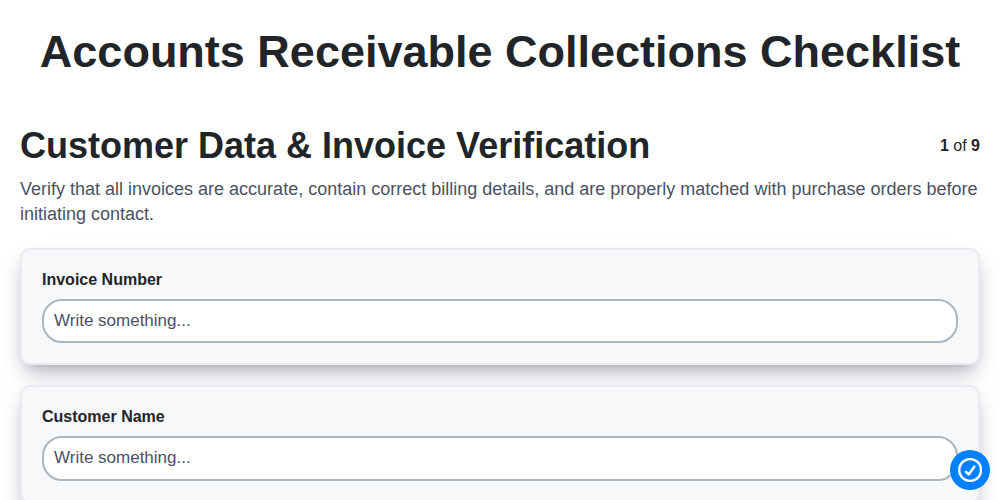
The Ultimate Accounts Receivable Collections Checklist: A Step-by-Step Guide to Streamlining Your Cash Flow
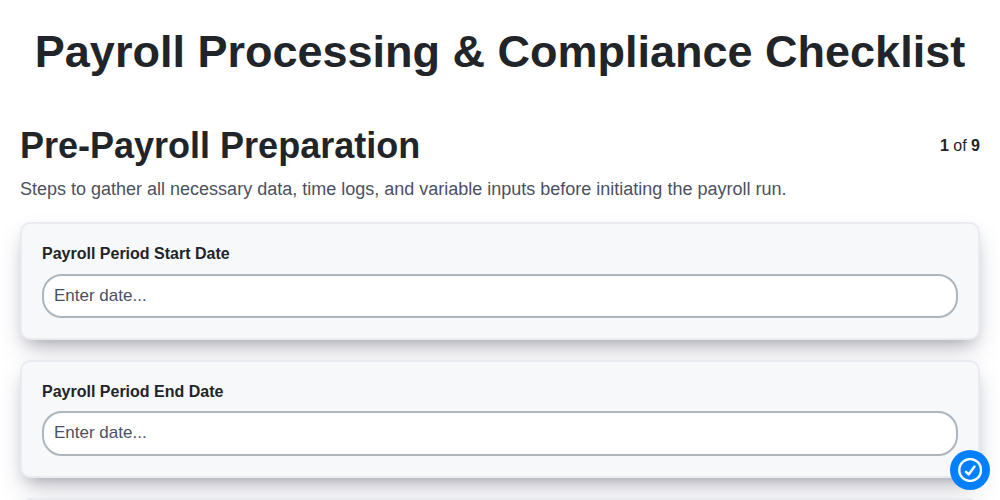
The Ultimate Payroll Processing & Compliance Checklist: A Step-by-Step Guide to Error-Free Payroll
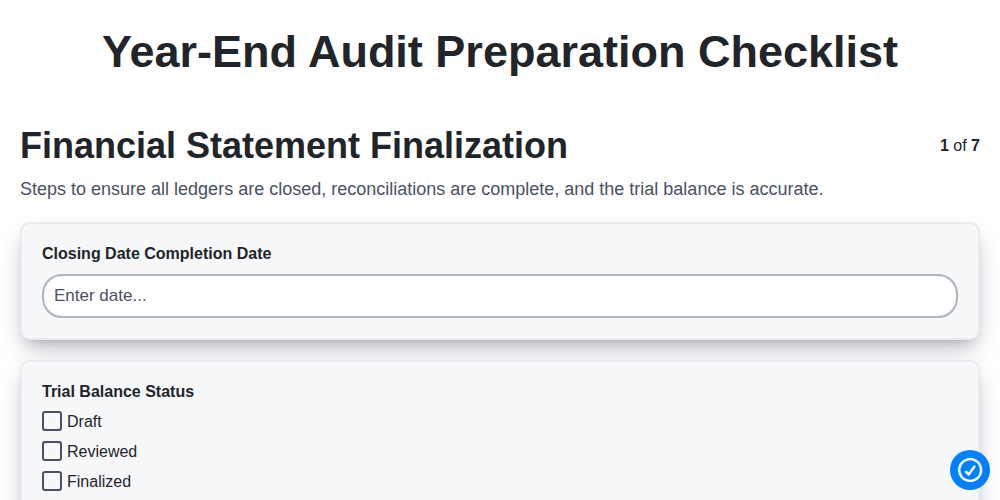
The Ultimate Year-End Audit Preparation Checklist: A Step-by-Step Guide to a Stress-Free Audit
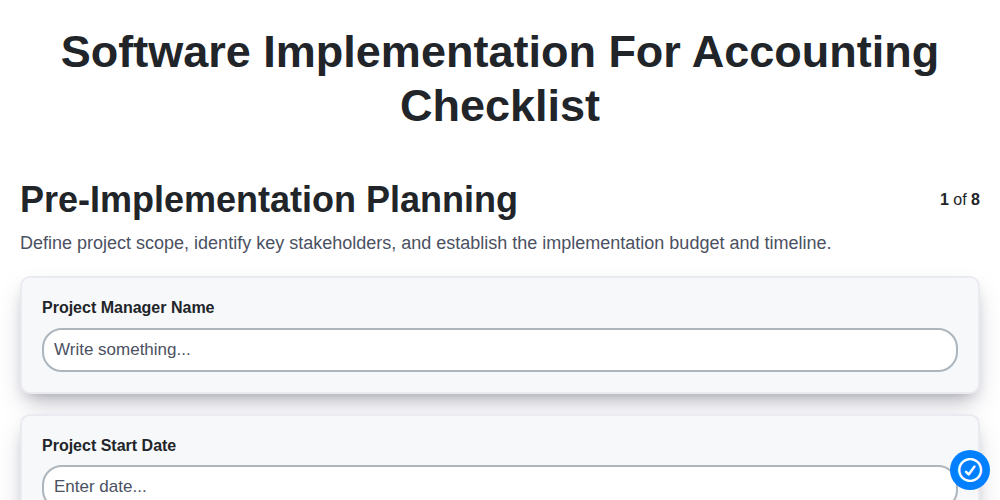
The Ultimate Software Implementation Checklist for Accounting Teams: A Step-by-Step Guide to a Seamless Transition
The Ultimate Inventory Valuation & Audit Checklist: A Step-by-Step Guide to Accuracy and Compliance
We can do it Together
Need help with
Accounting Management?
Have a question? We're here to help. Please submit your inquiry, and we'll respond promptly.