Mastering Ingredient Control: Your Food & Beverage BOM Checklist Template
Published: 12/10/2025 10:00 PM Updated: 12/14/2025 7:54 AM
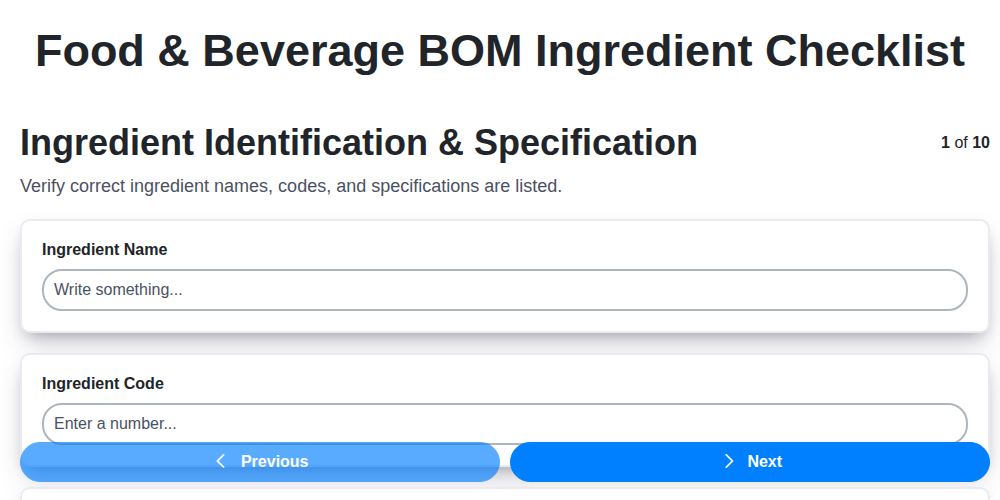
Table of Contents
- Introduction: Why a Food & Beverage Ingredient BOM is Crucial
- What is a Food & Beverage Bill of Materials (BOM)?
- Ingredient Identification & Specification: Defining Your Components
- Supplier Information & Approval: Building Reliable Partnerships
- Quantity & Unit of Measure: Precision in Procurement
- Allergen & Dietary Restrictions: Catering to Consumer Needs
- Regulatory Compliance (Labeling): Navigating the Legal Landscape
- Traceability & Lot Numbers: Ensuring Food Safety
- Cost & Pricing: Optimizing Your Budget
- Storage & Handling Requirements: Maintaining Quality
- Substitutions & Alternatives: Planning for Contingencies
- BOM Revision Control: Keeping Your Recipes Current
- Implementing Your Ingredient BOM Checklist: Best Practices
- Conclusion: Elevating Ingredient Control for Food & Beverage Success
- Resources & Links
TLDR: Feeling overwhelmed managing your food & beverage ingredients? This checklist template is your shortcut to organized, compliant ingredient control! It covers everything from supplier approval to allergen labeling and cost tracking, ensuring you're set up for consistent quality, reduced risk, and efficient operations. Download it and simplify your BOM management today!
Introduction: Why a Food & Beverage Ingredient BOM is Crucial
In the fast-paced and highly regulated world of food and beverage, meticulous ingredient management isn't just good practice-it's essential. A robust Bill of Materials (BOM) for your ingredients serves as the bedrock of quality control, consistency, and compliance. Think of it as your recipe's detailed, authoritative guide. Beyond just listing what goes into your product, a comprehensive ingredient BOM - or Ingredient BOM - establishes clear expectations for suppliers, ensures product integrity, and provides a vital safety net against recalls and regulatory issues. Without it, you risk inconsistencies in taste and texture, potential allergen contamination, and a complex, costly response to any problems that arise. This checklist provides a framework for building that critical foundation.
What is a Food & Beverage Bill of Materials (BOM)?
A Bill of Materials (BOM) is essentially a recipe, but for manufacturers. In the food and beverage industry, it's a comprehensive list of every ingredient needed to produce a finished product. It goes far beyond a simple list; it details the exact specifications, sourcing details, and handling instructions for each component. Think of it as the definitive guide for your production team, ensuring consistent quality and adherence to regulations. A well-crafted F&B BOM is more than just a document-it's the backbone of your production process, crucial for cost control, quality assurance, and regulatory compliance. It bridges the gap between recipe development and actual manufacturing, ensuring that the final product consistently meets expectations.
Ingredient Identification & Specification: Defining Your Components
A robust Food & Beverage Bill of Materials (BOM) starts with meticulous ingredient identification and specification. This isn't just about knowing you need sugar; it's about defining exactly what sugar you need. Think beyond the common name.
Here's what you need to cover:
- Full Chemical Name/Description: Go beyond sugar - specify Cane Sugar, Granulated, FCC Grade. This clarity eliminates ambiguity.
- Physical Characteristics: Detail the appearance (color, crystal size), texture, and any unique identifiers.
- Purity & Quality Standards: Reference specific industry standards (e.g., USP, FCC) and define acceptable purity levels. Don's be afraid to set stricter standards if your product demands it.
- Origin & Source: Where does the ingredient come from? Knowing the origin can be crucial for traceability and quality control.
- Detailed Specifications Sheet: Create a comprehensive document containing all of the above. This serves as a single source of truth for your team and suppliers.
Accurate ingredient identification and specification minimizes errors in purchasing, production, and ensures the final product meets your quality benchmarks.
Supplier Information & Approval: Building Reliable Partnerships
A robust Food & Beverage Bill of Materials (BOM) isn't just about listing ingredients; it's about ensuring you're sourcing them from reliable and vetted suppliers. This section of your checklist focuses on establishing and maintaining strong supplier relationships that contribute directly to product quality, consistency, and safety.
Beyond Just a Name: Don't just record your supplier's name. Capture essential details like their full legal name, address, contact person (with multiple backups!), and relevant certifications (e.g., HACCP, GMP, Organic). Maintaining updated contact information is critical for immediate communication in case of issues.
Approval Process: Implement a formal supplier approval process. This should include a risk assessment - considering factors like geographic location, financial stability, and past performance. Document this assessment. Initial audits (either your own or leveraging third-party certifications) should be conducted to verify supplier capabilities and adherence to your quality standards. Regularly scheduled re-evaluations are equally vital.
Contractual Agreements: Clearly defined contracts outlining quality expectations, pricing, delivery schedules, and dispute resolution processes safeguard your business and ensure consistent performance. Include clauses addressing product recalls and liability.
Performance Monitoring: Track supplier performance against agreed-upon metrics. This could involve assessing on-time delivery, product quality (through regular testing), and responsiveness to inquiries. Document any deviations and work with suppliers to implement corrective actions.
Maintaining Records: Keep meticulous records of supplier assessments, audit reports, contracts, and performance reviews. This documentation provides valuable insights for continuous improvement and serves as evidence of due diligence.
Quantity & Unit of Measure: Precision in Procurement
Accuracy in defining quantity and unit of measure is foundational to a reliable Food & Beverage Bill of Materials (BOM). A seemingly small error here can ripple through your entire operation, leading to overstocking, stockouts, wasted product, and ultimately, increased costs.
Beyond simply stating sugar or flour, your BOM needs to specify exactly how much is required. This includes:
- Precise Measurement: Use consistent units - grams, kilograms, pounds, ounces, liters, gallons - and always specify the unit. Avoid ambiguous terms like "a pinch" or "a handful."
- Recipe vs. Production: Distinguish between quantities needed for a single recipe batch and the scaled-up quantities for full production runs.
- Yield Considerations: Account for potential yield loss during processing. If you need 100 pounds of finished product, but anticipate a 10% loss during cooking, your BOM should reflect the need for 110 pounds of raw ingredients.
- Tolerance Levels: Define acceptable variance. For example, "Sugar: 500g +/- 2%". This acknowledges natural variations in ingredients while maintaining quality.
- Packaging & Delivery: Specify how the ingredient is to be delivered (e.g., 25lb bags, 5-gallon pails). This impacts storage and handling.
Failing to meticulously define quantity and unit of measure creates unnecessary risk and inefficiencies. A little extra time invested here pays dividends in operational effectiveness.
Allergen & Dietary Restrictions: Catering to Consumer Needs
In today's market, simply offering delicious food isn't enough. Consumers are increasingly aware of their dietary needs and restrictions, and they demand transparency and accuracy regarding ingredients. Failing to address these concerns can lead to serious consequences - from negative reviews and lost customers to legal liabilities.
Your Food & Beverage Bill of Materials (BOM) ingredient checklist must include a robust section dedicated to allergens and dietary restrictions. This isn't just about ticking a box; it's about creating a thorough and constantly updated record. Here's what this section should encompass:
- Comprehensive Allergen Identification: Go beyond the Big 9 (Milk, Eggs, Fish, Crustacean Shellfish, Tree Nuts, Peanuts, Wheat, Soy, Sesame). Consider less common allergens relevant to your product line and target market. Clearly identify if an ingredient contains, may contain, or is derived from an allergen.
- Dietary Flags: Document adherence to specific dietary requirements such as:
- Vegan: Ensure no animal products are present.
- Vegetarian: Specifically identify if the ingredient contains animal-derived ingredients (e.g., gelatin, rennet).
- Gluten-Free: Verify ingredients are certified gluten-free or meet defined gluten-free thresholds.
- Kosher/Halal: Record relevant certifications and compliance.
- Low-Sodium/Sugar/Fat: Document specific content levels.
- Supplier Confirmation: Require suppliers to provide allergen declarations and supporting documentation. This documentation should be regularly reviewed and updated.
- Cross-Contamination Risk Assessment: Evaluate the risk of cross-contamination during ingredient handling, processing, and packaging. Implement control measures to mitigate these risks.
- Consumer Communication Strategy: Determine how allergen and dietary information will be communicated to consumers (e.g., ingredient lists, product labels, website, point-of-sale materials).
Regulatory Compliance (Labeling): Navigating the Legal Landscape
Food and beverage labeling is far more than just listing ingredients. It's a complex web of regulations designed to protect consumers and ensure transparency. Failing to comply can result in hefty fines, recalls, and damage to your brand reputation.
Here's a breakdown of key considerations:
- Mandatory Information: Most jurisdictions require a list of ingredients in descending order by weight, net quantity of product, name and address of the manufacturer or distributor, and nutritional information (often in a standardized format).
- Allergen Declaration: Allergen labeling is particularly critical. Regulations dictate specific wording and placement of allergen declarations (e.g., Contains: Milk, Soy). Be absolutely certain your ingredients are accurately identified and flagged for potential allergens.
- Nutritional Facts Panel: Formatting, font size, and required nutrients vary based on location. Stay updated on the latest requirements and ensure your panel is accurate and easily readable.
- Country of Origin Labeling (COOL): Some regions require labeling the country of origin for certain ingredients.
- Claims and Declarations: Be extremely cautious with any claims made on your labels (e.g., organic, gluten-free, low sodium). These claims must be substantiated and comply with specific standards.
- Language Requirements: Labeling might need to be in multiple languages depending on the region where the product is sold.
- Changes & Updates: Regulations evolve constantly. Subscribe to industry newsletters, consult with regulatory experts, and regularly review your labeling practices to maintain compliance.
Pro-Tip: Develop a robust internal review process involving quality assurance and legal teams to verify label accuracy before production.
Traceability & Lot Numbers: Ensuring Food Safety
In the food and beverage industry, traceability isn't just a best practice; it's a critical safety net. A robust ingredient BOM (Bill of Materials) checklist must include stringent procedures for tracking ingredients from origin to finished product. This means meticulously documenting lot numbers for every ingredient, linking them back to their suppliers, and maintaining a clear chain of custody.
Why is this so vital? Let's consider a scenario: a recall notice is issued due to contamination. Without accurate traceability, pinpointing the affected batch and swiftly removing it from the supply chain becomes a chaotic and potentially dangerous undertaking. Proper lot number tracking allows you to isolate the problem quickly, minimizing the impact on consumers and protecting your brand reputation.
Your ingredient BOM should mandate the following:
- Supplier Lot Number Recording: Require suppliers to provide lot numbers and ensure these are consistently recorded on your ingredient receipts and within your BOM.
- Internal Lot Number Assignment: Implement an internal lot numbering system to link supplier lot numbers to your production batches.
- Record Keeping: Maintain detailed records linking ingredients to their respective lot numbers, suppliers, and receiving dates. This includes batch records from processing and production stages.
- Expiration Date Tracking: Consider including expiration dates alongside lot numbers, especially for perishable ingredients.
- Regular Audits: Periodically audit your traceability systems to ensure accuracy and adherence to procedures.
Beyond safety, robust traceability can also help with quality control, identifying trends in ingredient performance, and resolving disputes with suppliers. A comprehensive ingredient BOM checklist focused on traceability is an investment in your food safety program and long-term business success.
Cost & Pricing: Optimizing Your Budget
Ingredient costs are a significant driver of your overall food and beverage profitability. Simply accepting supplier quotes isn't enough; a proactive and thorough cost & pricing analysis is essential. This checklist item goes beyond just the purchase price.
Breakdown the Cost: Consider the total landed cost. This includes:
- Base Ingredient Cost: The price per unit from your supplier.
- Shipping & Transportation: Freight costs, fuel surcharges, and potential import duties.
- Handling Fees: Any charges associated with receiving and processing the ingredient.
- Storage Costs: Factor in your warehouse costs for holding the ingredient.
- Waste & Spoilage: Account for ingredient loss due to spoilage, damage, or trimming.
Negotiation & Volume Discounts: Regularly review supplier contracts and leverage volume discounts. Are you consistently buying the optimal quantity to secure the best price without overstocking? Explore alternative suppliers to foster competition and ensure you're getting market-competitive rates.
Price Fluctuations: Food and beverage ingredients are often subject to price volatility due to seasonality, weather patterns, and global market forces. Track these fluctuations and build contingencies into your pricing strategy. Consider hedging strategies or contracts that offer price stability.
Cost-Benefit Analysis of Substitutions: While we cover substitutions elsewhere on this checklist, always factor in the cost implications. A cheaper substitute might offer cost savings, but a change in quality or consumer perception could negate those benefits.
Regular Review & Benchmarking: Don't set it and forget it. Establish a schedule for regularly reviewing ingredient costs and benchmarking them against industry averages. This proactive approach allows you to identify potential savings and adjust your sourcing strategies accordingly.
Storage & Handling Requirements: Maintaining Quality
Proper storage and handling are crucial to preserving the quality, safety, and efficacy of your food & beverage ingredients. Deviations from recommended practices can lead to spoilage, degradation, and even compromise the final product. This section details essential considerations for maintaining ingredient integrity.
Temperature Control: Many ingredients are highly sensitive to temperature fluctuations. Clearly define ideal storage temperatures (refrigerated, frozen, ambient) for each ingredient, and consistently monitor conditions. Invest in reliable thermometers and data loggers to ensure adherence. Document any temperature excursions and their potential impact.
Humidity Management: Excess moisture can promote microbial growth and affect texture. Control humidity levels, particularly for hygroscopic ingredients like sugars and starches. Utilize desiccant packs or humidity-controlled environments where necessary.
Light Sensitivity: Certain ingredients (oils, vitamins, some colorants) are degraded by light exposure. Store these in opaque containers and in areas away from direct sunlight.
Container Integrity: Ensure containers are airtight and undamaged to prevent contamination and moisture absorption. Regularly inspect and replace damaged packaging.
Cross-Contamination Prevention: Implement strict procedures to prevent cross-contamination between ingredients, particularly allergens. Dedicated storage areas and utensils are vital. FIFO (First-In, First-Out) inventory management is also key.
Pest Control: A robust pest control program is essential to protect ingredients from infestation. Regularly inspect storage areas and implement preventative measures.
Handling Precautions: Provide clear instructions for handling ingredients to minimize damage and contamination. This includes appropriate lifting techniques and the use of clean equipment. Training for all personnel involved in ingredient handling is paramount.
Documentation: Meticulously document all storage and handling procedures, along with any deviations and corrective actions taken.
Substitutions & Alternatives: Planning for Contingencies
Unexpected disruptions happen. A key supplier might face production issues, a particular ingredient could become unavailable due to weather events, or market fluctuations might drastically impact pricing. Having a proactive approach to ingredient substitutions and alternatives isn't just about problem-solving - it's about maintaining consistent product quality and minimizing costly delays.
Your Food & Beverage Bill of Materials (BOM) should proactively address potential substitutions. This involves more than just knowing what could replace an ingredient; it requires rigorous evaluation. Consider these points:
- Functional Equivalence: Does the substitute perform the same function in the product (taste, texture, color, stability, etc.)? Document these assessments.
- Impact on Formulation: How will the substitution affect the overall formulation? Will adjustments to other ingredients be necessary?
- Nutritional Profile: Ensure any substitution doesn't significantly alter the nutritional content, which could impact labeling requirements.
- Cost Analysis: Evaluate the cost difference between the primary ingredient and potential substitutes. Factor in potential processing or formulation adjustments that might impact overall cost.
- Approved List: Maintain a clearly defined "Approved Substitutions" list within your BOM, with details on their suitability and any necessary adjustments.
- Testing & Validation: Thoroughly test and validate any substitution before it's implemented in production. Document the testing results.
- Communication: Communicate approved substitutions to all relevant teams (procurement, production, quality control, marketing).
Having this level of detail in your BOM significantly reduces the risk associated with ingredient unavailability and allows for swift, informed decisions when unexpected situations arise.
BOM Revision Control: Keeping Your Recipes Current
In the dynamic world of food and beverage, recipes evolve. Ingredient availability changes, costs fluctuate, regulations update, and product improvements are constantly sought. Without a robust system for managing these changes, your Bill of Materials (BOM) can quickly become outdated, leading to inconsistencies in production, quality control failures, and even costly errors.
BOM revision control is more than just numbering versions; it's a structured process for documenting, approving, and tracking changes to your ingredient list. Here's why it's critical:
- Maintain Accuracy: Ensures everyone - from purchasing to production - is using the correct and current ingredient list.
- Compliance: Provides an audit trail to demonstrate adherence to regulatory requirements and internal quality standards.
- Problem Solving: When issues arise (e.g., taste variation, recall potential), you can easily trace back to previous versions to identify the source of the change.
- Collaboration: Facilitates seamless communication and collaboration between R&D, purchasing, production, and quality teams.
Best Practices for BOM Revision Control:
- Clear Versioning System: Implement a consistent numbering system (e.g., V1.0, V1.1, V2.0) and clearly indicate the date of each revision.
- Change Request Process: Require a formal change request process with documentation outlining the reason for the change, the impact assessment, and the approval authority.
- Approval Workflow: Establish a defined workflow for reviewing and approving BOM revisions, involving relevant stakeholders.
- Documentation: Meticulously document all changes, including who made them, when, and why. Include a brief description of the modification.
- Accessibility: Ensure all versions of the BOM are easily accessible to authorized personnel. Consider using a centralized, digital system.
- Training: Train your team on the BOM revision control process to ensure consistent adherence.
Neglecting BOM revision control can have serious consequences. Embrace a structured approach to keep your recipes accurate, compliant, and consistently high quality.
Implementing Your Ingredient BOM Checklist: Best Practices
Creating a robust Ingredient BOM checklist is just the first step. Successfully integrating it into your food and beverage production process requires careful planning and consistent execution. Here's how to maximize its effectiveness:
Training is Key: Ensure all relevant personnel - purchasing, production, quality control, and even potentially sales - understand the purpose of the checklist and their role in its completion. Simple, clear training sessions covering the criteria for each section will reduce errors and ensure compliance.
Digital is Often Better: While a paper checklist can work, transitioning to a digital BOM system provides numerous advantages. Digital systems offer real-time data access, automated updates, version control, and enhanced reporting capabilities. This minimizes manual errors, streamlines processes, and facilitates better collaboration across departments.
Establish Clear Approval Workflows: Don't just have the checklist; enforce its use. Define a clear approval workflow for each ingredient. This should outline who is responsible for validating each section of the checklist and who has the authority to approve the ingredient for use.
Regular Review & Updates: Food and beverage regulations, supplier practices, and even ingredient availability are constantly evolving. Schedule regular reviews (at least annually, or more frequently for high-risk ingredients) to update your checklist and ensure it remains current.
Integrate with Existing Systems: Ideally, your Ingredient BOM checklist should integrate with your ERP, inventory management, and supplier relationship management systems. This provides a unified view of your ingredient data and minimizes data silos.
Document Exceptions: Sometimes, deviations from the checklist are unavoidable. When exceptions occur, document them thoroughly, including the reason for the deviation, any mitigating actions taken, and who approved the exception. This provides valuable insights for future decision-making and risk assessment.
Feedback Loop: Encourage feedback from those using the checklist. Their practical experience will highlight areas for improvement and ensure the checklist remains relevant and user-friendly.
Conclusion: Elevating Ingredient Control for Food & Beverage Success
Implementing a robust Food & Beverage Bill of Materials (BOM) Ingredient Checklist, as detailed above, isn't just about ticking boxes - it's about building a foundation for operational excellence and brand trust. By systematically addressing ingredient identification, supplier vetting, compliance, and more, you're proactively mitigating risks, streamlining processes, and ultimately, enhancing the quality and safety of your products. This commitment to detail resonates with increasingly discerning consumers and regulatory bodies alike. Don't view this checklist as a burden; see it as an investment in a more resilient, efficient, and successful food & beverage operation. The journey to elevated ingredient control starts now.
Resources & Links
- Food Safety.gov: The U.S. government's food safety website. Offers guidance on food safety regulations, recalls, and best practices - vital for understanding your responsibilities in ingredient control.
- U.S. Food and Drug Administration (FDA): The FDA website provides extensive information on food labeling regulations, ingredient approvals, and food safety standards. A key resource for regulatory compliance.
- USDA Food Safety and Inspection Service (FSIS): If your ingredients or finished products involve meat or poultry, the FSIS provides specific guidance on inspection, labeling, and safety protocols.
- National Institute of Standards and Technology (NIST): NIST develops and promotes measurement standards and practices, which is relevant for accurate ingredient quantity and unit of measure definitions, crucial for BOM accuracy.
- FARE (Food Allergy Research & Education): A leading resource for information on food allergies and allergen labeling requirements. Essential for allergen identification and specification within your BOM.
- Gluten Intolerance Group (GIG): Provides information and resources on gluten-free labeling and ingredient verification for catering to dietary restrictions.
- Association for Contract Manufacturing International (ACMI): Relevant if using co-packers or contract ingredient suppliers. ACMI provides resources on ingredient sourcing and quality assurance.
- QSAS (Quality Systems Alliance): QSAS provides comprehensive food safety training and auditing programs, useful for ensuring ingredient supplier compliance and traceability.
- My Food Data: A valuable online resource for nutritional information, ingredient composition, and regulatory information - helpful for defining ingredient specifications and calculating nutritional labels.
- Specialty Food Association: Provides resources and insights specific to specialty food manufacturers, covering topics like ingredient sourcing, regulatory compliance, and market trends.
- Labeling Guide: Offers detailed information on food labeling requirements worldwide - crucial for navigating the legal landscape of ingredient labeling.
- Supply Chain Link: Provides news and analysis on supply chain management, relevant for assessing supplier reliability and managing ingredient sourcing risks.
- American Society for Quality (ASQ): Provides resources and training on quality management systems - helpful for establishing and maintaining robust ingredient control processes.
- International Organization for Standardization (ISO): Provides information regarding standards, including ISO 22000 (Food Safety Management Systems), which may be relevant for ingredient BOM maintenance.
Frequently Asked Questions
What is a Bill of Materials (BOM) and why is it important for food & beverage businesses?
A Bill of Materials (BOM) is a comprehensive list of all the ingredients, components, and raw materials required to manufacture a specific food or beverage product. It's crucial for ingredient control, cost management, recipe consistency, quality assurance, and regulatory compliance - essentially, it's your recipe's instruction manual for production.
What are the key components of a food & beverage BOM checklist?
A complete BOM checklist typically includes: ingredient name, supplier information, quantity per batch, cost per unit, lot numbers, shelf life/expiration dates, allergens, certifications (e.g., organic, kosher, halal), specifications, storage instructions, and potential substitutions.
Who should use this BOM checklist template?
This template is designed for anyone involved in food & beverage production, including: product developers, production managers, procurement specialists, quality control teams, and food safety personnel. It's beneficial for both small startups and large manufacturing facilities.
How can this template help me improve ingredient control?
The template provides a structured approach to documenting and tracking every ingredient. This allows you to monitor usage, identify discrepancies, manage supplier performance, ensure traceability, and prevent errors in production, leading to better ingredient control.
Can I customize this BOM checklist template?
Yes! The template is designed to be flexible. You can add or remove fields to suit your specific product requirements, company policies, and regulatory needs. The key is to ensure all relevant information is captured for your process.
What is traceability and how does the BOM checklist contribute to it?
Traceability is the ability to track ingredients from origin to finished product. The BOM checklist, with its inclusion of lot numbers, supplier information, and date tracking, provides a foundation for robust traceability throughout your supply chain, vital for food safety recalls and regulatory compliance.
What types of allergens should I include in my BOM checklist?
You should include all allergens that are legally required to be declared (e.g., milk, eggs, fish, shellfish, tree nuts, peanuts, wheat, and soybeans) and any other potential allergens that may be present, even in trace amounts, due to shared equipment or processing areas.
How often should I review and update my BOM checklists?
BOMs are not static documents. They should be reviewed and updated regularly, ideally every six months or whenever there are changes to ingredients, suppliers, formulations, or regulations. Consistent review ensures accuracy and relevance.
What is a 'specification' in the context of a BOM checklist, and why is it important?
A specification defines the exact quality and characteristics of an ingredient (e.g., sugar: crystal size, purity, color). Including specifications prevents variations in ingredient quality, which impacts the final product's taste, texture, and appearance.
How can I use the BOM checklist to manage food costs?
By meticulously tracking ingredient costs within the BOM, you can calculate the cost of goods sold (COGS) for each product, identify areas for cost reduction (e.g., sourcing cheaper alternatives, negotiating better supplier contracts), and optimize pricing strategies.
Found this Article helpful?
Comments
There are no comments yet. Be the first to add one!
BOM - Bill of Materials Management Solution Demo
Struggling with inaccurate BOMs & costly errors? ChecklistGuro provides a centralized BOM Management solution, connecting your design, engineering, & manufacturing teams for improved collaboration and control. Simplify operations & boost efficiency.
Related Articles
The Ultimate Logistics BOM Packaging Checklist: Ensuring Safe & Efficient Shipments
Mastering Leather Manufacturing: Your Tannery BOM & Compliance Checklist
Mastering Your BOM: A Comprehensive Checklist Template for Success
Ensuring Success: Your Oil & Gas BOM Component Approval Checklist Guide
Navigating Medical Device BOM Regulatory Compliance: Your Essential Checklist
The Ultimate Retail BOM Product Definition Checklist: A Step-by-Step Guide
Ensuring Quality: Your Rubber Manufacturing Polymer BOM Checklist Guide
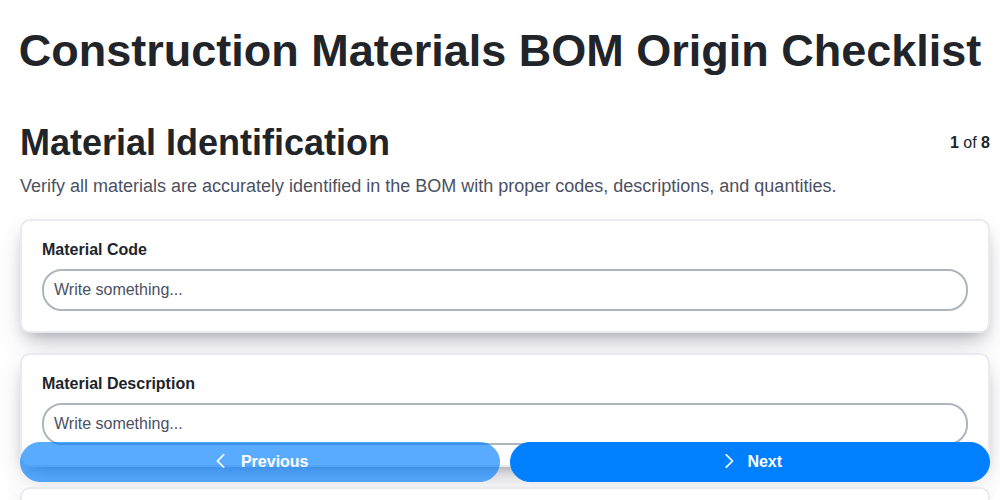
Decoding Origins: Your Construction Materials BOM Origin Checklist Guide
We can do it Together
Need help with
Bill of Materials (BOM) Management?
Have a question? We're here to help. Please submit your inquiry, and we'll respond promptly.