Ensuring Sustainable Forest Products: Your BOM Checklist for Responsible Sourcing
Published: 10.12.2025 22:00 Updated: 14.12.2025 07:55
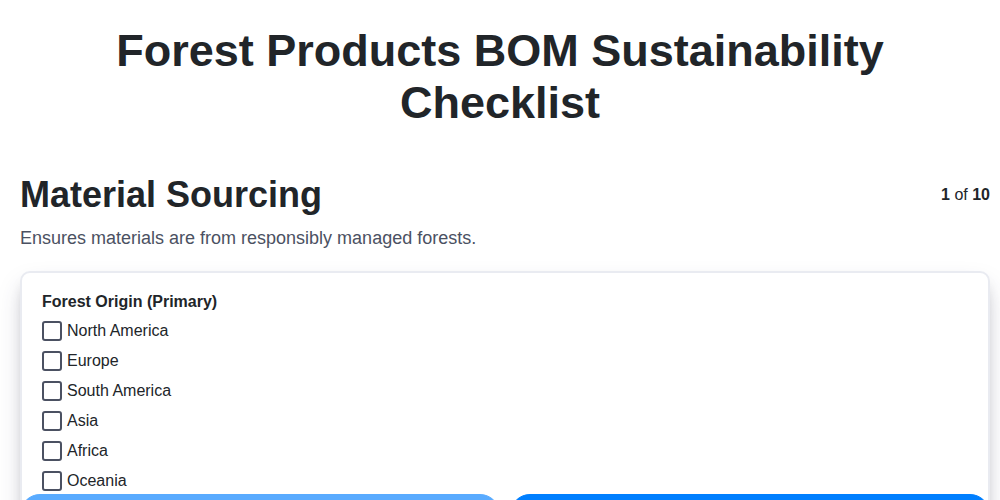
Table of Contents
- Introduction: Why a Forest Products BOM Sustainability Checklist Matters
- 1. Material Sourcing: Tracing Your Forest Products Back to the Source
- 2. Chain of Custody Documentation: Maintaining a Clear Paper Trail
- 3. Forest Certification: Recognizing Credible Standards (FSC, PEFC, etc.)
- 4. Legal Compliance: Navigating Regulations and Permits
- 5. Environmental Impact Assessment: Minimizing Harm to Ecosystems
- 6. Social Responsibility: Protecting Workers and Communities
- 7. Transportation & Logistics: Reducing Carbon Footprint
- 8. Packaging Sustainability: Minimizing Waste and Maximizing Recyclability
- 9. Waste Management: Responsible Disposal and Recycling
- 10. Supplier Code of Conduct: Setting Expectations for Your Partners
- 11. Risk Assessment & Mitigation
- 12. Continuous Improvement & Auditing
- Conclusion: Building a Sustainable Forest Products Supply Chain
- Resources & Links
TLDR: Want to make sure your forest products are truly sustainable? This checklist guides you through every step - from where materials come from and how they's tracked (Chain of Custody), to environmental impact, worker rights, and even packaging. Use it to assess your Bill of Materials (BOM) and ensure responsible sourcing that protects forests and communities.
Introduction: Why a Forest Products BOM Sustainability Checklist Matters
The beauty and utility of forest products - from lumber and paper to furniture and flooring - often belie a complex supply chain. Ensuring these products are sourced and processed responsibly is no longer a 'nice-to-have' but a business imperative. Consumers are increasingly demanding transparency and sustainability, investors are scrutinizing ESG (Environmental, Social, and Governance) performance, and regulations are tightening. A robust Bill of Materials (BOM) sustainability checklist for forest products isn't just about ticking boxes; it's about building trust, mitigating risk, and contributing to a healthier planet. This checklist provides a systematic approach to evaluating and improving the sustainability of your forest product BOM, covering everything from the origin of the raw materials to the disposal of waste, ensuring accountability and promoting responsible forestry practices throughout the entire lifecycle. Ignoring these considerations can lead to reputational damage, supply chain disruptions, and potential legal ramifications. This post details the crucial steps within this checklist, providing a clear pathway to a more sustainable and resilient business.
1. Material Sourcing: Tracing Your Forest Products Back to the Source
Understanding where your forest products originate is the bedrock of any robust sustainability program. It's not enough to simply know you're using wood or paper; you need to know which forest it came from, how it was harvested, and who was involved. This level of transparency is crucial for ensuring responsible forestry practices and mitigating potential risks.
This section of the sustainability checklist focuses on the initial stages of the supply chain. We're talking about a detailed audit trail that allows you to track materials back to their origin. Key considerations here include:
- Geographic Origin: Where are the forests your materials are sourced from? Knowing the location allows you to assess the region's environmental regulations and potential risks (e.g., deforestation, illegal logging).
- Species Identification: What specific tree species are being used? Understanding the species helps evaluate its sustainability, growth rate, and vulnerability to disease or climate change.
- Harvesting Methods: Were the trees harvested through selective cutting, clear-cutting, or another method? Each method carries different environmental consequences.
- Transparency and Documentation: Insist on complete transparency from your suppliers. They should be able to readily provide information about the origin of their materials.
Without a solid foundation in material sourcing, the rest of your sustainability efforts are built on shaky ground.
2. Chain of Custody Documentation: Maintaining a Clear Paper Trail
Ensuring the sustainability of forest products isn't just about where they originate, but also about tracking them every step of the way. This is where Chain of Custody (CoC) documentation becomes absolutely critical. Think of it as a detailed, verifiable paper trail that follows your forest products from the forest floor to your customer's doorstep.
A robust CoC system demonstrates that the products you're selling are genuinely derived from sustainably managed forests. This isn't just a feel-good measure; it's a legal requirement for many certifications and builds consumer trust.
What does good CoC documentation look like?
- Detailed Records: Meticulous records must be kept at each stage of the process - harvesting, primary processing, manufacturing, and distribution. This includes quantities of wood entering and leaving facilities, the source of that wood, and the final product derived.
- Unique Identification: Each batch or lot of material should ideally be uniquely identified, allowing for complete traceability.
- Regular Audits: Regular internal and external audits are essential to verify the accuracy and integrity of the CoC system. These audits confirm that the documented procedures are being followed correctly.
- Segregation Practices: If you handle both certified and non-certified materials, clear segregation practices must be in place to prevent mixing and maintain the integrity of the certified product stream.
- Retention of Records: Maintaining accurate records for a defined period (often several years) is crucial for demonstrating compliance and responding to audit inquiries.
Why is it so important?
A well-maintained CoC provides:
- Verification of Claims: Provides concrete proof to back up your sustainability claims.
- Consumer Confidence: Assures consumers that the products they are buying are truly sustainable.
- Regulatory Compliance: Satisfies the requirements of various forest certification schemes and legal regulations.
- Risk Mitigation: Helps to identify and address any vulnerabilities or potential issues within your supply chain.
Without a clear and verifiable Chain of Custody, even the most sustainably managed forests risk having their products tainted by unsustainable practices somewhere along the line.
3. Forest Certification: Recognizing Credible Standards (FSC, PEFC, etc.)
Verifying the source of your forest products goes beyond simply knowing where they came from; it's about ensuring they were harvested responsibly. Forest certification schemes provide independent verification that forests are managed sustainably, encompassing environmental, social, and economic considerations. These certifications offer a powerful signal to consumers and businesses alike, demonstrating a commitment to responsible sourcing.
While various certification schemes exist, some are more widely recognized and considered more credible than others. Here's a breakdown of a few key players:
Forest Stewardship Council (FSC): Widely regarded as the gold standard, FSC certification requires strict adherence to principles and criteria covering forest management, chain of custody, and environmental protection. It's known for its robust and independent auditing process. Look for the FSC logo, which signifies a product has met these rigorous standards.
Programme for the Endorsement of Forest Certification (PEFC): PEFC is a global umbrella organization that endorses national forest certification systems. It promotes sustainable forest management by recognizing schemes that align with its global principles and criteria. PEFC is often seen as more accessible to smaller forest owners.
Sustainable Forestry Initiative (SFI): Primarily used in North America, SFI certification focuses on responsible forest management practices and promotes biodiversity, wildlife habitat, and community involvement.
Other Schemes: While less common internationally, other certifications may exist within specific regions. It's crucial to research and understand the standards behind any certification claimed.
Beyond the Logo: Don't just look for the logo! Investigate the certifying body and its reputation. Understanding the differences in standards and auditing processes will help you select forest products aligned with your sustainability goals. Ask suppliers for evidence of their certification and verification audits.
4. Legal Compliance: Navigating Regulations and Permits
Ensuring legal compliance is paramount for any company utilizing forest products. This goes far beyond simply avoiding fines; it demonstrates a commitment to responsible forestry practices and builds trust with consumers. The legal landscape surrounding forest products is complex and varies significantly by region, country, and even local jurisdiction.
This section focuses on proactive steps to guarantee adherence to relevant laws and regulations. This includes, but isn't limited to:
- Understanding National and International Laws: Familiarize yourself with legislation like the Lacey Act (in the US), the EU Timber Regulation (EUTR), and similar regulations in your operational areas. These often address illegal logging, timber trafficking, and import/export restrictions.
- Import/Export Permits & Documentation: Meticulously track all import and export permits required for the movement of forest products. Maintain detailed records of these documents, ensuring they are readily available for audits.
- Customs Compliance: Understand and adhere to customs regulations, including tariff classifications and declaration requirements. Incorrect classification can lead to significant penalties.
- Local Regulations: Don't overlook regional and local ordinances related to forestry activities, harvesting practices, and transportation of materials.
- Staying Updated: Laws and regulations are subject to change. Implement a system for monitoring legal updates and adapting your practices accordingly. Subscribe to relevant industry alerts and engage with legal counsel specializing in forestry.
- Due Diligence Records: Maintain comprehensive records demonstrating your due diligence efforts in verifying legal compliance throughout your supply chain.
Failing to address legal compliance poses serious risks, including legal repercussions, reputational damage, and supply chain disruptions. Investing in expert legal advice and implementing robust tracking and documentation procedures is crucial.
5. Environmental Impact Assessment: Minimizing Harm to Ecosystems
A thorough Environmental Impact Assessment (EIA) is critical for ensuring the responsible sourcing of forest products. This isn't just about ticking a box; it's about understanding and actively minimizing the impact your sourcing has on the environment. The EIA should go beyond simply identifying potential negative impacts; it should propose mitigation strategies and monitor their effectiveness.
Here's what a robust EIA for forest products should include:
- Biodiversity Impact: Assessing the effect on local flora and fauna, including endangered or protected species. This requires understanding the ecosystem's sensitivity and potential habitat disruption.
- Water Resources: Evaluating the impact on water quality and availability, considering factors like erosion, sedimentation, and chemical runoff.
- Soil Health: Examining the effect on soil fertility, structure, and erosion risk due to harvesting and processing activities.
- Carbon Footprint: Analyzing greenhouse gas emissions throughout the entire product lifecycle, from forest management to transportation. Consider opportunities for carbon sequestration and reduction.
- Landscape Connectivity: Evaluating the impact on wildlife corridors and assessing fragmentation caused by harvesting roads and other infrastructure.
- Monitoring & Reporting: Implementing a system to regularly monitor environmental indicators and publicly report findings. Adaptation strategies should be in place to respond to unforeseen consequences.
By prioritizing a comprehensive EIA, businesses can demonstrate a commitment to sustainable practices and contribute to the preservation of vital forest ecosystems.
6. Social Responsibility: Protecting Workers and Communities
The sourcing of forest products isn't just about the trees; it's fundamentally about the people involved - the workers in the forests, the communities that depend on them, and the Indigenous populations whose ancestral lands may be impacted. A robust sustainability checklist must address social responsibility, moving beyond simple regulatory compliance to actively promote ethical and equitable practices.
This section of our checklist focuses on ensuring fair labor conditions, respecting human rights, and fostering positive relationships with local communities. We're looking for evidence of:
- Fair Wages and Safe Working Conditions: Are workers paid a living wage? Are safety protocols rigorously enforced and consistently followed? Are workers provided with adequate training and personal protective equipment?
- Freedom of Association and Collective Bargaining: Do workers have the right to form and join unions or other worker organizations?
- Indigenous Rights and Free, Prior, and Informed Consent (FPIC): This is critical. We require confirmation that Indigenous communities have been consulted and provided with Free, Prior, and Informed Consent (FPIC) regarding any forestry activities impacting their lands and resources. This goes beyond simple consultation - it's about respecting their right to say no and ensuring their interests are genuinely considered.
- Community Engagement and Benefit Sharing: Forestry operations should contribute positively to the wellbeing of surrounding communities. This can involve local employment opportunities, infrastructure development, or supporting community-led initiatives. Evidence of transparent and equitable benefit-sharing agreements is essential.
- Respect for Human Rights: A commitment to upholding international human rights standards, including the prevention of forced labor, child labor, and discrimination, is non-negotiable.
By prioritizing social responsibility, we're not just promoting sustainable forestry; we're contributing to a more just and equitable world.
7. Transportation & Logistics: Reducing Carbon Footprint
The journey of forest products from the forest to the consumer often involves significant distances and various modes of transport. This phase presents a critical opportunity to minimize environmental impact. A truly sustainable BOM (Bill of Materials) considers the last mile just as much as the origin.
Here's how to improve transportation & logistics sustainability within your forest products BOM:
- Modal Shift: Prioritize lower-emission transport options. Can shipments be moved from trucks to rail or ships where feasible? While truck transport is often necessary for final delivery, exploring alternatives for long-haul journeys can make a substantial difference.
- Route Optimization: Utilize route planning software to identify the most efficient routes, minimizing mileage and fuel consumption. Consider factors like traffic congestion and elevation changes.
- Vehicle Efficiency: Encourage suppliers to invest in fuel-efficient vehicles, including electric or hybrid options where appropriate. Regular vehicle maintenance is also key to ensuring optimal fuel economy.
- Consolidation & Collaboration: Consolidate shipments whenever possible to reduce the number of trips required. Collaborate with other companies to share transport resources and maximize vehicle utilization.
- Local Sourcing: Where possible, prioritize suppliers located closer to processing facilities and end markets to reduce transportation distances.
- Carbon Offset Programs: As a transitional strategy, consider investing in reputable carbon offset programs to compensate for unavoidable emissions from transportation. However, offset programs should complement, not replace, efforts to directly reduce emissions.
By actively addressing transportation & logistics within your forest products BOM, you contribute to a more environmentally responsible supply chain.
8. Packaging Sustainability: Minimizing Waste and Maximizing Recyclability
Packaging plays a crucial role in the journey of forest products, and unfortunately, it often contributes significantly to environmental impact. A truly sustainable BOM (Bill of Materials) incorporates a rigorous assessment of packaging across the entire supply chain. This isn't just about using less; it's about choosing the right materials and designs.
Here's what to consider:
- Material Selection: Prioritize recycled content materials (post-consumer recycled content is ideal) for boxes, pallets, wrapping, and any other packaging components. Explore alternatives to traditional plastics, like biodegradable or compostable options derived from plant-based sources.
- Reduce Packaging Volume: Optimize packaging dimensions to minimize the amount of material used. This can involve careful analysis of product sizes and shapes, and exploring innovative packaging designs that utilize space efficiently.
- Design for Recyclability: Ensure packaging is easily recyclable by avoiding mixed materials or complex designs that hinder the recycling process. Clear labeling indicating recyclability is essential for consumer understanding.
- Reusable Packaging: For certain product types, consider the feasibility of implementing reusable packaging systems, such as pallets or crates, that can be returned and reused multiple times.
- Minimizing Waste Generation: Aim to reduce packaging waste generated at all stages, from manufacturing to consumer use.
- Assess Carbon Footprint: Consider the carbon footprint associated with the packaging materials, transportation, and end-of-life disposal.
By prioritizing packaging sustainability, you're not just reducing waste - you're reinforcing your commitment to responsible forest product sourcing and contributing to a more circular economy.
9. Waste Management: Responsible Disposal and Recycling
Forest product manufacturing generates waste - from wood scraps and sawdust to packaging materials and processing chemicals. A robust waste management program isn't just about minimizing environmental impact; it's about resource efficiency and contributing to a circular economy.
Our sustainability checklist emphasizes a layered approach to waste management. This goes beyond simply sending waste to landfill. We prioritize the following:
- Waste Reduction at the Source: Identifying opportunities to minimize waste generation throughout the production process. This might involve optimizing cutting patterns, improving equipment efficiency, and finding alternative uses for byproducts.
- Material Recovery & Recycling: Implementing comprehensive recycling programs for all recyclable materials, including paper, cardboard, plastics, and metals. We encourage closed-loop recycling where possible, reusing materials back into the production cycle.
- Composting Organic Waste: Utilizing composting facilities for organic waste like sawdust, bark, and wood chips. This creates valuable soil amendments and reduces landfill burden.
- Energy Recovery (Where Appropriate): Exploring options for energy recovery from non-recyclable waste through processes like biomass combustion, ensuring strict adherence to emissions regulations.
- Hazardous Waste Management: Implementing rigorous protocols for the safe handling, storage, and disposal of any hazardous waste generated, complying with all applicable regulations.
- Waste Tracking and Reporting: Maintaining detailed records of waste generation, recycling rates, and disposal methods for continuous improvement and transparency.
By actively managing our waste stream, we minimize environmental harm, conserve resources, and contribute to a more sustainable future for forest products.
10. Supplier Code of Conduct: Setting Expectations for Your Partners
Sustainability isn't just about your own operations; it's about extending those values throughout your supply chain. A robust Supplier Code of Conduct is a crucial component of any Forest Products Bill of Materials (BOM) sustainability checklist. It's more than just a document - it's a clear articulation of your expectations for ethical and responsible practices from those you partner with.
This code should outline your requirements relating to environmental protection, labor rights, ethical business dealings, and transparency. Specifically, it should address issues like deforestation, forced labor, fair wages, safe working conditions, and adherence to local laws.
Don't assume your suppliers share your values. Explicitly stating your expectations provides a framework for accountability. Regularly review supplier compliance with this code, through audits, self-assessments, and ongoing dialogue. A well-defined and actively enforced Supplier Code of Conduct strengthens your entire Forest Products BOM's sustainability profile and minimizes reputational risks. Remember, the responsibility for sustainable sourcing extends to everyone involved in bringing your products to market.
11. Risk Assessment & Mitigation
Sustainability isn't just about ticking boxes; it's about proactively identifying and minimizing potential risks that could undermine your commitment. This section focuses on rigorously assessing those risks throughout the entire Forest Products Bill of Materials (BOM) lifecycle.
Identifying Potential Risks:
Each area within your sustainability checklist (Material Sourcing, Chain of Custody, etc.) carries inherent risks. For example:
- Material Sourcing: Risks could include illegal logging, conflict timber usage, or exploitation of local communities.
- Chain of Custody: Breakdowns in tracking systems can lead to misrepresentation of origin and certification status.
- Transportation & Logistics: Increased carbon footprint due to inefficient routes or reliance on high-emission transport.
Risk Assessment Process:
We recommend a tiered risk assessment matrix evaluating likelihood and impact. This involves:
- Identify Hazards: Thoroughly analyze each checklist area for potential environmental, social, and economic risks.
- Assess Likelihood: Determine the probability of each risk occurring (e.g., Low, Medium, High).
- Evaluate Impact: Gauge the severity of consequences if a risk materializes (e.g., Reputational damage, legal penalties, disruption of supply).
- Prioritize: Focus on high-risk areas requiring immediate attention.
Mitigation Strategies:
Once risks are identified and prioritized, develop actionable mitigation strategies. These might include:
- Enhanced Due Diligence: Implement stricter verification processes for material origins.
- Supplier Audits: Conduct regular audits to ensure compliance with your code of conduct.
- Contingency Planning: Develop backup plans for sourcing and transportation in case of disruption.
- Traceability Technologies: Invest in blockchain or other technologies to enhance tracking and transparency.
Regularly review and update your risk assessment and mitigation plan as your supply chain evolves and new risks emerge. A proactive and adaptive approach is crucial for maintaining a truly sustainable Forest Products BOM.
12. Continuous Improvement & Auditing
Sustainability isn't a destination; it's a journey. Even with a robust Forest Products Bill of Materials (BOM) sustainability checklist in place, consistent evaluation and refinement are crucial. This section focuses on establishing mechanisms for continuous improvement and ensuring accountability.
Regular internal audits should be conducted to assess adherence to the checklist and identify areas for enhancement. These audits shouldn't be punitive but rather opportunities to learn and adjust processes. Equally important are external audits, preferably by reputable, independent certification bodies, to provide unbiased verification of your sustainability performance.
Feedback loops are essential. Encourage communication from all stakeholders - internal teams, suppliers, customers, and even community groups - to surface potential issues and innovative solutions. Track key performance indicators (KPIs) related to each checklist item - for example, percentage of certified material sourced, waste diversion rates, or supplier compliance scores - to monitor progress and pinpoint areas requiring more focused attention. Document all findings, corrective actions taken, and lessons learned. This creates a valuable record for demonstrating commitment to sustainability and informs future iterations of your Forest Products BOM and sourcing strategy. Remember to schedule these reviews and audits regularly, ensuring they remain a living, breathing element of your sustainability program.
Conclusion: Building a Sustainable Forest Products Supply Chain
Ultimately, implementing a robust Forest Products Bill of Materials (BOM) Sustainability Checklist isn't just about ticking boxes; it's about fostering a fundamentally more responsible and resilient supply chain. By systematically addressing material sourcing, chain of custody, certifications, legalities, environmental and social impacts, and logistics, businesses can demonstrate a genuine commitment to sustainability. This proactive approach mitigates risks - from reputational damage and legal challenges to resource scarcity - and unlocks opportunities for innovation, enhanced brand loyalty, and a stronger position within the evolving market. Continuous improvement is key; regularly reviewing and updating the checklist based on emerging best practices and stakeholder feedback will ensure your forest products supply chain remains aligned with the highest standards of environmental and social responsibility. Embracing this checklist isn't just good for the planet; it's good for business.
Resources & Links
- Forest Stewardship Council (FSC): The FSC is a leading international non-profit organization that promotes responsible forest management. Their website provides information on FSC certification, standards, and how to verify FSC-certified products. Crucial for understanding a core forest product certification.
- Programme for the Endorsement of Forest Certification (PEFC): PEFC is another global forest certification system focusing on sustainable forest management. Similar to FSC, it provides a framework for assessing forest practices and verifying the origin of timber and other forest products. Provides a good alternative perspective.
- Rainforest Watch: Rainforest Watch is a non-profit organization that monitors rainforests and tracks forest products. Their website provides data, reports, and maps related to deforestation and illegal logging. Helps identify potential risks in sourcing areas.
- Global Forest Watch: Global Forest Watch provides near real-time data and satellite imagery to monitor forest cover and deforestation. Helps to identify areas of concern related to deforestation and illegal logging activity. Very useful for due diligence.
- International Institute for Sustainable Development (IISD): IISD is a non-profit think tank that researches and promotes sustainable development, including forestry and forest products. Offers insightful reports and analyses on forest management and policy.
- United Nations Sustainable Development Goals - Forests: The UN's website on forests outlines the role of sustainable forest management in achieving the Sustainable Development Goals. Useful for understanding the broader context and policy landscape around responsible forestry.
- Queensland Department of Primary Industries and Fisheries (example of regional regulation): This is an example of a regional government body that may regulate forest products. Replace with relevant regulatory body for your operating region. Demonstrates the importance of understanding legal frameworks.
- International Organization for Standardization (ISO): ISO develops and publishes international standards on various topics, including environmental management (ISO 14001) and social responsibility (ISO 26000). These standards can be integrated into a sustainable forest products BOM checklist.
- WRAP (Waste & Resources Action Programme): WRAP is a UK-based organization that promotes resource efficiency and waste reduction. Useful for understanding best practices in packaging sustainability and waste management of forest products. Focuses specifically on UK context.
- Clean Water Action: Focuses on the environmental impacts of forestry, with a focus on water quality. Provides resources for minimizing harm to ecosystems and understanding environmental assessment considerations. Relevant to Environmental Impact Assessment section.
- Fairtrade International: While primarily associated with agricultural products, Fairtrade principles regarding worker rights and community benefits can be applied to the forest products supply chain. Important for Social Responsibility checks.
- British Standards Institution: Provides auditing and certification services. Helpful for understanding and implementing auditing practices for continuous improvement in your supply chain. Relevant to Continuous Improvement & Auditing section.
- Ecocert: Independent certification body that certifies organic products, including forestry products. Provides insight into sustainable forestry practices. Another strong certification option.
Frequently Asked Questions
What does 'sustainable forest products' mean?
Sustainable forest products are derived from forests managed in a way that balances environmental, social, and economic considerations. This means ensuring forests are replanted and regenerated, biodiversity is protected, local communities are involved, and responsible forestry practices are employed to maintain long-term forest health and productivity.
What is a BOM in the context of this article?
BOM stands for 'Bill of Materials' or 'Best Option Manifest'. In this article, it refers to a checklist or framework to guide responsible sourcing of forest products, ensuring they meet sustainability criteria and are traceable back to their origin.
Why is it important to ensure forest products are sustainably sourced?
Unsustainable forestry practices can lead to deforestation, habitat loss, climate change, and negative impacts on local communities. Responsible sourcing helps protect forests, biodiversity, and the livelihoods of people who depend on them, while also supporting a long-term supply of forest products.
Who should use this BOM checklist?
The BOM checklist is intended for anyone involved in the supply chain of forest products - businesses, retailers, consumers, procurement professionals, and anyone seeking to make more responsible purchasing decisions.
What are the key areas covered by the BOM checklist?
The checklist typically covers aspects like forest certification (e.g., FSC, PEFC), chain-of-custody traceability, legal compliance, biodiversity protection, worker rights, community engagement, and responsible harvesting practices. Specifics may vary based on the product and region.
What is forest certification and why is it important?
Forest certification is a voluntary process where a forest management system is assessed against a set of standards and, if successful, awarded a certificate. Reputable certifications like FSC (Forest Stewardship Council) and PEFC (Programme for the Endorsement of Forest Certification) provide assurance that forests are managed sustainably.
What is chain-of-custody and why is it crucial?
Chain-of-custody (CoC) tracking ensures that certified forest products can be traced back to their origin, demonstrating that the material has been managed sustainably throughout the entire supply chain - from the forest to the final product.
How can I verify the validity of a forest certification claim?
Look for certification logos from recognized schemes like FSC or PEFC. Check the certificate number and verify its validity on the certification body's website. Beware of 'greenwashing' and investigate the details of the certification.
What if a product doesn't have a certification? Does that mean it's unsustainable?
Not necessarily. While certification provides a strong indication of sustainability, products can still be responsibly sourced without formal certification. However, you'll need to conduct more thorough due diligence to ensure responsible practices, potentially through direct supplier assessments and site visits.
Where can I find more information and resources on sustainable forest products?
Several organizations offer resources and information, including the Forest Stewardship Council (www.fsc.org), the Programme for the Endorsement of Forest Certification (www.pefc.org), and the Sustainable Forestry Initiative (www.sfi.org). Your local environmental organizations may also be a valuable resource.
Found this Article helpful?
Comments
There are no comments yet. Be the first to add one!
BOM - Bill of Materials Management Solution Demo
Struggling with inaccurate BOMs & costly errors? ChecklistGuro provides a centralized BOM Management solution, connecting your design, engineering, & manufacturing teams for improved collaboration and control. Simplify operations & boost efficiency.
Related Articles
The Ultimate Logistics BOM Packaging Checklist: Ensuring Safe & Efficient Shipments
Mastering Leather Manufacturing: Your Tannery BOM & Compliance Checklist
Mastering Your BOM: A Comprehensive Checklist Template for Success
Ensuring Success: Your Oil & Gas BOM Component Approval Checklist Guide
Navigating Medical Device BOM Regulatory Compliance: Your Essential Checklist
The Ultimate Retail BOM Product Definition Checklist: A Step-by-Step Guide
Ensuring Quality: Your Rubber Manufacturing Polymer BOM Checklist Guide
Decoding Origins: Your Construction Materials BOM Origin Checklist Guide
We can do it Together
Need help with
Bill of Materials (BOM) Management?
Have a question? We're here to help. Please submit your inquiry, and we'll respond promptly.