Ensuring Quality & Sustainability: Your Furniture BOM Wood Source Checklist
Published: 12/10/2025 10:00 PM Updated: 12/14/2025 7:58 AM
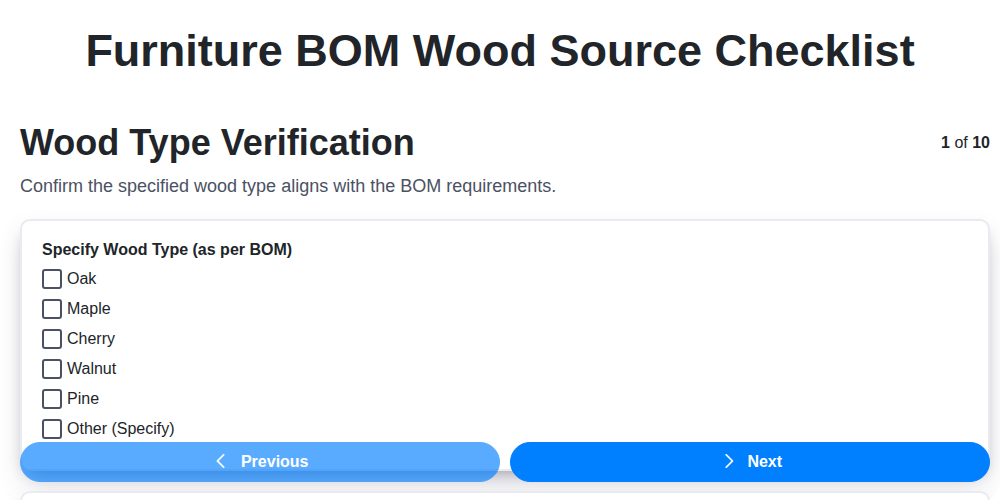
Table of Contents
- Introduction: Why a Wood Source Checklist Matters
- 1. Wood Type Verification: Confirming the Species
- 2. Sustainability Certification: Ensuring Responsible Forestry
- 3. Origin Documentation: Tracing the Wood's Journey
- 4. Moisture Content Analysis: Preventing Warping & Cracking
- 5. Defect Inspection: Identifying Flaws and Imperfections
- 6. Treatment and Finishing: Safety and Aesthetics
- 7. Vendor Compliance: Holding Your Suppliers Accountable
- 8. Lot Traceability: A Chain of Custody
- 9. Custom Milling Specifications: Meeting Design Requirements
- 10. Quality Assurance Approval: The Final Gatekeeper
- 11. Integrating the Checklist into Your BOM
- 12. Common Challenges & How to Overcome Them
- 13. The Long-Term Benefits of a Robust Wood Sourcing Process
- Conclusion: Building Trust and Delivering Excellence
- Resources & Links
TLDR: Worried about the wood in your furniture? This checklist is your solution! It ensures you're getting high-quality, sustainably sourced wood by verifying everything from wood type and moisture levels to vendor compliance and milling specs. Download the template and simplify your wood sourcing process - it's a game-changer for quality and ethical production!
Introduction: Why a Wood Source Checklist Matters
The beauty and longevity of fine furniture hinge on the quality of the wood used. But sourcing wood isn't simply about finding a supplier; it's about ensuring it meets rigorous standards for sustainability, quality, and traceability. A comprehensive wood source checklist - a Bill of Materials (BOM) specifically tailored to wood - is an essential tool for furniture manufacturers.
Think of it as your first line of defense against issues like inconsistent wood properties, environmental concerns, legal compliance challenges, and ultimately, dissatisfied customers. Without a structured process, you risk everything from structural failures and discoloration to reputational damage and potential legal ramifications. This checklist isn't just about ticking boxes; it's about creating a transparent, reliable supply chain that supports the integrity of your furniture and aligns with ethical sourcing practices. Investing in a robust wood source checklist demonstrates a commitment to quality, sustainability, and responsible manufacturing - all of which are increasingly important to today's discerning consumer.
1. Wood Type Verification: Confirming the Species
Accuracy starts at the very beginning. Before any other steps in your Furniture Bill of Materials (BOM) wood sourcing process, meticulous wood type verification is crucial. Simply stating Oak isn't enough; you need to be absolutely certain of the specific species. Is it Red Oak, White Oak, or potentially a less common variety? Misidentification can lead to significant issues down the line - compromised structural integrity, incorrect staining or finishing results, and ultimately, customer dissatisfaction.
Our checklist requires a detailed species confirmation, typically involving a combination of visual inspection (grain pattern, color, texture), microscopic analysis, and sometimes even DNA testing for rare or ambiguous wood types. Document this verification with photos and detailed notes, referencing established industry standards and botanical classifications. This isn't just about identifying the wood; it's about building a verifiable record of your sourcing. Remember to track who performed the verification and their credentials - this accountability is vital for traceability.
2. Sustainability Certification: Ensuring Responsible Forestry
Wood is a natural resource, and its responsible sourcing is paramount for the longevity of our forests and the health of our planet. A robust Furniture Bill of Materials (BOM) and wood sourcing checklist must include verification of sustainability certifications. Simply put, these certifications guarantee that the wood originates from forests managed in an environmentally sound, socially responsible, and economically viable manner.
Common and widely recognized certifications include:
- Forest Stewardship Council (FSC): Considered the gold standard, FSC certification ensures forests are managed to protect biodiversity, respect the rights of indigenous peoples, and support local communities.
- Programme for the Endorsement of Forest Certification (PEFC): PEFC promotes sustainable forest management globally and provides a framework for national certification systems.
- Sustainable Forestry Initiative (SFI): Primarily used in North America, SFI focuses on responsible forest management practices, promoting biodiversity, water quality, and wildlife habitat.
Don't just accept a certification number. Demand chain-of-custody documentation to verify the wood's journey from the forest to your factory. This ensures the certified wood hasn't been mixed with non-certified wood along the way. Inquire about the certification body itself - are they accredited and reputable? Finally, be aware that some vendors may offer "self-certified" claims. These lack the independent verification of a recognized certification and should be approached with caution. Your commitment to sustainability begins with a demand for verifiable, credible forest certifications.
3. Origin Documentation: Tracing the Wood's Journey
Knowing where your wood comes from isn't just about satisfying a curious mind; it's a critical component of responsible furniture sourcing. Robust origin documentation provides a verifiable chain of custody, ensuring transparency and accountability throughout the supply chain. This goes far beyond just knowing the country of origin - it's about understanding the specific region, the forestry practices employed, and the permits and permissions obtained to harvest the timber.
We require detailed documentation including, but not limited to, harvest permits, import/export licenses, and chain-of-custody certificates. This documentation validates that the wood was legally and sustainably harvested and transported. It's essential for verifying compliance with international regulations like the Lacey Act and for demonstrating a commitment to ethical sourcing. We ask vendors to provide this information at each stage - from the forest to the mill - so we can confidently trace the wood's journey and ensure its legitimacy. Without it, we simply cannot proceed with sourcing.
4. Moisture Content Analysis: Preventing Warping & Cracking
Wood isn't a static material; it breathes! Its moisture content fluctuates based on the surrounding environment. This is crucial to understand when crafting furniture that's meant to last. Too much moisture, and your beautifully milled wood can warp, cup, or crack as it dries. Too little, and it can shrink and become brittle.
Our wood source checklist includes a stringent moisture content analysis. We don't just accept a supplier's claim - we verify it ourselves. This involves using calibrated moisture meters to measure the percentage of water within the wood. We establish specific, project-dependent moisture content ranges for each wood type, based on its intended use and the environment where the furniture will reside.
This isn't just about preventing visible defects. Maintaining optimal moisture content minimizes stress within the wood fibers, ensuring dimensional stability and reducing the likelihood of issues like splitting, cupping, and movement - all of which can compromise the integrity and aesthetic appeal of the finished furniture piece. We document all moisture content readings for traceability and to ensure consistent quality.
5. Defect Inspection: Identifying Flaws and Imperfections
Wood, despite its natural beauty and strength, isn't without its potential flaws. Thorough defect inspection is a critical step in ensuring the quality and longevity of your furniture. This goes beyond simply looking for knots; it's a systematic evaluation looking for a range of imperfections that could impact the final product's structural integrity, appearance, or workability.
Our defect inspection process includes careful assessment for:
- Knots: Size, tightness, and location of knots are evaluated. Loose or excessively large knots can compromise the wood's strength and create challenges for joinery.
- Warping & Cupping: Deviations from a straight and flat profile can cause assembly problems and an uneven finished product.
- Checks & Splits: These cracks, even small ones, can grow over time and weaken the wood.
- Insect Damage & Decay: Visible signs of infestation or rot must be identified and rejected.
- Mineral Streaks & Stain: While sometimes aesthetically acceptable, heavy mineral streaks can affect staining and finishing.
- Pitch & Resin Pockets: These can interfere with adhesives and finishes.
Each defect is graded based on its severity and impact on usability, and the wood is rejected if it exceeds pre-defined thresholds. We document all identified defects, providing transparent records for our clients and ensuring continuous improvement in our sourcing practices.
6. Treatment and Finishing: Safety and Aesthetics
Beyond the inherent beauty of the wood, the treatment and finishing process is crucial for both the longevity of the furniture and the safety of the end-user. This stage isn't just about aesthetics; it's about protecting the wood from environmental factors, pests, and wear and tear.
Our checklist rigorously assesses these finishing processes. We verify the types of finishes used, ensuring they meet stringent VOC (Volatile Organic Compound) limits and adhere to relevant safety regulations. This includes evaluating the safety of any sealants, stains, paints, or lacquers applied.
We also examine the application process itself - ensuring proper ventilation and adherence to manufacturer instructions to prevent imperfections or health hazards. The goal is to achieve a flawless and durable finish that enhances the wood's natural grain while providing lasting protection. Furthermore, we assess the finish's resistance to scratches, UV damage, and chemical spills to guarantee a beautiful and functional piece of furniture.
7. Vendor Compliance: Holding Your Suppliers Accountable
Your furniture BOM (Bill of Materials) relies entirely on the integrity of your wood suppliers. Vendor compliance isn't just about ensuring they deliver on time and at the agreed price; it's about verifying they adhere to your standards for quality, sustainability, and ethical sourcing. This is a critical step in your wood source checklist.
What does robust vendor compliance look like? It starts with clear, documented expectations. These should encompass everything from the specific certifications they hold (more on that in other checklist items!) to their labor practices and environmental policies.
Regular audits, both announced and unannounced, are essential. These audits should cover their facilities, record-keeping, and processes. Don't shy away from asking tough questions and demanding transparency. Develop a scoring system to objectively assess vendor performance and identify areas for improvement.
Establish a clear escalation process for non-compliance. What happens when a supplier fails to meet your expectations? A documented process that includes warnings, corrective action plans, and, if necessary, suspension of business, demonstrates your commitment to upholding your standards. Finally, continuously review and update your vendor compliance program to stay ahead of evolving industry regulations and best practices. Remember, your furniture's reputation rests partly on theirs.
8. Lot Traceability: A Chain of Custody
Beyond knowing what wood you're using, it's crucial to understand where it came from and its journey to your furniture BOM. Lot traceability is the backbone of responsible sourcing and quality control. It's more than just a number on a piece of lumber; it's a complete record of the wood's provenance.
This involves establishing a clear chain of custody, from the forest to your workshop. We require detailed documentation, often starting with the logging permit and extending through processing facilities, transportation records, and ultimately, our vendor's receiving logs. This includes tracking the specific lot number associated with each piece of wood, allowing us to pinpoint its origin in the event of quality issues or concerns about sustainability.
Why is this so important? If a problem arises - be it a defect, an unexpected moisture content issue, or a question about the wood's legality - traceability allows us to quickly and accurately identify the source, isolate the affected lot, and prevent future occurrences. It builds trust with your customers, demonstrates your commitment to ethical sourcing, and safeguards your brand reputation. We work closely with our vendors to ensure this detailed record-keeping is maintained and readily available for audit.
9. Custom Milling Specifications: Meeting Design Requirements
Achieving the precise aesthetic and structural integrity of your furniture hinges on meticulous adherence to custom milling specifications. This isn't just about cutting wood to size; it's about ensuring complex profiles, joinery details, and unique shapes are executed flawlessly. Our checklist emphasizes rigorous verification at every stage.
We confirm that the millwork supplier fully understands and can consistently reproduce the design's intended details. This includes verifying dimensions, angles, radii, tolerances, and the application of any specialized tooling. We review shop drawings and samples, conduct on-site inspections during the milling process, and employ detailed measurement protocols.
Discrepancies, no matter how seemingly minor, are immediately flagged and corrected to prevent costly rework and ensure the finished product aligns perfectly with the original design intent. This proactive approach safeguards the project's visual appeal and structural soundness, directly contributing to overall quality and client satisfaction.
10. Quality Assurance Approval: The Final Gatekeeper
After all the preceding steps - wood type verification, sustainability checks, milling confirmations, and rigorous inspections - the furniture Bill of Materials (BOM) wood source checklist culminates in Quality Assurance (QA) Approval. This isn't just a formality; it's the final, critical gatekeeper ensuring the delivered wood aligns perfectly with the project specifications and quality standards.
QA approval involves a comprehensive review of all previous checklist entries. It's about verifying that the vendor's documentation is complete and accurate, the wood's characteristics match the defined requirements (species, grade, dimensions), and any deviations have been properly addressed and resolved. This might involve a final visual inspection, spot-checking moisture content, and ensuring treatment and finishing meet expectations.
The QA team isn't just checking what was done, but how it was done. They're evaluating the entire process - from the initial wood selection to the final delivery - to identify any potential areas for improvement in the BOM wood source process. A successful QA approval signifies a high level of confidence in the wood's suitability for the furniture, minimizing the risk of costly rework or compromised product quality later in the manufacturing process. Documentation of this approval, including any observations or required corrective actions, is essential for traceability and continuous improvement.
11. Integrating the Checklist into Your BOM
A Furniture Bill of Materials (BOM) is more than just a list of components; it's a living document that guides your entire production process. Integrating the Wood Source Checklist directly into your BOM elevates it from a simple inventory list to a comprehensive quality control system. Here's how:
1. Create a Dedicated Section: Allocate a distinct section within your BOM specifically for wood sourcing information. This section should mirror the checklist items (Wood Type Verification, Sustainability Certification, etc.).
2. Assign Responsibility: Clearly assign responsibility for verifying each checklist item. This could be the purchasing manager, a quality control specialist, or a designated supplier contact. Document who is accountable for each verification.
3. Record Results Directly in the BOM: Instead of maintaining the checklist as a separate document, record the findings of each verification directly within the BOM. Use columns or fields to capture details like certification numbers, moisture content percentages, defect ratings, vendor contact information, and lot numbers.
4. Link Documentation: While the BOM will contain summarized results, include links to supporting documentation. This might be copies of sustainability certificates, origin documents, detailed moisture content reports, or vendor compliance audits. This creates a robust audit trail.
5. Version Control: As your wood sources or suppliers change, update the BOM and clearly document the changes with version numbers and dates. This ensures everyone is working with the most current information.
6. Automate Where Possible: Explore opportunities to automate parts of the verification process. For example, if vendors consistently provide digital documentation, integrate a system for automatic uploading and linking to the BOM.
By embedding this Wood Source Checklist into your BOM, you create a transparent, traceable, and accountable system that reinforces your commitment to quality, sustainability, and ethical sourcing.
12. Common Challenges & How to Overcome Them
Navigating a Furniture BOM Wood Source Checklist can be surprisingly complex. Here are some common hurdles and practical strategies to address them:
1. Sustainability Certification Discrepancies: Vendors might present conflicting or outdated certifications. Solution: Cross-reference certifications with the issuing body's website, request updated documentation directly from the certifying organization, and proactively schedule audits of vendor practices.
2. Origin Documentation Gaps: Tracking wood origin can be challenging, especially with global supply chains. Solution: Implement a robust vendor onboarding process requiring detailed origin documentation. Utilize blockchain technology or digital tracking systems for increased transparency and verifiable data.
3. Moisture Content Variations: Fluctuations in moisture content can lead to warping, cracking, and instability in finished furniture. Solution: Establish clear, specific moisture content thresholds within your BOM. Implement regular, on-site moisture content testing by qualified personnel, and consider desiccated shipping to mitigate post-delivery changes.
4. Defect Identification Subjectivity: What one inspector deems a minor defect, another might consider unacceptable. Solution: Develop a detailed, visual defect guide with photographs and clearly defined severity levels. Train all inspectors to the same standards and ensure consistent application of the guide.
5. Custom Milling Specification Misinterpretations: Incorrect milling can result in wasted wood and increased costs. Solution: Provide vendors with incredibly precise and detailed milling specifications, including diagrams and tolerances. Conduct a mock milling test run prior to bulk production.
6. Vendor Compliance Issues: Vendors failing to adhere to your requirements can derail your project. Solution: Implement a vendor performance evaluation system, including regular audits and documented corrective action plans. Be prepared to switch vendors if non-compliance persists.
7. Lot Traceability Breakdown: Losing track of a specific wood lot can make recall or problem resolution difficult. Solution: Enforce strict lot numbering and tracking protocols throughout the supply chain. Use barcode or RFID technology to streamline tracking.
8. Treatment and Finishing Inconsistencies: Uneven or inadequate treatment/finishing can impact product durability and aesthetics. Solution: Require documented proof of treatment processes and provide sample finishes for approval. Conduct thorough on-site inspections post-treatment.
9. Limited Vendor Options: Finding vendors that meet all checklist criteria can be difficult. Solution: Broaden your search beyond your immediate geographic area, attend industry trade shows, and build relationships with smaller, specialized vendors.
10. Cost Pressures: Meeting strict checklist requirements can increase material costs. Solution: Explore alternative wood species that meet your criteria at a lower cost. Negotiate pricing with vendors based on long-term partnerships and adherence to quality standards.
11. Communication Barriers: Misunderstandings can arise due to language differences or cultural nuances. Solution: Utilize clear, concise communication methods with vendors. Employ translators when necessary, and foster strong, open lines of communication.
12. Documentation Overload: Managing the sheer volume of documentation can be overwhelming. Solution: Implement a centralized digital document management system to organize and track all relevant information.
13. The Long-Term Benefits of a Robust Wood Sourcing Process
Investing in a detailed wood sourcing process, like the one outlined in our Wood Sourcing Checklist (including steps like Wood Type Verification, Sustainability Certification, and Lot Traceability), isn't just about ticking boxes - it's a strategic decision with significant long-term benefits. While the initial effort might seem more involved, the return on that investment far outweighs the cost.
Think beyond the immediate project. A well-vetted wood supply reduces the risk of costly rework due to material inconsistencies or quality issues. Avoiding legal complications stemming from non-compliance with regulations - particularly concerning sustainable forestry practices - protects your brand reputation and minimizes potential fines.
Furthermore, a robust process builds resilience into your supply chain. Knowing exactly where your wood comes from, with complete Lot Traceability and Vendor Compliance records, allows you to quickly identify and address potential disruptions, whether that's due to geopolitical instability, environmental concerns, or unexpected shortages.
Finally, and increasingly importantly to consumers, a transparent and sustainable sourcing process builds trust and strengthens your brand's commitment to environmental responsibility. This resonates with an increasingly conscious consumer base, boosting customer loyalty and driving positive brand perception. Ultimately, a detailed checklist isn't a burden; it's an investment in the longevity and success of your furniture business.
Conclusion: Building Trust and Delivering Excellence
Ultimately, the Furniture Bill of Materials (BOM) Wood Source Checklist isn't just a procedural formality; it's a cornerstone of trust and a commitment to excellence. By diligently following each step - from verifying wood types and ensuring sustainability certifications to meticulously tracking lot traceability and confirming custom milling specs - we're not just ensuring the quality of our furniture; we're building trust with our customers and demonstrating a deep respect for the environment and responsible sourcing practices. This checklist provides a framework for transparency, accountability, and continuous improvement, ensuring we deliver furniture that's beautiful, durable, and ethically produced. Investing in this level of detail elevates the entire product lifecycle, resulting in a final product that reflects a dedication to quality and a promise kept.
Resources & Links
- Forest Stewardship Council (FSC): The FSC is a leading international non-profit organization working to promote responsible forest management worldwide. Provides certification standards and lists certified forests.
- Programme for the Endorsement of Forest Certification (PEFC): Another globally recognized certification system promoting sustainable forest management. Offers a broad range of forest certification standards.
- Sustainable Forestry Initiative (SFI): A North American forestry standards organization. Provides standards for sustainable forestry practices.
- Wood Products Manufacturing Institute (WPMA): Provides resources and information on wood products manufacturing, including quality and safety considerations. They have articles and guides relating to wood properties and defects.
- American Woodworking Institute (AWI): Focuses on woodworking industry standards, quality control, and best practices. Relevant for understanding milling specifications and defect inspection.
- Fine Woodworking: A comprehensive resource for woodworking knowledge, covering wood species, characteristics, and construction techniques. Good for understanding wood behavior and defect identification.
- Wood Database: An extensive online database providing detailed information about various wood species, including their properties, uses, and sustainability status.
- Timber Production: Offers information on timber and wood products. While primarily focused on supply, they provide insight into the complexities of timber sourcing.
- International Organization for Standardization (ISO): While not solely wood-focused, ISO standards (e.g., ISO 9001 for quality management) can be applied to wood sourcing processes to ensure consistency and accountability.
- AWI Standards: The AWI publishes standards that are commonly used for furniture manufacturing, and are especially relevant to the custom milling specifications section.
- Building Component Supply Chain Board (BCSCB): Provides insight and best practices for timber supply chains and logistics, especially relevant for understanding timber origin documentation and traceability.
- American Wood Protection Association (AWPA): Provides standards and information on wood preservation and treatment methods, important for the Treatment and Finishing section. They set standards for safety and longevity.
- Wood Technology Services Ltd (WTS): WTS is a wood technology company, useful for resources on wood analysis, moisture content and defect assessment.
- Woodworking Talk Forums: A forum where woodworking professionals discuss techniques, materials and processes - useful for crowdsourced solutions to common challenges.
Frequently Asked Questions
What does BOM stand for in the article title?
BOM stands for Bill of Materials. It's a comprehensive list of all the raw materials, components, and assemblies required to manufacture a piece of furniture, including wood sources.
Why is it important to have a wood source checklist for furniture?
A wood source checklist ensures transparency and accountability in your furniture manufacturing process. It helps guarantee the wood you're using meets quality standards, is sustainably sourced, and adheres to ethical practices, ultimately enhancing your brand reputation and meeting consumer demand.
What are some key factors to consider when assessing a wood supplier's sustainability practices?
Key factors include the supplier's certifications (e.g., FSC, PEFC), forest management practices, chain of custody documentation, traceability efforts, and commitment to responsible harvesting and reforestation.
What is FSC certification, and why is it important?
FSC (Forest Stewardship Council) certification is an internationally recognized standard for responsible forest management. It ensures forests are managed in a way that protects biodiversity, respects the rights of indigenous peoples, and promotes long-term ecological balance.
What does 'chain of custody' mean in the context of wood sourcing?
Chain of custody refers to the documented tracking of wood from the forest to the end product. It verifies the wood's origin and ensures its sustainable credentials are maintained throughout the supply chain.
How does the article help with verifying wood quality?
The checklist provides questions to assess wood grade, moisture content, insect and pest control, and other quality characteristics, ensuring the wood meets your furniture's performance requirements.
What should I do if a supplier can't provide certain documentation or answers to the checklist questions?
It's a significant red flag. You should investigate further, request alternative documentation, or consider sourcing from a different supplier. Lack of transparency can indicate potential issues with quality or sustainability.
Can this checklist be adapted for different types of wood?
Yes, the checklist is designed to be adaptable. While the core principles remain the same, you may need to adjust the specific questions based on the unique characteristics and sourcing considerations for different wood species (e.g., hardwoods vs. softwoods).
The article mentions 'due diligence.' What does that entail?
Due diligence involves a thorough investigation of a supplier's practices and policies. It's more than just accepting their word; it's actively verifying their claims and assessing risks related to quality, sustainability, and ethical sourcing.
Where can I find more information about sustainable forestry certifications?
You can find more information about FSC at www.fsc.org, and about PEFC at www.pefc.org.
Found this Article helpful?
Comments
There are no comments yet. Be the first to add one!
BOM - Bill of Materials Management Solution Demo
Struggling with inaccurate BOMs & costly errors? ChecklistGuro provides a centralized BOM Management solution, connecting your design, engineering, & manufacturing teams for improved collaboration and control. Simplify operations & boost efficiency.
Related Articles
The Ultimate Logistics BOM Packaging Checklist: Ensuring Safe & Efficient Shipments
Mastering Leather Manufacturing: Your Tannery BOM & Compliance Checklist
Mastering Your BOM: A Comprehensive Checklist Template for Success
Ensuring Success: Your Oil & Gas BOM Component Approval Checklist Guide
Navigating Medical Device BOM Regulatory Compliance: Your Essential Checklist
The Ultimate Retail BOM Product Definition Checklist: A Step-by-Step Guide
Ensuring Quality: Your Rubber Manufacturing Polymer BOM Checklist Guide
Decoding Origins: Your Construction Materials BOM Origin Checklist Guide
We can do it Together
Need help with
Bill of Materials (BOM) Management?
Have a question? We're here to help. Please submit your inquiry, and we'll respond promptly.