Ensuring Quality: Your Glass Manufacturing BOM Composition Checklist Guide
Published: 12/10/2025 10:00 PM Updated: 12/14/2025 7:54 AM
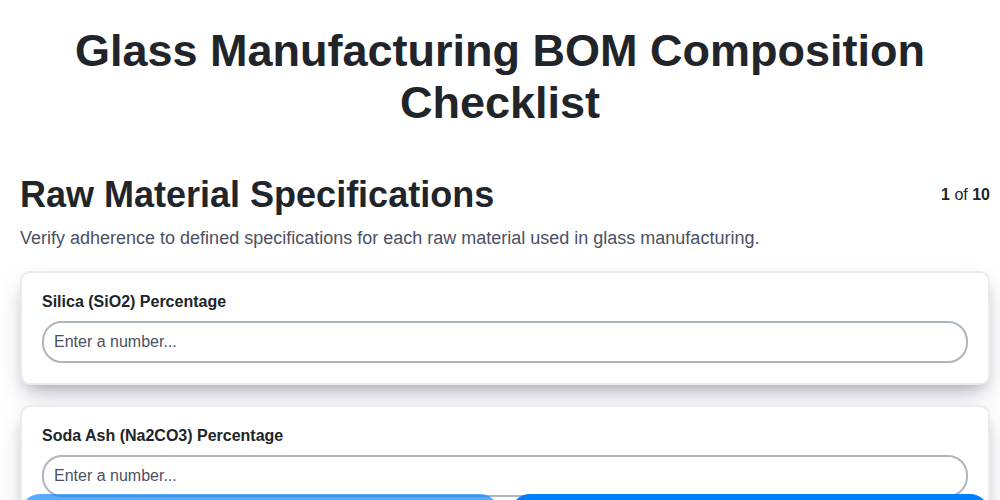
Table of Contents
- Introduction: The Critical Role of BOM Composition in Glass Manufacturing
- Understanding Your Glass Manufacturing Bill of Materials (BOM)
- Raw Material Specifications: Defining the Foundation
- Supplier Certification: Verifying Material Integrity
- Batch Analysis & Testing: Ensuring Consistency
- Composition Variance Monitoring: Staying Within Tolerance
- Regulatory Compliance: Meeting Industry Standards
- Traceability Records: Mapping Material Origins
- Substitution Approvals: Managing Material Changes
- Material Safety Data Sheets (MSDS): Prioritizing Safety
- Recycled Content Verification: Tracking Sustainable Practices
- Contaminant Analysis: Minimizing Impurities
- Building a Robust Glass Manufacturing BOM Checklist
- Conclusion: Maintaining Quality and Consistency
- Resources & Links
TLDR: Manufacturing high-quality glass? This checklist is your secret weapon! It ensures every raw material-from specs and supplier certs to recycled content and contaminant levels-meets strict standards, guaranteeing consistency, regulatory compliance, and full traceability throughout your production process. Download the template and safeguard your glass quality today!
Introduction: The Critical Role of BOM Composition in Glass Manufacturing
The Bill of Materials (BOM) for glass manufacturing isn't just a list; it's the blueprint for quality, consistency, and compliance. Every sheet of glass, every bottle, every specialized lens - all begin with a precise combination of raw materials. A poorly managed BOM can lead to defects, inconsistent properties, increased scrap rates, and potentially, serious regulatory issues. This blog post focuses on a crucial checklist - the Glass Manufacturing BOM Composition Checklist - and highlights why each step is vital to maintaining excellence in glass production. Understanding and rigorously adhering to this checklist isn't simply best practice; it's essential for survival in a competitive and highly regulated industry. From ensuring raw material purity to verifying recycled content, this checklist represents the framework for producing high-quality, compliant glass products.
Understanding Your Glass Manufacturing Bill of Materials (BOM)
The Bill of Materials (BOM) is the cornerstone of any successful glass manufacturing operation. It's more than just a list of ingredients; it's a detailed breakdown of every raw material, component, and sub-assembly required to produce a specific glass product. A well-defined and meticulously managed BOM provides critical control over quality, cost, and consistency.
In glass manufacturing, the BOM is incredibly complex. It's not simply silica and soda ash; it encompasses a precise mix of raw materials like silica sand, sodium carbonate, calcium oxide, alumina, feldspar, dolomite, and various colorants and fining agents, each contributing specific properties to the final product. Variations in these components, even slight ones, can dramatically impact the glass's strength, color, clarity, and overall performance.
Beyond the raw materials themselves, a comprehensive glass manufacturing BOM also accounts for additives that affect melting behavior, reduce bubbles, improve surface finish, or enhance specific characteristics like UV resistance. Managing this intricate web of materials requires a rigorous process, and that's where a detailed checklist becomes indispensable. This checklist ensures every element of your BOM is accounted for, controlled, and compliant with relevant standards and regulations. We'll explore that checklist in detail in the next section.
Raw Material Specifications: Defining the Foundation
The quality of finished glass hinges directly on the precise composition of the raw materials used. This isn't just about having the right ingredients; it's about meticulously defining exactly what those ingredients are and ensuring they consistently meet those standards. Our checklist's Raw Material Specifications section is the bedrock of this process.
Here, we define acceptable limits for each component - silica, soda ash, limestone, dolomite, alumina, and any other additives - detailing purity levels, particle size distribution, moisture content, and more. These specifications aren't arbitrary; they're established based on years of experience, product performance data, and established industry best practices.
A clear, comprehensive specification document acts as a crucial guide for both procurement teams and quality control personnel. It minimizes ambiguity, reduces the risk of errors, and establishes a baseline for consistent product quality. Without rigorously defined specifications, achieving predictable glass properties - strength, clarity, color, and chemical resistance - becomes a matter of guesswork, not engineering. Furthermore, these specifications form the foundation for all subsequent quality checks and assessments throughout the manufacturing process.
Supplier Certification: Verifying Material Integrity
The foundation of consistent glass manufacturing quality rests on the integrity of the raw materials. While detailed specifications are critical, they're only as effective as the assurance that suppliers are consistently meeting those standards. A robust supplier certification program is paramount. This isn't just about receiving a document; it's about a proactive and ongoing verification process.
Our checklist demands documented evidence from suppliers confirming adherence to our stringent raw material specifications. This includes, but isn't limited to: certificates of analysis, quality control reports, and evidence of internal audits performed by the supplier. We don't just accept these documents; we actively review them, benchmark performance against historical data, and periodically conduct our own supplier audits. These audits focus on the supplier's quality management systems, testing procedures, and adherence to ethical sourcing practices.
Furthermore, we require ongoing communication channels with suppliers to discuss any emerging concerns or potential changes in their processes. This collaborative approach fosters a partnership built on transparency and accountability, safeguarding the quality and consistency of our glass manufacturing process. We also demand periodic re-certification to ensure continued compliance.
Batch Analysis & Testing: Ensuring Consistency
Maintaining consistent glass quality hinges on rigorous batch analysis and testing. This isn't just about confirming ingredients; it's about verifying that each batch performs as expected in the melting process and ultimately contributes to the desired properties of the finished glass.
Our process starts with a representative sample from each incoming raw material batch. This sample undergoes a comprehensive suite of tests, including but not limited to: chemical composition analysis using techniques like X-Ray Fluorescence (XRF) and Inductively Coupled Plasma Optical Emission Spectrometry (ICP-OES); physical properties assessment such as bulk density and particle size distribution; and visual inspection for any visible impurities.
Beyond simple composition verification, we conduct performance tests simulating the glass-making process. These can include cold-sonication testing to evaluate batch flowability, and preliminary melting behavior assessments. Any deviation from established benchmarks triggers immediate investigation and corrective action. The data collected forms a vital record, informing adjustments to sourcing, blending, and process control. Detailed reports are maintained for each batch, providing a complete audit trail and contributing to continuous improvement efforts within our glass manufacturing operations.
Composition Variance Monitoring: Staying Within Tolerance
Maintaining consistent glass quality hinges on meticulous composition variance monitoring. Subtle shifts in raw material percentages - even seemingly insignificant ones - can dramatically impact the final product's strength, clarity, color, and overall performance. This isn't simply about meeting initial specifications; it's about proactive management.
Our checklist emphasizes the need for ongoing monitoring, not just a one-time assessment. This means establishing baseline data for each batch and setting clear tolerance limits for each component within the Bill of Materials (BOM). Regular analysis, utilizing techniques like X-ray fluorescence (XRF) or other appropriate analytical methods, should be performed to compare actual compositions against these baselines.
Any deviation exceeding the predefined tolerances triggers a thorough investigation. Is it a fluctuation in raw material supply? An equipment calibration issue? A process variation? Understanding the root cause is paramount. Furthermore, documenting these variances, the corrective actions taken, and the resulting impact on glass properties builds a vital record for continuous improvement and avoids future occurrences. Consider implementing statistical process control (SPC) charts to visualize trends and identify potential issues before they become critical.
Regulatory Compliance: Meeting Industry Standards
The glass manufacturing industry operates under a complex web of regulations, and ensuring compliance is paramount for product quality, safety, and market access. This checklist's focus on regulatory compliance isn't just about ticking boxes; it's about demonstrating a commitment to industry best practices and legal requirements. Key regulations impacting glass composition often stem from food and beverage container standards (ensuring leachable materials are within safe limits), pharmaceutical applications (requiring strict purity and control), and environmental mandates concerning emissions and waste.
Our checklist highlights the need to meticulously document adherence to relevant standards like FDA regulations (where applicable), EU directives (for European markets), and local environmental protection laws. This involves maintaining records of testing results, material certifications, and any modifications made to the BOM composition. Regular audits and proactive engagement with regulatory bodies are crucial elements of a robust compliance program - a program our checklist is designed to support. Staying informed about evolving regulations and incorporating changes promptly will safeguard your operations and maintain a competitive edge.
Traceability Records: Mapping Material Origins
Maintaining impeccable traceability records is paramount in glass manufacturing. It's not simply about knowing what materials are used, but where they come from, and the journey they've taken. This involves meticulously documenting the source of every raw material - from the quarry or mine to the processing facility and finally, to your glass plant.
Your traceability system should include detailed records of:
- Supplier Information: Name, address, contact details, and supplier code for each material source.
- Lot Numbers/Batch IDs: Clearly identify each material lot received, correlating it to specific production batches.
- Date and Time of Receipt: Accurate records of when each lot arrived at your facility.
- Transportation Details: Information about the carrier and any relevant shipping documentation.
- Internal Movement: Track the material's movement within your plant, linking it to specific production stages.
Implementing a robust traceability system allows for swift identification of problematic material lots, enables rapid recall procedures if necessary, and builds trust with customers who increasingly demand transparency about product origins. Furthermore, it's often a regulatory requirement, demonstrating accountability and adherence to industry standards. Consider leveraging digital tracking systems like barcode scanning or RFID technology to automate and improve the accuracy of your traceability records.
Substitution Approvals: Managing Material Changes
In glass manufacturing, maintaining consistent product quality and performance hinges on precise material control. While adhering to established Bill of Materials (BOM) is critical, the reality is that material availability and market fluctuations can necessitate substitutions. Implementing a robust substitution approval process is therefore vital, transforming potential disruption into managed change.
This isn't a simple swap and go scenario. Any proposed substitution must undergo a comprehensive evaluation. This starts with a formal request, clearly outlining the proposed alternative, its source, and the rationale for the substitution. Next, a multidisciplinary review team - including materials engineers, quality control specialists, production personnel, and procurement - should assess the potential impact on glass properties, manufacturing processes, and final product performance.
The evaluation should consider:
- Chemical Composition Compatibility: Detailed analysis of the substitute's chemical makeup to ensure it aligns with the original material's properties and won't negatively affect the glass's melting behavior, clarity, strength, or color.
- Physical Properties: Assessing density, particle size distribution, and other relevant physical characteristics to ensure they meet the required specifications.
- Process Impact: Evaluating how the substitution might affect furnace stability, melting rates, viscosity, and other crucial aspects of the glassmaking process.
- Regulatory Compliance: Verifying that the substitute material meets all applicable regulatory requirements and doesn't introduce any new compliance issues.
- Documentation: Maintaining meticulous records of the substitution request, evaluation results, approval rationale, and any subsequent performance monitoring data.
A formal approval document, signed by authorized personnel, should clearly outline the approved substitution, its limitations, and any required process adjustments. This documentation becomes a crucial part of the BOM's traceability and audit trail, ensuring accountability and facilitating continuous improvement. Furthermore, establishing a defined time window for the approval to be valid, requiring re-evaluation at regular intervals, prevents stagnation and keeps the process responsive to evolving conditions.
Material Safety Data Sheets (MSDS): Prioritizing Safety
In the glass manufacturing process, handling various chemicals and raw materials is unavoidable. Ensuring the safety of your workforce and minimizing environmental impact hinges on diligent adherence to Material Safety Data Sheet (MSDS) protocols. These documents, now often referred to as Safety Data Sheets (SDS) under the Globally Harmonized System (GHS), are critical.
An MSDS/SDS provides comprehensive information about each substance used, including potential hazards, safe handling procedures, first-aid measures, and spill control guidelines. Your checklist must include verification that current, accurate, and readily accessible MSDSs/SDSs are available for every material involved in glass manufacturing - from silica and soda ash to colorants and processing aids.
Don't just have them available; ensure your team is trained on how to interpret them and understand the required precautions. Regular review and updates are essential, as formulations and regulatory requirements evolve. A proactive approach to MSDS/SDS management demonstrates a commitment to worker safety, environmental responsibility, and regulatory compliance - all crucial aspects of a robust glass manufacturing operation.
Recycled Content Verification: Tracking Sustainable Practices
Glass manufacturing is increasingly focused on sustainability, and incorporating recycled glass (cullet) is a cornerstone of that effort. However, simply adding cullet isn't enough. Rigorous verification of recycled content is vital for demonstrating environmental responsibility, meeting consumer demand for eco-friendly products, and complying with evolving regulations.
This checklist item focuses on ensuring that the percentage of recycled content used in your glass batches is accurately documented and verifiable. This isn't just about paperwork; it's about building a transparent and auditable process. Here's what this verification should include:
- Source Documentation: Maintain records from your cullet suppliers detailing the origin and percentage of recycled content within their material. Demand certificates of analysis or similar documentation.
- Incoming Inspection: Implement procedures to visually inspect incoming cullet shipments and potentially perform initial testing (e.g., density, color) to assess quality and consistency.
- Batch Tracking: Precisely track the amount of cullet added to each glass batch during production. This requires accurate weighing and record-keeping at the mixing stage.
- Periodic Verification Testing: Conduct periodic laboratory analysis to independently verify the actual percentage of recycled content in finished batches. This confirms the supplier's claims and internal tracking accuracy.
- Chain of Custody: Establish a clear chain of custody for recycled materials, ensuring that the origin and percentage remain verifiable throughout the process.
- Reporting: Regularly report on the percentage of recycled content used in your glass production, both internally and potentially to customers or regulatory bodies.
Documenting and verifying recycled content isn't just a nice-to-have - it's becoming a business imperative.
Contaminant Analysis: Minimizing Impurities
The presence of contaminants within the glass manufacturing process, even in trace amounts, can significantly impact the final product's clarity, strength, color, and overall performance. These impurities can originate from raw materials, equipment, or even the environment. A robust contaminant analysis program is, therefore, not just a quality control measure; it's a critical component of ensuring consistent glass quality and mitigating potential defects.
Our checklist includes a dedicated focus on contaminant analysis, encompassing several key areas:
- Regular Testing: Scheduled testing of incoming raw materials and in-process batches is vital. This should include analysis for heavy metals (lead, arsenic, cadmium), alkali metals (sodium, potassium), and other potential contaminants relevant to the glass type being produced.
- Analytical Techniques: Employing appropriate analytical techniques such as Inductively Coupled Plasma Mass Spectrometry (ICP-MS), Atomic Absorption Spectroscopy (AAS), and X-Ray Fluorescence (XRF) are essential for sensitive and accurate detection of contaminants. The choice of technique depends on the specific contaminants being targeted and the required detection limits.
- Method Validation: Ensuring the analytical methods used are validated and regularly calibrated is paramount for reliable and reproducible results.
- Trend Analysis: Monitoring contaminant levels over time allows for the identification of potential sources of contamination and proactive implementation of corrective actions.
- Root Cause Investigation: When elevated levels of contaminants are detected, a thorough investigation to identify the root cause-whether it's an issue with a specific raw material supplier, equipment malfunction, or process deviation-must be conducted.
- Process Improvement: Findings from contaminant analysis should directly inform process improvements aimed at minimizing contamination risks. This could involve changes to material handling procedures, equipment cleaning protocols, or supplier selection criteria.
Building a Robust Glass Manufacturing BOM Checklist
A Bill of Materials (BOM) for glass manufacturing is far more complex than a simple list of ingredients. It's a critical document impacting everything from glass quality and performance to regulatory compliance and cost control. A robust checklist ensures consistency and minimizes risk throughout the entire process. Here's a breakdown of key elements to include in your checklist, ensuring a comprehensive approach to managing your glass manufacturing BOM.
Raw Material Specifications: Don't just list materials; detail precise chemical composition ranges, physical properties (particle size, density, refractive index), and permissible impurity levels. Reference specific industry standards (ASTM, ISO) where applicable. Deviations can significantly alter the final glass properties.
Supplier Certification: Require formal certification from your suppliers demonstrating adherence to your stringent material specifications. This includes independent audits and ongoing quality assurance programs.
Batch Analysis & Testing: Every batch of raw material received should undergo rigorous analysis and testing, validating its conformance to specifications. This should be documented with clear records and approval signatures.
Composition Variance Monitoring: Establish a system for tracking and analyzing any compositional variances. This allows for proactive adjustments to the manufacturing process and identification of potential supply chain issues.
Regulatory Compliance: Glass manufacturing is heavily regulated. Your BOM checklist must incorporate all applicable regulations (e.g., REACH, RoHS, FDA) and ensure that all materials are compliant.
Traceability Records: Maintain detailed traceability records for every material, linking it back to its origin, supplier, batch number, and testing results. This is crucial for identifying root causes in case of quality issues.
Substitution Approvals: Develop a formal approval process for any proposed material substitutions. This should involve thorough testing and validation to ensure the substitute maintains the desired performance characteristics.
Material Safety Data Sheets (MSDS): Ensure readily available and up-to-date MSDS for all materials used, accessible to all personnel involved in handling and processing. This is vital for safety and environmental protection.
Recycled Content Verification: If using recycled glass (cullet), verification of its origin, composition, and contaminant levels is paramount to maintain consistency and avoid negative impacts on glass quality.
Contaminant Analysis: Implement a program for analyzing materials for potential contaminants that could negatively affect glass clarity, strength, or color. Specific attention should be given to heavy metals and other undesirable elements.
Conclusion: Maintaining Quality and Consistency
Ultimately, a robust Glass Manufacturing Bill of Materials (BOM) Composition Checklist isn't just about ticking boxes - it's about safeguarding the integrity of your final product. Diligent adherence to this checklist, encompassing everything from raw material specifications and supplier certifications to contaminant analysis and traceability records, ensures consistent glass quality, minimizes production risks, and fosters consumer trust. Investing in a comprehensive and regularly reviewed checklist demonstrates a commitment to excellence and provides a vital framework for continuous improvement within your glass manufacturing process. Remember, consistent quality is a cornerstone of a successful glass manufacturing operation.
Resources & Links
- ISM (Institute for Supply Management): ISM is a leading provider of supply management standards, education, and training. Their resources cover procurement, planning, and material management - key areas tied to BOM accuracy and supplier management. Offers articles, certifications and tools for BOM professionals. Specifically look for their publications on strategic sourcing and supplier risk management.
- ASQ (American Society for Quality): ASQ provides quality resources, training, and certifications. They offer guidance on quality control, process improvement, and statistical process control - all critical for consistent glass manufacturing quality and BOM accuracy. Look for their resources on statistical process control (SPC) and quality management systems.
- ISO (International Organization for Standardization): ISO provides international standards for quality management (ISO 9001), environmental management, and other relevant areas. Compliance with ISO standards demonstrates a commitment to quality and consistency, impacting BOM control and material traceability. Relevant standards include those pertaining to quality management systems.
- ANSI (American National Standards Institute): ANSI coordinates the development of voluntary consensus standards in the U.S. While they don't create standards themselves, they accredit standards development organizations (SDOs). Understanding the relevant SDOs for glass manufacturing can inform your BOM specifications. Check for standards relating to glass composition and manufacturing processes.
- Corning: As a leading glass manufacturer, Corning's website often contains technical articles and resources related to glass science and manufacturing. While they may not directly provide BOM checklists, understanding their insights into material properties and production processes can inform your own. Search for their publications on glass composition and material performance.
- Saint-Gobain: Similar to Corning, Saint-Gobain is a global leader in glass manufacturing. Their website has technical content, product specifications, and potentially resources related to material selection and quality control. Look for information on material science and production processes.
- MDPI (Multidisciplinary Digital Publishing Institute): MDPI publishes a wide range of peer-reviewed scientific journals. Search their journals (e.g., *Glass and Ceramics*) for research articles on glass composition, manufacturing processes, and material properties - relevant for understanding your BOM requirements.
- ResearchGate: A platform for scientists and researchers to share their work. Search for publications related to glass manufacturing, material science, and quality control. It is a good source for technical details often not found elsewhere.
- SAE International: SAE International develops standards for various industries, including those impacting materials and processes. While less direct than other resources, they might have relevant standards or publications depending on the specific glass application (e.g., automotive glass).
- U.S. Environmental Protection Agency (EPA): The EPA is essential for regulatory compliance, particularly regarding material safety data sheets (MSDS) and environmental considerations for recycled content. Review their website for relevant regulations and guidance.
- U.S. Occupational Safety and Health Administration (OSHA): OSHA provides regulations and resources for workplace safety, including requirements for handling hazardous materials and providing material safety data sheets (MSDS). Vital for the 'Material Safety Data Sheets (MSDS): Prioritizing Safety' section.
Frequently Asked Questions
What does BOM stand for in the context of glass manufacturing?
BOM stands for Bill of Materials. It's a comprehensive list of all the raw materials, components, sub-assemblies, and quantities needed to manufacture a specific glass product.
Why is a detailed BOM crucial for quality in glass manufacturing?
A thorough BOM ensures consistency in materials, reduces errors, and allows for traceability. This leads to improved product quality, minimized waste, and easier identification of issues when they arise.
What are the key categories of materials typically included in a glass manufacturing BOM?
Common categories include raw glass materials (silica sand, soda ash, limestone, dolomite), cullet (recycled glass), colorants, fining agents, batch additives, and consumables like lubricants and mold release agents.
What information *specifically* should be included for each material listed in the BOM?
Each material entry should include: Material Name, Supplier, Part Number/Code, Specification (e.g., purity, particle size), Quantity Required, Unit of Measure, Batch Number (if applicable), and any relevant certifications.
What role does supplier management play in ensuring BOM accuracy and material quality?
Establishing strong supplier relationships, conducting supplier audits, and verifying material specifications against the BOM are crucial. Regular communication about material availability and potential changes is also essential.
How does batch traceability fit into the BOM composition?
Assigning unique batch numbers to materials received and linking them to the finished product allows for complete traceability. If a quality issue arises, this allows you to quickly identify the affected batch and take corrective action.
What is the significance of specifying material specifications within the BOM?
Specifications ensure materials meet the required standards for purity, chemical composition, and physical properties, directly impacting the final glass product's performance and appearance.
How frequently should the BOM be reviewed and updated?
The BOM should be reviewed at least annually and updated whenever there are changes in raw material sources, formulations, equipment, or quality standards. Major process or product changes warrant immediate BOM revisions.
What are some common mistakes to avoid when creating or managing a glass manufacturing BOM?
Common mistakes include using outdated information, omitting critical materials, using incorrect units of measure, failing to include supplier information, and neglecting to regularly review and update the BOM.
Where can I find more information on industry standards related to glass manufacturing and BOM composition?
Relevant organizations such as the American Association of Glass Manufacturers (AGM) and the European Glass Manufacturers Federation (EFG) often provide guidelines and standards. Additionally, consult with industry experts and quality control professionals.
Found this Article helpful?
Comments
There are no comments yet. Be the first to add one!
BOM - Bill of Materials Management Solution Demo
Struggling with inaccurate BOMs & costly errors? ChecklistGuro provides a centralized BOM Management solution, connecting your design, engineering, & manufacturing teams for improved collaboration and control. Simplify operations & boost efficiency.
Related Articles
The Ultimate Logistics BOM Packaging Checklist: Ensuring Safe & Efficient Shipments
Mastering Leather Manufacturing: Your Tannery BOM & Compliance Checklist
Mastering Your BOM: A Comprehensive Checklist Template for Success
Ensuring Success: Your Oil & Gas BOM Component Approval Checklist Guide
Navigating Medical Device BOM Regulatory Compliance: Your Essential Checklist
The Ultimate Retail BOM Product Definition Checklist: A Step-by-Step Guide
Ensuring Quality: Your Rubber Manufacturing Polymer BOM Checklist Guide
Decoding Origins: Your Construction Materials BOM Origin Checklist Guide
We can do it Together
Need help with
Bill of Materials (BOM) Management?
Have a question? We're here to help. Please submit your inquiry, and we'll respond promptly.