The Ultimate Grant Management & Accounting Checklist: A Step-by-Step Guide to Compliance and Financial Integrity
Published: 12.07.2026 Updated: 05.10.2026
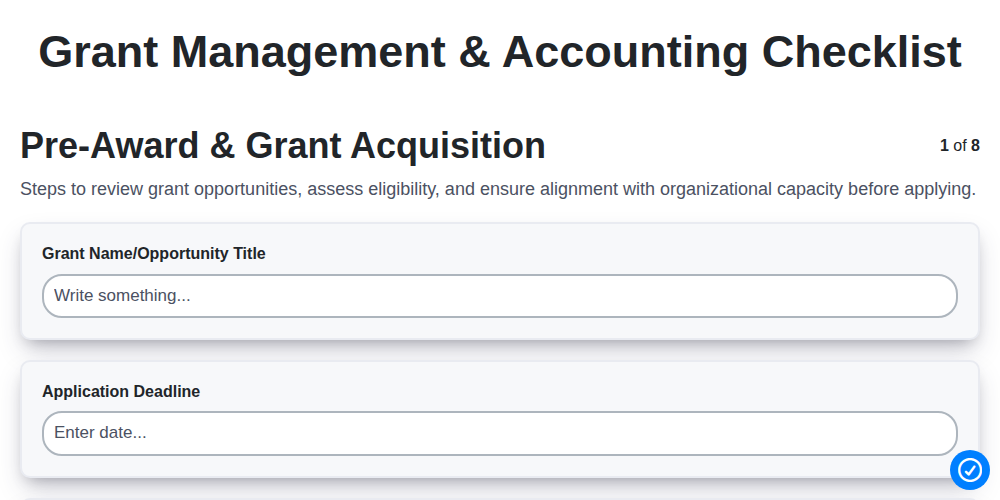
Table of Contents
- Introduction: The Importance of Robust Grant Management
- Phase 1: Pre-Award & Grant Acquisition
- Phase 2: Grant Agreement & Compliance Review
- Phase 3: Budget Setup & Fund Accounting
- Phase 4: Grant Expenditure & Documentation
- Phase 5: Managing Time & Effort Reporting
- Phase 6: Financial Monitoring & Reconciliation
- Phase 7: Grant Reporting & Deliverables
- Phase 8: Grant Closeout & Post-Award Audit
- Conclusion: Ensuring Long-Term Financial Integrity
- Resources & Links
TLDR: Master the complexities of grant administration with this comprehensive guide and checklist. Learn how to navigate every stage of the grant lifecycle-from pre-award acquisition and budget setup to fund accounting, compliance monitoring, and final closeout-ensuring your organization maintains total financial integrity and stays audit-ready.
Introduction: The Importance of Robust Grant Management
Securing a grant is a monumental achievement for any organization, representing both a significant financial opportunity and a profound responsibility. However, the moment the award letter arrives, a new and complex layer of administrative duty begins. Grant management is far more than simply receiving funds; it is a rigorous process of stewardship that requires meticulous oversight to ensure every cent is used according to the donor's specific mandates.
The stakes of effective grant management are incredibly high. Inadequate oversight can lead to much more than just administrative headaches; it can result in disallowed costs, legal complications, and-most critically-the loss of donor trust. For non-profits, academic institutions, and researchers, a single compliance failure can jeopardize future funding opportunities and damage the organization's reputation permanently.
A robust management framework serves as your organization's safeguard. It ensures that financial resources are tracked with precision, that every hour of labor is properly accounted for, and that all programmatic milestones are met on schedule. By implementing a standardized, step-by-step approach to both the financial and administrative lifecycle of a grant, you move from a reactive state of managing crises to a proactive state of managing impact. This checklist is designed to help you navigate this complexity, providing a roadmap to maintain compliance, satisfy auditors, and ultimately focus on what matters most: achieving your mission.
Phase 1: Pre-Award & Grant Acquisition
The foundation of successful grant management is laid long before any funds actually hit your bank account. The Pre-Award & Grant Acquisition phase is about strategic alignment and rigorous preparation. This stage is not merely about finding a funder; it is about ensuring that your organization is both eligible and capable of executing the proposed work.
During this phase, your focus should be on three critical activities:
- Opportunity Identification & Alignment: Scouring databases and announcements to find funding opportunities that align with your mission, capacity, and long-term strategic goals.
- Eligibility & Requirement Assessment: Conducting a deep dive into the Request for Proposals (RFP) or Notice of Funding Opportunity (NOFO) to understand the specific criteria, deadlines, and-most importantly-the potential restrictions or strings attached to the funding.
- Proposal Development & Resource Planning: Building a compelling narrative supported by a preliminary budget. This includes identifying the internal personnel, equipment, and sub-recipients needed to carry out the project scope.
Mastering this phase ensures that you aren't just winning grants, but winning manageable grants that won't overwhelm your organization's administrative capacity later on.
Phase 2: Grant Agreement & Compliance Review
Once the award letter is received, the transition from winning the grant to managing it begins. This critical phase is where you bridge the gap between the promise of funding and the reality of legal obligation. A mistake made during this stage can lead to compliance failures that jeopardize your organization's reputation and future funding eligibility.
During this phase, your primary objective is to meticulously dissect the grant agreement to ensure your organization can actually meet the terms laid out by the funder. Your review should focus on three key areas:
- Terms and Conditions Analysis: Carefully read the fine print. Identify any restrictive clauses, specific prohibitions on certain types of spending, or unique milestones that differ from your standard operating procedures.
- Compliance Obligations: Identify all mandatory compliance requirements, including reporting schedules, specific branding requirements (such as logo usage), and any specialized regulatory frameworks (such as Uniform Guidance for federal awards).
- Scope and Deliverable Verification: Ensure that the project scope described in the approved proposal aligns perfectly with the language in the final signed agreement. Any discrepancies found here must be addressed with the grantor immediately through a formal amendment process.
By conducting a rigorous review now, you mitigate the risk of compliance creep-where unexamined obligations unexpectedly strain your resources mid-project.
Phase 3: Budget Setup & Fund Accounting
Once the grant agreement is finalized, the focus shifts from legal compliance to operational execution. This phase is the backbone of grant management; if your budget setup is flawed, you risk significant-scale non-compliance and potential disallowed costs during audits.
Effective budget setup requires more than just copying numbers from the proposal. You must ensure that the approved grant budget is integrated into your organization's accounting system with high precision. This involves the following key actions:
- Establishing Separate Fund Accounting: To maintain transparency and audit readiness, you must segregate grant funds from your general operating funds. Each grant should be assigned a unique class, project code, or fund ID within your financial software. This allows you to track every cent specifically allocated to that award.
- Cost Center Allocation: Determine which internal departments or cost centers will be responsible for managing specific line items. This ensures that decentralized spending is still captured under the umbrella of the specific grant.
- Aligning Budget Line Items with Chart of Accounts: Ensure that the categories defined in the grant agreement (e.g., personnel, travel, equipment, supplies) map directly to your organization's existing Chart of Accounts. This alignment is critical for generating accurate financial reports later.
- Defining Restriction Parameters: Clearly document which funds are restricted (can only be used for specific purposes outlined in the grant) and which are unrestricted. This prevents the accidental use of grant funds for unauthorized organizational overhead.
- Establishing Internal Controls: Before the first dollar is spent, define the approval workflow. Who has the authority to approve expenditures against this budget? What is the threshold for spending? Setting these guardrails early prevents budget overruns and unauthorized spending.
By treating budget setup as a rigorous accounting process rather than a simple data entry task, you create a paper trail of accountability that will make the subsequent reporting and auditing phases much smoother.
Phase 4: Grant Expenditure & Documentation
Once your grant funds are disbursed, the focus shifts from planning to execution. This phase is where the integrity of your financial management is truly tested. Proper grant expenditure and documentation are not just about paying bills; they are about creating an undeniable audit trail that proves every cent was used according to the specific terms of the award.
To maintain compliance and ensure successful audits, focus on these three critical pillars:
Adherence to Allowable Costs: Before any transaction occurs, verify that the expense meets the allowability criteria defined in your grant agreement. Every expenditure must be necessary, reasonable, and allocable to the specific project. Avoid the common pitfall of scope creep, where funds intended for project-specific needs are inadvertently used for general organizational overhead.
Rigorous Documentation Standards: If it isn't documented, it didn't happen. For every expenditure, you must maintain a complete paper trail. This includes not only receipts and invoices but also proof of payment (such as cancelled checks or electronic transfer confirmations) and any internal approvals required by your organization's procurement policy.
Cost Allocation Accuracy: If a single expense-such as a piece of equipment or a staff salary-supports multiple funding sources, you must have a consistent, documented method for allocating those costs. Ensure that the portion charged to the grant is calculated using a verifiable formula (like square footage for rent or percentage of time for labor) to prevent overcharging the grant.
By treating every receipt and invoice as a piece of evidence for a future audit, you protect your organization from potential clawbacks and build a reputation for financial excellence.
Phase 5: Managing Time & Effort Reporting
One of the most critical-and often most scrutinized-aspects of grant compliance is ensuring that the labor costs charged to a grant accurately reflect the actual work performed. Time and effort reporting serves as the primary mechanism to prove that the personnel expenses charged to a specific award are directly related to the scope of work outlined in the grant agreement.
To maintain compliance and pass potential audits, your organization must implement a robust system for tracking labor. This involves more than just simply noting hours worked; it requires a documented process that captures how much time employees spent on specific, grant-funded activities versus unallowable or other project tasks.
Key components of an effective effort reporting process include:
- Consistency and Accuracy: Ensure that the reporting period aligns with your payroll cycles and that all hours recorded are supported by contemporaneous records (records created at the time the work is performed, rather than reconstructed after the fact).
- Allocation of Effort: If an employee works on multiple projects, their total effort must be distributed proportionally across all active grants, ensuring that the total percentage of effort does not exceed 100%.
- Documentation of Changes: Any significant shifts in an individual's responsibilities or project scope should be documented to explain why a change in effort allocation occurred.
- Verification and Approval: Implement a workflow where employees certify their own time and a supervisor or Principal Investigator (PI) reviews and approves it, providing a secondary layer of oversight.
Failure to maintain rigorous time and effort documentation is a common red flag during audits and can lead to disallowed costs, which may require the organization to return funds to the grantor.
Phase 6: Financial Monitoring & Reconciliation
Effective grant management relies on your ability to ensure that every dollar spent aligns with your approved budget and donor intentions. Financial monitoring and reconciliation act as your organization's internal safety net, preventing budget overruns and identifying discrepancies before they become audit findings.
To maintain fiscal integrity, your process should include several critical sub-steps:
- Regular Budget-to-Actual Analysis: Perform monthly or quarterly comparisons between your projected expenditures and actual spending. This allows you to identify underspend (which may require budget reallocations) or overspend (which could jeopardize your remaining funds) in real-time.
- Monthly Ledger Reconciliation: Ensure that your internal grant tracking system matches your organization's general ledger. Any discrepancies between your project-specific records and your central accounting software must be investigated and resolved immediately.
- Burn Rate Tracking: Monitor your burn rate-the speed at which you are consuming grant funds. This is essential for determining if you need to accelerate activities to meet project milestones or if you need to request a no-cost extension due to slow spending.
- Unallowable Cost Detection: Periodically review transactions to ensure no prohibited expenses (such as certain administrative overheads or prohibited travel) have been inadvertently charged to the grant.
By maintaining a rigorous reconciliation cycle, you transform financial monitoring from a reactive task into a proactive management tool, ensuring you remain audit-ready at all times.
Phase 7: Grant Reporting & Deliverables
Once the hard work of implementation is complete, the focus shifts to demonstrating accountability to your funders. The reporting phase is where you prove that the funds were used as intended and that the project goals were met. This stage is critical because failure to provide accurate, timely, and comprehensive reports can jeopardize future funding opportunities and trigger audits.
To ensure success in this phase, your checklist should include:
- Adherence to Reporting Schedules: Maintain a master calendar of all financial and programmatic due dates. Missing a deadline is often viewed as a sign of poor management.
- Financial Report Preparation: Compile all expenditure data to create financial reports that match your internal fund accounting records. Ensure that all costs reported align exactly with the approved budget categories.
- Programmatic Progress Narratives: Draft detailed narratives that highlight key milestones, successes, and challenges. Use quantitative data (metrics) and qualitative evidence (stories/impact) to demonstrate progress against your original objectives.
- Verification of Deliverables: Cross-reference your outputs against the specific requirements outlined in the grant agreement. Ensure every promised deliverable-whether it be a published report, a completed training session, or a physical product-has been documented.
- Data Integrity Check: Before submission, perform a final review to ensure that the numbers in your financial reports reconcile perfectly with the data in your programmatic reports.
- Submission and Documentation: Once submitted, archive a complete copy of the final report, along with any confirmation of receipt from the funder, in your permanent grant file.
Phase 8: Grant Closeout & Post-Award Audit
The final stage of the grant lifecycle is just as critical as the initial application. The Grant Closeout phase is the formal process of finalizing all activities, settling all financial obligations, and officially ending the period of performance. This is your opportunity to ensure that every cent has been accounted for and that all programmatic goals were met according to the funder's requirements.
A successful closeout involves several key actions:
- Final Financial Reporting: Submitting the final financial report to the grantor, ensuring all outstanding invoices are paid and all sub-recipient obligations are resolved.
- Final Programmatic Report: Summarizing the outcomes, successes, and challenges encountered during the grant period to demonstrate impact.
- Asset Disposition: Ensuring that any equipment or supplies purchased with grant funds are handled, transferred, or disposed of in strict accordance with the grant agreement.
- Record Retention: Organizing and archiving all documentation-including receipts, contracts, and reports-for the mandatory period (often several years after the grant ends) to prepare for potential audits.
The Post-Award Audit serves as the ultimate test of your management process. Whether it is an internal review or an external audit by a government agency or private foundation, the goal is to verify compliance with the original terms and conditions. By maintaining rigorous documentation throughout the entire grant lifecycle, you transform the audit from a stressful event into a routine validation of your organization's integrity and financial stewardship.
Conclusion: Ensuring Long-Term Financial Integrity
Mastering the complexities of grant management is about much more than just staying organized; it is about safeguarding the trust placed in your organization by funders and donors. By implementing a rigorous, step-by-step checklist-from the initial pre-award phase through to the final post-award audit-you create a culture of accountability and transparency.
A systematic approach to fund accounting, documentation, and compliance does more than just prevent audit findings; it protects your organization's reputation and ensures your eligibility for future funding opportunities. When your financial monitoring and reporting are seamless, you free up your team to focus on what truly matters: the mission-driven work that the grants were intended to support. Use this checklist as your blueprint for excellence, and turn grant management from a source of administrative stress into a cornerstone of your organization's long-term financial integrity.
Resources & Links
- Grants.gov: The official centralized portal for finding and applying for federal grants, essential for the Pre-Award and Acquisition phase.
- Office of Management and Budget (OMB): The primary source for Uniform Guidance (2 CFR 200) regulations, which govern compliance and cost principles for federal awards.
- Council on Financial Stewardship: Resources regarding best practices for fund accounting and maintaining financial integrity in non-profit and governmental sectors.
- U.S. General Services Administration: Guidance on federal procurement standards and compliance requirements for managing government-funded contracts and grants.
- AICPA (American Institute of CPAs): Professional resources for auditors and accountants regarding financial monitoring, reconciliation, and post-award audit preparation.
- National Council of Nonprofits: Practical insights into managing organizational budgets, reporting deliverables, and maintaining transparency in grant-funded programs.
Frequently Asked Questions
What is the primary goal of grant management and accounting?
The primary goal is to ensure full compliance with donor requirements, maintain financial integrity, and provide transparent documentation of how funds are being utilized to support the intended project outcomes.
Why is a checklist important for grant compliance?
A checklist serves as a structured roadmap to ensure that no critical steps-such as budget tracking, reporting deadlines, or documentation requirements-are missed, thereby reducing the risk of audits or fund clawbacks.
What are the key components of a grant accounting system?
Key components include accurate budget tracking, timely expense recording, separation of fund accounting from general operations, and a robust audit trail for all transactions related to specific grants.
How often should grant financial reports be reviewed?
Financial reports should be reviewed at least monthly to track actual spending against the approved budget, though more frequent reviews may be necessary depending on the specific donor's reporting requirements.
What should be included in a grant documentation audit trail?
An effective audit trail should include original grant agreements, approved budgets, invoices, receipts, payroll records, proof of procurement processes, and all submitted financial and progress reports.
What are the common risks of poor grant management?
Common risks include unauthorized spending, inaccurate financial reporting, failure to meet donor deadlines, loss of donor trust, and potential legal or financial penalties during a compliance audit.
Comments
There are no comments yet. Be the first to add one!
Accounting Management Solution Demo
Move beyond rigid, one-size-fits-all software. Leverage a fully programmable accounting environment designed to adapt to your unique workflows, complex hierarchies, and evolving business logic.
Related Articles
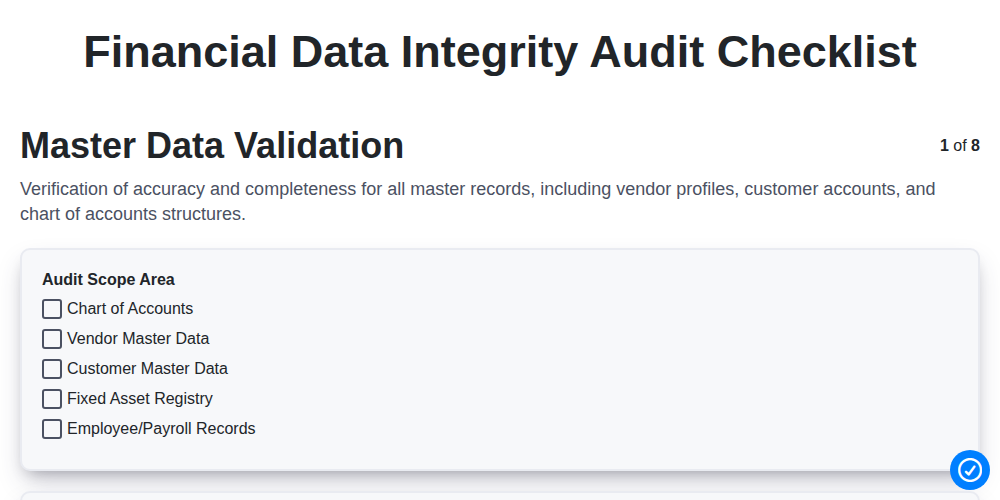
The Ultimate Financial Data Integrity Audit Checklist: A Step-by-Step Template for Precision and Compliance
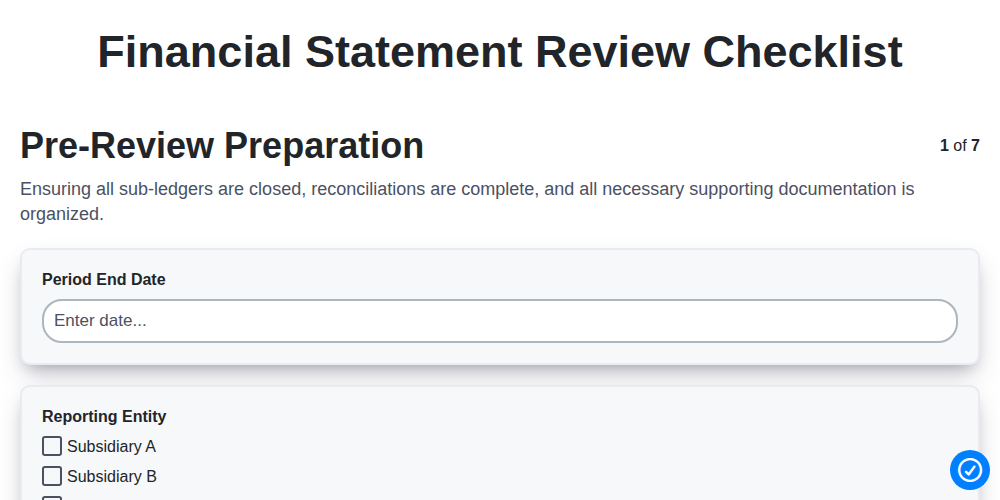
The Ultimate Financial Statement Review Checklist: A Step-by-Step Guide to Ensuring Accuracy and Compliance
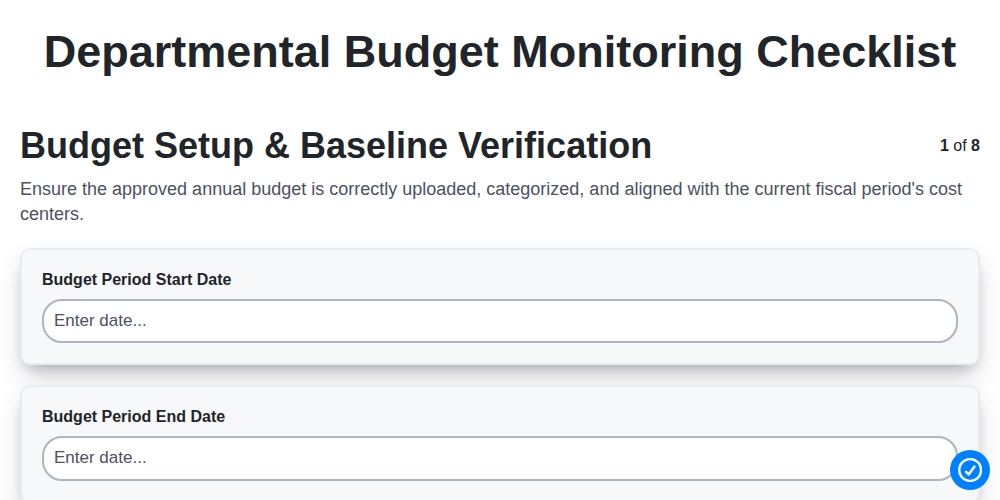
Mastering Financial Control: The Ultimate Departmental Budget Monitoring Checklist
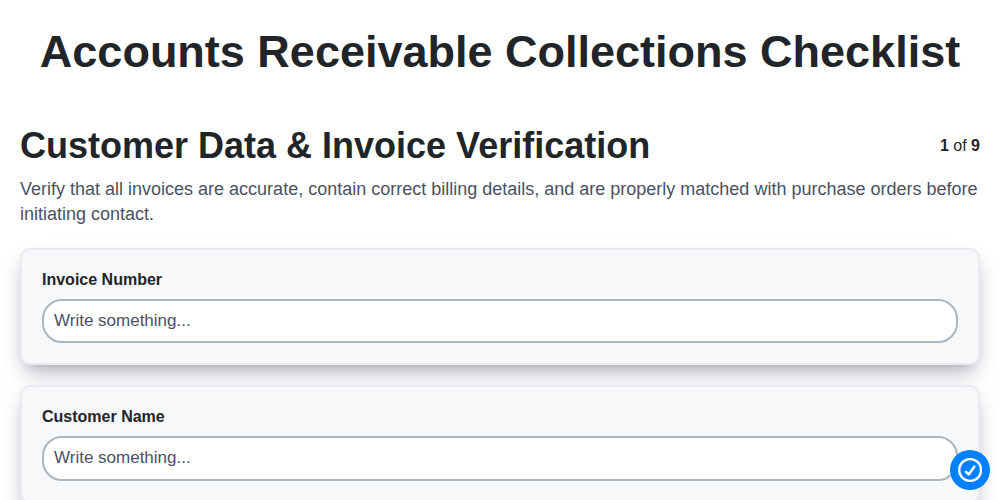
The Ultimate Accounts Receivable Collections Checklist: A Step-by-Step Guide to Streamlining Your Cash Flow
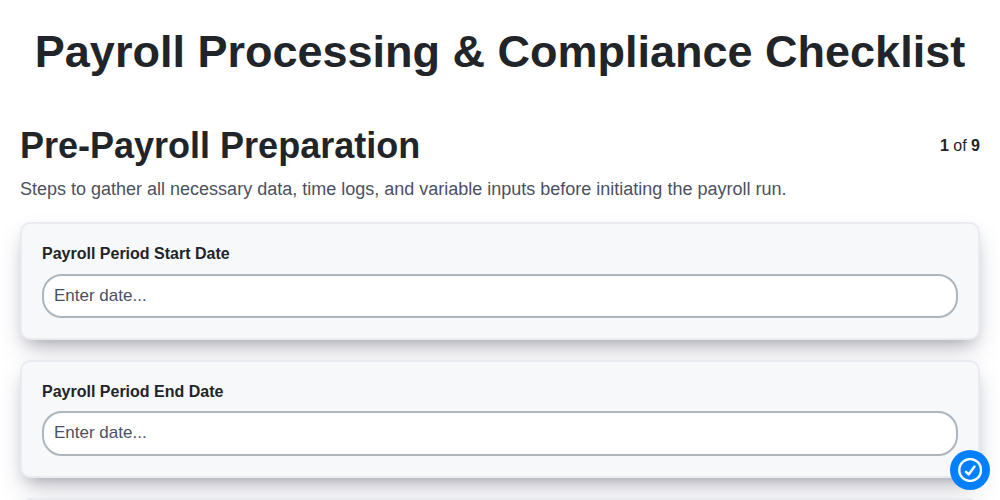
The Ultimate Payroll Processing & Compliance Checklist: A Step-by-Step Guide to Error-Free Payroll
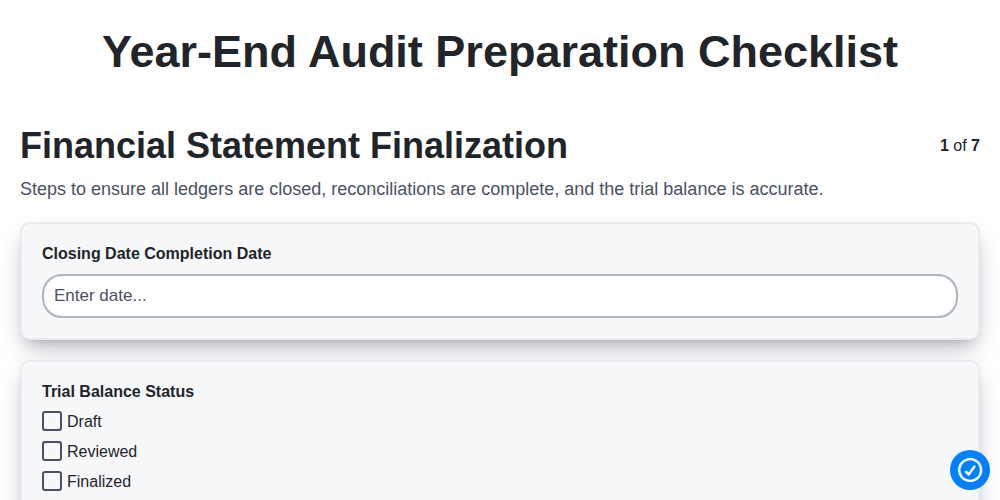
The Ultimate Year-End Audit Preparation Checklist: A Step-by-Step Guide to a Stress-Free Audit
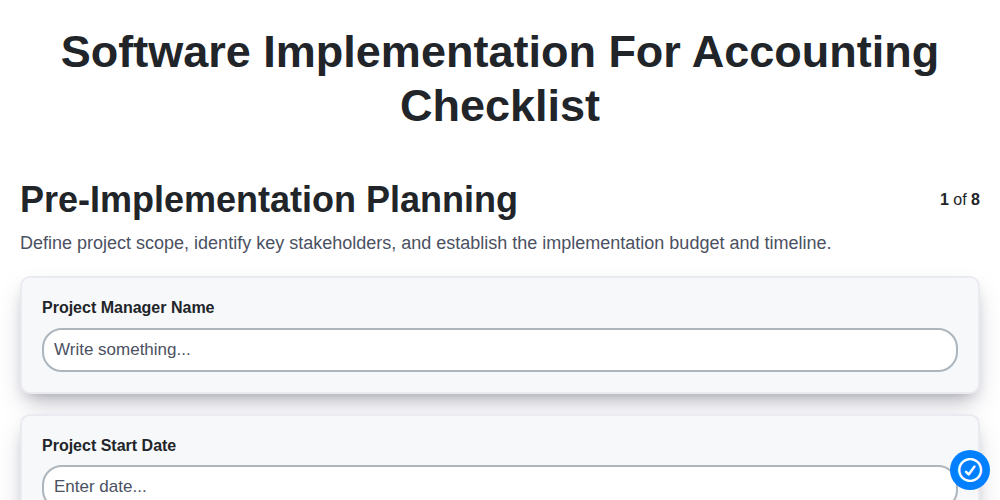
The Ultimate Software Implementation Checklist for Accounting Teams: A Step-by-Step Guide to a Seamless Transition
The Ultimate Inventory Valuation & Audit Checklist: A Step-by-Step Guide to Accuracy and Compliance
We can do it Together
Need help with
Accounting Management?
Have a question? We're here to help. Please submit your inquiry, and we'll respond promptly.