Mastering the 2026 Litigation Lifecycle: The Ultimate Case Management Checklist Template
Published: 10/30/2026 Updated: 10/31/2026
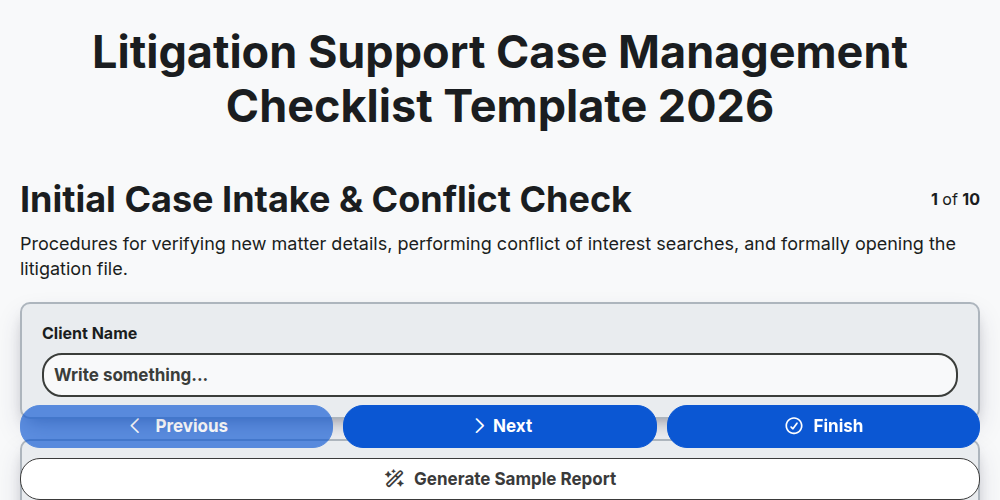
Table of Contents
- Introduction: Navigating the Complexities of Modern Litigation
- Phase 1: Foundation Building - Initial Case Intake & Conflict Check
- Phase 2: Strategic Blueprinting - Case Strategy & Litigation Planning
- Phase 3: Data & Discovery - Advanced E-Discovery & Discovery Management
- Phase 4: Asset Integrity - Evidence & Exhibit Management
- Phase 5: Human Intelligence - Witness Identification & Preparation
- Phase 6: Procedural Precision - Deposition & Hearing Coordination
- Phase 7: Maintaining Momentum - Motion Practice & Filing Deadlines
- Phase 8: The Final Countdown - Trial Preparation & Courtroom Readiness
- Phase 9: Resolution Pathways - Settlement Negotiation & Mediation Tracking
- Phase 10: Finalizing the Record - Post-Litigation Case Closure
- Conclusion: Implementing Your 2026 Workflow Efficiency
- Resources & Links
TLDR: Stay ahead of the complexities of modern legal proceedings with our comprehensive 2026 Litigation Support Case Management Checklist. This guide provides a step-by-step roadmap-from initial intake and e-discovery management to trial readiness and post-litigation closure-ensuring legal teams maintain organized, efficient, and deadline-driven workflows in an increasingly digital courtroom landscape.
Introduction: Navigating the Complexities of Modern Litigation
In the rapidly evolving legal landscape of 2026, the margin for error in litigation has never been thinner. As legal technologies advance and judicial scrutiny intensifies, the sheer volume of digital evidence and the speed of courtroom proceedings demand more than just legal expertise-they demand flawless operational execution.
The High Stakes of Case Management
Litigation is no longer just about arguing the law; it is a high-stakes logistical challenge. Between the explosion of unstructured data, the complexities of cross-border discovery, and the rigorous demands of strict court deadlines, a single oversight in the management lifecycle can lead to catastrophic consequences, ranging from missed filing windows to costly sanctions and lost cases.
Why a Structured Checklist is Your Greatest Asset
The modern litigator must act as both a strategist and a project manager. Relying on memory or fragmented spreadsheets is a recipe for professional burnout and procedural failure. A standardized, systematic approach ensures that no critical task-from the initial conflict check to the final post-litigation audit-falls through the cracks.
The Goal of This Guide
This comprehensive checklist is designed to serve as your operational North Star. Whether you are managing a single-plaintiff dispute or a massive multi-district litigation (MDL), this template provides a structured framework to:
- Minimize Risk: Ensure compliance with evolving E-Discovery standards and court rules.
- Optimize Resources: Allocate time and budget effectively across the litigation lifecycle.
- Enhance Predictability: Maintain a clear view of deadlines, witnesses, and evidence as the case progresses toward trial.
By implementing this checklist, you are not just managing a case; you are mastering a repeatable, scalable process designed for the complexities of the 2026 legal environment.
Phase 1: Foundation Building - Initial Case Intake & Conflict Check
The Bedrock of Every Lawsuit: Establishing Integrity from Day One
The success of a litigation lifecycle is rarely determined in the courtroom; it is determined in the first few hours after a client walks through your door. In the 2026 legal landscape-where precision and rapid response are even more critical due to increased digital footprints-the Initial Case Intake & Conflict Check phase serves as your project's foundation.
If this stage is handled sloppily, the entire case is built on sand. A single overlooked conflict or a missed piece of critical metadata during intake can lead to disqualification, malpractice claims, or catastrophic delays later in the proceedings.
The Critical Components of Intake
To ensure your firm remains compliant and prepared, your checklist must address two distinct but interconnected workflows:
1. The Conflict Check: Protecting Your Ethical Standing
Before any sensitive information is exchanged or any legal advice is rendered, a rigorous conflict check is non-negotiable. In 2026, this process must be comprehensive, looking beyond just the named parties to include:
- Related Entities: Checking subsidiaries, parent companies, and key stakeholders.
- Adverse Counsel/Witnesses: Ensuring no existing relationships compromise your ability to represent the client zealously.
- Prior Matters: Reviewing previous engagements that might create a subject matter conflict.
2. Comprehensive Data Intake
Once the path is clear, the focus shifts to capturing the digital DNA of the case. An effective intake process involves:
- Client Fact-Finding: Utilizing standardized digital intake forms to ensure no vital details (dates, names, locations) are lost in manual transcription.
- Preservation Notices (Litigation Holds): The moment a potential claim is identified, your checklist must trigger the issuance of preservation notices to clients and third parties to prevent the spoliation of evidence.
- Initial Document Repository Setup: Establishing a secure, encrypted environment where all incoming communications and early-stage documents are immediately categorized.
Why This Phase Matters for 2026 Litigators
With the rise of AI-driven legal research and automated discovery, the garbage in, garbage out rule has never been more relevant. An error during the intake phase-such as failing to identify a key digital asset or misidentifying a party-will propagate through your entire e-discovery and trial preparation workflows, leading to much higher costs and increased risk during the motion practice phase.
Phase 2: Strategic Blueprinting - Case Strategy & Litigation Planning
From Intake to Action: Building Your Litigation Roadmap
Once the initial conflict checks are cleared and the case is officially on your docket, the most critical transition occurs: moving from administrative intake to strategic execution. In the 2026 legal landscape, where complexity and data volume are increasing, a reactive approach is a recipe for malpractice. You cannot manage what you have not mapped out.
The Case Strategy & Litigation Planning phase is where you define the North Star for the entire litigation lifecycle. This is the stage where your legal team transforms raw case facts into a structured, actionable battle plan.
Defining the Theory of the Case
Effective litigation management begins with a deep dive into the merits. During this phase, your checklist should prioritize:
- Theory Development: Articulating the core legal arguments and the factual narrative that supports them.
- Burden of Proof Assessment: Identifying exactly what elements must be proven to prevail and which specific pieces of evidence are required to satisfy each element.
- Risk Analysis: Conducting a SWOT analysis (Strengths, Weaknesses, Opportunities, Threats) on your legal position.
Resource Allocation & Milestone Mapping
A strategy is only as good as the resources supporting it. Use this phase to establish your operational framework:
- Budgetary Guardrails: Setting realistic litigation budgets and establishing regular intervals for budget vs. actual reporting to prevent cost overruns.
- The Litigation Calendar: Creating a master Master Calendar that integrates court-mandated deadlines with internal milestones, such as expert report deadlines and discovery cut-offs.
- Team Delegation: Assigning specific responsibilities for document review, witness communication, and legal research to ensure no task falls through the cracks.
Anticipating the Opposition
Strategic planning also involves playing the other side. This involves predicting potential defenses, identifying likely motions to dismiss, and preparing for aggressive discovery tactics. By simulating the opposition's maneuvers during the planning phase, you ensure that your team is never caught off guard when the first motion is filed.
Phase 3: Data & Discovery - Advanced E-Discovery & Discovery Management
Navigating the Digital Deluge: Precision in E-Discovery
In 2026, the volume of electronically stored information (ESI) is no longer just a challenge-it is a legal battlefield. As forensic technologies evolve, the complexity of managing metadata,-encrypted communications, and massive datasets grows exponentially. To maintain a competitive edge and ensure procedural compliance, your discovery management must move beyond simple document review into a proactive, automated workflow.
The E-Discovery Lifecycle & Automated Workflows
Effective discovery management in the modern era requires a seamless integration of identification, preservation, and collection. Your checklist must prioritize the following pillars:
- Automated Preservation & Legal Holds: Moving beyond manual emails. Implement automated systems that trigger legal holds across cloud environments (Slack, Teams, and cloud-based CRM) the moment a potential dispute is identified.
- AI-Driven Document Review: Leverage Predictive Coding and Technology Assisted Review (TAR) to sift through large datasets. The goal is to use machine learning to identify relevant patterns, significantly reducing the time spent on manual linear review.
- Metadata Integrity & Chain of Custody: Ensure that every piece of ESI carries its forensic footprint intact. Your workflow must include rigorous verification steps to prove that data has not been altered during the collection process.
Managing the Discovery Timeline
The Discovery Management phase is where many cases are won or lost due to missed deadlines or overlooked productions. Use the following sub-steps to maintain control:
- ESI Protocol Negotiation: Establish clear, agreed-upon parameters with opposing counsel regarding file formats, de-duplication processes, and search terms early in the lifecycle.
- Interrogatories & Requests for Production (RFP): Maintain a centralized tracker for all incoming and outgoing requests. Each request should be linked to a specific custodian and a real-time deadline alert.
- Continuous Quality Control (QC): Implement a multi-tier review process. Once documents are culled by AI, they must undergo human-led validation to ensure that privilege logs are accurate and that no smoking gun documents are inadvertently withheld or produced.
Mitigating Risk in the Data Stream
By treating discovery as a continuous, technology-driven process rather than a reactive task, you mitigate the risks of sanctions, spoliation claims, and budget overruns. In 2026, the most successful litigators will be those who treat their discovery management as a sophisticated data science operation.
Phase 4: Asset Integrity - Evidence & Exhibit Management
Maintaining the Chain of Custody and Verifiability
In the modern litigation landscape of 2026, managing evidence is no longer just about physical folders; it is about maintaining an unbroken digital and physical chain of custody. As legal teams navigate increasingly complex data ecosystems, the integrity of your exhibits can make or break a case. A single gap in documentation can lead to devastating motions to suppress or challenges to the authenticity of your most critical proofs.
The Digital-Physical Hybrid Framework
As we move further into the era of integrated legal tech, your management strategy must bridge the gap between physical artifacts and digital assets. Your checklist should include:
- Digital Provenance Tracking: Ensuring every piece of electronically stored information (ESI) is accompanied by metadata that proves its origin and integrity.
- Physical Evidence Logging: Maintaining a rigorous, timestamped log for any tangible items, including secure storage protocols and access logs.
- Centralized Exhibit Indexing: A single, real-time source of truth that links every piece of evidence to its corresponding document number, description, and custodian.
Authentication and Admissibility Readiness
The goal of this phase is to move beyond mere storage and toward trial-ready status. Every piece of evidence under your management should be vetted against the following criteria:
- Verification of Authenticity: Have the necessary affidavits or declarations been prepared to authenticate the content?
- Completeness Audit: Does the exhibit set represent the full context of the communication, or are there gaps that could suggest cherry-picking?
- Format Compatibility: For digital exhibits, are the files in a format that is easily viewable on courtroom technology (e.g., high-resolution, non-corrupt, and searchable)?
Scalability and Security
In 2026, the volume of data is unprecedented. Effective management requires a scalable architecture that allows for rapid retrieval during high-pressure moments-such as a sudden rebuttal during testimony-without compromising the security of sensitive or privileged information. Your management template must prioritize encryption and strict permission-based access to ensure that even as the exhibit list grows, the risk of unauthorized exposure remains zero.
Phase 5: Human Intelligence - Witness Identification & Preparation
Strengthening Your Testimony: The Human Element of Litigation
In a digital-first legal landscape, while e-discovery and data analysis are critical, the outcome of a case often hinges on the strength of human testimony. As we move into 2026, effective case management requires a structured approach to managing the people involved in your dispute. This phase focuses on identifying the right voices and ensuring they are prepared to deliver credible, impactful testimony.
Strategic Witness Identification
The foundation of successful litigation is building a comprehensive witness list early in the process. A robust management workflow should include:
- Fact Witnesses: Identifying individuals with direct knowledge of the events in question.
- Expert Witnesses: Identifying, vetting, and securing specialists whose technical or scientific authority can substantiate your legal theories.
- Percipient Witnesses: Locating third parties who may have observed relevant actions or been present during critical moments.
- Adverse Witnesses: Mapping out the key players on the opposing side to anticipate their arguments and prepare for cross-examination.
Comprehensive Preparation Protocols
Identifying witnesses is only half the battle; the second half is rigorous preparation. Your checklist should include specific milestones for:
- Initial Contact & Engagement: Establishing a communication cadence and ensuring all expert retainers are executed and conflicts are cleared.
- Deposition Readiness: Organizing prep sessions where witnesses can review key documents, understand the scope of questioning, and practice maintaining composure under pressure.
- Document Review for Witnesses: Ensuring every witness has reviewed the specific exhibits, emails, and evidence that will be used to anchor their testimony.
- Trial Simulation: For high-stakes litigation, utilizing mock examinations to identify potential vulnerabilities in a witness's narrative before they ever step into a courtroom.
Leveraging Technology for Witness Management
In 2026, witness management is no longer just about a contact list. Modern case management requires tracking:
- Availability Calendars: Syncing witness schedules with deposition and trial dates to avoid scheduling conflicts.
- Subpoena Tracking: Monitoring the status of service of process and compliance with court-ordered appearances.
- Communication Logs: Maintaining a secure, centralized record of all instructions and preparatory materials shared with witnesses to ensure consistency across the legal team.
Phase 6: Procedural Precision - Deposition & Hearing Coordination
Streamlining the Moving Parts of Testimony and Testimony Prep
In the high-stakes environment of 2026 litigation, the ability to manage schedules, logistics, and personnel across multiple jurisdictions is what separates a winning legal team from one buried in administrative chaos. Phase 6 focuses on the critical period where theoretical strategy meets real-world execution: the coordination of depositions and hearings.
Orchestrating Deposition Logistics
A deposition is more than just a question-and-answer session; it is a complex logistical undertaking. To ensure your team is prepared to execute the case strategy, your checklist must cover:
- Notice and Scheduling: Ensuring all parties are properly served and that court reporters, videographers, and interpreters are booked well in advance.
- Remote & Hybrid Integration: In 2026, virtual is no longer an outlier. You must verify secure, high-bandwidth digital platforms and ensure all remote participants have stable access to the exhibit repository.
- The Digital Exhibit Bundle: Coordinating the seamless delivery of documents to opposing counsel and deponents to prevent surprises that disrupt the flow of testimony.
Managing Hearing and Oral Argument Timelines
As the case moves toward motion practice, the pressure on your calendar intensifies. Precise coordination in this phase involves:
- Calendar Synchronization: Integrating judicial deadlines, chamber-specific rules, and attorney availability into a single, real-time source of truth.
- Brief & Supplemental Filing Alignment: Ensuring that all supporting evidence and supplemental authorities are ready for submission alongside your oral argument preparations.
- Logistical Readiness: Coordinating courtroom technology, such as digital presentation tools or electronic evidence displays, to ensure a seamless transition from argument to evidentiary demonstration.
The Goal: Eliminating Procedural Friction
The objective of this phase is to remove all administrative distractions from the legal counsel. By implementing a rigorous coordination checklist, you allow the attorneys to focus entirely on the substance of the testimony and the strength of the arguments, rather than worrying about whether a videographer arrived on time or if a digital exhibit failed to load.
Phase 7: Maintaining Momentum - Motion Practice & Filing Deadlines
Navigating the Procedural Minefield
In the high-stakes environment of modern litigation, momentum is often won or lost in the trenches of motion practice. As we move into 2026, the complexity of procedural requirements is increasing, making it impossible to rely on memory alone. This phase of the checklist focuses on the disciplined management of every motion, brief, and court-mandated deadline to ensure your legal team never misses a critical beat.
Precision in Motion Practice
Motion practice is the engine of your litigation strategy. It is where you actively shape the scope of the case, seek summary judgments, and compel necessary actions from opposing counsel. To maintain control, your management process must include:
- Motion Tracking Logs: Maintaining a centralized real-time database of all pending motions, including the current status (e.g., briefed, pending, decided, or stayed).
- Opposition & Reply Windows: Explicitly mapping out the windows for opposition briefs and replies to ensure your team has adequate time for high-quality drafting.
- Substantive Milestone Integration: Linking motions to the overall case strategy to ensure that a motion to compel or a motion for sanctions aligns with your broader trial goals.
The Non-Negotiable: Deadlines & Calendaring
The most sophisticated legal argument is rendered useless if it is filed one hour too late. In 2026, with the integration of automated legal tech and electronic filing systems, the margin for error has shrunk.
Managing the Digital Deadline
As courts continue to transition toward more rigorous electronic filing protocols, your checklist must prioritize:
- Rule-Based Calendaring: Utilizing automated alerts that account for local court rules, weekend shifts, and statutory holidays.
- The Buffer Zone Strategy: Implementing internal soft deadlines (typically 48-72 hours prior to the actual court deadline) to allow for final review, formatting, and troubleshooting of e-filing portals.
- Service Verification: A dedicated sub-step to confirm that all parties have been properly served and that proofs of service are filed and archived immediately.
By treating motion practice and deadlines not just as administrative tasks, but as strategic pillars, you protect the integrity of your case and ensure that your legal arguments are heard when they matter most.
Phase 8: The Final Countdown - Trial Preparation & Courtroom Readiness
Entering the Arena: The Trial Readiness Phase
As the litigation lifecycle reaches its most critical juncture, the margin for error disappears. Trial preparation is not merely about organizing documents; it is about transforming months of discovery and strategy into a cohesive, persuasive narrative. In 2026, with the increasing integration of AI-driven trial presentation tools and real-time digital evidence rendering, your readiness must be both procedural and technological.
1. The Master Trial Notebook Construction
The digital and physical trial notebook serves as your single source of truth. As you move into this phase, ensure your notebook includes:
- Verified Exhibit List: A finalized, numbered list of all admitted and intended exhibits.
- Witness Summaries: Condensed, high-impact summaries of deposition testimony to allow for quick reference during cross-examination.
- Legal Authority Binder: Ready-to-use copies of all relevant case law, statutes, and motions in limine.
- Jury Instructions: A streamlined version of the proposed instructions to ensure alignment with your evidentiary strategy.
2. Technical & Digital Presentation Readiness
In the modern courtroom, readiness extends to your tech stack. The 2026 litigation landscape demands seamless integration between your case management software and courtroom hardware.
- Digital Exhibit Integration: Ensure all electronic exhibits are compatible with courtroom presentation software (such as TrialPad or similar).
- Demonstrative Evidence Testing: Test all 3D models, animations, or digital timelines on-site to prevent technical delays that can disrupt the rhythm of your argument.
- Remote Witness Protocols: If any witnesses are testifying via video link, conduct a stress test of the audio-visual connection and latency to ensure no critical testimony is lost to technical glitches.
3. The War Room Logistics
Effective trial management requires managing the human element of the legal team.
- The Daily Trial Briefing: Implement a mandatory morning sync to review the day's objectives, potential pitfalls, and upcoming witness sequences.
- Logistics Check: Confirm all travel, lodging, and meal schedules for the entire litigation team to prevent fatigue-related errors.
- Real-Time Note Taking: Assign a dedicated team member to capture real-time updates from the bench or opposing counsel to immediately adjust the next day's strategy.
Phase 9: Resolution Pathways - Settlement Negotiation & Mediation Tracking
Navigating the Path to Resolution
As a case moves toward its conclusion, the focus shifts from aggressive discovery to strategic negotiation. In the 2026 legal landscape, where-case volatility and court dockets are increasingly unpredictable, the ability to track settlement discussions with precision is what separates successful counsel from those caught in procedural chaos.
Strategic Settlement Tracking
The transition from litigation to negotiation requires a rigorous tracking system. It is no longer enough to simply wait for an offer. Your management process must include:
- Offer & Counter-Offer Logs: Maintaining a chronological, immutable record of every formal offer, counter-proposal, and verbal indication of intent.
- Valuation Modeling: Updating your case valuation assessments in real-time as new evidence emerges or as the strength of the opposing party's position shifts.
- Authority Documentation: Ensuring that all settlement instructions are documented and that you have clearly identified the boundaries of settlement authority from your clients.
Mediation Management
Mediation is often the most intensive period of the settlement phase. To avoid oversight, your checklist should include the following sub-steps:
Pre-Mediation Readiness
- Mediation Brief Preparation: Finalizing and distributing comprehensive briefs to the mediator and opposing counsel well in advance of the session.
- Mediator Selection & Vetting: Evaluating mediator availability, recent rulings, and specialized expertise relative to the specific nuances of the case.
- Logistics & Virtual Suite Setup: In an era of hybrid legal proceedings, ensuring all digital mediation platforms, secure document repositories, and breakout room links are functional and accessible.
The Mediation Session & Post-Session Follow-up
- Real-time Term Tracking: During the session, use a dedicated tracker to record specific terms discussed, such as payment structures, release language, and confidentiality stipulations.
- Term Sheet Drafting: Immediate conversion of verbal agreements into a formal, written term sheet to prevent memory drift or late-stage renegotiation.
- Execution Monitoring: Tracking the movement of the final settlement agreement through the necessary signing parties and ensuring all necessary court approvals (if required) are obtained.
By implementing a structured tracking system during this phase, you mitigate the risk of leaving value on the table and ensure that the momentum gained during litigation is successfully converted into a definitive, binding resolution.
Phase 10: Finalizing the Record - Post-Litigation Case Closure
Closing the Loop: Ensuring Compliance and Continuity
The conclusion of a legal battle is often met with a sense of relief, but for litigation support professionals, the work is far from over. The post-litigation phase is a critical period where the focus shifts from active combat to administrative precision and risk mitigation. Failure to execute a structured closure process can lead to missed compliance deadlines, lost intellectual property, or even malpractice claims.
To ensure your firm remains organized and audit-ready, your post-litigation workflow should focus on three primary pillars:
1. Data Retention and Digital Archiving
In the era of 2026's highly regulated data landscape, simply deleting files is not an option. You must execute a precise archiving strategy:
- Final Record Compilation: Consolidate all final orders, judgments, and settlement agreements into a single, immutable master file.
- E-Discovery Cleanup: Ensure all temporary working copies,-near-duplicate datasets, and processed metadata are handled according to your firm's specific data retention policy.
- Long-term Storage: Move closed matters to cold storage or long-term archival systems that maintain the chain of custody and integrity of the evidence.
2. Financial Reconciliation and File Auditing
A case is not truly closed until the books are balanced. This step involves a thorough audit of all costs incurred during the litigation lifecycle.
- Cost Recovery Verification: Reconcile all expert fees, filing fees, and deposition costs to ensure they are accurately reflected in final billing or settlement disbursements.
- Vendor Settlement: Ensure all third-party litigation support vendors (e-discovery providers, court reporters, and process servers) have been paid and their respective files are marked as complete.
3. Post-Mortem Analysis & Process Optimization
The most successful litigation teams use every closed case as a learning opportunity. Use this phase to refine your 2026 strategy:
- The Lessons Learned Review: Conduct a brief debrief with the legal team to identify bottlenecks in the discovery or motion practice phases.
- Template Updates: If a specific workflow failed or a new type of evidence emerged during trial, update your Litigation Support Case Management Checklist accordingly.
- Knowledge Management: Update your internal knowledge base with any new legal precedents or procedural nuances discovered during the case to benefit future litigation teams.
By treating post-litigation closure as a formal phase rather than an afterthought, you safeguard your firm against future liability and ensure that your litigation support infrastructure remains lean, efficient, and ready for the next high-stakes matter.
Conclusion: Implementing Your 2026 Workflow Efficiency
As we approach 2026, the complexity of legal proceedings continues to escalate with the rapid integration of AI-driven discovery, denser digital footprints, and increasingly aggressive court deadlines. Managing a modern caseload is no longer just about legal expertise; it is about operational excellence.
Turning a Checklist into a Competitive Advantage
Adopting a structured Litigation Support Case Management Checklist is more than an organizational tactic-it is a risk management strategy. By implementing this template, you transition from a reactive posture to a proactive one. Instead of scrambling during the high-pressure windows of trial preparation or motion practice, your team can focus on high-level legal analysis, knowing that the procedural foundation is secure.
Three Pillars for Success in 2026
To get the most out of this template, keep these implementation principles in mind:
1. Standardize, But Stay Agile
Use the checklist as your source of truth for every case. However, ensure your workflow allows for the unexpected. A litigation lifecycle is rarely linear; your ability to loop back from Witness Preparation to Discovery Management is where true mastery lies.
2. Leverage Technology Integration
In 2026, a paper checklist is insufficient. Integrate this workflow into your Practice Management Software (PMS) or Matter Management systems. Automate your Conflict Checks and set automated alerts for Filing Deadlines to eliminate the risk of human error.
3. Foster Collaborative Ownership
Case management is a team sport. Ensure that every stakeholder-from paralegals and litigation support specialists to senior partners-understands their role within each phase. When the entire team knows that Evidence & Exhibit Management is a shared responsibility, the burden of trial readiness is distributed and manageable.
Final Thoughts
The legal landscape is changing, but the fundamentals of thoroughness, organization, and foresight remain constant. By utilizing this 2026 template, you are not just tracking tasks; you are building a scalable framework for legal victory and institutional efficiency.
Resources & Links
- American Bar Association (ABA): Comprehensive resources on legal ethics, litigation standards, and professional responsibility for managing complex cases.
- Legal Information Institute (LII): Access to legal definitions, US code, and regulatory frameworks essential for Phase 1 and Phase 7 procedural accuracy.
- The Sedona Conference: The industry standard for best practices in e-discovery, data management, and electronic evidence protocols (Essential for Phase 3).
- Trellis: Advanced legal analytics and court data to assist in litigation strategy and motion practice research.
- Clio: Industry-leading legal practice management software to help automate workflows and case deadlines.
- Relativity: A leading platform for e-discovery and complex data review, critical for managing large-scale digital evidence.
- Thomson Reuters Westlaw: Comprehensive legal research tools for building case blueprints and identifying relevant case law.
- LexisNexis: Legal research and analytics for tracking litigation trends and preparing for trial-ready evidence.
- Prodigy Case Management: Tools for managing witness information, document repositories, and trial preparation workflows.
- Journal of Conflict and Information Security: Insights into managing information integrity and data security during the litigation lifecycle.
- ACORD (Litigation Support): Resources for managing insurance-related litigation and settlement tracking complexities.
- PACER (Public Access to Court Electronic Records): The essential portal for monitoring federal court filings, dockets, and procedural deadlines.
- Trevion Legal: Specialized services for document management and digital forensics during the discovery phase.
- Thomson Reuters Compliance: Resources for managing conflict checks and regulatory compliance during case intake.
- Forbes Legal Tech Insights: Trends and future-looking articles regarding the adoption of AI in 2026 litigation workflows.
- Law360: Real-time legal news and updates to stay informed on evolving litigation procedures and court rulings.
Comments
There are no comments yet. Be the first to add one!
Case Management Solution Demo
Streamline your casework & improve outcomes! ChecklistGuro centralizes case details, tasks, & communication. Enhance efficiency, ensure compliance, & deliver exceptional service. Manage it all with our Work OS.
Related Articles
Streamline Your Deals: The Ultimate Real Estate Case Management Checklist Template
Streamline Your Debt Collection: A Case Management Checklist Template
Cybersecurity Incident Response: Your Checklist Template for Success
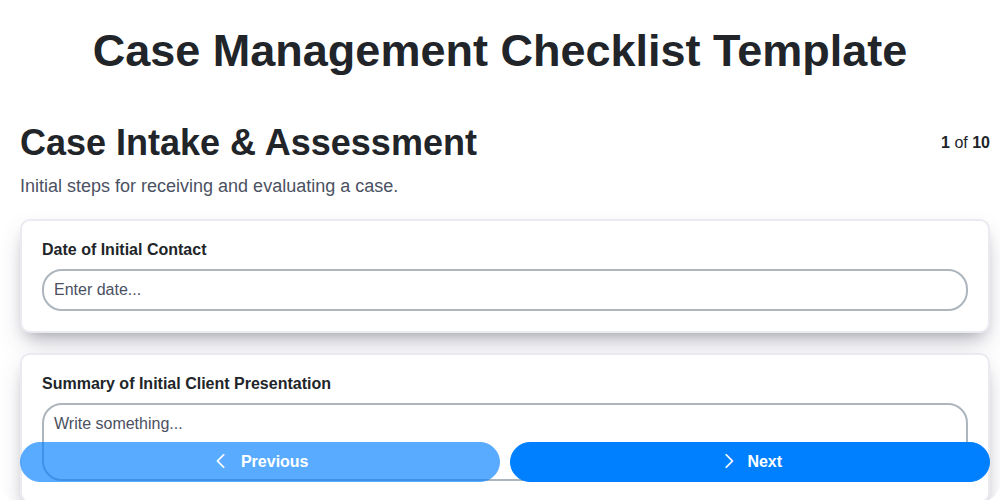
Streamline Your Case Management: The Ultimate Checklist Template
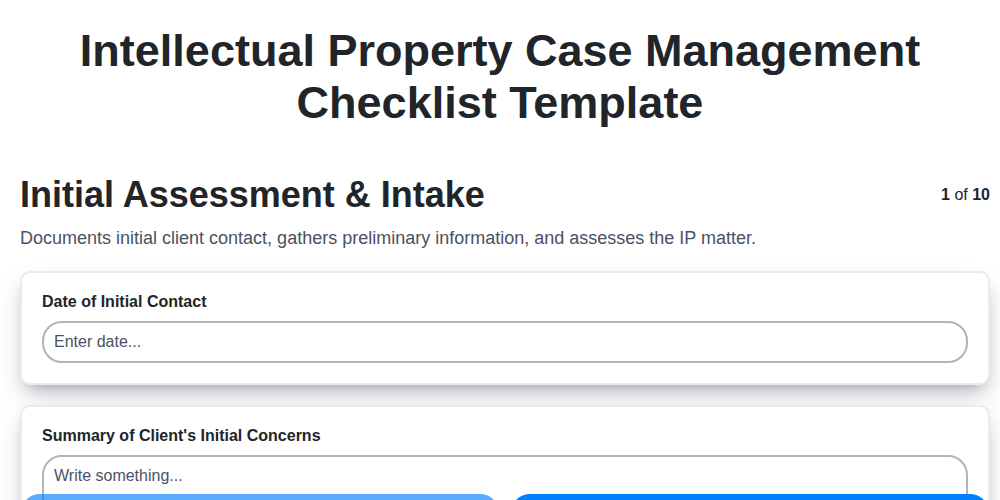
Mastering IP: Your Intellectual Property Case Management Checklist Template
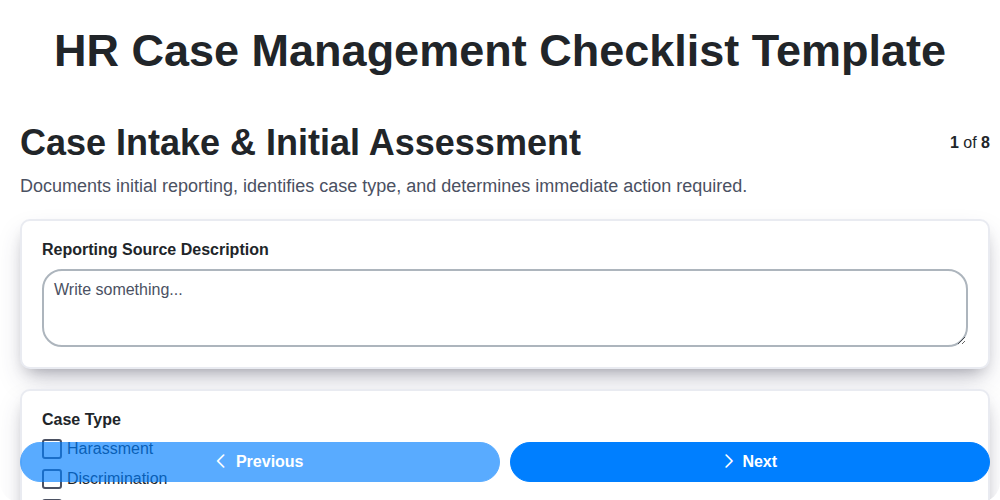
HR Case Management Checklist Template: Your Guide to Fair & Compliant Investigations
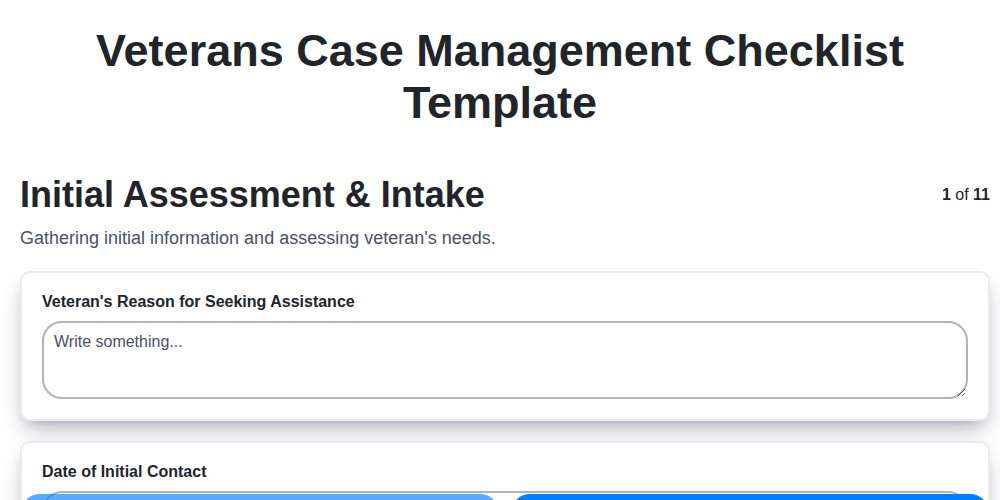
Streamlining Veteran Care: Your Comprehensive Case Management Checklist Template
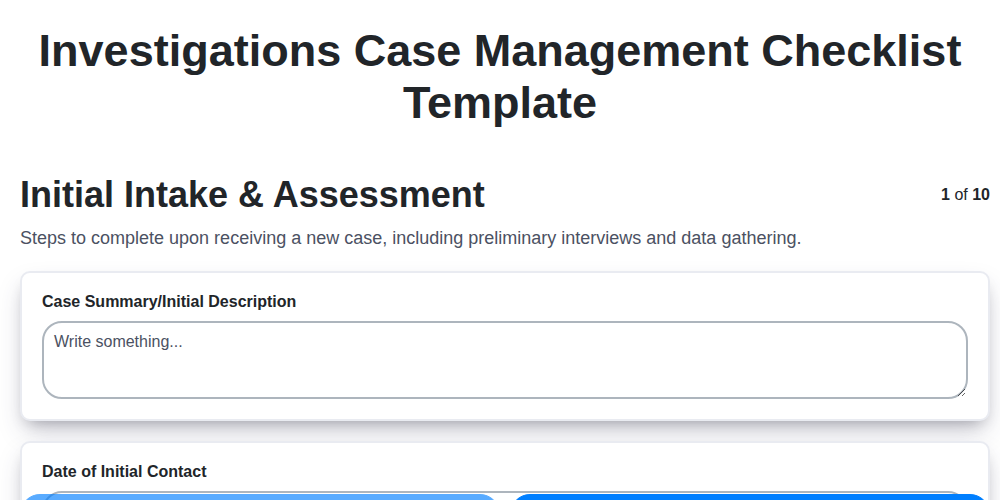
Mastering Investigations: Your Case Management Checklist Template Guide
Need help with
Case Management?
Have a question? We're here to help. Please submit your inquiry, and we'll respond promptly.