Efficient Mine Equipment Maintenance Scheduling Workflow
Published: 06/18/2026 9:00 PM Updated: 06/19/2026 11:48 AM
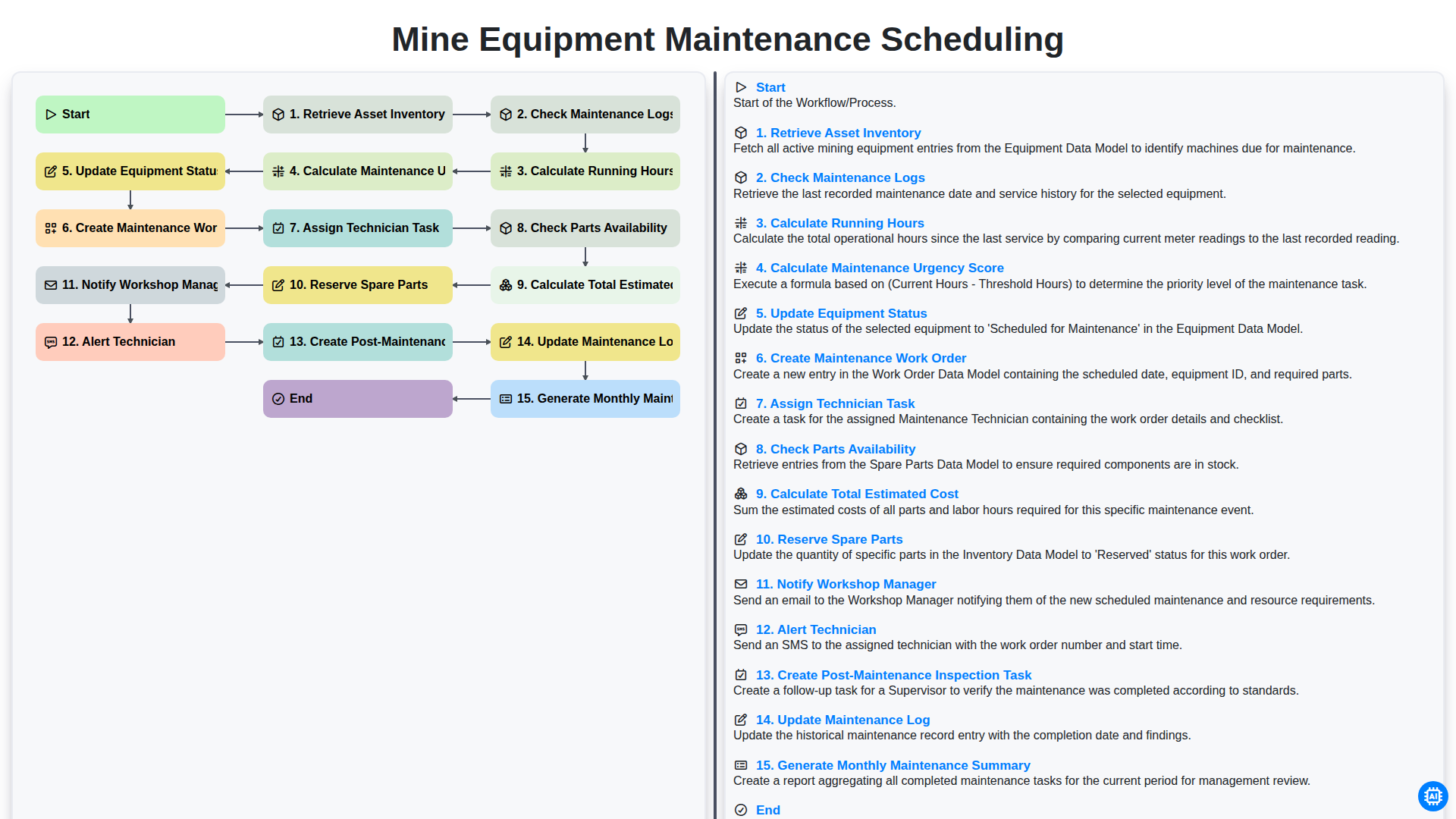
Table of Contents
- Introduction: The Importance of Structured Maintenance Scheduling
- Phase 1: Data Gathering and Asset Assessment
- Step 1: Retrieving and Verifying Asset Inventory
- Step 2: Reviewing Historical Maintenance Logs
- Step 3: Calculating Running Hours and Usage Metrics
- Phase 2: Prioritization and Urgency Assessment
- Step 4: Determining the Maintenance Urgency Score
- Phase 3: Work Order Generation and Resource Planning
- Step 5: Updating Equipment Status and Creating Work Orders
- Step 6: Technician Assignment and Task Delegation
- Step 7: Parts Availability and Cost Estimation
- Step 8: Managing Spare Parts Reservation
- Phase 4: Communication and Execution
- Step 9: Notifying Management and Alerting Technicians
- Phase 5: Post-Maintenance Verification and Reporting
- Step 10: Post-Maintenance Inspection and Log Updates
- Step 11: Generating Monthly Maintenance Summaries
- Resources & Links
TLDR: This guide introduces an automated maintenance scheduling workflow designed to optimize mine equipment uptime. Learn how to streamline operations by transforming raw asset data and running hours into actionable work orders, managing part availability, and ensuring seamless communication between technicians and managers to prevent costly unplanned downtime.
Introduction: The Importance of Structured Maintenance Scheduling
In the heavy-duty world of mining, downtime is the ultimate profit killer. When a critical piece of machinery fails unexpectedly, the ripple effects extend far beyond a single broken component; they trigger costly production delays, jeopardize worker safety, and disrupt the entire supply chain. This is why moving from a reactive fix it when it breaks mentality to a proactive, structured maintenance strategy is not just a luxury-it is a operational necessity.
Effective maintenance scheduling is about more than just keeping a calendar; it is about managing a complex ecosystem of data, logistics, and human expertise. A structured workflow ensures that every piece of equipment receives care exactly when needed, preventing catastrophic failures while optimizing the use of your most valuable resources: your technicians and your spare parts inventory. By implementing a systematic approach to tracking running hours, assessing urgency, and automating work orders, mining operations can transform their maintenance departments from cost centers into drivers of long-term operational stability and efficiency.
Phase 1: Data Gathering and Asset Assessment
The foundation of an effective maintenance strategy lies in the accuracy of your initial data. Before any scheduling can occur, the process begins with Retrieving the Asset Inventory to ensure every piece of machinery is accounted for in the system. Once the inventory is verified, the workflow moves into a deep dive of historical data by Checking Maintenance Logs. This step is critical for identifying recurring issues and understanding the lifecycle of each machine.
To determine exactly when an intervention is needed, the system must then Calculate Running Hours for each unit. By comparing actual usage against manufacturer-recommended service intervals, the workflow can precisely Calculate a Maintenance Urgency Score. This score acts as the primary driver for the entire schedule, allowing maintenance teams to prioritize high-risk machinery and prevent unexpected downtime before it occurs.
Step 1: Retrieving and Verifying Asset Inventory
The foundation of an effective maintenance strategy lies in knowing exactly what you are maintaining. The first step in the workflow is to Retrieve Asset Inventory, which involves pulling a comprehensive list of all machinery, vehicles, and heavy equipment currently in operation. This isn't just about a simple list; it is about ensuring that the digital registry matches the physical reality of the mine site.
During this phase, the goal is to verify that every critical asset is accounted for, including its unique identification number, model, and specific location. By establishing an accurate baseline of your inventory, you eliminate the risk of ghost assets or overlooked equipment, ensuring that no piece of machinery is left out of the scheduling cycle. This stage serves as the prerequisite for all subsequent data analysis, such as checking logs and calculating running hours.
Step 2: Reviewing Historical Maintenance Logs
Once the initial asset inventory has been retrieved, the next critical phase in the workflow is a deep dive into the historical maintenance data. Reviewing maintenance logs is not merely a clerical task; it is a diagnostic process that provides essential context for the current state of each machine.
By meticulously examining previous repair histories, technicians and managers can identify recurring patterns, such as frequent component failures or specific subsystems that demand more frequent interventions than the standard manufacturer guidelines suggest. This step allows the team to differentiate between routine, predictable servicing and irregular, high-priority repairs. Analyzing these logs ensures that the maintenance schedule is built on a foundation of empirical evidence rather than assumptions, preventing the common pitfall of overlooking hidden issues that have been documented in previous service cycles but not yet addressed.
Step 3: Calculating Running Hours and Usage Metrics
Once the maintenance logs have been reviewed, the next critical step in the workflow is the precise calculation of running hours and usage metrics. Maintenance in mining is rarely a matter of simple calendar dates; instead, it is driven by the actual intensity of machine operation. By analyzing engine hours, cycle times, and load factors, we can move from a reactive stance to a predictive one. This data-driven approach allows us to understand the true wear and tear on each asset, ensuring that maintenance intervals are based on actual operational stress rather than arbitrary timeframes. This step provides the empirical foundation necessary to determine exactly when a machine is approaching a critical service threshold.
Phase 2: Prioritization and Urgency Assessment
Once the necessary data has been gathered, the workflow moves into the most critical stage: transforming raw data into actionable intelligence. This phase is where the system distinguishes between routine upkeep and critical repairs.
The process begins by calculating running hours for each asset, comparing actual usage against manufacturer-recommended intervals. This real-time metric allows for a more precise maintenance window than simple calendar-based scheduling. Using these metrics, the system then calculates a Maintenance Urgency Score. This algorithm-driven score integrates current usage, historical failure patterns, and the wear-and-tear documented in previous logs to rank equipment based on the risk of imminent failure.
By quantifying urgency, the maintenance team can move away from a reactive fix it when it breaks mentality and transition into a predictive model. This high-level prioritization ensures that high-impact machinery receives immediate attention, preventing costly unplanned downtime and optimizing the allocation of workshop resources.
Step 4: Determining the Maintenance Urgency Score
After analyzing the running hours and historical maintenance data, the next critical step in the workflow is calculating the Maintenance Urgency Score. This stage moves the process from simple data collection to intelligent decision-making.
The urgency score is a weighted metric derived from several variables: the proximity to the next scheduled service interval, the current engine hours versus the manufacturer's recommended threshold, and the severity of any reported anomalies in the recent maintenance logs. By quantifying this data, the system can differentiate between routine preventative tasks and high-priority repairs that pose an immediate risk of equipment failure.
A high urgency score triggers an automatic escalation in the workflow, ensuring that critical assets are flagged for immediate attention. This prevents the reactive maintenance trap, where unexpected breakdowns lead to costly downtime, and instead allows the maintenance team to prioritize tasks based on actual operational risk rather than just a chronological calendar.
Phase 3: Work Order Generation and Resource Planning
Once the maintenance urgency score has been determined and the equipment status is officially updated to Scheduled, the workflow transitions from assessment to action. This phase is critical, as it transforms data-driven insights into actionable logistics.
The process begins with the formal creation of a Maintenance Work Order, which serves as the single source of truth for the upcoming service. To ensure this work order is actionable, the system immediately initiates the assignment of technician tasks, matching the complexity of the required repair with the specific skill sets available in the workforce.
Effective scheduling, however, requires more than just assigning personnel; it requires a seamless integration of inventory management and financial forecasting. To prevent costly downtime caused by missing components, the workflow triggers a simultaneous check of parts availability and a calculation of the total estimated cost for the service. If a necessary component is missing, the system moves to reserve spare parts from the warehouse to ensure they are staged and ready before the machine enters the workshop.
Finally, to bridge the gap between the planning office and the shop floor, the workflow automates communication by notifying the Workshop Manager of the upcoming workload and sending an immediate alert to the assigned Technician. This ensures that all stakeholders are aligned, resources are secured, and the transition from a scheduled task to an active repair is seamless and transparent.
Step 5: Updating Equipment Status and Creating Work Orders
Once the maintenance urgency score has been determined, the workflow transitions from analysis to action. The first critical step is to Update Equipment Status within your management system. By transitioning the asset's status from Operational to Scheduled for Maintenance or Under Review, you prevent the accidental assignment of heavy-duty tasks to machinery that is due for service, thereby mitigating the risk of unexpected breakdowns.
Following the status update, the system automatically triggers the Creation of a Maintenance Work Order. This document serves as the single source of truth for the upcoming service, containing all necessary technical specifications, required tools, and the specific maintenance parameters identified during the logs review. This stage is pivotal because it transforms raw data into a structured, actionable instruction that bridges the gap between administrative planning and hands-on execution.
Step 6: Technician Assignment and Task Delegation
Once the maintenance work order has been officially created, the workflow moves into the critical phase of human resource allocation. This stage, known as Assigning Technician Tasks, is where the digital plan meets physical execution.
Effective task delegation is not merely about picking an available staff member; it is about matching the specific complexity of the maintenance requirement with the right skill set. During this step, the system or supervisor evaluates the technician's expertise, certifications, and current workload to ensure that the assigned individual is capable of handling the specific machinery involved.
A seamless assignment process prevents bottlenecks in the workshop. By strategically delegating tasks, you ensure that high-priority repairs are handled by senior specialists, while routine inspections are distributed to maintain a balanced workflow across the entire team. Proper assignment ensures that when the technician receives their alert, they are fully equipped-both mentally and technically-to execute the job correctly the first time.
Step 7: Parts Availability and Cost Estimation
Once the maintenance work order has been created and a technician has been assigned, the workflow moves into the critical logistics phase: Checking Parts Availability and Calculating Total Estimated Cost.
Effective maintenance scheduling isn't just about knowing when to fix a machine, but ensuring you have the necessary resources to complete the job without unexpected downtime. During this step, the system cross-references the required components identified in the work order against current warehouse inventory. If a critical component is missing, the workflow triggers a procurement request to prevent the maintenance task from stalling.
Simultaneously, the system performs a comprehensive cost analysis. By aggregating the price of required spare parts, estimated labor hours, and potential consumable usage, the system generates a Total Estimated Cost for the repair. This financial transparency is vital for budget management, allowing maintenance managers to predict monthly expenditures and prioritize repairs based on both technical urgency and budgetary impact. This dual focus on logistics and cost ensures that once a technician is alerted, they have everything they need to move straight from planning to execution.
Step 8: Managing Spare Parts Reservation
Once the total estimated cost of the maintenance task has been calculated, the next critical step is to Check Parts Availability and proceed to Reserve Spare Parts. A maintenance schedule is only as effective as the availability of the components required to execute it.
During this phase, the system cross-references the required parts list against current warehouse stock levels. If the necessary components-such as filters, seals, or heavy-duty bearings-are in stock, they are immediately earmarked for the specific work order to prevent them from being allocated to other urgent repairs. If a shortage is identified, this step triggers the procurement process immediately, ensuring that parts arrive before the equipment is taken offline. By automating the reservation process, you eliminate the risk of dry runs, where technicians are ready to work but are sidelined by missing components, thereby minimizing unexpected downtime and optimizing workshop productivity.
Phase 4: Communication and Execution
Once the maintenance schedule is finalized and the logistical groundwork is laid, the focus shifts from planning to active communication and execution. This phase ensures that the right people and resources are mobilized to prevent downtime.
The process begins with the critical step of notifying the workshop manager, ensuring that the facility is prepared for the upcoming workload. Simultaneously, an alert is sent to the technician, providing them with the necessary details to prepare for the upcoming task. To ensure no delays occur once the work begins, it is vital to check parts availability and immediately reserve spare parts required for the specific repair.
The execution phase concludes with a rigorous quality control loop. Once the physical work is complete, a post-maintenance inspection task is created to verify that all repairs meet safety and operational standards. Finally, the cycle is closed by updating the maintenance log, ensuring that every action taken is documented for future audits and data-driven decision-making.
Step 9: Notifying Management and Alerting Technicians
Once the maintenance plan is finalized and the cost estimates are calculated, the workflow moves into the critical communication phase. Effective communication ensures that no maintenance task falls through the cracks due to information silos.
First, the system triggers a notification to the Workshop Manager. This step is vital for high-level oversight; it allows management to review the upcoming workload, assess the impact on production schedules, and ensure that the estimated costs and resource allocations align with the operational budget.
Simultaneously, an automated alert is dispatched to the assigned Technician. This real-time alert serves as a digital dispatch, providing the technician with immediate visibility into their upcoming responsibilities. By streamlining this notification process, you eliminate the delays associated with manual paperwork and ensure that the maintenance team can begin preparing for the task the moment the work order is approved.
Phase 5: Post-Maintenance Verification and Reporting
Once the physical maintenance work is completed, the workflow transitions into the critical final phase: verification and documentation. This stage ensures that the maintenance wasn't just performed, but performed to standard, and that all data is captured for long-term asset intelligence.
The process begins with the Creation of a Post-Maintenance Inspection Task. This step acts as a quality control gate, where a supervisor or lead engineer verifies that the repairs meet safety and operational specifications. Only after a successful inspection can the workflow proceed to Update the Maintenance Log, ensuring a permanent, digital footprint of the work performed, parts replaced, and any anomalies discovered during the process.
To close the loop on the entire maintenance cycle, the system then moves into the reporting layer. The final step is to Generate a Monthly Maintenance Summary. This high-level report aggregates all completed tasks, downtime metrics, and costs, providing management with the visibility needed to analyze fleet reliability and optimize future maintenance budgets. This end-to-end documentation ensures that every hour of machine downtime is accounted for and every repair is backed by verifiable data.
Step 10: Post-Maintenance Inspection and Log Updates
Once the maintenance task is completed, the workflow transitions from execution to verification and documentation. The process begins with the creation of a Post-Maintenance Inspection Task, which serves as a quality control gate to ensure that all repairs and preventive measures were performed according to standard operating procedures. This step is crucial for identifying any oversight before the equipment is returned to active service, thereby preventing costly secondary failures.
Following a successful inspection, the final critical step is to Update the Maintenance Log. This involves documenting the specific actions taken, the parts replaced, and any observations made during the repair. Maintaining an accurate, real-time digital history is vital for auditing, tracking the lifecycle of the asset, and providing the necessary data for future predictive maintenance calculations. By closing the loop with detailed documentation, you ensure that the entire maintenance ecosystem remains transparent and data-driven.
Step 11: Generating Monthly Maintenance Summaries
The final stage of the workflow is the transition from operational execution to strategic oversight. Once all individual maintenance tasks are completed and logged, the system automatically generates a Monthly Maintenance Summary. This report serves as a high-level analytical tool that consolidates all the data collected throughout the month-from equipment downtime and total maintenance costs to technician efficiency and parts usage.
By reviewing these summaries, management can identify recurring patterns, such as specific assets that frequently require emergency repairs or high-frequency part replacements. This data-driven insight is crucial for moving from a reactive maintenance culture to a predictive one, allowing for better budget forecasting and long-term lifecycle planning for your entire fleet.
Resources & Links
- IBM: Predictive Maintenance Overview: A deep dive into how data-driven maintenance models can prevent unexpected equipment downtime in industrial settings.
- SAP Asset Management Solutions: Comprehensive resources on managing large-scale asset inventories and automating maintenance workflows.
- GE Digital: Asset Performance Management: Insights into calculating urgency scores and managing real-time equipment health monitoring.
- McKinsey Operations Insights: Expert articles on optimizing maintenance scheduling and reducing total cost of ownership in mining operations.
- UpKeep: Maintenance Management Guide: A practical guide to work order creation, technician assignment, and parts inventory management.
- Bentley Systems: AssetWise: Information on managing the lifecycle of heavy machinery, from inspection tasks to final maintenance reporting.
Found this Article helpful?
Comments
There are no comments yet. Be the first to add one!
Mining Management Solution Demo
Maximize efficiency & safety in mining operations! ChecklistGuro streamlines task management, equipment tracking, and compliance reporting. Optimize workflows, reduce risk, & boost productivity. Manage it all with our Work OS.
Related Articles
Ensuring Mine Safety: Your Geotechnical Stability Checklist Guide
Ensuring Safety & Efficiency: Your Mine Haul Road Inspection Checklist Guide
Mastering Mine Safety: Your Guide to the Ground Control Checklist
Mining Security Procedures Checklist: A Comprehensive Template for Safety
Ensuring Safety: Your Mining Incident Reporting Checklist Guide
Ensuring Safety Underground: Your Mine Traffic Management Checklist Guide
Ensuring Safety: Your Mining Explosives Handling Checklist Template
Ensuring Safety & Compliance: Your Mining Noise Monitoring Checklist Guide
We can do it Together
Need help with
Checklists?
Have a question? We're here to help. Please submit your inquiry, and we'll respond promptly.