Proactive Safety: Your Guide to the Mine Site Hazard Identification Checklist
Published: 11/20/2025 Updated: 07/02/2026
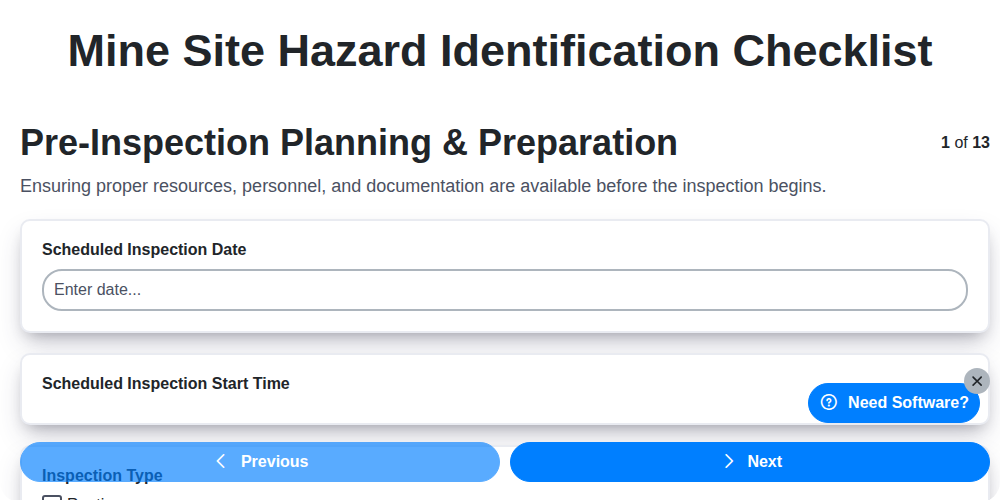
Table of Contents
- Introduction: Why Hazard Identification is Critical
- 1. Pre-Inspection Planning & Preparation: Setting the Stage
- 2. Ground Control & Slope Stability: Assessing the Earth's Embrace
- 3. Ventilation & Air Quality: Breathing Easy and Staying Safe
- 4. Electrical Equipment & Systems: Powering Safety
- 5. Mobile Equipment & Vehicle Traffic: Navigating Risks
- 6. Material Handling & Storage: Secure and Stable
- 7. Working at Heights: Preventing Falls
- 8. Confined Spaces: Understanding and Mitigating Risks
- 9. Emergency Preparedness: Ready for the Unexpected
- 10. The Human Element: PPE, Training & Competency
- 11. Continuous Improvement: Review & Corrective Actions
- Resources & Links
TLDR: This checklist is your essential tool for proactively identifying and mitigating hazards on your mine site. Covering everything from ground control to PPE and emergency preparedness, it guides you through a systematic assessment to minimize risks and create a safer working environment. Use it to plan, inspect, address concerns, and continuously improve your safety protocols.
Introduction: Why Hazard Identification is Critical
Mining sites present unique and complex hazards, making proactive risk management absolutely essential. A single overlooked danger can lead to serious injury, equipment damage, production delays, and even environmental incidents. Hazard identification isn't just about ticking boxes; it's about fostering a culture of safety where everyone is actively looking for and addressing potential risks. This checklist serves as a framework for systematically identifying these hazards, ensuring that critical areas are scrutinized and potential problems are caught before they escalate. By consistently and diligently working through this process, we empower our teams to minimize risks and create a safer, more productive work environment for everyone.
1. Pre-Inspection Planning & Preparation: Setting the Stage
A successful mine site hazard identification isn't a spur-of-the-moment activity. It begins long before boots hit the ground. Proper planning and preparation are absolutely crucial for a thorough and effective assessment, ensuring you uncover potential risks and lay the groundwork for corrective actions.
This initial phase involves several key steps:
- Define Scope & Objectives: Clearly outline what areas and activities will be assessed. What are the specific goals of the inspection? Are you looking for compliance, identifying trends, or addressing a specific incident?
- Assemble the Team: Choose a diverse team with relevant expertise. This might include safety personnel, supervisors, equipment operators, and even representatives from contractor groups. Varied perspectives are vital for identifying a broader range of hazards.
- Review Previous Records: Examine past inspection reports, incident logs, near-miss reports, and any relevant maintenance records. This provides context and highlights areas that may require closer scrutiny.
- Gather Relevant Documentation: Compile safety procedures, permits, risk assessments, and site plans. Having these readily available ensures compliance checks are accurate and efficient.
- Communicate the Plan: Inform all relevant personnel about the upcoming inspection, its purpose, and the areas to be covered. This fosters cooperation and minimizes disruption.
- Secure Necessary Permits & Approvals: Ensure all required permits and authorizations are in place before the inspection begins.
A little investment in this planning stage pays dividends by ensuring the entire hazard identification process is focused, efficient, and ultimately, more effective in protecting your workforce.
2. Ground Control & Slope Stability: Assessing the Earth's Embrace
Mining operations inherently involve significant earthmoving, creating potential for ground instability and slope failures. This section of the hazard identification checklist focuses on rigorously evaluating these risks. A proactive approach here is vital to protect personnel, equipment, and infrastructure.
Key Checks:
- Visual Inspection: Conduct thorough visual inspections of slopes, excavations, and surrounding terrain. Look for signs of distress like cracks, sloughing, bulging, water seepage, and vegetation stress. Note the type and extent of any observed features.
- Geotechnical Data Review: Verify the availability and accuracy of existing geotechnical reports, including soil and rock classifications, stability analyses, and groundwater conditions. Confirm the data reflects the current site conditions.
- Ground Movement Monitoring: Examine any installed ground movement monitoring systems (e.g., inclinometers, extensometers, survey markers). Review recent data and investigate any anomalies or trends indicating instability.
- Blasting Operations: For sites employing blasting, assess the blast design, procedures, and post-blast ground movement monitoring. Ensure adherence to approved blasting plans and established safety protocols.
- Excavation Support: Evaluate the adequacy and condition of excavation support systems (e.g., shoring, retaining walls, rock bolts, ground anchors). Confirm they are correctly installed, maintained, and inspected regularly.
- Water Management: Assess the effectiveness of drainage systems and water management practices to minimize water accumulation and erosion on slopes.
- Weather Conditions: Consider the potential impact of adverse weather conditions (e.g., heavy rainfall, freeze-thaw cycles) on slope stability.
Severity of Potential Hazard: Slope failures can lead to catastrophic consequences, including loss of life, equipment damage, and significant operational disruption.
3. Ventilation & Air Quality: Breathing Easy and Staying Safe
Mine sites often present unique challenges regarding air quality. Dust, gases (like methane, carbon monoxide, and hydrogen sulfide), and other airborne contaminants can pose serious health risks to workers. This section of the hazard identification checklist focuses on ensuring a safe and breathable working environment.
Key Checks Include:
- Ventilation System Functionality: Are ventilation systems (e.g., exhaust fans, dilution ventilation) operating correctly and providing adequate airflow? Check for obstructions, damaged fans, and proper maintenance records.
- Gas Monitoring: Are continuous gas monitoring systems (CGMS) in place and calibrated? Are readings regularly checked and alarms functioning correctly? Document the gases being monitored and the action levels defined.
- Dust Control Measures: Evaluate dust suppression techniques like water sprays, ventilation, and enclosures. Assess their effectiveness in minimizing dust levels. Are these controls consistently applied and maintained?
- Air Quality Testing: Review records of recent air quality testing. Are results within acceptable limits as defined by regulations and site-specific procedures? Identify any exceedances and the corrective actions taken.
- Worker Awareness: Are workers aware of potential air quality hazards and the appropriate response procedures? Have they received training on recognizing signs of oxygen deficiency or toxic gas exposure?
- Permit-to-Work Systems: Are permit-to-work systems in place for activities that may generate hazardous gases or dust, such as cutting, blasting, or confined space entry?
- Emergency Ventilation: Confirm the availability and functionality of emergency ventilation systems to quickly clear hazardous atmospheres in the event of an incident.
4. Electrical Equipment & Systems: Powering Safety
Electrical hazards are a significant risk on any mine site. A single oversight can lead to severe injury or even fatality. This section of the hazard identification checklist focuses on ensuring the safety of all electrical equipment and systems.
Key Areas to Inspect:
- Condition of Equipment: Thoroughly examine all electrical equipment (motors, generators, transformers, switchgear, wiring, etc.) for signs of damage - cracks, fraying, corrosion, or overheating. Look for any exposed wires or loose connections.
- Grounding & Bonding: Verify proper grounding and bonding of all electrical systems. This is critical for preventing electric shock and reducing the risk of fire. Confirm ground connections are secure and free from corrosion.
- Lockout/Tagout (LOTO) Procedures: Assess adherence to LOTO procedures during maintenance and repair work. Ensure LOTO devices are used correctly and are readily accessible. Are workers properly trained and authorized to perform LOTO?
- Electrical Safety Signage: Confirm that all electrical panels, equipment, and hazard areas are clearly marked with appropriate warning signs and labels.
- Insulation Integrity: Test insulation on cables and equipment to identify any degradation or potential for short circuits.
- Portable Equipment: Inspect portable tools and equipment for proper grounding, damage to cords, and functioning GFCI protection.
- Overload Protection: Check that all circuits have appropriate overload protection (fuses, circuit breakers) and that they are functioning correctly.
Documentation & Verification:
- Ensure all electrical inspections and maintenance activities are properly documented.
- Verify that electrical work is performed by qualified and authorized personnel.
- Confirm adherence to relevant electrical safety standards and regulations.
5. Mobile Equipment & Vehicle Traffic: Navigating Risks
The movement of heavy machinery and vehicles is a constant reality on mine sites, and with it comes significant risk. This section of the hazard identification checklist focuses on preventing incidents related to mobile equipment and vehicle traffic.
Key Areas to Assess:
- Traffic Management Plans: Are clear, well-defined, and consistently enforced? This includes designated routes, speed limits, signage, and pedestrian walkways. Review the plan's effectiveness - is it actually changing behavior?
- Equipment Condition & Maintenance: Regular inspections and preventative maintenance are critical. Check for tire condition, brake functionality, lighting, horn operation, and any signs of wear or damage. Document findings and ensure timely repairs.
- Operator Competency & Fatigue: Verify operators are appropriately licensed, trained, and medically fit. Fatigue is a major contributor to accidents; assess work schedules, break times, and potential for fatigue. Consider implementing fatigue risk management systems.
- Visibility & Blind Spots: Evaluate visibility for both equipment operators and pedestrians. Are mirrors adequate? Are spotters required for maneuvering large equipment? Are reflective markings visible?
- Interaction with Pedestrians: Clear communication and separation protocols are vital. Are designated pedestrian walkways available and enforced? Is there adequate signage and awareness campaigns?
- Load Security: When transporting materials, ensure loads are properly secured and stable to prevent shifting or falling.
- Communication Systems: Effective communication between operators, spotters, and ground personnel is essential. Are radio systems functioning correctly? Are hand signals clearly understood?
Checklist Questions to Consider:
- Are traffic routes clearly marked and well-maintained?
- Are operators properly trained and assessed for competency?
- Is there a system for managing operator fatigue?
- Are all vehicles equipped with appropriate safety devices (e.g., backup alarms, lights)?
- Are pedestrian walkways clearly defined and segregated from vehicle traffic?
6. Material Handling & Storage: Secure and Stable
Safe material handling and storage are critical on any mine site, preventing accidents, damage to equipment, and environmental impacts. This section of the hazard identification checklist focuses on ensuring materials are handled and stored responsibly.
Key Considerations:
- Stacking & Securing: Are materials stacked on stable, level ground? Are they adequately secured to prevent collapse or shifting, especially in windy conditions or during seismic activity? Consider using bracing, retaining walls, or other stabilization methods.
- Load Limits: Verify that racks, shelves, and storage areas are not overloaded beyond their specified load limits. Clearly display these limits where visible.
- Material Compatibility: Ensure compatibility of stored materials to prevent hazardous reactions. Refer to Safety Data Sheets (SDS) for proper segregation.
- Hazardous Materials Storage: Confirm hazardous materials are stored in designated areas with appropriate containment, labeling, and spill response equipment.
- Clear Pathways: Maintain clear and unobstructed pathways for material movement, avoiding trip hazards and ensuring sufficient space for equipment operation.
- Lifting Procedures: Are proper lifting techniques and equipment (e.g., forklifts, cranes) used, and are operators properly trained and certified?
- Container Integrity: Regularly inspect containers for damage (rust, cracks, leaks) that could compromise their integrity and potentially release hazardous contents.
- Weather Protection: Protect materials from weather elements (rain, sun, frost) that could degrade their quality or create a hazard.
- Proper Labeling: Ensure all materials are clearly and accurately labeled, including hazard warnings and handling instructions.
7. Working at Heights: Preventing Falls
Working at heights is consistently a leading cause of serious injury and fatalities on mine sites. The inherent risks are amplified by the often-challenging terrain and demanding conditions. This section focuses on practical steps to minimize those risks.
Hazard Identification: Beyond simply identifying elevated work areas, consider the specific hazards involved. This includes assessing the stability of platforms, the potential for falling objects, weather conditions (wind, rain, snow), and the condition of access points like ladders and scaffolding. Are guardrails secure? Is the ground level and stable beneath the work area?
Fall Protection Systems: A robust fall protection plan is essential. This goes beyond just harnesses and lanyards. Consider:
- Elimination: Can the work be done at ground level or from a lower elevation?
- Engineering Controls: Utilize guardrails, safety nets, aerial work platforms (AWPs), and scaffolding. Ensure these are regularly inspected and maintained.
- Administrative Controls: Implement safe work procedures, permit-to-work systems, and designated drop zones.
- Personal Protective Equipment (PPE): Harnesses, lanyards, helmets, and fall arrest devices are vital but should be the last line of defense. Ensure proper fit, inspection, and maintenance of all PPE.
Training and Supervision: All personnel working at heights must receive thorough training on fall hazards, fall protection equipment, and safe work practices. Continuous supervision and reinforcement of these practices are also critical. Don't allow shortcuts!
Regular Inspections: Frequent inspections of work areas, equipment, and anchor points are crucial to identify and address potential issues before they lead to incidents. Document these inspections meticulously.
8. Confined Spaces: Understanding and Mitigating Risks
Confined spaces pose significant hazards on mine sites, often presenting unseen dangers that can lead to serious injury or fatality. These spaces, by definition, are areas with limited entry and exit, inadequate ventilation, and the potential for hazardous atmospheres. They're not just pits and tunnels; they can be storage tanks, sumps, silos, manholes, and even large machinery.
Why are Confined Spaces So Dangerous?
The risks are multifaceted:
- Atmospheric Hazards: Oxygen deficiency (asphyxiation), toxic gas buildup (e.g., hydrogen sulfide, carbon monoxide), and flammable atmospheres (explosions) are common. These can be the result of decomposition, chemical reactions, or previous work performed in the space.
- Physical Hazards: These include engulfment (being buried by material), entrapment, and mechanical hazards from equipment or moving parts.
- Chemical Hazards: Exposure to corrosive or irritating substances can cause burns and respiratory problems.
- Communication Challenges: Limited access makes communication difficult, hindering rescue efforts.
Mitigation Strategies: A Layered Approach
Effective confined space management requires a comprehensive program built on these key steps:
- Identification & Evaluation: Thoroughly identify all potential confined spaces on the site and evaluate the potential hazards associated with each. This assessment must include atmospheric testing before entry and ongoing monitoring.
- Permit-Required Confined Space Program: Implement a formal permit system. This permit must clearly outline the hazards, required precautions, entry authorization, and a rescue plan.
- Atmospheric Testing & Monitoring: Constant atmospheric testing before and during entry is crucial. Oxygen levels, flammable gases, and toxic gases must be continuously monitored.
- Ventilation: Forced ventilation is often necessary to ensure a safe atmosphere.
- Isolation & Lockout/Tagout: Isolate the space from potential hazards, such as power sources or process lines, using lockout/tagout procedures.
- Attendant: A trained attendant must be stationed outside the confined space, continuously monitoring the entrants and ready to summon rescue assistance.
- Rescue Plan: A robust and practiced rescue plan must be in place, with trained personnel and appropriate equipment. Self-rescue should be discouraged; professional rescue is the preferred approach.
- Training: All personnel involved in confined space operations (entrants, attendants, supervisors, rescuers) must receive comprehensive training.
The failure to properly manage confined spaces can have devastating consequences. Proactive hazard identification, strict adherence to safety protocols, and ongoing training are essential for protecting your workforce.
9. Emergency Preparedness: Ready for the Unexpected
Mining sites present inherent risks, and a robust emergency preparedness plan isn't just recommended; it's essential for protecting personnel and minimizing environmental impact. This section of the hazard identification checklist focuses on ensuring your site is ready to respond effectively to a range of potential emergencies.
Key Areas to Assess:
- Emergency Response Plan (ERP): Is there a comprehensive, documented ERP that's readily accessible? Does it cover a variety of scenarios including fire, explosion, ground failure, medical emergencies, spills, and natural disasters?
- Communication Systems: Are communication channels reliable and tested? This includes radio systems, alarms, and procedures for communicating with emergency services and site personnel. Are backup systems in place for power outages?
- Evacuation Procedures: Are evacuation routes clearly marked and well-maintained? Are evacuation drills conducted regularly to ensure everyone knows what to do? Are assembly points clearly defined and accessible?
- Emergency Equipment: Is emergency equipment (first aid kits, fire extinguishers, breathing apparatus, rescue equipment) readily available, properly maintained, and inspected regularly? Are personnel trained in their use?
- First Aid and Medical Support: Is adequate first aid coverage available on site? Are personnel trained in first aid and CPR? Is there a plan for medical evacuation in case of serious injuries?
- Spill Response: Are spill kits readily available and personnel trained in spill response procedures?
- Coordination with External Agencies: Is there a plan for coordinating with local emergency services (fire department, ambulance, search and rescue)? Are contact lists up-to-date?
- Regular Drills & Exercises: Are emergency drills and exercises conducted frequently to test the plan's effectiveness and identify areas for improvement? What feedback is gathered and how is it incorporated?
Documentation Checklist:
- ERP document reviewed and updated annually.
- Communication system maintenance records.
- Evacuation route maps posted prominently.
- Emergency equipment inspection logs.
- First aid training records.
- Contact lists for emergency services.
- Drill/exercise evaluation reports.
10. The Human Element: PPE, Training & Competency
No matter how robust your hazard identification checklist and mitigation strategies are, their effectiveness hinges on the people executing them. This section highlights the crucial role of Personal Protective Equipment (PPE), comprehensive training, and demonstrable competency - the human element - in ensuring mine site safety.
Personal Protective Equipment (PPE): The Last Line of Defense
PPE isn't a substitute for hazard elimination; it's the last resort when risks can't be fully removed. A properly selected, maintained, and used PPE program is essential. This goes beyond just providing equipment. It includes:
- Hazard Assessment for PPE Selection: Matching PPE to the specific hazards present (e.g., hard hats for impact, respirators for dust, high-visibility vests for traffic).
- Fit Testing: Ensuring respirators and other tight-fitting gear provides a proper seal.
- Regular Inspections & Maintenance: Checking equipment for damage and ensuring functionality.
- Enforcement & Compliance: Consistent and fair enforcement of PPE requirements.
Training & Competency: Building a Culture of Safety
Training isn't just about ticking a box; it's about empowering personnel with the knowledge and skills to recognize hazards, follow safe work procedures, and proactively contribute to a safer working environment. Consider:
- Role-Specific Training: Tailoring training to the tasks individuals perform.
- Hazard Recognition Training: Equipping everyone to identify potential dangers.
- Emergency Response Training: Preparing for unforeseen events.
- Refresher Training: Regularly updating knowledge and reinforcing safe practices.
- Competency Assessment: Validating that training has been understood and can be applied effectively. This can involve practical demonstrations, written tests, and observation.
The Interconnectedness
PPE, training, and competency are intrinsically linked. Properly trained personnel are more likely to understand why PPE is required and how to use it correctly. A culture that values and prioritizes these elements fosters a proactive approach to safety, where everyone feels empowered to speak up, identify concerns, and contribute to a safer mine site. Neglecting any of these aspects significantly increases the risk of incidents and compromises the overall effectiveness of your hazard identification program.
11. Continuous Improvement: Review & Corrective Actions
Hazard identification isn't a one-and-done activity. It's an ongoing process crucial for maintaining a safe and productive mine site. This section focuses on the vital steps following the initial checklist completion and ongoing inspections.
Regular Review is Key: The findings from your hazard identification checklist should be reviewed regularly - at least quarterly, or more frequently depending on site activity and risk profile. This review should involve a diverse group of stakeholders including supervisors, safety personnel, equipment operators, and even frontline workers. Their insights provide valuable context and can highlight previously unseen risks.
Document, Investigate, and Correct: When hazards are identified, or near misses occur, a thorough investigation is essential. Simply noting the issue isn't enough. We need to understand why it happened, what contributed to it, and how to prevent recurrence. Document findings meticulously.
Prioritize Corrective Actions: Not all hazards demand immediate action. Prioritize corrective actions based on risk level - likelihood and severity of potential harm. High-risk issues need urgent attention, while lower-risk items can be addressed within a defined timeframe.
Track Progress & Verify Effectiveness: Assign responsibility for corrective actions and set clear deadlines. Critically, track progress to ensure actions are completed as planned. Following implementation, verify that the corrective actions have been effective in mitigating the identified hazard. This might involve further inspections, observations, or monitoring.
Feedback Loop: The entire process needs to be a feedback loop. Lessons learned from corrective actions should be shared with the entire team to improve future hazard identification and prevention efforts. This reinforces a culture of continuous improvement and proactive safety management.
Resources & Links
- Health and Safety Executive (HSE): The UK's HSE website provides comprehensive guidance and legislation related to workplace health and safety, including extensive resources on hazard identification and risk assessment. Crucial for understanding legal requirements and best practices.
- Mine Safety and Health Administration (MSHA): The MSHA website (US) provides regulations, statistics, and resources specifically for the mining industry, including safety checklists, training materials, and information on hazard identification. A vital source for US-specific regulations and best practices.
- International Council on Mining and Metals (ICMM): ICMM promotes responsible mining practices globally. Their website features guidelines, case studies, and resources on safety, health, and environmental performance, offering a broader perspective on hazard identification and risk management.
- Safety & Reliability Management (SRM): SRM is an Australian company specializing in safety training and consulting for the mining industry. Their website offers insights into safety management systems and provides resources, including sample checklists (often requiring paid access to full versions, but the homepage offers an overview of their services).
- International Organization for Standardization (ISO): Explore ISO standards related to safety management systems (like ISO 45001). While not a direct checklist provider, understanding the framework helps create a robust hazard identification program.
- American National Standards Institute (ANSI): ANSI develops standards and guidelines applicable to various industries, including mining. Researching relevant ANSI standards can supplement your hazard identification efforts and ensure compliance.
- Canadian Institute of Mining, Metallurgy and Petroleum (CIM): CIM offers publications, events, and resources for the mining industry in Canada. Their website provides information on best practices in safety and environmental management, potentially including articles or resources on hazard identification.
- Committee for Mineral Exploration Securities (CMES): Although focusing on mineral exploration, CMES offers insights into early-stage hazard identification that can be valuable for mine site risk management. This can be relevant for initial site assessments.
- Rescale: Rescale provides cloud-based simulation and optimization tools which can be used to model mine site conditions and potentially identify hazards that wouldn't be apparent through traditional inspections. Especially helpful for ground control and ventilation assessments.
- Dassault Systèmes: Dassault Systèmes offers 3DEXPERIENCE platform, which can integrate various data streams (geological models, ventilation simulations, equipment data) to create a comprehensive view of the mine site for improved hazard identification. A sophisticated, potentially costly option.
Frequently Asked Questions
What is proactive safety and why is it important in a mine site?
Proactive safety focuses on *preventing* incidents before they happen, rather than just reacting to them. It involves systematically identifying and mitigating hazards. In a mine site, this is crucial due to the inherently high-risk environment; proactive measures significantly reduce the likelihood of accidents, injuries, and operational disruptions.
What is a hazard identification checklist and how does it fit into proactive safety?
A hazard identification checklist is a structured document that guides personnel through a mine site to identify potential hazards. It's a core tool in proactive safety because it provides a systematic and consistent approach to identifying risks that might otherwise be missed.
Who should use the hazard identification checklist?
The checklist should be used by a wide range of personnel, including supervisors, safety officers, equipment operators, maintenance teams, and even general site workers. A multi-disciplinary approach ensures a more comprehensive identification of potential hazards.
How often should the hazard identification checklist be completed?
The frequency of checklist completion depends on the specific mine site, its operations, and any changes occurring. Generally, checklists should be completed: * **Regularly:** At least monthly, or more frequently in areas with higher risk or recent changes. * **After Changes:** After any significant changes to processes, equipment, or the work environment. * **Following Incidents:** After any near misses or actual incidents to identify contributing factors.
What types of hazards should I be looking for when using the checklist?
The checklist should prompt you to consider hazards related to: * **Equipment:** Machinery, vehicles, and tools. * **Environment:** Ground conditions, weather, ventilation. * **Processes:** Drilling, blasting, hauling, processing. * **Human Factors:** Training, fatigue, communication. * **Materials:** Hazardous substances, unstable rock.
What should I do once I identify a hazard using the checklist?
Once a hazard is identified, you should: 1. **Document it:** Clearly record the hazard and its potential consequences. 2. **Assess the Risk:** Determine the likelihood and severity of the potential harm. 3. **Implement Controls:** Develop and implement controls to eliminate or reduce the risk (e.g., engineering controls, administrative controls, PPE). 4. **Monitor & Review:** Regularly monitor the effectiveness of the controls and review the hazard assessment periodically.
How do I prioritize hazards identified on the checklist?
Prioritization is crucial. Focus on hazards with the highest risk level (determined by likelihood and severity). A risk matrix is often used for this purpose. High-likelihood, high-severity hazards require immediate attention and corrective action.
What if I'm unsure about how to address a hazard identified on the checklist?
If you are unsure about how to address a hazard, do *not* proceed without guidance. Consult with a safety officer, supervisor, or other qualified person. It's better to seek help than to make an incorrect assessment or implement ineffective controls.
Is the hazard identification checklist a 'one-size-fits-all' document?
No. While the article provides a general guide, the checklist should be tailored to the specific mine site, its operations, and the potential hazards present. Adapt and customize the checklist to ensure its relevance and effectiveness.
Where can I find more resources and training on hazard identification and proactive safety?
Your mine site's safety department is the primary resource. Additionally, consider: * Industry associations (e.g., The Mining Safety and Health Administration (MSHA) in the US). * Professional safety training courses. * Government regulatory bodies.
Comments
There are no comments yet. Be the first to add one!
Mining Management Solution Demo
Maximize efficiency & safety in mining operations! ChecklistGuro streamlines task management, equipment tracking, and compliance reporting. Optimize workflows, reduce risk, & boost productivity. Manage it all with our Work OS.
Related Articles
Ensuring Mine Safety: Your Geotechnical Stability Checklist Guide
Ensuring Safety & Efficiency: Your Mine Haul Road Inspection Checklist Guide
Mastering Mine Safety: Your Guide to the Ground Control Checklist
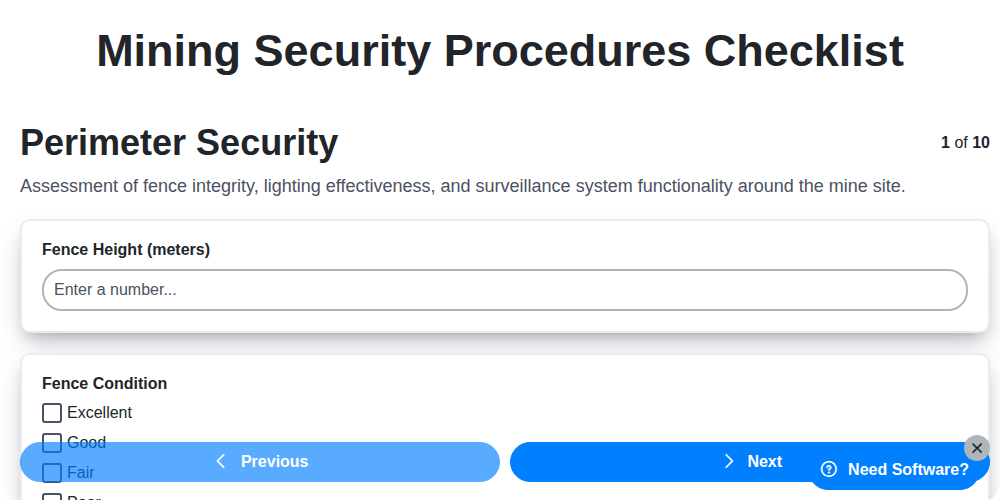
Mining Security Procedures Checklist: A Comprehensive Template for Safety
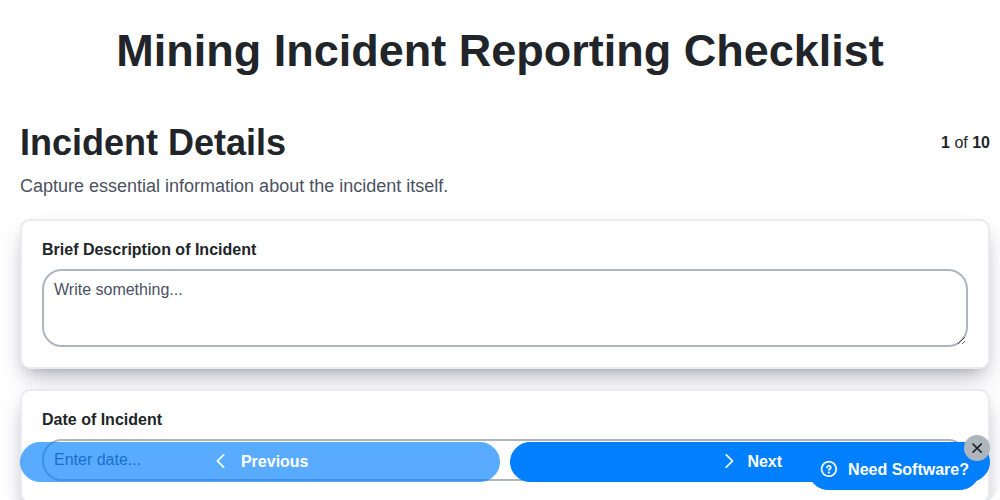
Ensuring Safety: Your Mining Incident Reporting Checklist Guide
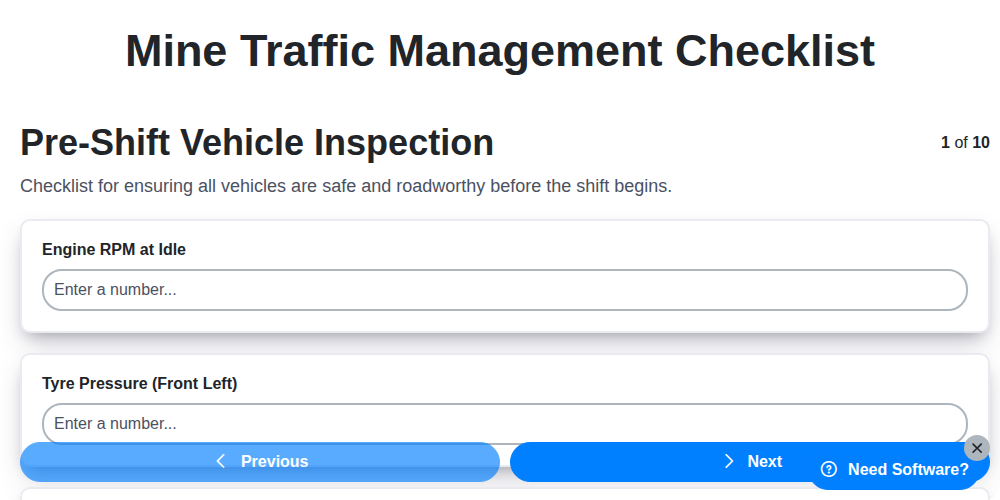
Ensuring Safety Underground: Your Mine Traffic Management Checklist Guide
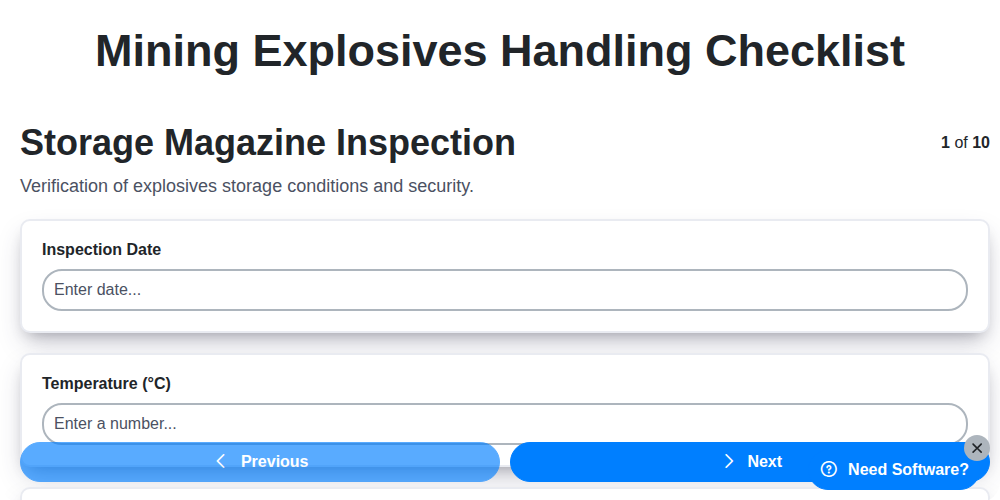
Ensuring Safety: Your Mining Explosives Handling Checklist Template
Ensuring Safety & Compliance: Your Mining Noise Monitoring Checklist Guide
Need help with
Mining Management?
Have a question? We're here to help. Please submit your inquiry, and we'll respond promptly.