Ensuring Safety: Your Mine Tailings Storage Facility Checklist Guide
Published: 11/20/2025 Updated: 07/02/2026
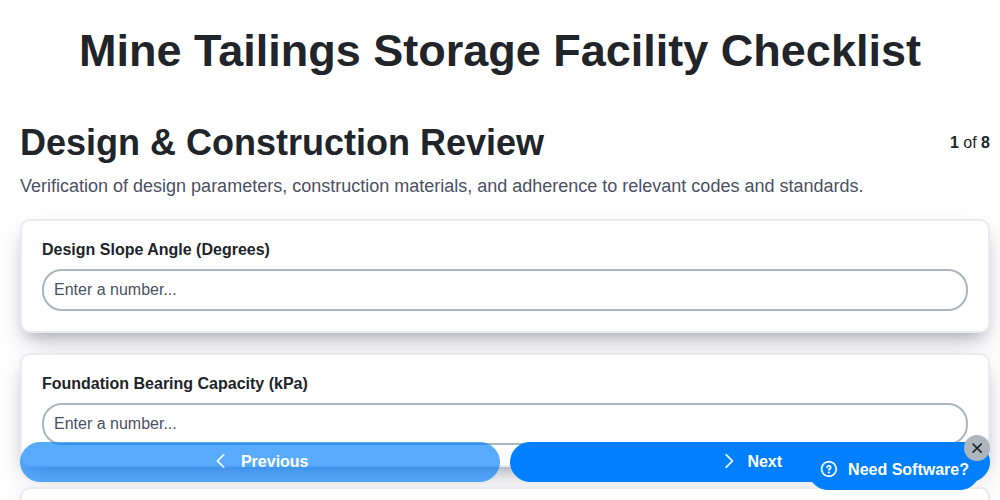
Table of Contents
- Introduction: Why a Tailings Facility Checklist is Crucial
- 1. Design & Construction Review: The Foundation of Safety
- 2. Dam Stability Monitoring: Continuous Assessment
- 3. Water Management Systems: Controlling the Flow
- 4. Understanding Tailings Characteristics: Behavior and Risks
- 5. Instrumentation and Monitoring: Real-Time Insights
- 6. Emergency Response Preparedness: Planning for the Unexpected
- 7. Visual Inspection - Structural Integrity: A Regular Routine
- 8. Regulatory Compliance: Meeting Legal Requirements
- 9. Tailings Segregation and Management
- 10. Community Engagement and Communication
- 11. Long-Term Facility Management and Closure Planning
- Conclusion: Proactive Safety for a Sustainable Future
- Resources & Links
TLDR: Running a Mine Tailings Storage Facility (TSF)? This checklist is your essential guide to safety! It covers everything from initial design reviews and ongoing dam stability to emergency preparedness and regulatory compliance - ensuring you're proactively minimizing risks and protecting your operation and the environment. Download the template and start ticking!
Introduction: Why a Tailings Facility Checklist is Crucial
Mine tailings, the waste product from mineral processing, represent a significant environmental and safety risk if not managed responsibly. Tailings Storage Facilities (TSFs) - the engineered structures designed to hold these tailings - are complex systems requiring meticulous oversight. A single failure can lead to catastrophic consequences, impacting ecosystems, communities, and the mining operation itself.
Simply put, a robust checklist for TSF management isn't just a good practice; it's an absolute necessity. This structured approach provides a framework for comprehensive monitoring, identifies potential vulnerabilities proactively, and ensures consistent adherence to best practices and regulatory requirements. Ignoring or neglecting aspects of TSF management can lead to escalating risks, costly remediation, and severe reputational damage. This blog post will explore the key elements that a thorough tailings facility checklist should encompass, providing essential guidance for those responsible for these critical structures.
1. Design & Construction Review: The Foundation of Safety
A robust Design & Construction Review is the bedrock of any Mine Tailings Storage Facility (TSF) safety program. This isn't a one-time event; it's an ongoing process encompassing initial design, construction, and any subsequent modifications. Key elements include verifying that the original design adequately addresses site-specific geological conditions, including groundwater levels, seismic activity, and soil properties.
Construction must meticulously follow the approved design specifications. This requires rigorous quality control processes - material testing, compaction verification, and adherence to established construction methods. Independent third-party reviews at critical stages (conceptual design, detailed design, pre-construction, and during construction) are highly recommended to provide an unbiased assessment and identify potential discrepancies. Furthermore, record keeping related to design assumptions, calculations, and construction procedures is vital for future reference and audits. Any deviations from the original design must be thoroughly documented, analyzed, and approved with appropriate engineering justifications before implementation. This review process establishes a clear baseline for ongoing safety and facilitates informed decision-making throughout the TSF lifecycle.
2. Dam Stability Monitoring: Continuous Assessment
Dam stability monitoring isn't a one-time event; it's an ongoing, dynamic process critical to ensuring the long-term safety of your Mine Tailings Storage Facility (TSF). This section moves beyond initial construction assessments and focuses on the continuous data collection and analysis needed for proactive risk mitigation.
The core of effective dam stability monitoring involves a layered approach. This includes:
- Regular Geotechnical Investigations: Periodically scheduled borehole drilling, cone penetration testing (CPT), and other subsurface investigations provide valuable data on ground conditions, settlement patterns, and potential seepage pathways. Changes from baseline data should immediately trigger further investigation.
- Piezometer Readings: Monitoring pore water pressure is essential to identify potential buildup that could contribute to instability. Automated piezometers provide real-time data, allowing for prompt action if pressures exceed safe thresholds.
- Inclinometer and Extensometer Readings: These instruments measure ground deformation, providing early warning signs of slope movement or settlement. Trends in data, even slight shifts, are important to track.
- Seepage Monitoring: Active seepage control measures (e.g., drainage systems) require ongoing monitoring to ensure their effectiveness. This includes visual inspections, flow rate measurements, and chemical tracer testing.
- Surface Movement Surveys: Regular surveys, using techniques like total station measurements or satellite-based radar, can identify subtle surface deformation that might precede larger-scale instability.
- Data Analysis and Trend Identification: Raw data is useless without rigorous analysis. Sophisticated software and experienced geotechnical engineers are needed to identify trends, anomalies, and potential problems. Statistical process control charts are valuable tools here.
- Adaptive Management: Monitoring data shouldn't just be recorded; it should inform operational decisions. An adaptive management strategy means adjusting water levels, drainage systems, or other controls based on observed trends.
Proactive monitoring, combined with a strong understanding of the tailings behavior and a willingness to adapt, is your best defense against potential dam failures.
3. Water Management Systems: Controlling the Flow
Effective water management is absolutely critical for the safe operation of a Mine Tailings Storage Facility (TSF). It's not just about draining water; it's about controlling the flow, minimizing risks, and ensuring the long-term stability of the facility.
A robust water management system encompasses several key components. Firstly, the design must incorporate efficient drainage paths, accounting for both rainfall and seepage. This includes strategically placed collection ditches, sumps, and discharge points. Regular inspection and maintenance of these structures are essential to prevent blockages and ensure their functionality.
Beyond drainage, understanding the source of the water is vital. This includes analyzing rainfall patterns, groundwater inflow, and water generated within the tailings themselves. This data informs the design and operation of the system.
Active water treatment may be necessary to remove contaminants before discharge, complying with stringent environmental regulations. Dewatering systems, such as pumps and wellpoints, are frequently employed to manage water levels within the TSF.
Furthermore, the system needs to be designed to handle extreme events like flood scenarios. Spillways, decant levels, and overflow routes must be properly sized and maintained to safely convey excess water without compromising the structural integrity of the facility. Regular hydrological modeling and scenario planning are valuable tools for ensuring the water management system is prepared for all potential conditions. Finally, data logging and monitoring of water levels, discharge rates, and water quality provide crucial insight into system performance and allow for proactive adjustments as needed.
4. Understanding Tailings Characteristics: Behavior and Risks
Tailings aren't just waste; they's a complex material with unique physical and chemical properties that directly influence the safety and long-term stability of a Mine Tailings Storage Facility (TSF). Failing to thoroughly understand these characteristics is a significant risk.
Here's why understanding tailings is crucial:
- Particle Size Distribution: A wide range of particle sizes can lead to segregation, where coarser particles settle and fines remain suspended, impacting consolidation and potentially leading to instability. Fine-grained tailings are prone to liquefaction, particularly when saturated.
- Mineralogy & Chemistry: The mineral composition dictates potential chemical reactions. Acid mine drainage (AMD) is a prime example - sulfide minerals reacting with water and oxygen produce acidic conditions that can corrode structural components and mobilize heavy metals. Understanding the presence of reactive elements is essential for predicting long-term geochemistry.
- Water Content & Dewatering: The initial water content, and how effectively it's removed during dewatering, significantly impacts the tailings' strength and consolidation behavior. High water content increases pore pressure and reduces effective stress.
- Consolidation Behavior: Tailings consolidate under pressure, changing their volume and strength over time. Predicting this consolidation rate is critical for foundation design and settlement calculations.
- Rheology: Tailings exhibit complex rheological behavior - how they flow under stress. They can act as solids, liquids, or something in between. This impacts slope stability, erosion potential, and the effectiveness of water management systems.
- Paste vs. Slurry: The type of tailings deposition (paste, slurry, filtered tailings) drastically affects their characteristics and long-term behavior. Paste tailings offer greater stability and lower water content, but require more intensive management.
Regular laboratory testing and characterization, including geotechnical and geochemical analyses, are essential to continually refine our understanding of tailings characteristics and adapt management strategies accordingly. This ongoing assessment should be incorporated into the TSF's operational plan and documented meticulously.
5. Instrumentation and Monitoring: Real-Time Insights
A robust instrumentation and monitoring program is absolutely critical for the safe and reliable operation of a Mine Tailings Storage Facility (TSF). It's not enough to simply rely on periodic visual inspections; a proactive, data-driven approach is essential. This involves deploying a suite of instruments to continuously measure key parameters and providing real-time data for analysis and informed decision-making.
What kind of instruments are we talking about? Think piezometers to measure pore pressure within the tailings and foundation, inclinometers to detect ground movement and potential slope instability, settlement markers to track ground deformation, and automated water level gauges to monitor reservoir levels. Increasingly, remote sensing technologies like satellite radar (InSAR) are also being integrated for broader, more frequent deformation assessments.
The data collected isn't useful in isolation. It needs to be transmitted to a centralized monitoring system, where it's analyzed by trained personnel. Automated alert systems should be implemented to flag any readings that fall outside pre-defined thresholds, triggering immediate investigations. Furthermore, this data should be integrated with historical records to identify trends and potential long-term issues that might not be immediately apparent. A well-designed instrumentation and monitoring program doesn't just detect problems; it prevents them by allowing for early intervention and adaptive management.
6. Emergency Response Preparedness: Planning for the Unexpected
A robust Emergency Response Plan (ERP) is not just a formality; it's a vital lifeline for a Mine Tailings Storage Facility (TSF). While proactive design, diligent monitoring, and preventative maintenance significantly reduce risk, the potential for unforeseen events - from extreme weather to equipment failure - demands a well-defined and regularly practiced response strategy.
Your ERP should encompass several critical components:
- Clearly Defined Roles & Responsibilities: Outline who is in charge during an emergency and what their specific duties are. Include backup personnel for every key role.
- Communication Protocols: Establish multiple communication channels (radio, satellite phone, cellular) and ensure all personnel understand how to report incidents and receive instructions. Consider communication with local communities and regulatory bodies.
- Evacuation Plans: Detailed evacuation routes, assembly points, and procedures for personnel, local communities, and livestock. Regular drills are essential to ensure familiarity.
- Containment Strategies: Pre-defined actions to contain a potential breach, such as deploying booms, constructing temporary barriers, and rerouting water flow. Ensure the availability of necessary equipment and trained personnel.
- Resource Availability: Stockpile emergency response equipment (sandbags, pumps, geotextiles) and maintain readily available access to additional resources if needed.
- Training & Drills: Conduct regular emergency drills involving all relevant personnel, including local emergency services. Evaluate and update the ERP based on lessons learned.
The ERP should be a living document, regularly reviewed and updated to reflect changes in facility operations, regulatory requirements, and lessons learned from drills and near-miss incidents. A well-prepared and practiced ERP provides a critical layer of defense, minimizing potential impacts and protecting lives and the environment.
7. Visual Inspection - Structural Integrity: A Regular Routine
Regular visual inspections are the frontline defense against subtle structural issues in a Mine Tailings Storage Facility (TSF). This isn't just a cursory glance; it's a methodical, documented assessment conducted by trained personnel. These inspections should be performed frequently - ideally weekly, but at minimum monthly - and following a standardized protocol.
What are we looking for? Cracks, erosion, settlement, seepage, vegetative growth (which can conceal problems), and any signs of distress in the dam's embankment, foundation, and appurtenances. Pay close attention to areas known to be vulnerable, such as the toe of the dam, areas where water flow concentrates, and around instrumentation points. Photographic documentation is essential - a picture is worth a thousand words and provides a vital record of condition over time, enabling trend analysis. Any observed anomalies, no matter how minor they seem, must be meticulously recorded, reported, and investigated promptly. Early detection and timely remediation are significantly more cost-effective and, critically, safer than reacting to a developing failure. Remember, consistency and thoroughness are key to the effectiveness of visual inspections.
8. Regulatory Compliance: Meeting Legal Requirements
Operating a Mine Tailings Storage Facility (TSF) isn't just about best practices; it's about adhering to a complex web of regulations at local, regional, and national levels. These regulations exist to ensure the safety of the surrounding environment and communities, and non-compliance can result in significant penalties, operational shutdowns, and reputational damage.
This checklist highlights the importance of ongoing regulatory compliance. Key aspects include maintaining thorough records of all TSF operations, design approvals, monitoring data, and inspection reports. Staying abreast of any changes to applicable laws and guidelines is paramount, as regulatory frameworks are often updated to reflect new scientific understanding and lessons learned from past incidents.
Regularly engage with regulatory agencies, participate in industry forums, and seek expert advice to ensure your TSF operations are continuously aligned with evolving requirements. Document all communications and consultations, demonstrating a proactive approach to compliance and a commitment to responsible tailings management. Remember, regulatory compliance is not a one-time event; it's an ongoing process integral to the long-term sustainability and safety of your TSF.
9. Tailings Segregation and Management
Effective tailings segregation and management are paramount to the long-term stability and environmental safety of a Mine Tailings Storage Facility (TSF). This isn't simply about placing tailings in a pit; it's a carefully orchestrated process to minimize risks and maximize resource recovery.
The goal is to prevent the mixing of tailings with varying characteristics - for instance, fine versus coarse, fresh versus oxidized, or those with different geochemical properties. Mixing can lead to instability, increased potential for acid rock drainage (ARD), and reduced efficiency of water treatment processes.
Key Strategies:
- Segregation by Characteristics: Tailings should be segregated at the source whenever possible. This requires careful characterization of the mined material and the tailings generated from each processing stage.
- Layered Deposition: In the TSF, tailings are often deposited in layers. Different layers might be dedicated to specific tailings streams, often using techniques like controlled deposition methods and curtain walls. Layering allows for targeted management of each stream.
- Paste Tailings: Using paste tailings (a thicker, more stable form of tailings) can significantly reduce water consumption and improve overall tailings stability. Paste deposition often facilitates better segregation and containment.
- Geochemical Control: Tailings containing potentially acid-generating minerals should be managed separately to prevent ARD. This often involves encapsulating them within less reactive material or treating them in situ.
- Water Quality Monitoring: Water within the TSF needs constant monitoring. Different areas often require independent water treatment strategies based on the specific tailings mixture contained within.
Proper segregation and management require continuous vigilance and a proactive approach to ensure the long-term integrity of the TSF and minimize environmental impact.
10. Community Engagement and Communication
A robust tailings storage facility (TSF) isn't just about engineering and technical safeguards; it's about fostering a strong relationship with the surrounding community. Open and ongoing communication is paramount in building trust and addressing potential concerns. This isn't a one-time event but a continuous process.
Our engagement strategy includes:
- Regular Public Forums: Providing opportunities for community members to ask questions, voice concerns, and receive updates on TSF operations and monitoring.
- Community Liaison: Appointing a designated point of contact who is readily accessible to address inquiries and facilitate communication.
- Transparent Data Sharing: Providing accessible and understandable information on monitoring data, including water quality and structural integrity assessments. Tailor the information to be easily digestible, avoiding technical jargon.
- Emergency Notification Procedures: Clearly defined and publicized procedures for notifying the community in the event of an emergency, utilizing multiple communication channels (e.g., SMS, local radio, community leaders).
- Feedback Mechanisms: Establishing avenues for community feedback, such as suggestion boxes, online forms, and direct contact options.
- Cultural Sensitivity: Recognizing and respecting local customs, traditions, and languages in all communication efforts. Engagement should be culturally appropriate and inclusive.
Maintaining a proactive and empathetic approach to community engagement is essential for the long-term success and social license to operate.
11. Long-Term Facility Management and Closure Planning
The journey of a Mine Tailings Storage Facility (TSF) doesn't end with construction; it extends far into the future. Robust long-term management and proactive closure planning are crucial for ensuring environmental protection, community safety, and responsible mine stewardship. This involves a phased approach, recognizing that tailings behavior changes over time, and that the long-term stability of a TSF depends on continuous assessment and adaptation.
Key elements of a comprehensive long-term management and closure plan include:
- Periodic Reviews & Updates: The original design and operational plan should be revisited and updated regularly (e.g., every 2-5 years) to incorporate new data, lessons learned, and advancements in tailings management practices.
- Successor Responsibility: Clear protocols and documentation should be established to ensure a smooth transition of responsibility for TSF management to a designated party (e.g., a rehabilitation trust, government agency, or successor mining operation). This includes detailed records of design, construction, operation, monitoring data, and any remediation work undertaken.
- Financial Provisioning: Adequate financial resources must be secured to cover the costs of long-term monitoring, maintenance, potential remediation, and ultimate closure. This requires careful estimation of future costs and ongoing adjustments based on performance and evolving regulations.
- Tailings Characteristics Monitoring: While initial tailings characterization is vital, long-term monitoring of tailings properties (e.g., strength, permeability, consolidation) is essential to detect potential degradation or unforeseen behavior.
- Vegetation Management & Erosion Control: Establishment of a robust vegetative cover is key to preventing erosion and stabilizing the tailings. Ongoing monitoring and maintenance of this cover are vital.
- Seepage Management: Long-term monitoring of groundwater levels and water quality is critical to detect and address any seepage issues.
- Community Engagement: Continued engagement with local communities is crucial to address any concerns and build trust.
- Decommissioning Strategy: Develop a detailed decommissioning strategy outlining the steps required for complete facility closure, including progressive rehabilitation options and final landform design.
- Post-Closure Monitoring: A post-closure monitoring plan should remain in place for a defined period to verify the effectiveness of closure measures and address any unforeseen issues.
Effective long-term facility management and closure planning are an investment in the sustainability of the mining operation and the well-being of future generations.
Conclusion: Proactive Safety for a Sustainable Future
Ultimately, a comprehensive and diligently followed checklist for Mine Tailings Storage Facilities (TSF) isn't just about ticking boxes; it's about safeguarding lives, protecting the environment, and ensuring the long-term sustainability of mining operations. The rigorous processes outlined - from design and construction reviews to ongoing stability monitoring and emergency preparedness - represent a commitment to responsible mining practices. By embracing proactive safety measures and continuously refining these checklists based on lessons learned and evolving best practices, the mining industry can move towards a future where tailings management poses minimal risk and contributes to a more sustainable and ethical approach to resource extraction. Investing in these checks isn't an expense; it's an investment in a secure and responsible future for all stakeholders.
Resources & Links
- Tailings International: A non-profit organization dedicated to advancing tailings management practices globally. Offers resources, case studies, and guidelines for safer tailings facilities. A core resource for all tailings management professionals.
- International Council on Mining and Metals (ICMM): ICMM promotes sustainable development in the mining industry. Their 'Tailings Management Toolkit' provides guidance on all aspects of tailings facility management, aligned with the Global Industry Standard on Tailings Management (GISTM).
- Global Tailings Review: Provides news, analysis, and resources related to tailings management, including updates on legislation, technology, and best practices. Useful for staying current with industry developments.
- Ausenco: A global engineering, construction, and mining services company with significant expertise in tailings management facilities. Offers design, construction, and operational support - their website showcases project examples and technical insights.
- Golder Associates: A global environmental and engineering consulting firm. They offer a wide range of tailings management services, including design, risk assessment, and monitoring. Their site features publications and case studies.
- SRK Consulting: Provides expert advice and services across the mining lifecycle, including tailings management. Their website contains technical papers, case histories, and information on their tailings expertise.
- International Technology and Regulatory Community (ITRC): The ITRC develops technical and regulatory guidance documents on various environmental topics. While not exclusively tailings-focused, some of their documents address relevant issues like seepage control and waste stabilization.
- United States Environmental Protection Agency (EPA): The EPA website provides information on regulations and guidelines related to waste management, which can be relevant to tailings facilities in the US and provide helpful context for regulatory compliance.
- Mines Safety JWA (Australia): Provides guidance, information, and resources on mining safety in Australia, including considerations for tailings storage facility safety. Relevant for understanding regional regulatory landscape and best practice.
- The CoAL International (formerly known as The CoAL International): Focuses on advancing responsible mining practices, particularly around tailings, and provides a range of training and certification programs relating to tailings management.
- Hydronex: A provider of instrumentation and monitoring systems specifically designed for tailings facilities, including piezometers, pore pressure sensors, and automated data acquisition systems. Relevant to the 'Instrumentation and Monitoring' section.
- FLSmidth: A global engineering and technology company that provides solutions for the mining and mineral processing industries, including tailings management technologies and systems. Contains project case studies.
Frequently Asked Questions
What is a Mine Tailings Storage Facility (TSF)?
A TSF, also known as a tailings dam or tailings pond, is a structure designed to safely contain tailings - the waste material left over after mineral processing. It's a crucial component of mining operations and requires careful management to prevent environmental damage and ensure safety.
Why is a TSF checklist important?
A comprehensive checklist is vital for proactively identifying and mitigating potential risks associated with TSFs. It ensures consistent inspection practices, helps to track issues, and provides a framework for implementing corrective actions, ultimately contributing to a safer and more sustainable operation.
Who should use this checklist?
This checklist is designed for a wide range of professionals involved in TSF management, including mine engineers, geologists, environmental specialists, safety officers, and operational managers. It's beneficial for both internal teams and external consultants.
What are the key areas covered in this checklist?
The checklist covers several critical areas, including dam stability, water management, instrumentation monitoring, emergency response planning, and regulatory compliance. Specific sub-sections address aspects like foundation integrity, embankment performance, seepage control, and overall structural health.
How often should I use this checklist?
The frequency of checklist usage depends on the TSF's risk profile, regulatory requirements, and operational conditions. Typically, a detailed inspection using the checklist should be conducted at least monthly, with more frequent inspections potentially needed for higher-risk facilities. Annual, in-depth reviews are also recommended.
What should I do if I identify a potential problem during the checklist inspection?
Any identified issues, regardless of perceived severity, should be documented thoroughly and reported to the appropriate personnel (e.g., engineering team, site manager). A corrective action plan should be developed and implemented, with timelines for completion and verification of effectiveness.
What is the significance of instrumentation monitoring?
Instrumentation monitoring (e.g., piezometers, inclinometers, settlement markers) provides real-time data on the TSF's performance. This data helps detect early warning signs of instability and allows for prompt corrective action, preventing potential failures.
How does emergency response planning fit into TSF safety?
Emergency response planning is a critical component. The plan outlines procedures to be followed in the event of a catastrophic failure, including evacuation plans, communication protocols, and strategies to minimize environmental impact. Regular drills and training are essential.
What are the regulatory aspects of TSF management?
TSF management is heavily regulated. Compliance with local, national, and international regulations is mandatory. The checklist helps ensure adherence to these requirements, including reporting obligations and design standards.
Where can I find more detailed information about TSF safety and management?
Several resources are available, including industry guidelines from organizations like the Global Tailings Review, the International Commission on Large Dams (ICOLD), and local regulatory agencies. Consulting with experienced geotechnical and tailings engineering specialists is also recommended.
Comments
There are no comments yet. Be the first to add one!
Mining Management Solution Demo
Maximize efficiency & safety in mining operations! ChecklistGuro streamlines task management, equipment tracking, and compliance reporting. Optimize workflows, reduce risk, & boost productivity. Manage it all with our Work OS.
Related Articles
Ensuring Mine Safety: Your Geotechnical Stability Checklist Guide
Ensuring Safety & Efficiency: Your Mine Haul Road Inspection Checklist Guide
Mastering Mine Safety: Your Guide to the Ground Control Checklist
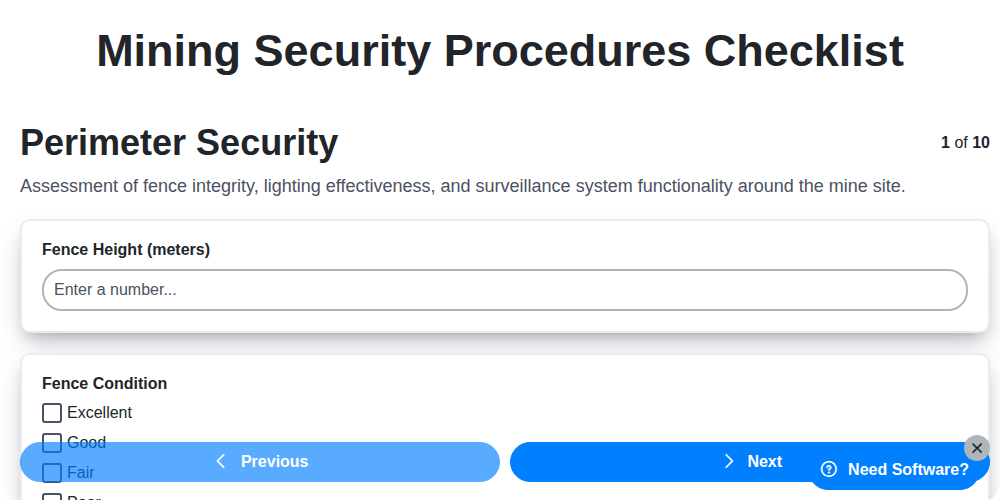
Mining Security Procedures Checklist: A Comprehensive Template for Safety
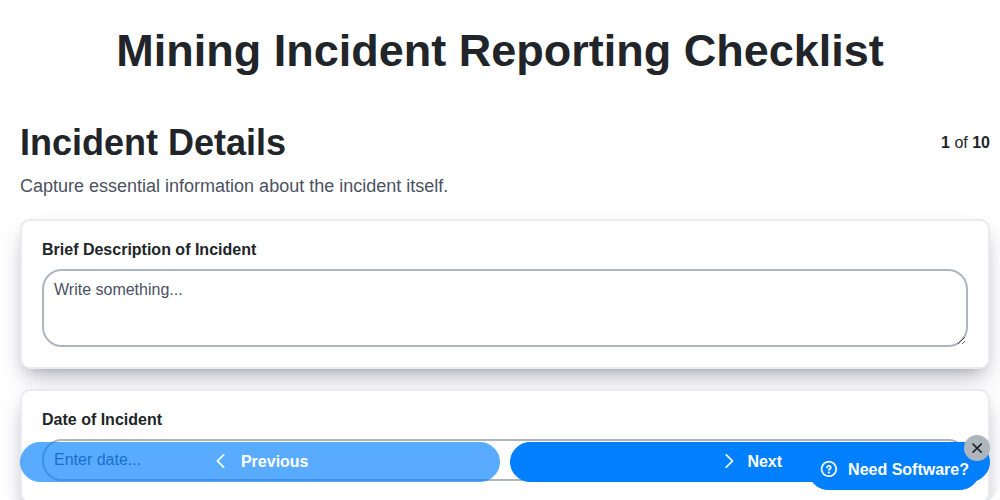
Ensuring Safety: Your Mining Incident Reporting Checklist Guide
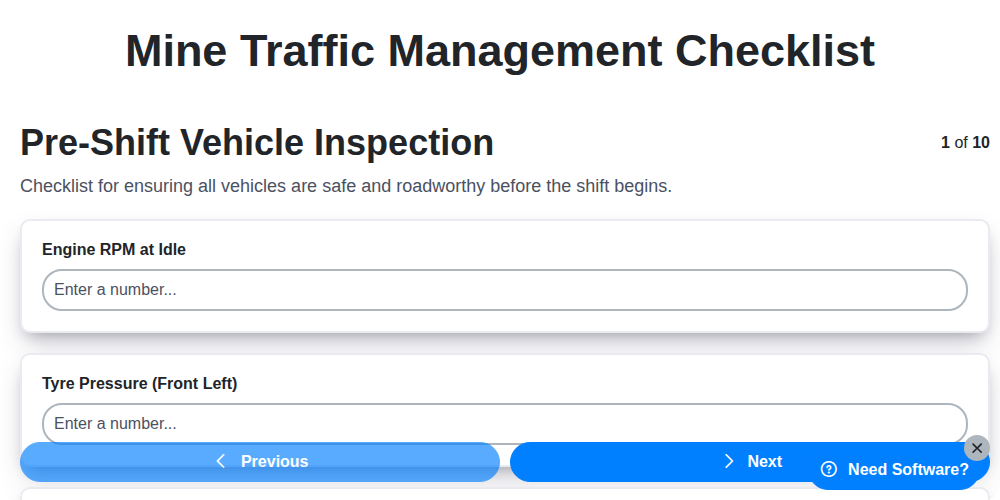
Ensuring Safety Underground: Your Mine Traffic Management Checklist Guide
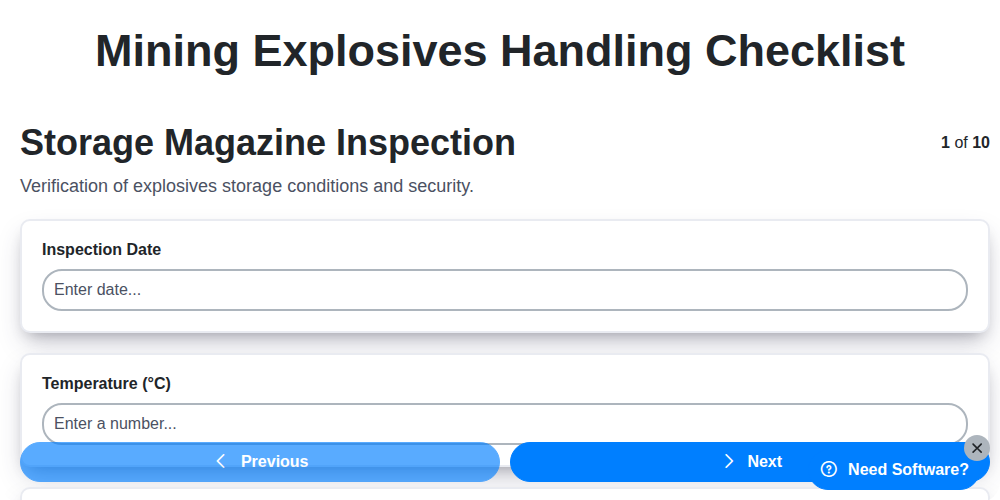
Ensuring Safety: Your Mining Explosives Handling Checklist Template
Ensuring Safety & Compliance: Your Mining Noise Monitoring Checklist Guide
Need help with
Mining Management?
Have a question? We're here to help. Please submit your inquiry, and we'll respond promptly.