Mining Environmental Monitoring Checklist: Ensuring Compliance and Sustainability
Published: 11/20/2025 Updated: 07/02/2026
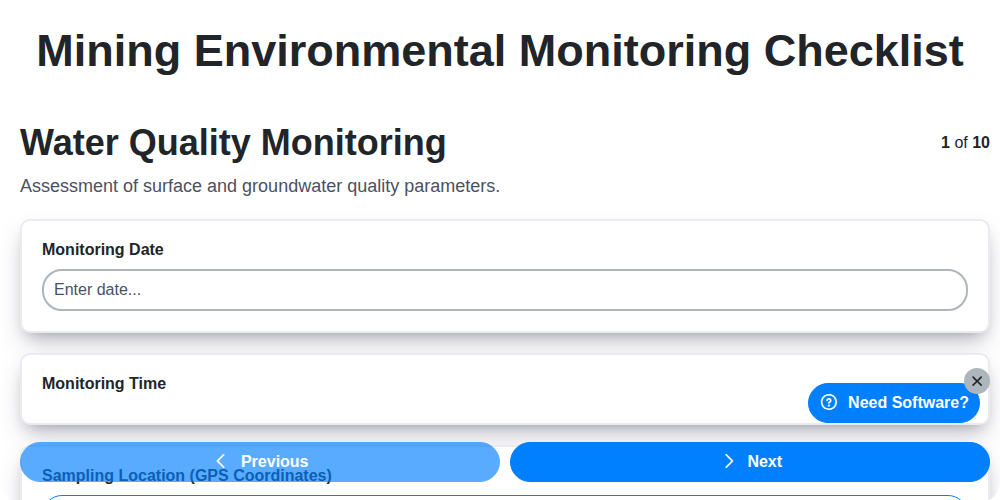
Table of Contents
- Introduction: The Importance of Environmental Monitoring in Mining
- 1. Water Quality Monitoring: Protecting Aquatic Ecosystems
- 2. Air Quality Monitoring: Safeguarding Human and Environmental Health
- 3. Soil Sampling & Analysis: Assessing Land Degradation and Contamination
- 4. Vegetation & Ecological Assessment: Tracking Biodiversity and Ecosystem Health
- 5. Wildlife Monitoring: Protecting Species and Habitats
- 6. Discharge Monitoring (Effluent): Ensuring Compliance with Permit Limits
- 7. Stormwater Management: Minimizing Runoff and Pollution
- 8. Rehabilitation Area Monitoring: Evaluating Restoration Success
- 9. Reporting & Documentation: Maintaining Records and Transparency
- 10. Equipment Calibration & Maintenance: Guaranteeing Data Accuracy
- Resources & Links
TLDR: This checklist template is your all-in-one guide to environmental monitoring in mining. It covers everything from water and air quality to wildlife and rehabilitation, helping you stay compliant with regulations and track your environmental impact. Download it to streamline your monitoring process, reduce risks, and demonstrate your commitment to sustainable mining practices!
Introduction: The Importance of Environmental Monitoring in Mining
Mining operations, while crucial for resource extraction and economic development, inherently impact the environment. Effective environmental monitoring is therefore essential - it's not just about compliance with regulations, but about responsible and sustainable resource management. A proactive monitoring program identifies potential impacts early, allowing for timely mitigation and preventing long-term damage to ecosystems and human health. This involves a systematic and consistent evaluation of various environmental parameters, utilizing standardized procedures and robust data analysis. Without a comprehensive monitoring program, mining activities can lead to water contamination, air pollution, soil degradation, biodiversity loss, and ultimately, irreversible environmental harm. This blog post will delve into the key components of a thorough environmental monitoring checklist for mining operations, outlining the critical steps involved in ensuring environmental protection throughout the lifecycle of a mine.
1. Water Quality Monitoring: Protecting Aquatic Ecosystems
Water is the lifeblood of any ecosystem, and its quality directly impacts the health of aquatic life, human well-being, and overall environmental sustainability. Regular and rigorous water quality monitoring is therefore a cornerstone of effective environmental management.
This crucial process goes beyond simply checking for obvious pollutants. It involves a comprehensive suite of tests to evaluate various parameters, including:
- Physical Parameters: Temperature, pH, turbidity, dissolved oxygen (DO), and conductivity - these provide a baseline understanding of the water's condition and can indicate potential issues.
- Chemical Parameters: Assessment of pollutants like heavy metals (lead, mercury, cadmium), nutrients (nitrogen, phosphorus), pesticides, and organic compounds. These can stem from industrial discharge, agricultural runoff, or urban stormwater.
- Biological Indicators: Evaluating the presence and abundance of aquatic organisms (macroinvertebrates, fish) as indicators of overall water health. Changes in these communities can signal shifts in water quality.
Monitoring locations are strategically selected based on potential pollution sources (upstream, downstream, tributaries) and sensitive areas like drinking water intakes or critical habitats. Data collected is meticulously analyzed to identify trends, assess compliance with regulations, and implement corrective actions to safeguard aquatic ecosystems and protect human health. Frequency of monitoring is determined by the site's risk profile and regulatory requirements.
2. Air Quality Monitoring: Safeguarding Human and Environmental Health
Air quality monitoring is a crucial component of any robust environmental monitoring program. It goes beyond simply measuring pollutants; it's about protecting human health, preserving ecosystems, and ensuring regulatory compliance. Our checklist incorporates rigorous protocols for assessing airborne contaminants.
This includes regular measurement of key pollutants such as particulate matter (PM2.5 and PM10), nitrogen oxides (NOx), sulfur dioxide (SO2), ozone (O3), and volatile organic compounds (VOCs). We employ both passive and active sampling techniques, utilizing calibrated instruments like air quality monitors, gas analyzers, and dust meters.
The monitoring program considers prevailing wind patterns, local emission sources (industrial facilities, traffic, etc.), and background levels to accurately represent air quality conditions. Data is meticulously recorded, time-stamped, and analyzed to identify trends and potential exceedances of regulatory limits. Furthermore, we assess the impact of dust and particulate matter on visibility and its potential to damage infrastructure and vegetation. The data collected informs mitigation strategies and ensures continuous improvement in air quality management practices, ultimately safeguarding the well-being of local communities and the integrity of the environment.
3. Soil Sampling & Analysis: Assessing Land Degradation and Contamination
Soil is a critical indicator of environmental health, and its condition reveals a lot about past activities and potential future impacts. Soil sampling and analysis is a vital component of environmental monitoring, providing valuable data for assessing land degradation, identifying contamination, and guiding remediation efforts.
Our checklist's soil sampling process begins with a carefully planned strategy. This includes identifying representative sample locations based on potential contaminant sources, topography, and past land use. We consider factors like historical industrial activity, agricultural practices (including fertilizer and pesticide application), and proximity to roadways.
The sampling itself involves collecting soil cores or grab samples at specified depths, ensuring proper documentation of location, depth, and appearance. Strict quality control measures are implemented, including the use of clean sampling equipment and techniques to prevent cross-contamination.
Following collection, samples are sent to a certified laboratory for comprehensive analysis. This typically includes testing for:
- Physical Properties: Grain size distribution, soil texture, moisture content, and density. These provide a baseline understanding of soil characteristics.
- Chemical Properties: pH, organic matter content, nutrient levels (nitrogen, phosphorus, potassium), and heavy metals (arsenic, cadmium, lead, mercury).
- Contaminants of Concern: Specific organic and inorganic compounds relevant to the site's history and potential risks.
The laboratory results are then meticulously reviewed and interpreted in conjunction with historical data and site observations. Any exceedances of established regulatory limits or threshold values trigger further investigation and potentially remediation action. Furthermore, the data informs decisions regarding land use, future development, and long-term management strategies. We ensure chain of custody is maintained and documented throughout the entire process, providing an auditable record of sample handling.
4. Vegetation & Ecological Assessment: Tracking Biodiversity and Ecosystem Health
Beyond simply observing plant life, a thorough vegetation and ecological assessment delves into the intricate web of relationships within an ecosystem. This crucial component of environmental monitoring goes beyond species identification; it aims to understand community structure, habitat quality, and overall ecosystem health.
Our checklist incorporates several key steps. Initially, we conduct detailed vegetation surveys, documenting plant species present, their abundance, and distribution. This includes identifying indicator species - those that provide valuable clues about environmental conditions. We assess habitat mapping, delineating different habitat types and their extent. Following this, we evaluate ground cover and canopy health, looking for signs of stress, disease, or invasive species.
Furthermore, we assess riparian zone health, if applicable, as these areas are vital for water quality and wildlife habitat. We also document invasive species presence and density, developing targeted management strategies where necessary. The assessment might involve quantifying biomass and analyzing plant community composition.
Ultimately, this assessment isn't just about listing plants; it's about understanding how they are responding to environmental changes and informing proactive conservation efforts. Baseline data established during this assessment are critical for detecting future trends and evaluating the effectiveness of remediation or mitigation measures.
5. Wildlife Monitoring: Protecting Species and Habitats
Effective environmental monitoring isn't just about water, air, and soil; it's fundamentally about understanding and protecting the life that depends on these resources. Wildlife monitoring is a crucial component of comprehensive environmental assessment, offering insights into the health of an ecosystem and the impact of mining activities.
Our checklist incorporates wildlife monitoring through several key areas. This includes species identification and abundance surveys, focusing on both indicator species (those sensitive to environmental changes) and species of conservation concern. We employ techniques like camera trapping, track surveys, acoustic monitoring (for birds and bats), and direct observation to gauge population sizes and distribution.
Beyond simple counts, we assess habitat quality and connectivity. This examines factors like food availability, nesting sites, and the ability of wildlife to move between different areas - vital for genetic diversity and resilience. We also analyze behavioral changes; altered feeding patterns, breeding success, or movement patterns can signal underlying environmental stress.
The data gathered informs mitigation strategies aimed at minimizing disturbance, restoring habitats, and establishing wildlife corridors. Regular monitoring allows for adaptive management, ensuring that conservation efforts remain effective and responsive to evolving conditions. Ultimately, diligent wildlife monitoring is a commitment to preserving biodiversity and minimizing the impact of mining on vulnerable species and their habitats.
6. Discharge Monitoring (Effluent): Ensuring Compliance with Permit Limits
Discharge monitoring, often referred to as effluent monitoring, is a critical component of any robust environmental monitoring program. It focuses specifically on the water leaving a facility or site - whether it's industrial wastewater, treated sewage, or runoff - and its impact on receiving water bodies. Failing to accurately monitor and comply with discharge limits can lead to hefty fines, operational shutdowns, and significant environmental damage.
Here's a breakdown of what effective discharge monitoring entails:
- Understanding Your Permit: The foundation of any discharge monitoring program is a thorough understanding of your National Pollutant Discharge Elimination System (NPDES) permit (or equivalent regional/national permit). Know your permitted parameters, frequency of sampling, and applicable limits.
- Representative Sampling: Accurate results are only as good as the samples collected. Employ established protocols to ensure you're collecting representative samples at designated locations and times. This often requires a well-defined sampling plan.
- Parameter Analysis: Your permit will specify the parameters that require monitoring. This can include (but is not limited to) pH, temperature, biochemical oxygen demand (BOD), total suspended solids (TSS), metals, nutrients, and oil & grease. Utilize accredited laboratories for analysis to ensure data quality and chain of custody documentation.
- Record Keeping: Meticulous record-keeping is essential. Document all sampling dates, times, locations, sample identifiers, analytical results, and any deviations from standard procedures.
- Trend Analysis: Don't just focus on individual results; analyze data trends over time. This can help identify potential problems before they lead to permit violations.
- Corrective Actions: If monitoring results consistently approach or exceed permit limits, immediate corrective actions are needed. This might involve process adjustments, equipment repairs, or further investigation into the source of the elevated pollutants.
Regular, diligent discharge monitoring is not merely a compliance exercise; it's a demonstration of environmental stewardship and responsible operations.
7. Stormwater Management: Minimizing Runoff and Pollution
Stormwater, essentially rainwater that flows over surfaces, can become a significant source of pollution if not properly managed. In mining operations, it's crucial to implement robust stormwater management practices to protect water resources and comply with environmental regulations. This section of the checklist focuses on those critical steps.
Our monitoring process includes regular inspections of all stormwater control measures, such as sediment ponds, retention basins, and vegetated swales. We assess their functionality and effectiveness in capturing sediment, pollutants, and preventing erosion. Key checks involve verifying the integrity of liners, ensuring proper outlet structures, and evaluating vegetation health to maximize infiltration and filtration.
We also meticulously analyze stormwater discharge samples for pollutants like suspended solids, metals (often associated with mining activities), and oil/grease. This testing helps identify potential issues and allows for proactive corrective actions. Records are maintained on rainfall events, discharge volumes, and pollutant concentrations, allowing us to track trends and demonstrate compliance. Finally, the checklist incorporates a review of the Site's Stormwater Pollution Prevention Plan (SWPPP), ensuring it's up-to-date, accurate, and effectively implemented.
8. Rehabilitation Area Monitoring: Evaluating Restoration Success
Rehabilitation efforts, whether following mine closure or ongoing land disturbance, require rigorous and consistent monitoring to ensure they're achieving their intended goals. This isn't just about ticking a regulatory box; it's about verifying the long-term ecological health and stability of the restored land.
Rehabilitation area monitoring focuses on assessing the recovery of disturbed areas, tracking progress towards pre-disturbance conditions (or, where that's not possible, achieving agreed-upon performance criteria). This involves a multi-faceted approach, often incorporating elements from other monitoring programs described in this checklist. Key indicators to observe include:
- Vegetation Cover & Composition: Regularly assess plant density, species diversity, and the presence of invasive species. Monitor plant health, growth rates, and success in establishing a self-sustaining ecosystem.
- Soil Stability & Erosion Control: Evaluate the effectiveness of erosion control measures (e.g., terracing, vegetation) and monitor soil loss. Analyze soil organic matter content and structure to assess long-term soil health.
- Hydrological Function: Track water infiltration, surface runoff, and groundwater levels. Assess the condition of any constructed wetlands or drainage channels.
- Wildlife Use: While detailed wildlife monitoring (see section 5) may not always be feasible, observe signs of wildlife presence (tracks, scat, nests) and note any changes in species composition over time.
- Visual Assessment: Document the overall appearance of the rehabilitation area with photographs and detailed descriptions. Note any signs of instability or degradation.
Consistent data collection over time, compared against baseline data and rehabilitation targets, allows for adaptive management - making adjustments to rehabilitation strategies as needed to maximize success and ensure long-term stability of the restored landscape.
9. Reporting & Documentation: Maintaining Records and Transparency
Consistent and thorough reporting and documentation are cornerstones of any robust environmental monitoring program. It's not enough to simply collect data; you need a system for organizing, storing, and presenting it effectively. This section details the key aspects of reporting and documentation within the mining environmental monitoring checklist.
What Needs to be Documented?
Everything. Seriously. From the initial site assessment to ongoing monitoring results, meticulously record:
- Methodologies: Detailed descriptions of the sampling techniques, analytical methods used, and any deviations from standard procedures. This ensures reproducibility and allows for future audits.
- Raw Data: All raw data collected, including field measurements, laboratory results, and any observed anomalies. Electronic data should be backed up securely.
- Chain of Custody: A detailed record of sample handling, tracking their movement from collection to laboratory analysis, ensuring data integrity.
- Calibration Records: Documentation of equipment calibration, including dates, procedures, and technician signatures.
- Incident Reports: Any spills, leaks, or unusual environmental observations require immediate reporting and comprehensive documentation.
- Corrective Actions: If anomalies are detected, record the actions taken to investigate and rectify the issue.
- Communication: Log all communication with regulatory bodies, stakeholders, and internal teams regarding monitoring results and environmental concerns.
Why is Documentation Crucial?
- Regulatory Compliance: Accurate records are essential for demonstrating compliance with permits and environmental regulations.
- Transparency & Public Trust: Openly sharing environmental monitoring data builds trust with local communities and stakeholders.
- Trend Analysis: Historical data allows for the identification of environmental trends and informs adaptive management strategies.
- Legal Protection: Comprehensive documentation can provide a strong defense in the event of environmental claims or legal challenges.
- Continuous Improvement: Analyzing past performance through documentation helps identify areas for program optimization.
Best Practices:
- Digital Data Management: Utilize a secure, centralized database for data storage and accessibility.
- Standardized Forms: Employ standardized forms for data entry and reporting to ensure consistency.
- Regular Audits: Conduct periodic audits of your documentation practices to identify weaknesses and ensure accuracy.
- Accessibility: Ensure that records are readily accessible to authorized personnel.
10. Equipment Calibration & Maintenance: Guaranteeing Data Accuracy
Environmental monitoring relies heavily on accurate data, and that accuracy is only as good as the equipment used to collect it. A robust equipment calibration and maintenance program is therefore a critical component of any comprehensive environmental monitoring plan. Neglecting this step can lead to skewed results, inaccurate assessments, and potentially costly remediation efforts down the line.
Why is Calibration & Maintenance Essential?
- Drift & Degradation: Monitoring equipment, even with careful use, experiences drift and degradation over time. Sensors can become less responsive, readings can become inaccurate, and internal components can wear down.
- Regulatory Compliance: Many environmental regulations mandate regular equipment calibration and maintenance to ensure data integrity and demonstrate compliance.
- Data Reliability: Accurate data is vital for informed decision-making regarding environmental protection and remediation. Malfunctioning equipment compromises this foundation.
What's Involved?
A comprehensive program should include:
- Scheduled Calibration: Following manufacturer recommendations and regulatory requirements for each piece of equipment (water quality meters, air quality monitors, soil sampling tools, etc.).
- Preventative Maintenance: Regular cleaning, inspection for wear and tear, and replacement of parts before they fail.
- Record Keeping: Detailed logs of all calibration and maintenance activities, including dates, technicians involved, and any issues identified.
- Quality Control Checks: Implementing quality control procedures, such as comparison with known standards, to verify equipment performance.
- Training: Ensuring personnel are properly trained in the operation, maintenance, and calibration of all monitoring equipment.
By prioritizing equipment calibration and maintenance, we safeguard the integrity of our environmental monitoring data and contribute to effective and sustainable environmental management.
Resources & Links
- U.S. Environmental Protection Agency - Mining: EPA's Mining website provides extensive information on mining regulations, environmental impact, and remediation efforts. A crucial starting point for understanding legal frameworks and best practices.
- Mississippi Department of Environmental Quality - Mining: While specific to Mississippi, this provides a solid example of state-level mining oversight, detailing permit requirements and monitoring expectations, which are often representative of broader regulations.
- Government of Canada - Mining and Environmental Protection: Provides Canadian regulations and guidance on environmental assessment, water management, and reclamation in mining operations. Good for understanding international best practices.
- International Organization for Standardization (ISO): Explore ISO standards related to environmental management (ISO 14001) and quality management, applicable to mining environmental monitoring programs. Search for relevant standards.
- American Society for Quality (ASQ): ASQ offers resources and training on quality management principles, which are directly applicable to ensuring data quality and reliability in environmental monitoring. Focus on Six Sigma principles for monitoring program optimization.
- WaterWorld: An industry publication covering water treatment and management technologies. Useful for finding information on water quality monitoring equipment and techniques applicable to mining water management.
- Air Quality World: Provides real-time air quality data and resources, useful for understanding air quality parameters and trends relevant to mining emissions monitoring. Provides context for your monitoring data.
- TerraMetrics: Provides specialized environmental monitoring equipment and software. Demonstrates technology solutions for various aspects of environmental monitoring, like soil and water analysis.
- Thermo Fisher Scientific: A leading supplier of scientific instruments and equipment for environmental analysis. Offers a wide range of tools for soil, water, and air quality testing.
- Agilent Technologies: Another major provider of analytical instruments, including those used for environmental monitoring. Focus on their equipment for trace metal analysis relevant to mining contaminants.
- World Health Organization (WHO): WHO provides guidelines and information on environmental health risks, including air and water quality standards, useful for setting monitoring benchmarks and understanding potential impacts.
- United Nations Environment Programme (UNEP): UNEP provides a global perspective on environmental sustainability and resource management, offering insights into responsible mining practices and environmental protection.
- International Council on Mining and Metals (ICMM): ICMM promotes sustainable development in the mining and metals industry. Their guidelines and reports can provide valuable insights into best practices.
- Empa - Swiss Federal Laboratories for Materials Science and Technology: Empa develops and applies materials science solutions for environmental remediation and monitoring. Provides some highly specialized techniques and expertise.
Frequently Asked Questions
What is the purpose of an environmental monitoring checklist for mining operations?
The checklist provides a structured way to ensure mining operations comply with environmental regulations, minimize environmental impacts, and promote sustainable practices. It helps identify potential risks, track performance, and maintain a documented record of monitoring activities.
Who should use this checklist?
This checklist is designed for various stakeholders involved in mining operations, including environmental managers, site supervisors, compliance officers, and mining engineers. It's useful for both established mines and new projects.
What types of environmental parameters should be monitored in mining?
Commonly monitored parameters include water quality (pH, turbidity, heavy metals), air quality (particulate matter, dust levels), noise levels, soil contamination, and biodiversity impacts. The specific parameters depend on the site's geology, hydrology, and potential environmental risks.
How often should environmental monitoring be conducted?
The frequency of monitoring depends on the regulatory requirements, the nature of the mining operation, and the identified risks. It could range from daily or weekly to monthly or annually. The checklist should guide in establishing a monitoring schedule based on these factors.
What regulatory standards should be considered when developing a mining environmental monitoring checklist?
The checklist should align with local, national, and international environmental regulations specific to mining. These may include water discharge permits, air quality standards, noise limits, and biodiversity protection laws. Always refer to the latest legal requirements.
Where can I find more detailed information about specific environmental monitoring techniques?
Refer to industry best practices, regulatory guidance documents, and scientific literature for detailed information on specific monitoring techniques and methodologies. Consulting with environmental specialists is also recommended.
Comments
There are no comments yet. Be the first to add one!
Mining Management Solution Demo
Maximize efficiency & safety in mining operations! ChecklistGuro streamlines task management, equipment tracking, and compliance reporting. Optimize workflows, reduce risk, & boost productivity. Manage it all with our Work OS.
Related Articles
Ensuring Mine Safety: Your Geotechnical Stability Checklist Guide
Ensuring Safety & Efficiency: Your Mine Haul Road Inspection Checklist Guide
Mastering Mine Safety: Your Guide to the Ground Control Checklist
Mining Security Procedures Checklist: A Comprehensive Template for Safety
Ensuring Safety: Your Mining Incident Reporting Checklist Guide
Ensuring Safety Underground: Your Mine Traffic Management Checklist Guide
Ensuring Safety: Your Mining Explosives Handling Checklist Template
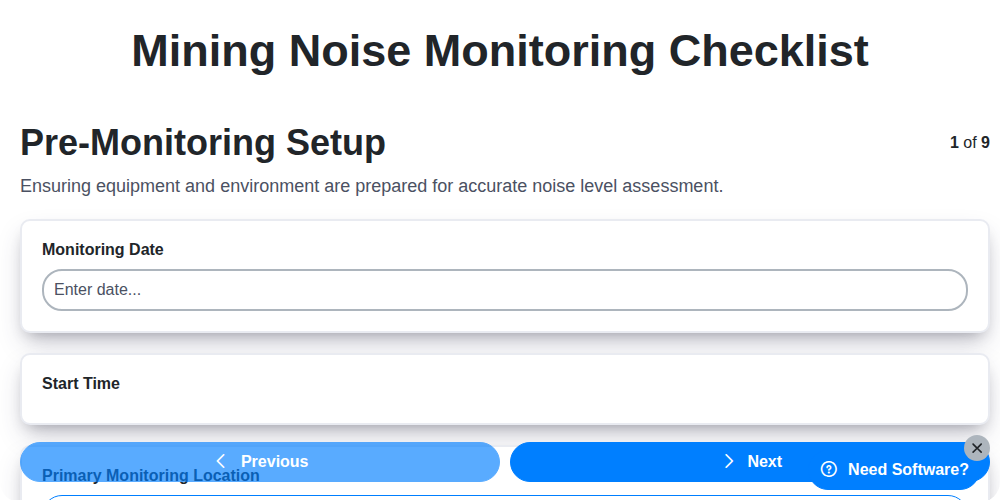
Ensuring Safety & Compliance: Your Mining Noise Monitoring Checklist Guide
Need help with
Mining Management?
Have a question? We're here to help. Please submit your inquiry, and we'll respond promptly.