Mining Production Planning Checklist: Your Guide to Seamless Operations
Published: 11/20/2025 Updated: 07/02/2026
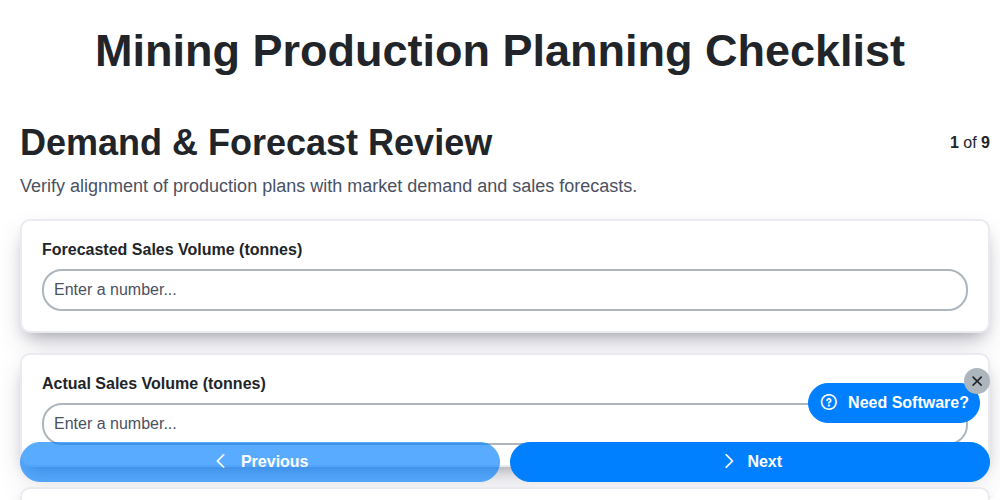
Table of Contents
- Introduction: The Foundation of Successful Mining
- 1. Demand & Forecast Review: Setting the Stage
- 2. Resource Assessment Validation: Knowing What You Have
- 3. Schedule Development & Optimization: Crafting the Plan
- 4. Equipment Availability & Allocation: Keeping Things Moving
- 5. Labor Requirements & Planning: Ensuring the Right Workforce
- 6. Budget & Cost Analysis: Staying on Track Financially
- 7. Risk Assessment & Mitigation: Preparing for the Unexpected
- 8. Stakeholder Communication & Approval: Keeping Everyone Informed
- 9. Performance Metrics & Reporting: Measuring Success
- 10. Integrating Technology for Enhanced Planning
- 11. Adapting to Dynamic Market Conditions
- 12. Continuous Improvement & Lessons Learned
- Conclusion: Your Checklist for Mining Excellence
- Resources & Links
TLDR: Feeling overwhelmed by mining production planning? This checklist walks you through everything from forecasting demand to assessing risks and tracking performance. It's your step-by-step guide to creating realistic, efficient, and approved production plans that minimize disruptions and maximize output - saving you time and headaches!
Introduction: The Foundation of Successful Mining
Mining production planning isn't just about creating a schedule; it's the bedrock upon which successful and profitable operations are built. A well-defined plan aligns resources, minimizes risk, and maximizes output while maintaining safety and environmental responsibility. Without a robust plan, mining operations face inefficiencies, cost overruns, delays, and potential safety hazards. This checklist provides a structured approach to production planning, ensuring no critical element is overlooked and laying a solid foundation for achieving operational excellence. It's more than just ticking boxes; it's about proactively considering all aspects of the mining process and setting the stage for consistent, predictable, and ultimately, successful production.
1. Demand & Forecast Review: Setting the Stage
Accurate production planning hinges on a solid understanding of what you need to produce and when. This begins with a meticulous review of demand and forecasts. Don't just accept existing forecasts at face value - challenge them!
Here's what to scrutinize:
- Historical Data Analysis: Dive into past sales data. Identify trends, seasonality, and any anomalies. Are there recurring patterns you can leverage for future predictions?
- Market Intelligence: What's happening in the market? New competitor activity, shifts in consumer preferences, economic indicators - all these can impact demand.
- Sales Team Input: Your sales team is on the front lines. Solicit their insights on upcoming promotions, potential large orders, and customer expectations.
- External Factors: Consider external influences like regulatory changes, geopolitical events, or supply chain disruptions that might affect demand.
- Forecast Accuracy Assessment: Evaluate the accuracy of previous forecasts. Understand where they fell short and why. Use statistical methods to measure forecast error and identify areas for improvement.
- Collaboration is Key: This isn't a solo activity. Engage with sales, marketing, and customer service to build a comprehensive demand picture.
A flawed demand forecast ripples through every subsequent planning step. Investing time and effort into a robust review upfront will save headaches and optimize your production later.
2. Resource Assessment Validation: Knowing What You Have
Before you can even think about building a production schedule, you need an accurate picture of your available resources. This isn't just about a quick headcount; it's a thorough validation of everything at your disposal - from equipment and materials to skilled labor and specialized tools. A flawed resource assessment is a recipe for missed deadlines, costly rework, and frustrated teams.
This stage goes beyond simply knowing you have a certain number of machines or employees. It's about understanding their capabilities and limitations. Are those excavators truly capable of the volume of material you're planning to move? Do your operators have the certifications required for specialized tasks? Is that milling machine undergoing scheduled maintenance next month that will render it unavailable?
Here's what a rigorous resource assessment validation entails:
- Equipment Inventory & Condition: Compile a comprehensive list of all equipment. Include details like age, maintenance history, and current working condition. Schedule preventative maintenance checks and factor potential downtime into your planning. Don't forget about smaller, but critical, tools.
- Material Availability: Verify the current stock levels of key raw materials and consumables. Consider lead times for replenishment and potential supply chain disruptions. Negotiate contracts with suppliers to ensure timely deliveries.
- Labor Skill Sets & Availability: Assess the skills and certifications of your workforce. Identify any skill gaps and develop training programs to address them. Track employee availability, considering vacation schedules, training commitments, and potential absences.
- External Resource Evaluation: If you rely on contractors or subcontractors, validate their capacity, capabilities, and contractual obligations. Confirm their availability aligns with your schedule.
- Capacity Constraints Identification: Clearly identify any bottlenecks or capacity constraints that could limit production. This might be a single piece of equipment, a particular skillset, or a material shortage.
By meticulously validating your resource assessment, you're establishing a solid foundation for a realistic and achievable production plan. It's the difference between hoping for the best and knowing you can deliver.
3. Schedule Development & Optimization: Crafting the Plan
This is where the rubber meets the road. Having validated your demand forecast and resource assessment, you're now ready to build the production schedule itself. This isn't just about stringing tasks together; it's about creating a optimized plan that balances efficiency, flexibility, and responsiveness.
Here's a breakdown of key considerations:
- Prioritization: Not all orders are created equal. Establish clear prioritization criteria. Are you prioritizing based on due date, customer importance, profitability, or a combination of factors? A robust prioritization system ensures you're focusing on what matters most.
- Sequencing & Dependencies: Identify task dependencies. What needs to be completed before something else can begin? Visualizing these dependencies (e.g., with a Gantt chart) can reveal bottlenecks and inefficiencies.
- Capacity Constraints: The schedule must respect your validated resource capacities. Avoid over-allocation, which inevitably leads to delays and compromised quality. Explore techniques like bottleneck analysis to focus improvement efforts.
- Lead Time Considerations: Account for realistic lead times for each process. Don't underestimate the time needed for setup, processing, inspection, and potential rework.
- Optimization Techniques: Consider leveraging scheduling optimization software. These tools can use algorithms to generate multiple schedule scenarios based on various constraints and objectives (e.g., minimizing changeover time, maximizing throughput). Even simpler approaches like cycle time analysis and work-in-progress (WIP) reduction can yield significant improvements.
- Flexibility & Buffer: Build in some flexibility. Unexpected events will happen. Allocate buffer time where possible to absorb disruptions and prevent cascading delays. This could involve maintaining small inventories of key materials or assigning a flexible workforce.
- Simulation & Validation: Before finalizing the schedule, simulate its performance. Can you identify potential issues before they become real-world problems? This process helps to refine the plan and build confidence in its feasibility.
4. Equipment Availability & Allocation: Keeping Things Moving
Mining operations are heavily reliant on equipment - from massive excavators and haul trucks to specialized drilling rigs and processing machinery. Unexpected downtime can cripple production, leading to costly delays and missed targets. This checklist section focuses on proactively ensuring your equipment is available when needed and allocated effectively.
Here's what to review:
- Maintenance Schedules: Are preventative maintenance schedules up-to-date and being adhered to? Review historical maintenance logs and identify any recurring issues or patterns. Consider implementing predictive maintenance strategies utilizing sensor data and machine learning to anticipate failures.
- Equipment Condition Assessments: Regularly conduct thorough condition assessments for all critical equipment. This goes beyond routine checks and involves detailed inspections by qualified mechanics. Document findings and prioritize repairs.
- Spare Parts Inventory: Maintain an adequate supply of critical spare parts. Analyze historical usage data to accurately forecast requirements and avoid stockouts. Establish relationships with reliable suppliers to expedite delivery.
- Equipment Allocation Plans: Develop clear equipment allocation plans that align with the production schedule. Consider factors like equipment type, capacity, and proximity to work areas. Utilize digital tools to optimize allocation and track utilization.
- Backup Equipment Availability: Ensure backup equipment is available for critical tasks. This minimizes disruption if a primary machine experiences a breakdown.
- Operator Training & Competency: Verify that operators are properly trained and competent to operate assigned equipment safely and efficiently. This includes refresher training and familiarization with new equipment.
- Utilization Tracking: Implement a system to track equipment utilization rates. This data reveals underutilized assets and potential bottlenecks.
- Fleet Management System: Evaluate the potential benefits of a fleet management system to monitor equipment location, performance, and maintenance needs in real-time.
5. Labor Requirements & Planning: Ensuring the Right Workforce
Mining production planning isn't just about equipment and materials; it's fundamentally about the people who make it all happen. Accurate labor requirements planning is critical to avoid bottlenecks, maintain productivity, and ensure safety. This step goes beyond simply knowing how many people you need; it's about ensuring you have the right people with the right skills at the right time.
Here's what needs to be considered:
- Skill Matrix & Role Definition: Clearly define each role's responsibilities, required skills (operating machinery, blasting, maintenance, geology, etc.), and experience levels. A detailed skill matrix helps identify gaps.
- Shift Scheduling & Overtime: Develop shift schedules based on the production plan, accounting for different skill requirements across shifts. Proactively plan for potential overtime needs and associated costs.
- Training & Upskilling: Identify skill gaps and implement training programs to ensure employees are proficient in their roles and adaptable to changing requirements. Consider cross-training to increase flexibility.
- Contractor Management: If utilizing contractors, meticulously plan their scope of work, ensure proper onboarding and safety training, and manage their performance against agreed-upon KPIs.
- Attrition & Availability: Factor in potential employee attrition and absenteeism. Having contingency plans and a pipeline of potential replacements is essential.
- Safety Considerations: Plan for adequate supervision and safety personnel, ensuring a safe working environment. Consider fatigue management strategies.
- Communication & Feedback: Regularly communicate the production plan and anticipated labor needs to the workforce, soliciting feedback and addressing concerns.
Failure to plan for labor effectively can lead to project delays, increased costs, and compromised safety. A well-defined and continually refined labor plan is a cornerstone of successful mining production.
6. Budget & Cost Analysis: Staying on Track Financially
Mining production planning isn't just about schedules and resources; it's fundamentally about financial viability. A beautifully optimized plan is useless if it blows the budget. This is where rigorous budget & cost analysis becomes critical.
This step goes beyond simply estimating costs; it involves proactively analyzing and tracking expenditures throughout the planning process and beyond. Here's what needs to be included:
- Detailed Cost Breakdown: Start with a comprehensive breakdown of all anticipated costs. This includes everything from explosives and fuel to maintenance, royalties, and regulatory compliance. Don't forget indirect costs like administration and insurance.
- Sensitivity Analysis: Model how changes in key variables (e.g., ore grade, metal prices, energy costs) will impact overall project costs. Identify potential break-even points and understand the risk associated with unfavorable price fluctuations.
- Contingency Planning: Allocate funds for unforeseen circumstances. A realistic contingency fund protects against unexpected delays, equipment breakdowns, or changes in market conditions.
- Regular Cost Tracking & Variance Analysis: Implement a system for continuously monitoring actual costs against the planned budget. Analyze variances promptly to identify issues and implement corrective actions.
- Lifecycle Costing: Consider the entire lifecycle of the project, including decommissioning and rehabilitation costs, to ensure long-term financial sustainability.
- Return on Investment (ROI) Calculation: Calculate and regularly reassess the projected ROI to justify the plan and demonstrate its potential profitability.
By focusing on detailed cost estimation, proactive analysis, and continuous monitoring, you can significantly increase the likelihood of staying on track financially and maximizing the return on your mining production plan.
7. Risk Assessment & Mitigation: Preparing for the Unexpected
Mining production planning isn't just about creating an ideal scenario; it's about anticipating and preparing for the inevitable disruptions. A robust risk assessment and mitigation plan is crucial for maintaining productivity and avoiding costly setbacks.
Identifying Potential Risks:
Start by brainstorming potential risks across all areas of your plan. Consider:
- Geological Risks: Unexpected orebody variations, geotechnical instability, water ingress, seismic activity.
- Operational Risks: Equipment failures, processing bottlenecks, supply chain disruptions, weather events, industrial accidents.
- Market Risks: Price volatility, changing demand, regulatory changes.
- External Risks: Political instability, community relations issues, environmental concerns.
Assessing Risk Severity & Probability:
Once risks are identified, evaluate their potential impact (severity) and the likelihood of occurrence (probability). A risk matrix - often using scales of High, Medium, and Low - can be a helpful tool for this process. This allows prioritization - focusing on risks that have both high probability and high severity first.
Developing Mitigation Strategies:
For each identified risk, develop a clear mitigation strategy. These might include:
- Preventative Measures: Regular equipment maintenance, robust geotechnical investigations, redundant infrastructure.
- Contingency Plans: Backup suppliers, alternative processing routes, emergency response protocols.
- Insurance & Financial Reserves: Protecting against unforeseen financial losses.
- Buffer Time in Schedules: Building flexibility to address delays.
Ongoing Review & Adaptation:
Risk assessment isn't a one-time event. Regularly review and update your risk assessment, especially after significant changes to the mine plan or operational environment. Learn from past incidents and adapt your mitigation strategies accordingly. Proactive risk management is key to resilient mining production.
8. Stakeholder Communication & Approval: Keeping Everyone Informed
Mining production planning isn't a solitary exercise. Its success hinges on clear, consistent communication and buy-in from a wide range of stakeholders. This isn't just about informing people; it's about collaboration and ensuring everyone understands the plan's objectives, implications, and potential impacts.
Who are your Stakeholders? Consider everyone affected by or influencing the plan - from senior management and department heads (engineering, geology, operations, finance) to frontline supervisors, union representatives, and even potentially, community representatives.
Communication is Key: Establish a communication plan outlining what information will be shared, when it will be shared, and how. Regular updates, even if brief, are better than infrequent, detailed reports. Utilize diverse channels - meetings, email, dashboards, and presentations - to cater to different preferences and ensure accessibility.
Seek Approval & Feedback: Don't present the plan as a finished product. Actively solicit feedback at various stages. This allows for adjustments based on valuable insights from those with practical experience and diverse perspectives. Formal approval checkpoints, documented with clear sign-off, are essential to ensure accountability and commitment.
Transparency Builds Trust: Be upfront about potential challenges, risks, and trade-offs. Explaining the reasoning behind decisions fosters understanding and minimizes resistance when unexpected issues arise.
Document Everything: Maintain a clear audit trail of all communication, feedback received, and approvals granted. This provides transparency and allows for future reference and analysis.
Ultimately, proactive stakeholder communication transforms production planning from a potentially disruptive process into a collaborative effort that strengthens alignment and maximizes the plan's effectiveness.
9. Performance Metrics & Reporting: Measuring Success
Mining production planning isn't a "set it and forget it" exercise. Continuous monitoring and refinement are critical to ensuring you're achieving your production targets, staying within budget, and optimizing efficiency. This is where robust performance metrics and reporting come into play.
What to Track:
- Production Volume: This is your primary indicator - are you hitting your planned extraction rates? Track by ore type, location, and time period.
- Cost Per Tonne: A vital measure of efficiency, encompassing all costs associated with extraction and processing. Regularly compare against budget and identify areas for cost reduction.
- Schedule Adherence: Are you staying on track with your planned schedule? Deviations should be investigated and corrective actions implemented.
- Equipment Utilization: Monitor equipment uptime, downtime, and overall efficiency. Low utilization rates may indicate maintenance issues or scheduling conflicts.
- Labor Productivity: Assess the output per worker to identify potential bottlenecks or areas for training and process improvement.
- Safety Metrics: Integrate safety performance indicators, such as incident rates and near-miss reporting, into your overall production reporting.
- Forecast Accuracy: Regularly compare actual production against your original forecast to evaluate forecast accuracy and refine your forecasting methods.
Reporting & Review:
- Frequency: Establish a reporting cadence (daily, weekly, monthly) based on the speed of your operations and the need for timely decision-making.
- Visualization: Use dashboards and visual representations of data to easily identify trends and areas of concern.
- Regular Reviews: Schedule regular meetings with stakeholders to review performance data, discuss challenges, and adjust production plans as needed.
- Continuous Improvement: Use performance data to drive continuous improvement initiatives, constantly seeking ways to optimize production and reduce costs.
10. Integrating Technology for Enhanced Planning
Modern mining production planning isn't just about spreadsheets and estimations anymore. Embracing technology is no longer a nice-to-have, but a necessity for efficiency, accuracy, and ultimately, profitability. Several software solutions can significantly improve each stage of the planning process.
Demand & Forecast Review: AI-powered forecasting tools can analyze historical data, market trends, and external factors to generate more accurate demand predictions, going beyond simple moving averages.
Resource Assessment Validation: 3D geological modeling software allows for real-time updates based on drilling data, ensuring resource assessments are precise and adaptable.
Schedule Development & Optimization: Specialized mining planning software utilizes algorithms to optimize mine schedules, maximizing recovery and minimizing waste. These tools consider complex constraints like ore grade variability and equipment limitations.
Equipment Availability & Allocation: Digital twin technology can simulate equipment performance, allowing for proactive maintenance scheduling and optimizing allocation based on real-time data.
Labor Requirements & Planning: Workforce management software can track skills and availability, optimizing crew assignments and identifying potential shortages.
Budget & Cost Analysis: Integrated cost management platforms can link production plans directly to financial projections, providing real-time cost visibility and facilitating what-if scenarios.
Risk Assessment & Mitigation: Data analytics platforms can identify potential risks based on historical data and predictive modeling, enabling proactive mitigation strategies.
Stakeholder Communication & Approval: Cloud-based platforms facilitate seamless collaboration and approval workflows, improving communication and reducing delays.
Performance Metrics & Reporting: Real-time dashboards provide immediate visibility into key performance indicators, allowing for quick adjustments and informed decision-making.
Investing in the right technology isn't just about acquiring software; it's about integrating it into your existing processes and training your team to utilize its full potential. This holistic approach will transform your production planning from a reactive task to a proactive, data-driven advantage.
11. Adapting to Dynamic Market Conditions
The mining industry isn't static; market demands fluctuate, commodity prices swing, and geopolitical events can rapidly shift the landscape. A rigid production plan quickly becomes a liability. This is why ongoing adaptation is paramount. Regularly revisit your initial forecasts - are they still accurate? Have new markets emerged or existing ones shrunk? Are competitor strategies impacting your anticipated demand?
Don't let your plan become a dusty document. Implement a system for continuous monitoring. This includes staying abreast of industry news, analyzing sales data, and proactively engaging with customers. Be prepared to adjust your production schedule, re-evaluate resource allocation, and even consider new product streams. Flexibility is key - build agility into your planning process so you can pivot quickly when necessary, minimizing disruption and maximizing profitability in a volatile market. Consider scenario planning, where you model different potential market conditions and develop contingency plans accordingly.
12. Continuous Improvement & Lessons Learned
Mining production planning isn't a set it and forget it process. It's a living document that needs constant review and refinement. After each planning cycle - and crucially, after each actual production period - dedicate time to analyze what went well, what didn't, and why.
Specifically, focus on:
- Variance Analysis: How did actual performance deviate from the planned schedule? Were forecasts accurate? Did resource availability match expectations?
- Root Cause Identification: Don't just identify the discrepancies; dig deeper to understand the underlying causes. Was it a faulty assumption, unexpected geological conditions, equipment failure, or a communication breakdown?
- Documentation: Meticulously document all findings, along with proposed corrective actions. This creates a valuable knowledge base for future planning cycles.
- Feedback Loop: Incorporate lessons learned into the planning checklist and process itself. Update forecasting methods, refine resource allocation strategies, and adjust risk mitigation plans based on real-world experience.
- Team Collaboration: Facilitate open discussions among all stakeholders - planners, engineers, operators, and management - to share insights and collectively improve the planning process.
Remember, a commitment to continuous improvement transforms your production plan from a static document into a dynamic tool that drives operational excellence.
Conclusion: Your Checklist for Mining Excellence
Implementing a robust production planning process isn't about adopting a single silver bullet; it's about consistent, diligent execution. This checklist - encompassing Demand & Forecast Review, Resource Assessment Validation, Schedule Development & Optimization, Equipment Availability & Allocation, Labor Requirements & Planning, Budget & Cost Analysis, Risk Assessment & Mitigation, Stakeholder Communication & Approval, and Performance Metrics & Reporting - provides a foundational framework.
Think of it not as a one-time exercise, but as a living document, continuously refined and updated based on your mine's specific challenges and successes. Regularly revisit each item, ensuring alignment with changing market conditions, technological advancements, and operational learnings. By embracing this structured approach and committing to ongoing improvement, you can elevate your mining production planning from reactive to proactive, minimizing disruptions, maximizing efficiency, and ultimately, driving sustainable operational excellence. Remember, a well-executed plan isn't just about reaching targets; it's about building a resilient and profitable mining operation.
Resources & Links
- SRM Minerals: SRM Minerals offers mining production planning software and consulting services. Provides insights into optimizing mining operations, covering topics relevant to production planning, scheduling, and resource management. Their website offers case studies and resources.
- Mintec: Mintec specializes in mining software, particularly focusing on production planning and scheduling. Their website offers details on their solutions, demo requests, and resources related to optimizing mine production.
- Bentley Systems - Mining: Bentley Systems provides engineering and technology solutions, including software for mining operations. Their website highlights how their tools can assist with production planning, lifecycle management, and digital twins for mines.
- Ausenco: Ausenco is a global mining engineering and construction company. Their website offers information about their consulting and engineering services, including production planning and feasibility studies. Useful for understanding larger scale planning considerations.
- DMT Group: DMT is a global consulting company offering technical services, including mining engineering, feasibility studies, and production planning. Their website demonstrates expertise in optimizing mine operations and resolving complex challenges.
- Snowy Hydro - Resources and Expertise: While primarily known for hydro power, Snowy Hydro's expertise in large-scale project management and resource extraction (historical context of coal mining) provides valuable lessons applicable to mining production planning. Check out their publications and case studies.
- Geoscience Australia: Geoscience Australia provides geoscience data, maps, and expertise, which are crucial for initial resource assessment - a core element of production planning. Essential for understanding deposit characteristics.
- Investopedia - Demand Forecasting: Provides a clear explanation of demand forecasting techniques, which are foundational to setting production targets. Useful for understanding the methodologies used in 'Demand & Forecast Review'.
- Project Management Institute (PMI): PMI offers resources and certifications related to project management. Production planning in mining is inherently a project. Useful for understanding methodologies like Gantt charts and critical path analysis.
- Smartsheet: Smartsheet provides a cloud-based collaboration and work management platform. Useful for creating and managing checklists, tracking progress, and collaborating on production plans. Relevant for many elements of the checklist outlined.
- ISO (International Organization for Standardization): ISO provides international standards for quality management (ISO 9001) and other areas. Implementing a standardized approach to production planning can enhance consistency and efficiency. Important for risk assessment and continuous improvement.
- McKinsey & Company: McKinsey provides management consulting, including expertise in operational efficiency and digital transformation. Their website contains articles and reports that provide a broader perspective on optimizing mining operations and adopting technology. Good for "Integrating Technology" and "Adapting to Dynamic Market Conditions" sections.
Frequently Asked Questions
What is mining production planning?
Mining production planning is the process of outlining how a mining operation will extract ore over a specified period. It involves defining targets, scheduling activities, allocating resources, and optimizing workflows to maximize efficiency and profitability while considering safety, environmental regulations, and market conditions.
Why is a checklist important for mining production planning?
A checklist provides a structured and consistent approach to planning, ensuring that critical aspects aren't overlooked. It reduces errors, improves communication, and promotes accountability, leading to more predictable and reliable operations. It also acts as a baseline for continuous improvement.
Who should use this checklist?
This checklist is beneficial for a wide range of roles involved in mining production planning, including mine managers, production supervisors, mining engineers, geologists, and planning specialists. Even experienced professionals can benefit from the systematic review it provides.
What are the key areas covered by the checklist?
The checklist generally covers geological data review, resource modeling, mine design, equipment availability, labor planning, scheduling, budget considerations, risk assessment, regulatory compliance, and performance monitoring.
Can I modify the checklist to suit my specific mine?
Absolutely. The checklist is designed as a template. You should adapt it to reflect your mine's unique characteristics, geological conditions, operational practices, and regulatory requirements. Add or remove items as needed.
How does this checklist help with risk management?
The checklist includes a section dedicated to risk assessment, encouraging you to identify potential hazards and develop mitigation strategies. This proactive approach helps minimize disruptions and ensures safer operations.
What is the difference between short-term and long-term production planning?
Short-term planning (e.g., monthly or quarterly) focuses on immediate operational execution and resource allocation. Long-term planning (e.g., annual or multi-year) focuses on overall mine life, strategic goals, and investment decisions. The checklist facilitates both perspectives.
How does this checklist integrate with other mine planning software?
The checklist serves as a crucial planning framework. It's intended to complement, not replace, software used for mine planning and scheduling. The checklist findings and data can be used to refine models within those software packages.
What is the importance of continuous monitoring and feedback in the production planning process?
Regularly monitoring performance against the plan and gathering feedback from the team is vital. This allows for adjustments to the plan, identifies areas for improvement, and ensures the plan remains aligned with changing conditions and market demands. The checklist encourages this process.
Where can I find more information about specific aspects of mining production planning?
Several resources are available, including industry publications, technical journals, professional organizations (like the Society for Mining, Metallurgy & Exploration), and government regulatory agencies. Your mine's internal documentation and expert personnel should also be utilized.
Comments
There are no comments yet. Be the first to add one!
Mining Management Solution Demo
Maximize efficiency & safety in mining operations! ChecklistGuro streamlines task management, equipment tracking, and compliance reporting. Optimize workflows, reduce risk, & boost productivity. Manage it all with our Work OS.
Related Articles
Ensuring Mine Safety: Your Geotechnical Stability Checklist Guide
Ensuring Safety & Efficiency: Your Mine Haul Road Inspection Checklist Guide
Mastering Mine Safety: Your Guide to the Ground Control Checklist
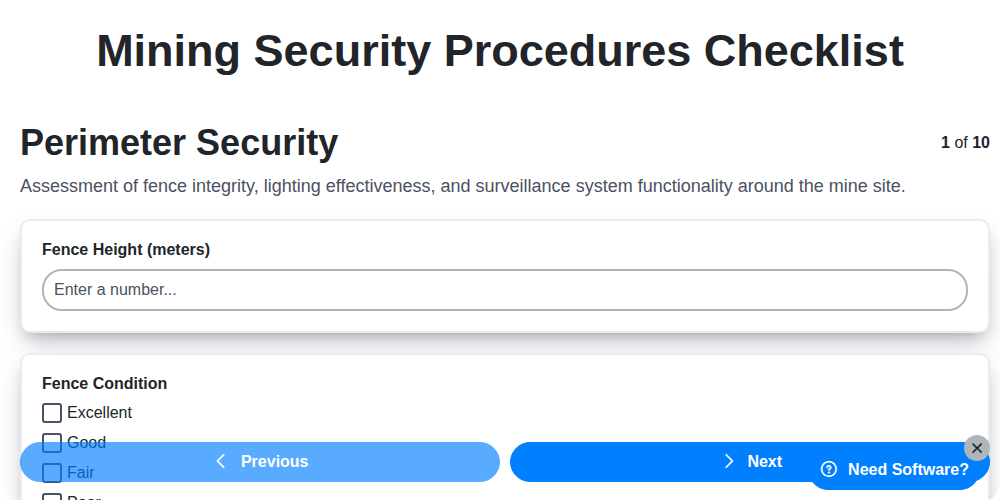
Mining Security Procedures Checklist: A Comprehensive Template for Safety
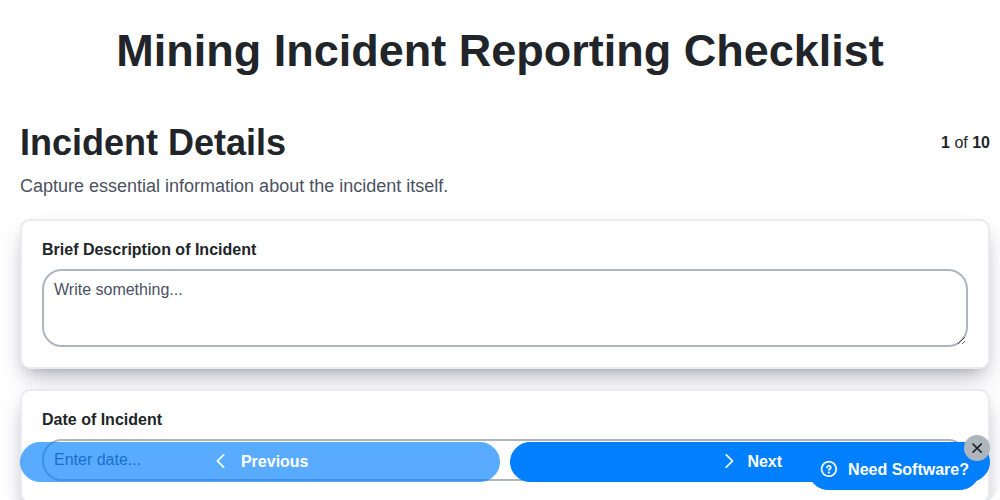
Ensuring Safety: Your Mining Incident Reporting Checklist Guide
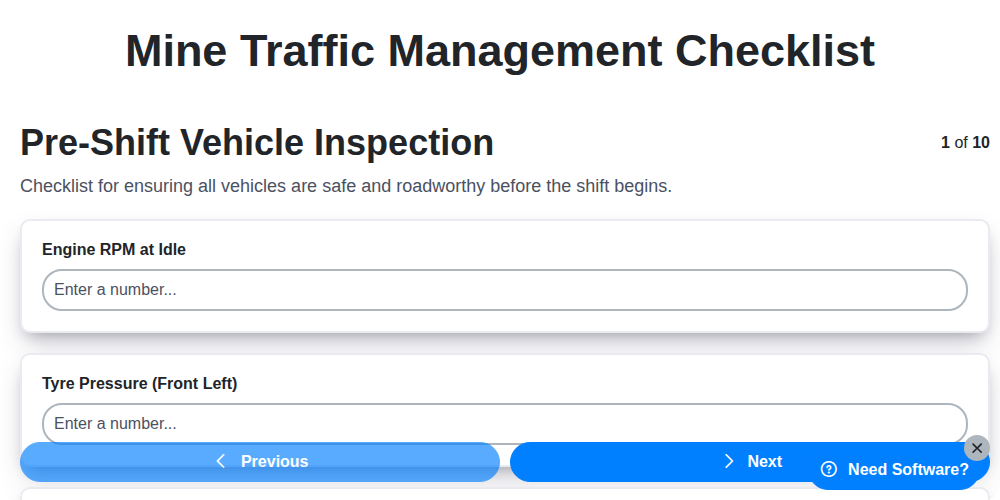
Ensuring Safety Underground: Your Mine Traffic Management Checklist Guide
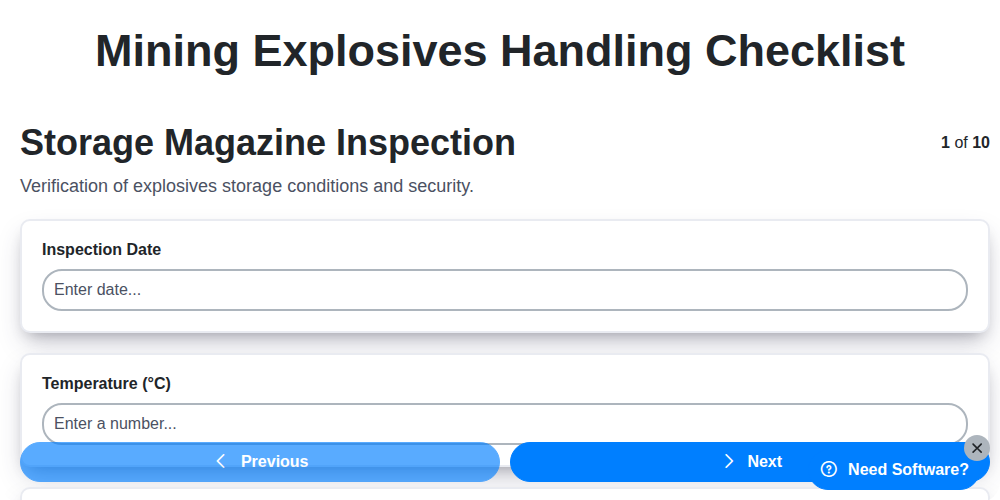
Ensuring Safety: Your Mining Explosives Handling Checklist Template
Ensuring Safety & Compliance: Your Mining Noise Monitoring Checklist Guide
Need help with
Mining Management?
Have a question? We're here to help. Please submit your inquiry, and we'll respond promptly.