Mastering Mining Water Management: Your Essential Checklist Guide
Published: 11/20/2025 Updated: 07/02/2026
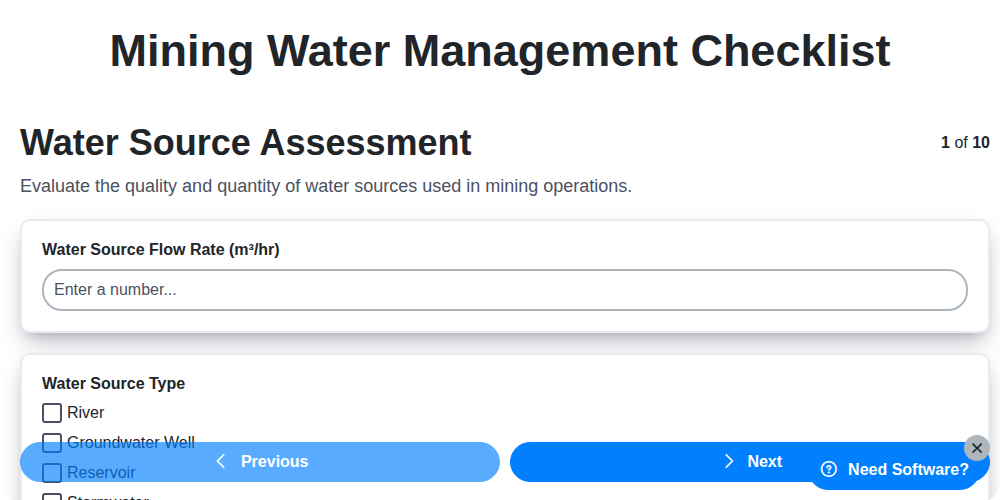
Table of Contents
- Introduction: Why Water Management is Critical in Mining
- 1. Water Source Assessment: Knowing Your Baseline
- 2. Surface Water Discharge Monitoring: Protecting Waterways
- 3. Groundwater Monitoring: Safeguarding Subsurface Resources
- 4. Sediment and Erosion Control: Minimizing Environmental Impact
- 5. Water Treatment & Recycling: Maximizing Efficiency
- 6. Dam Safety Inspection: Ensuring Structural Integrity
- 7. Spill Prevention & Response: Preparedness is Key
- 8. Water Licensing & Permits: Navigating Regulatory Requirements
- 9. Drainage Management: Controlling Runoff and Preventing Flooding
- 10. Rehabilitation and Closure: Restoring Water Resources Post-Mining
- Resources & Links
TLDR: Mining operations need to carefully manage water to protect the environment and comply with regulations. This checklist provides a step-by-step guide covering everything from assessing water sources to final site closure, ensuring you've addressed critical areas like groundwater monitoring, spill prevention, and permit compliance. Use it to minimize risks, maximize efficiency, and keep your operation sustainable!
Introduction: Why Water Management is Critical in Mining
Mining operations, by their very nature, interact significantly with water resources. Whether extracting ore from the earth or processing the materials afterward, water is often an essential component. However, this interaction presents a considerable responsibility. Poor water management can lead to devastating environmental consequences, including contamination of waterways, depletion of aquifers, and disruption of local ecosystems. Beyond the environmental impact, inadequate water management can also trigger regulatory scrutiny, legal challenges, and damage to a mining company's reputation. Sustainable mining practices demand a proactive and rigorous approach to water management - one that prioritizes conservation, minimizes pollution, and ensures the long-term health of the surrounding environment and communities. This isn't just about compliance; it's about responsible resource extraction and leaving a positive legacy.
1. Water Source Assessment: Knowing Your Baseline
Before any mining operation can begin, a thorough understanding of the existing water resources is absolutely critical. A Water Source Assessment isn't just a formality; it's the foundation for responsible and sustainable mining practices. This assessment goes beyond simply identifying the nearest river or aquifer. It's a comprehensive investigation of all potential water sources that could be impacted by the mining activity.
What does a Water Source Assessment entail? It typically includes:
- Hydrological Mapping: Identifying all surface water bodies (rivers, streams, lakes, wetlands) and groundwater resources (aquifers, springs) within the area of potential impact.
- Water Quality Baseline: Establishing a baseline of water quality parameters (pH, dissolved oxygen, turbidity, heavy metals, etc.) in all identified water sources before any disturbance occurs. This provides a benchmark against which future changes can be measured.
- Quantity Assessment: Determining the volume and flow rates of surface water and the recharge rates of groundwater. This informs water usage planning and ensures sustainable extraction.
- Ecological Context: Assessing the ecological importance of the water sources, including aquatic life, riparian vegetation, and dependent ecosystems. This helps prioritize protection and mitigation efforts.
- Stakeholder Engagement: Consulting with local communities and other stakeholders who rely on these water resources. Their knowledge and concerns should be integrated into the assessment.
Ignoring this crucial initial step can lead to unforeseen environmental consequences, regulatory challenges, and damage to community relations. A robust Water Source Assessment ensures that mining operations proceed with a clear understanding of their potential impact and a plan for minimizing it.
2. Surface Water Discharge Monitoring: Protecting Waterways
Regularly monitoring surface water discharges is crucial for responsible water management, particularly in mining operations. It's not just about compliance; it's about safeguarding aquatic ecosystems and protecting downstream water users. This process involves collecting and analyzing water samples from points where mine water is released into rivers, streams, or other surface water bodies.
What We Monitor: Key parameters include pH, temperature, turbidity, dissolved oxygen, electrical conductivity, total suspended solids (TSS), heavy metals (like mercury, arsenic, and lead), and other pollutants specific to the mining activity. The frequency of monitoring is dictated by regulatory requirements and the potential risk posed by the operation. Higher risk areas demand more frequent testing.
Why it Matters: Consistent monitoring allows us to detect any deviations from established baseline conditions. This data helps us quickly identify potential problems, allowing for proactive adjustments to mining practices to prevent contamination. Furthermore, it provides a clear record of our environmental performance, demonstrating accountability to regulatory bodies and the public. Analysis of trends over time can also indicate the effectiveness of mitigation measures. Finally, it's a vital tool in ensuring our water discharges meet or exceed applicable water quality standards.
3. Groundwater Monitoring: Safeguarding Subsurface Resources
Groundwater is a vital, often hidden, resource, and its sustainable management is critical for long-term operational success and environmental responsibility. Consistent groundwater monitoring provides essential data to understand aquifer health, identify potential contamination risks, and ensure that mining activities don't negatively impact this valuable resource.
This monitoring goes beyond simple water level measurements. A comprehensive groundwater monitoring program should encompass several key elements:
- Establishment of a Monitoring Network: This involves strategically placing monitoring wells in areas potentially affected by mining operations, considering geological conditions, groundwater flow patterns, and proximity to surface water bodies.
- Regular Water Quality Analysis: Samples should be collected and analyzed for a suite of parameters, including pH, electrical conductivity, metals (arsenic, cadmium, lead, mercury, etc.), nitrates, sulfates, and total dissolved solids (TDS). Frequency of testing should be determined by risk assessment and regulatory requirements.
- Groundwater Level Monitoring: Measuring water levels in monitoring wells allows for tracking groundwater flow direction and identifying potential drawdown or recharge patterns. This data is crucial for predicting potential impacts on nearby users and ecosystems.
- Baseline Data Comparison: Establishing a robust baseline dataset prior to mining activities begins is paramount. This allows for accurate comparison of water quality and levels over time, enabling early detection of any anomalies.
- Data Interpretation and Trend Analysis: Raw data isn't enough; it needs to be interpreted by qualified hydrogeologists to identify trends, potential sources of contamination, and the effectiveness of mitigation measures.
- Contingency Planning: A clear plan should be in place to address potential groundwater contamination events, including remediation strategies and notification protocols.
Neglecting groundwater monitoring can lead to serious consequences, including regulatory fines, operational delays, and long-term environmental damage. A proactive and well-executed groundwater monitoring program is a cornerstone of responsible water management in mining.
4. Sediment and Erosion Control: Minimizing Environmental Impact
Sediment and erosion control are critical components of responsible water management, particularly in mining operations. Uncontrolled erosion can lead to significant environmental damage, impacting water quality, harming aquatic life, and destabilizing landscapes. A robust plan isn't just about compliance; it's about protecting the surrounding ecosystem.
Our checklist emphasizes proactive measures. This starts with a thorough site assessment to identify areas susceptible to erosion - steep slopes, disturbed ground, areas near waterways, and exposed rock. We then detail the implementation of best management practices (BMPs) tailored to these specific vulnerabilities. These BMPs can include:
- Terracing: Creating level platforms on slopes to reduce runoff velocity and erosion.
- Vegetation: Establishing cover crops and native plants to stabilize soil and bind it together.
- Silt Fences & Hay Bales: Physical barriers to trap sediment before it reaches waterways.
- Check Dams: Small barriers built across drainage channels to slow water flow and trap sediment.
- Diversion Ditches: Channels designed to redirect runoff away from vulnerable areas.
- Mulching: Applying organic material to the soil surface to reduce erosion and retain moisture.
Regular inspections and maintenance of these control measures are essential. Our checklist includes specific points for documenting these activities, ensuring continued effectiveness and identifying any areas needing adjustments. Ultimately, a commitment to diligent sediment and erosion control minimizes environmental impact and contributes to sustainable mining practices.
5. Water Treatment & Recycling: Maximizing Efficiency
Water scarcity is a growing concern globally, and responsible mining operations are increasingly focused on minimizing their water footprint. Water treatment and recycling are cornerstones of this effort, not just for environmental stewardship but also for operational cost savings.
The process typically begins with assessing the quality of water extracted from various sources - surface runoff, groundwater, and process water. This assessment guides the selection of appropriate treatment technologies. Common techniques employed include:
- Sedimentation: Removing suspended solids through gravity.
- Filtration: Utilizing various filters (sand, carbon, membrane) to remove finer particles and contaminants.
- Chemical Treatment: Employing chemicals to adjust pH, precipitate heavy metals, or remove dissolved substances.
- Biological Treatment: Using microorganisms to break down organic pollutants.
- Reverse Osmosis (RO): A more advanced filtration process for removing dissolved salts and minerals.
The treated water is then re-introduced into the mining process, reducing reliance on freshwater sources. Closed-loop systems aim to recycle as much water as possible, minimizing discharge and maximizing resource utilization. This not only reduces operational costs associated with water acquisition but also minimizes the impact on local water resources and potentially avoids stringent discharge regulations. Regular monitoring of recycled water quality is crucial to ensure its suitability for the intended purpose and prevent equipment damage or process inefficiencies. Investing in water treatment and recycling technology demonstrates a commitment to sustainable mining practices and can contribute significantly to a project's long-term viability.
6. Dam Safety Inspection: Ensuring Structural Integrity
Dam safety is paramount, and regular inspections are a critical component of responsible water management. These aren't just cursory glances; they're comprehensive assessments conducted by qualified engineers and specialists. The checklist focuses on evaluating the dam's structural integrity, including:
- Visual Inspections: Checking for cracks, settlement, deformation, and any signs of distress in the dam's embankment, concrete, or foundation.
- Instrumentation Review: Analyzing data from installed monitoring systems (piezometers, seepage meters, inclinometers) to understand water pressure, movement, and potential instability.
- Hydraulic Performance Assessment: Evaluating the dam's ability to safely pass flood events, including assessing spillway capacity and outlet works functionality.
- Foundation Stability Analysis: Investigating the condition of the underlying geology and ensuring the foundation remains stable and capable of supporting the dam.
- Vegetation Management: Addressing any vegetation growth that could compromise the dam's stability or drainage.
- Emergency Action Plan Review: Ensuring the emergency action plan is up-to-date, understood, and regularly practiced.
The frequency and scope of inspections depend on the dam's size, type, age, and risk classification, but a proactive and rigorous approach to dam safety inspection is essential for protecting downstream communities and the environment.
7. Spill Prevention & Response: Preparedness is Key
Water management operations, particularly those involving extraction and storage, inherently carry the risk of spills. These can range from minor leaks to large-scale releases, impacting water quality, surrounding ecosystems, and potentially human health. A robust Spill Prevention, Control, and Countermeasure (SPCC) plan isn's just good practice, it's often a regulatory requirement.
Beyond just having a plan, effective spill preparedness involves these key elements:
- Risk Assessment: Identify potential spill sources - storage tanks, pipelines, transfer areas - and evaluate the likelihood and potential impact of each. Consider factors like tank age, soil permeability, proximity to waterways, and weather conditions.
- Containment Measures: Implement secondary containment for all significant water storage areas. This includes berms, dikes, double-walled tanks, and collection systems. Regularly inspect these structures for integrity.
- Employee Training: All personnel involved in water management must be thoroughly trained in spill prevention techniques, proper handling of materials, and spill response procedures. Regular refresher training is crucial.
- Spill Response Equipment: Maintain readily accessible spill response kits stocked with absorbent materials, booms, personal protective equipment (PPE), and necessary tools. Ensure everyone knows where the kits are and how to use them.
- Reporting Procedures: Establish clear procedures for reporting spills to relevant authorities and internal teams. This includes knowing thresholds requiring immediate notification and proper documentation.
- Regular Drills: Conduct periodic spill response drills to test the effectiveness of the plan and identify areas for improvement. Simulate realistic scenarios to ensure personnel are comfortable and competent.
- Plan Updates: Review and update the SPCC plan regularly (at least annually) and whenever there are significant changes to operations, equipment, or regulations.
Proactive spill prevention and rapid, effective response significantly minimize environmental damage and financial repercussions. Investing in these measures is an investment in the long-term sustainability of your water management operations.
8. Water Licensing & Permits: Navigating Regulatory Requirements
Mining operations rely heavily on water, and as such, are subject to a complex web of regulations designed to protect this vital resource. Securing and maintaining the correct water licenses and permits is not merely a bureaucratic hurdle; it's a legal necessity and a cornerstone of responsible mining practices.
The specific licenses and permits required vary significantly depending on location, the scale of the operation, and the type of water being sourced and discharged. Generally, you're likely to encounter requirements related to:
- Water Extraction: Permits are needed to draw water from surface or groundwater sources, often stipulating the permitted volume and outlining conditions to prevent over-extraction and impacts on downstream users.
- Discharge Permits: If wastewater or treated water is discharged back into the environment, permits dictate the allowable levels of pollutants and require regular monitoring and reporting.
- Construction Permits: Building any infrastructure that interacts with water, from settling ponds to pipelines, will likely require specific permits.
- Alterations to Watercourses: Modifying streams, rivers, or wetlands necessitates permits and often requires demonstrating minimal environmental impact.
Staying compliant means more than just obtaining the initial permits. They require ongoing management, including:
- Regular Reporting: Submitting data on water usage, discharge quality, and monitoring results to regulatory bodies.
- Renewal Processes: Licenses have expiration dates and require renewal, which often involves demonstrating continued compliance and potentially updating conditions.
- Staying Informed: Keeping abreast of changes in regulations and adapting practices accordingly.
Failure to adhere to water licensing and permit requirements can lead to substantial fines, operational shutdowns, and reputational damage. Proactive engagement with regulatory agencies, thorough record-keeping, and a commitment to best management practices are crucial for maintaining a license to operate responsibly. Consulting with environmental specialists and legal professionals experienced in mining regulations is highly recommended.
9. Drainage Management: Controlling Runoff and Preventing Flooding
Effective drainage management is a crucial component of responsible water management, particularly in mining operations. Poor drainage can lead to a cascade of negative consequences, including erosion, sedimentation of water bodies, increased flood risk, and potential damage to infrastructure and surrounding ecosystems. This checklist item focuses on strategies to control surface runoff and prevent flooding throughout the mine lifecycle.
This encompasses more than just digging ditches. A robust drainage management plan involves careful assessment and implementation of a range of techniques. It starts with a thorough topographical survey to understand natural flow paths and identify areas susceptible to pooling and erosion. Subsequent steps involve:
- Designing and Maintaining Ditches & Channels: Properly sized and sloped ditches are essential for diverting runoff away from sensitive areas and towards designated collection points. Regular maintenance, including debris removal and erosion repair, is critical.
- Contour Bunding & Terracing: Creating earthen bunds and terracing slopes helps to slow runoff, allowing water to infiltrate the ground and reducing erosion.
- Vegetation Management: Establishing and maintaining vegetation cover helps to intercept rainfall, reduce runoff velocity, and stabilize soil. Native, drought-tolerant species are often preferred.
- Stormwater Retention Ponds: Strategically placed ponds can capture and temporarily store runoff, allowing for controlled release and reducing the peak flow during storm events.
- Culvert & Bridge Inspection: Regular inspection and maintenance of culverts and bridges ensures their capacity to handle runoff without blockage or failure.
- Predictive Modeling: Utilizing hydrologic models to predict runoff patterns and potential flood risks allows for proactive management and mitigation.
- Regular Inspections: Routine visual inspections of drainage infrastructure are key to identifying and addressing issues before they escalate.
Remember, drainage management isn't a one-off activity; it requires ongoing monitoring and adaptation to ensure its effectiveness throughout the entire mining operation.
10. Rehabilitation and Closure: Restoring Water Resources Post-Mining
Mining operations, while essential for resource extraction, inevitably impact water resources. Responsible mining practices recognize that rehabilitation and closure are not merely an afterthought, but an integral part of the entire lifecycle. This crucial stage focuses on restoring water-related impacts and ensuring long-term ecological stability.
The goals of water resource rehabilitation post-mining are multifaceted. We aim to return water quality to pre-mining levels where feasible, stabilize slopes to prevent erosion and sediment runoff, restore natural drainage patterns, and establish self-sustaining ecosystems. This process isn't a one-size-fits-all solution; it's tailored to the specific site conditions, mining methods, and regulatory requirements.
Key steps in water resource rehabilitation include:
- Surface Water Restoration: This may involve reshaping channels, re-vegetating riparian zones, and creating or restoring wetlands to filter runoff and provide habitat.
- Groundwater Recharge: Strategies to enhance groundwater recharge can help replenish aquifers impacted by mining.
- Water Quality Monitoring: Continued monitoring of surface and groundwater quality is essential to verify the effectiveness of rehabilitation efforts.
- Slope Stabilization: Implementing measures such as terracing, bioengineering, and retaining walls to prevent erosion and landslides.
- Acid Mine Drainage (AMD) Mitigation: Addressing AMD, if present, through passive treatment systems like constructed wetlands or active treatment approaches, ensuring long-term water quality.
- Long-Term Management Plans: Developing and implementing long-term management plans that outline responsibilities for ongoing monitoring, maintenance, and potential corrective actions.
Successful rehabilitation and closure demonstrates a commitment to environmental stewardship and ensures that water resources are protected for future generations. It's about leaving a legacy of responsible resource extraction, rather than lasting environmental damage.
Resources & Links
- Minerals & Mineral Processing - Mining Water Management: A global consulting firm specializing in mining water management. They provide resources and expertise across the whole spectrum from planning, assessments, treatment, and reuse.
- Waste Management - Mining Water Management: Provides engineering services and expertise including water management and tailings storage facilities and related risk management. Offers comprehensive solutions to address water challenges and ensure sustainable mining operations.
- University of Manchester - Mining Water Research: Research group focused on various aspects of mining water management, including hydrogeology, mine water chemistry, and remediation techniques. Useful for understanding the science behind solutions.
- ISO Standards (Specifically ISO 14001): ISO 14001 is an internationally recognised standard for environmental management systems. Important for demonstrating compliance and best practices in water management. Look for related standards as well.
- U.S. Geological Survey (USGS): Provides extensive data and research on water resources, hydrology, and groundwater. Excellent for understanding baseline conditions and potential impacts.
- U.S. Environmental Protection Agency (EPA): Provides regulations and guidelines related to water quality and discharge. Crucial for understanding legal requirements, particularly in the US. Check local environmental agencies for similar regulations.
- WaterWorld Magazine: A leading industry publication covering water and wastewater treatment technologies, including those applicable to mining operations. Provides case studies and technical articles.
- International Hydropower Association: Provides information and best practices for dam safety inspection and management, applicable to tailings dams and water storage facilities in mining operations. Relates to header 6.
- International Council on Mining and Metals (ICMM): An industry association committed to sustainable mining practices. Provides guidance and frameworks for responsible water management. Useful for broader context and best practices.
- World Bank - Water Resource Management: The World Bank frequently provides guidance and resources related to sustainable water management in developing countries, including mining projects. May contain project examples and best practice guides.
- Government of Canada - Environmental Protection: Resource for Canadian readers, providing information on water regulations and guidelines specific to mining operations in Canada. Refer to local and regional authorities for regulations relevant to the region.
- HydroLink: A platform aggregating content and expertise related to water management, including articles, reports, and news relevant to the mining industry. Useful for staying updated on new technologies and practices.
- Arcadis - Mining Water Solutions: Arcadis provides design, consultancy and engineering services for the mining industry, including comprehensive water management solutions. Provides case studies and technical expertise.
Frequently Asked Questions
What is mining water management and why is it important?
Mining water management encompasses all activities related to the control, diversion, treatment, and reuse of water within a mining operation. It's crucial for environmental protection, regulatory compliance, operational efficiency, and ensuring the long-term sustainability of mining projects. Poor water management can lead to pollution, water scarcity, and project delays.
Who is this checklist guide for?
This guide is for mining engineers, environmental managers, site supervisors, and anyone involved in planning, operating, or overseeing water management practices at a mining site. It's suitable for both new projects and existing operations looking to improve their water management strategies.
What are the main areas covered in this checklist?
The checklist covers a wide range of topics including baseline assessments, permits and regulations, water sources and diversions, water treatment, discharge monitoring, water reuse and recycling, risk assessment, and emergency response planning.
What does 'baseline assessment' mean in the context of mining water management?
A baseline assessment is a comprehensive initial evaluation of existing water resources, water quality, and hydrological conditions at a mining site *before* any mining activities commence. It establishes a reference point to monitor changes and impacts throughout the project's lifecycle.
How do I ensure compliance with mining water management regulations?
First, thoroughly research and understand all applicable federal, state, and local regulations. Regularly consult with regulatory agencies and environmental consultants. Maintain detailed records of water management activities and monitoring data to demonstrate compliance. The checklist provides a framework for identifying these requirements.
What are some common water treatment methods used in mining?
Common methods include sedimentation, flocculation, filtration, reverse osmosis, chemical precipitation, and biological treatment. The specific method used depends on the contaminants present and the required water quality standards.
What's the difference between a discharge permit and a water usage permit?
A discharge permit regulates the quality and quantity of water released from the mine site. A water usage permit controls the amount of water taken from a source (like a river or aquifer) and ensures sustainable water extraction.
What are some considerations for implementing a water reuse and recycling program?
Consider the water quality requirements for different mine processes, the cost-effectiveness of treatment technologies, the potential for scaling up the program, and the availability of storage facilities. Regularly evaluate the efficiency and effectiveness of the recycling system.
How do I conduct a risk assessment for water management?
Identify potential hazards (e.g., spills, flooding, contamination), assess the likelihood of occurrence and potential consequences, and prioritize mitigation measures based on risk level. Regularly review and update the risk assessment.
What should be included in an emergency response plan for mining water management?
The plan should outline procedures for dealing with spills, flooding, contamination incidents, and equipment failures. Include contact information for emergency services, designated personnel, and procedures for containment, cleanup, and communication.
Comments
There are no comments yet. Be the first to add one!
Mining Management Solution Demo
Maximize efficiency & safety in mining operations! ChecklistGuro streamlines task management, equipment tracking, and compliance reporting. Optimize workflows, reduce risk, & boost productivity. Manage it all with our Work OS.
Related Articles
Ensuring Mine Safety: Your Geotechnical Stability Checklist Guide
Ensuring Safety & Efficiency: Your Mine Haul Road Inspection Checklist Guide
Mastering Mine Safety: Your Guide to the Ground Control Checklist
Mining Security Procedures Checklist: A Comprehensive Template for Safety
Ensuring Safety: Your Mining Incident Reporting Checklist Guide
Ensuring Safety Underground: Your Mine Traffic Management Checklist Guide
Ensuring Safety: Your Mining Explosives Handling Checklist Template
Ensuring Safety & Compliance: Your Mining Noise Monitoring Checklist Guide
Need help with
Mining Management?
Have a question? We're here to help. Please submit your inquiry, and we'll respond promptly.