The Ultimate New Vendor Onboarding Checklist: A Step-by-Step Guide to Seamless Integration
Published: 07/12/2026 Updated: 10/05/2026
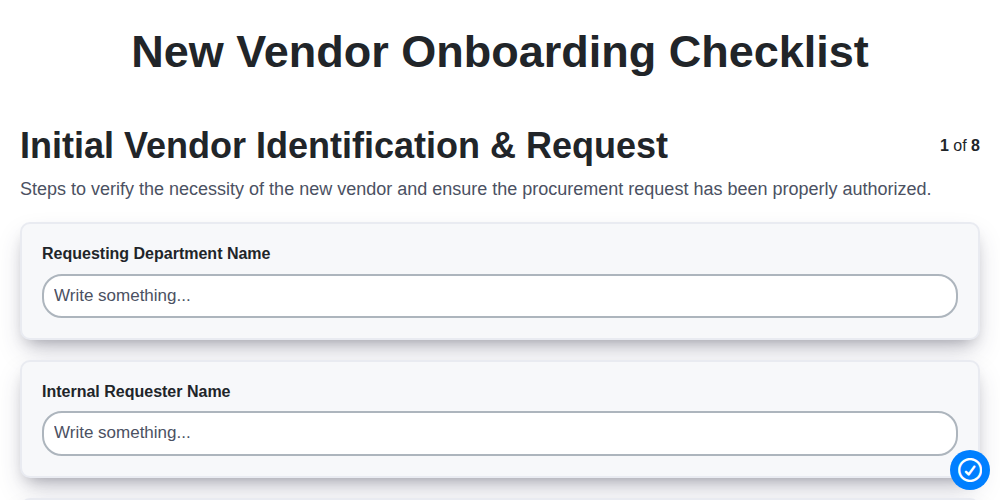
Table of Contents
- Introduction: Why a Structured Onboarding Process Matters
- Step 1: Initial Vendor Identification & Request
- Step 2: Documentation & Compliance Collection
- Step 3: Vendor Information Verification
- Step 4: Risk Assessment & Due Diligence
- Step 5: Banking & Payment Setup
- Step 6: Contract & Agreement Finalization
- Step 7: Internal System Integration
- Step 8: Final Review & Activation
- Best Practices for Maintaining Vendor Relationships
- Conclusion: Ensuring Long-Term Supply Chain Success
- Resources & Links
TLDR: Streamline your procurement process and mitigate operational risks with our comprehensive New Vendor Onboarding Checklist. This guide provides a structured, step-by-step framework-from initial identification to final system activation-designed to help your team ensure compliance, verify credentials, and integrate new partners into your workflow without the usual friction or manual errors.
Introduction: Why a Structured Onboarding Process Matters
In the fast-paced modern business landscape, your company is only as strong as the ecosystem of partners it relies on. Whether you are outsourcing manufacturing, hiring software providers, or engaging consultants, every new vendor introduces a new layer of complexity to your operations. Without a standardized process, onboarding becomes a chaotic scramble of fragmented emails, missing tax forms, and incomplete compliance checks.
A structured onboarding process serves as your organization's first line of defense. It is not merely an administrative formality; it is a strategic framework designed to mitigate risk, ensure financial accuracy, and maintain operational continuity. By implementing a repeatable, step-by-step checklist, you move away from a reactive approach-where errors are caught only after a payment fails or a legal breach occurs-to a proactive model.
A well-defined onboarding workflow ensures that every vendor meets your specific security, legal, and financial standards before they ever touch your internal systems. This protects your brand reputation, prevents fraudulent activities, and, most importantly, ensures that when the partnership officially begins, your team is set up for a seamless, efficient, and productive relationship from day one.
Step 1: Initial Vendor Identification & Request
The onboarding journey begins long before any contracts are signed or payments are processed. The first step is the Initial Vendor Identification & Request phase, where the foundation for the entire partnership is laid.
This stage is triggered when an internal department identifies a specific business need-whether it's a shortage in raw materials, a need for specialized software, or a gap in professional services. The process involves defining the scope of work, establishing clear requirements, and initiating the formal request for a vendor to participate in your procurement process.
During this phase, your procurement or sourcing team should focus on:
- Defining Requirements: Clearly outlining the specifications, quantities, and delivery timelines needed.
- Sourcing Potential Partners: Researching market options and identifying vendors that align with your company's quality standards.
- Issuing RFPs/RFQs: Sending out Requests for Proposals (RFP) or Requests for Quotations (RFQ) to gather competitive bids and understand the vendor's capabilities.
- Preliminary Screening: Conducting an initial high-level check to ensure the vendor's core services match your organizational needs.
By being thorough during this initial stage, you ensure that you are only moving forward with candidates that are fundamentally capable of meeting your operational goals, saving your team significant time in the later, more intensive stages of due diligence.
Step 2: Documentation & Compliance Collection
Once you have identified a potential partner, the next critical phase is gathering the essential paperwork required to ensure they meet your company's legal and operational standards. This stage is about building a formal paper trail that protects your organization from liability and ensures regulatory compliance.
During this step, you must request and collect a standardized set of documents from the vendor. Depending on your industry and the nature of the services provided, this typically includes:
- Tax Documentation: Completed W-9 forms (for US-based vendors) or W-8BEN (for international vendors) to ensure accurate tax reporting.
- Certificates of Insurance (COI): Proof that the vendor carries adequate general liability, professional indemnity, or workers' compensation insurance to cover potential mishaps.
- Business Licenses and Permits: Verification that the vendor is legally authorized to operate within their specific industry and jurisdiction.
- Data Privacy Agreements (DPA): If the vendor will handle any sensitive or proprietary data, you must collect signed agreements that outline how they manage and protect information.
- Compliance Certifications: Industry-specific credentials such as SOC2 reports, ISO certifications, or GDPR compliance documentation.
To make this process seamless, avoid manual back-and-forth emails. Instead, utilize a centralized portal or a standardized checklist that allows vendors to upload their documents directly. Maintaining an organized repository of these files is crucial, as you will need to reference them during audits or periodic reviews.
Step 3: Vendor Information Verification
Once you have collected the necessary documentation, the next critical step is to ensure that the information provided is accurate and authentic. Verification acts as a safeguard against fraud and administrative errors that can lead to significant operational disruptions later.
This stage involves cross-referencing the details in the vendor's application with official records. You should verify the legal business name, physical address, and tax identification numbers against government databases or official registry filings. It is also essential to confirm that the contact persons listed are authorized representatives of the company.
Failure to verify these details can result in ghost vendors or payments being directed to incorrect entities. By meticulously auditing the vendor's identity during this phase, you establish a foundation of trust and ensure that your procurement records are built on verified, high-quality data.
Step 4: Risk Assessment & Due Diligence
Before any vendor is officially integrated into your supply chain, it is critical to move beyond surface-level information and conduct a deep dive into their operational stability. The goal of the Risk Assessment & Due Diligence phase is to identify potential red flags that could lead to service interruptions, financial loss, or legal liabilities.
This stage involves evaluating the vendor's ability to meet your organization's standards through several layers of scrutiny:
- Financial Stability Analysis: Reviewing credit reports, audited financial statements, or bankruptcy filings to ensure the vendor has the long-term viability to support your needs.
- Security & Data Privacy Audit: For vendors handling sensitive information, this includes reviewing SOC2 reports, ISO certifications, or performing a security questionnaire to ensure they comply with GDPR, HIPAA, or other relevant regulations.
- Operational Capability Assessment: Verifying that the vendor possesses the necessary infrastructure, technical expertise, and human capital to fulfill the scope of work outlined in your agreement.
- Reputational & Compliance Checks: Screening against global sanctions lists, checking for past litigation, and ensuring their business practices align with your company's ethical and ESG (Environmental, Social, and Governance) standards.
By performing rigorous due diligence now, you shift from a reactive stance to a proactive one, preventing costly disruptions and safeguarding your company's reputation before the partnership even begins.
Step 5: Banking & Payment Setup
Once you have verified a vendor's identity and compliance status, the next critical step is establishing a secure and efficient method for transferring funds. Setting up the banking and payment infrastructure correctly is essential to prevent payment errors, mitigate the risk of fraud, and ensure seamless financial operations.
During this phase, you must collect and validate the vendor's official banking details, such as IBAN, SWIFT/BIC codes, or routing and account numbers. To protect your organization from Business Email Compromise (BEC) scams-where hackers intercept communications to provide fraudulent bank details-never rely solely on an email request. Always implement a callback procedure, where a member of your finance team calls a known, trusted contact at the vendor to verbally confirm the account details.
Beyond simply capturing numbers, this step involves integrating the vendor into your Accounts Payable (AP) workflow. Determine the preferred payment method (e.g., ACH, wire transfer, or corporate credit card) and establish the payment terms-such as Net 30 or Net 60-within your ERP or accounting software. By standardizing this process, you reduce the manual workload for your finance team and ensure that every vendor is paid accurately and on time.
Step 6: Contract & Agreement Finalization
Once the technical and administrative groundwork has been laid, the focus shifts to the legal foundation of the partnership. The finalization of the contract is the most critical step in ensuring that both your organization and the new vendor have a shared understanding of expectations, liabilities, and deliverables.
During this stage, it is essential to ensure that the terms outlined in the initial negotiations are accurately reflected in the written agreement. This includes verifying service level agreements (SLAs), clear scope of work (SOW), delivery timelines, and termination clauses. Beyond just the service details, pay close attention to clauses regarding data privacy, indemnification, and dispute resolution to mitigate potential legal friction down the line.
Before moving to the final signature, ensure that all stakeholders-including legal, procurement, and the project lead-have reviewed and approved the document. A well-finalized contract acts as your primary safeguard, transforming a verbal agreement into a legally binding roadmap for a successful long-term partnership.
Step 7: Internal System Integration
Once the contract is finalized and the legal groundwork is laid, the next critical phase is integrating the new vendor into your company's existing ecosystem. This step ensures that the vendor isn't just a name on a contract, but a functional part of your operational workflow.
Internal system integration involves several key technical and administrative tasks:
- ERP and Procurement Software Updates: Add the vendor's profile to your Enterprise Resource Planning (ERP) or procurement system. Ensure all metadata-such as vendor category, contact details, and payment terms-is accurately entered to allow for seamless purchase order (PO) generation.
- Access Management: If the vendor requires access to your internal portals, project management tools, or shared drives, coordinate with your IT department to establish secure, role-based access controls.
- Communication Channels: Establish the official channels for communication, whether it be a dedicated Slack channel, a shared email distribution list, or a specific ticketing system for support requests.
- Workflow Alignment: Define the specific touchpoints where the vendor will interact with your internal teams. This includes setting up automated notifications for invoice approvals or delivery milestones to prevent bottlenecks.
Proper integration prevents siloed information, ensuring that your finance, procurement, and operations teams are all working with a single, unified source of truth.
Step 8: Final Review & Activation
The final step in the onboarding journey is the formal go-live moment. Before officially marking a vendor as active in your system, conduct a comprehensive final review to ensure no stones were left unturned. This stage serves as a quality control gate where you verify that all previous steps-from compliance documentation to banking details-are not only present but accurate and fully approved by the relevant stakeholders.
Once the audit is complete, proceed with the official activation. This involves granting necessary access to your internal procurement portals, notifying your accounts payable team, and updating your master vendor file. By performing this final check, you mitigate the risk of onboarding fatigue and ensure that your organization is prepared for a seamless, error-free first transaction.
Best Practices for Maintaining Vendor Relationships
Once the onboarding process is complete and the vendor is officially integrated into your system, the real work begins. Successful vendor management isn't a set it and forget it task; it requires continuous oversight to ensure that the value promised during the procurement phase is actually delivered. To maintain high-performing partnerships, consider implementing these best practices:
1. Establish Clear KPIs and SLAs
A relationship cannot be managed if success isn't measurable. Define clear Key Performance Indicators (KPIs) and Service Level Agreements (SLAs) from the outset. Whether it is delivery timelines, product quality, or system uptime, having documented benchmarks allows for objective performance evaluations rather than relying on subjective impressions.
2. Schedule Regular Performance Reviews
Don't wait for a crisis to communicate with your vendors. Implement a cadence of periodic reviews-ranging from quarterly business reviews (QBRs) for strategic partners to monthly check-ins for critical service providers. Use these meetings to discuss what is working, address bottlenecks, and align on upcoming business goals.
3. Maintain Open Communication Channels
Communication breakdowns are the most common cause of vendor friction. Establish a formal communication protocol so your team knows exactly who to contact for technical issues, billing discrepancies, or contract renewals. Encouraging a two-way dialogue fosters a partnership mindset rather than a purely transactional one.
4. Monitor Compliance and Risk Continuously
Risk assessment is not a one-time event. As discussed in our onboarding checklist, initial due diligence is vital, but external factors change. Set automated reminders to request updated insurance certificates, renewed SOC2 reports, or updated security documentation. Continuous monitoring ensures that a vendor's risk profile doesn't drift after the contract is signed.
5. Foster a Partnership Mentality
The most resilient supply chains are built on mutual respect. Whenever possible, treat your key vendors as an extension of your own team. When vendors feel invested in your success, they are more likely to go the extra mile during emergencies, offer early access to new innovations, and provide more flexible terms during economic shifts.
Conclusion: Ensuring Long-Term Supply Chain Success
Implementing a structured New Vendor Onboarding Checklist is more than just a way to manage administrative tasks; it is a strategic investment in your company's operational resilience. By systematically moving through each stage-from initial identification to final activation-you effectively mitigate risks, prevent costly payment errors, and build a foundation of transparency with your new partners.
A seamless onboarding process does more than just tick boxes; it fosters much stronger, more collaborative relationships with your suppliers. When vendors feel that your processes are professional, organized, and predictable, it sets a tone of mutual respect that can lead to better service levels, improved communication, and greater agility during supply chain disruptions. Ultimately, a rigorous onboarding framework transforms your procurement department from a reactive unit into a proactive driver of long-term, sustainable growth.
Resources & Links
- Compliance & Security Standards Guide: A resource for understanding the security protocols and regulatory compliance standards required during the documentation and verification phases.
- Project Management Institute (PMI): Expert resources on managing complex integrations and the step-by-step execution of organizational workflows.
- Chartered Institute of Procurement & Supply (CIPS): Professional insights into risk assessment, due diligence, and effective supply chain management practices.
- Forbes Business Strategy Insights: Strategic advice on managing vendor relationships and optimizing business operations through efficient onboarding.
- Gartner Supply Chain Research: Deep dives into risk management, digital integration, and the importance of internal system alignment for enterprise vendors.
Frequently Asked Questions
What is the primary goal of a new vendor onboarding process?
The primary goal is to ensure a seamless integration of a new supplier into your business operations, minimizing risks, ensuring compliance with company standards, and establishing clear communication channels for a productive long-term partnership.
What are the essential documents required during vendor onboarding?
Essential documents typically include business licenses, tax identification numbers (like W-9 or W-8BEN), certificates of insurance, banking information for payments, NDAs, and completed service-level agreements (SLAs).
How can companies mitigate risks when onboarding a new vendor?
Risks can be mitigated by performing thorough due diligence, including financial stability checks, verifying compliance with regulatory requirements, auditing security protocols, and conducting reference checks with previous clients.
What is the difference between vendor onboarding and vendor management?
Vendor onboarding is the initial process of collecting information and integrating a new supplier into your system, whereas vendor management is the ongoing process of monitoring performance, managing relationships, and ensuring contract compliance throughout the lifecycle.
How often should the vendor onboarding checklist be reviewed?
The checklist should be reviewed regularly, at least annually, or whenever there are significant changes to your company's regulatory requirements, internal procurement policies, or technological infrastructure.
Comments
There are no comments yet. Be the first to add one!
Accounting Management Solution Demo
Move beyond rigid, one-size-fits-all software. Leverage a fully programmable accounting environment designed to adapt to your unique workflows, complex hierarchies, and evolving business logic.
Related Articles
The Ultimate Financial Data Integrity Audit Checklist: A Step-by-Step Template for Precision and Compliance
The Ultimate Financial Statement Review Checklist: A Step-by-Step Guide to Ensuring Accuracy and Compliance
Mastering Financial Control: The Ultimate Departmental Budget Monitoring Checklist
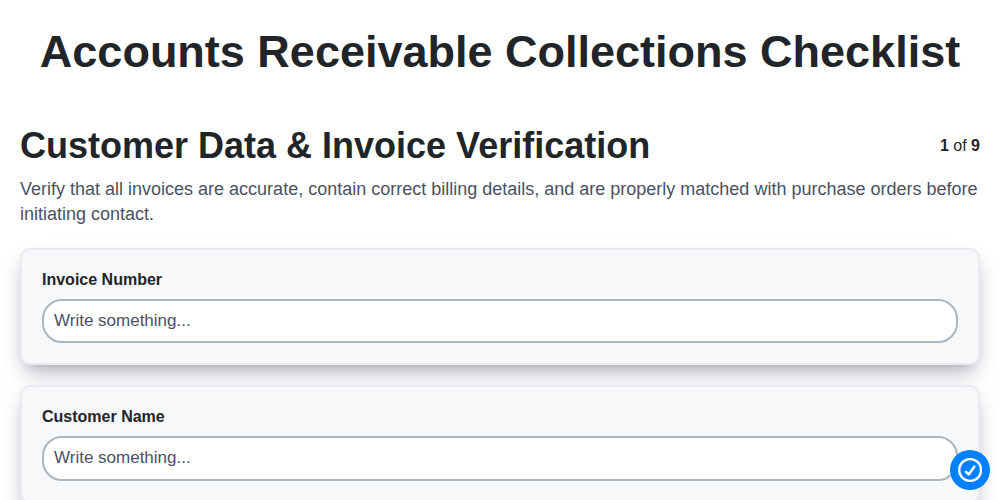
The Ultimate Accounts Receivable Collections Checklist: A Step-by-Step Guide to Streamlining Your Cash Flow
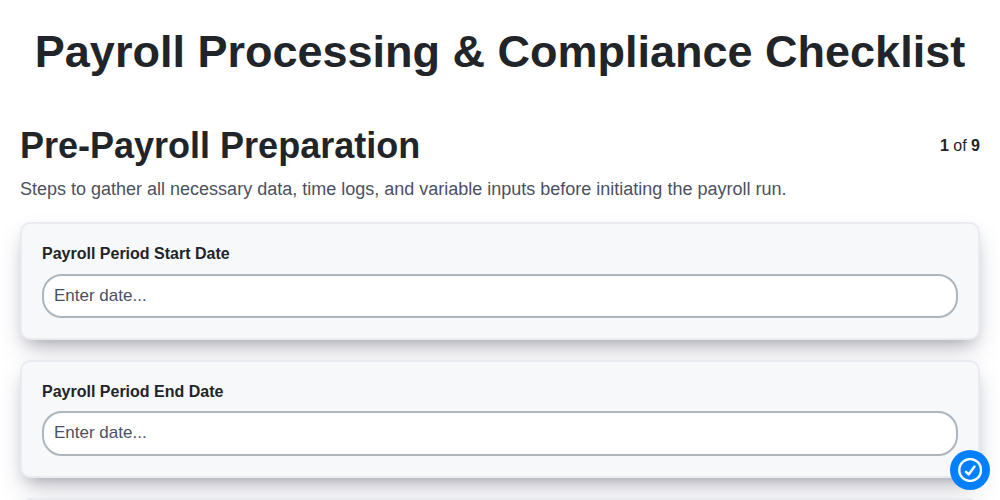
The Ultimate Payroll Processing & Compliance Checklist: A Step-by-Step Guide to Error-Free Payroll
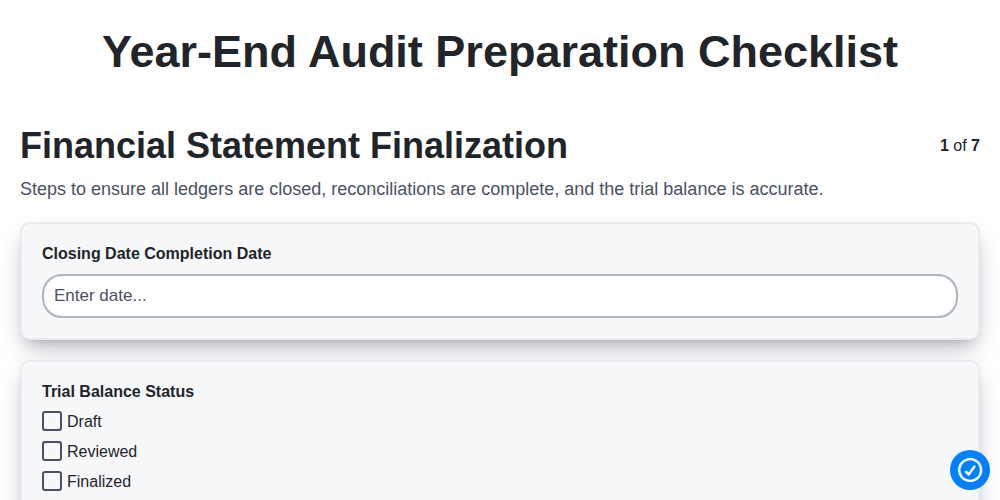
The Ultimate Year-End Audit Preparation Checklist: A Step-by-Step Guide to a Stress-Free Audit
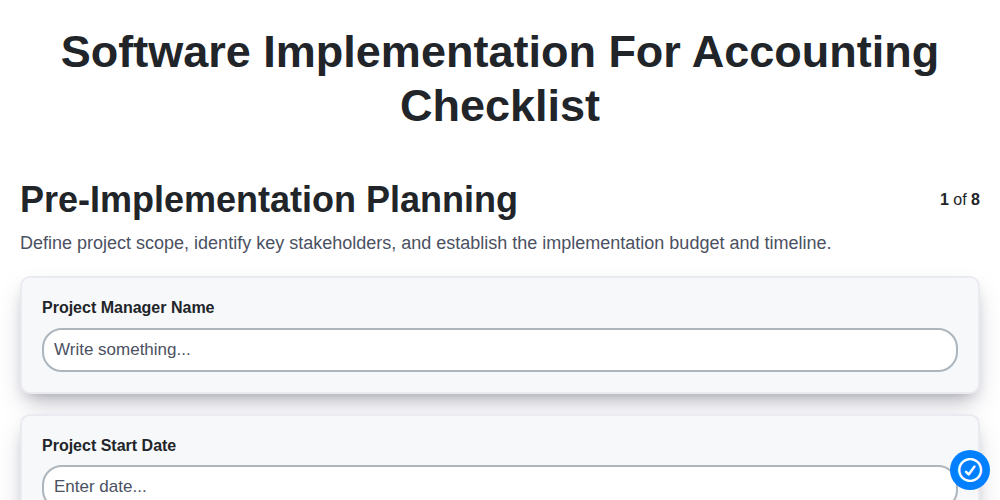
The Ultimate Software Implementation Checklist for Accounting Teams: A Step-by-Step Guide to a Seamless Transition
The Ultimate Inventory Valuation & Audit Checklist: A Step-by-Step Guide to Accuracy and Compliance
We can do it Together
Need help with
Accounting Management?
Have a question? We're here to help. Please submit your inquiry, and we'll respond promptly.