The Ultimate Order-to-Cash (O2C) Workflow Checklist: A Step-by-Step Guide to Streamlining Your Revenue Cycle
Published: 07/12/2026 Updated: 07/13/2026
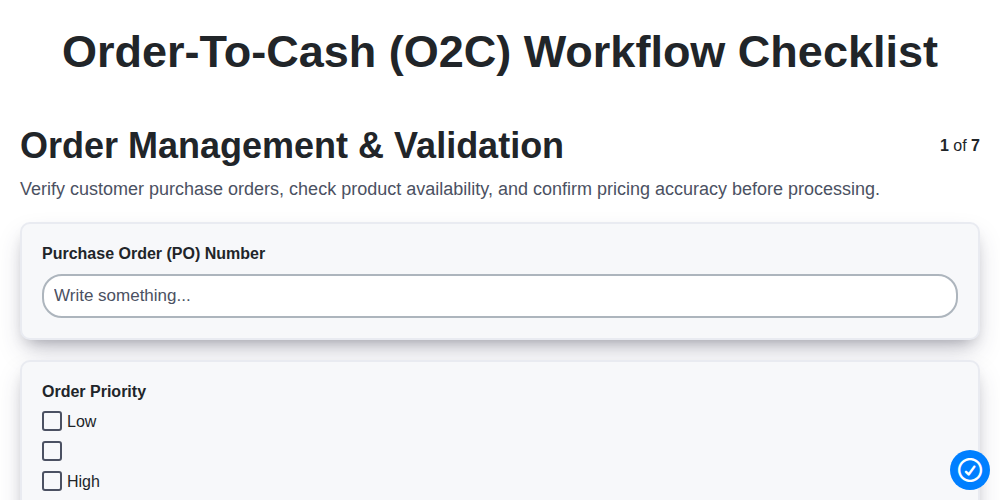
Table of Contents
- Introduction: Why a Streamlined O2C Process is Critical for Business Growth
- Understanding the Order-to-Cash (O2C) Lifecycle
- Step 1: Order Management & Validation - Ensuring Accuracy from the Start
- Step 2: Credit Management & Approval - Mitigating Financial Risk
- Step 3: Order Fulfillment & Shipping - Delivering Value to Your Customers
- Step 4: Invoicing & Billing - The Foundation of Timely Payments
- Step 5: Accounts Receivable Management - Monitoring Your Cash Inflow
- Step 6: Collections & Dispute Resolution - Reducing DSO and Handling Friction
- Step 7: Revenue Recognition & Reconciliation - Ensuring Financial Integrity
- Common Bottlenecks in the O2C Cycle and How to Avoid Them
- The Role of Automation in Optimizing Your O2C Workflow
- Conclusion: Building a Scalable Revenue Engine
- Resources & Links
TLDR: Optimize your revenue cycle and eliminate operational bottlenecks with this comprehensive Order-to-Cash (O2C) checklist. This guide breaks down every critical stage-from initial order validation to final revenue recognition-providing a structured framework to reduce errors, accelerate cash flow, and improve working capital management.
Introduction: Why a Streamlined O2C Process is Critical for Business Growth
In the modern business landscape, the efficiency of your revenue cycle can be the deciding factor between scaling rapidly or stagnating under operational weight. The Order-to-Cash (O2C) process-the end-to-end journey from the moment a customer places an order to the point when the payment is settled in your bank account-is the very heartbeat of your company's cash flow.
A fragmented or manual O2C workflow does more than just create administrative headaches; it introduces systemic risks. Bottlenecks in order validation lead to unhappy customers, errors in invoicing trigger avoidable disputes, and sluggish collections management creates trapped capital that could otherwise be reinvested into innovation or expansion. When your O2C process is broken, you aren't just losing time-you are losing liquidity and damaging your brand reputation.
Conversely, a streamlined, optimized O2C cycle acts as a powerful engine for growth. By ensuring accuracy, reducing manual intervention, and accelerating the time between sale and settlement, you improve your Days Sales Outstanding (DSO) and boost working capital. A well-oiled O2C machine provides the predictable, predictable cash flow necessary to make strategic investments with confidence. This checklist is designed to help you audit your current workflow, identify friction points, and transform your revenue cycle into a competitive advantage.
Understanding the Order-to-Cash (O2C) Lifecycle
The Order-to-Cash (O2C) lifecycle represents the entire sequence of events that occurs from the moment a customer places an order until the payment is received and applied to the company's books. It is the backbone of a company's revenue stream, encompassing every touchpoint between the initial sales commitment and the final reconciliation in the general ledger.
At its core, the O2C process is about more than just moving products or services; it is about managing the flow of information, inventory, and capital. A seamless O2C cycle ensures that customers receive exactly what they ordered, on time, and that the organization receives the correct payment without unnecessary friction. When this cycle is optimized, it drives higher customer satisfaction, improves cash flow, and reduces the operational costs associated with errors and delays.
However, because this process spans multiple departments-including Sales, Finance, Logistics, and Customer Service-it is also prone to bottlenecks. Any breakdown in any single stage, such as a delay in credit approval or a mistake in invoicing, can trigger a domino effect that slows down the entire revenue engine. Understanding each stage of this lifecycle is the first step toward identifying inefficiencies and building a more resilient, scalable business model.
Step 1: Order Management & Validation - Ensuring Accuracy from the Start
The Order-to-Cash cycle begins the moment a customer places an order, and this initial stage is the foundation of the entire process. The primary goal of Order Management & Validation is to ensure that every incoming request is complete, accurate, and actionable. Errors made during this phase-such as incorrect quantities, wrong product SKUs, or mismatched shipping addresses-create a devastating ripple effect that leads to delayed shipments, frustrated customers, and costly manual corrections later in the cycle.
To master this step, your checklist should focus on three key areas of validation:
- Data Integrity Check: Verify that all essential fields are populated. This includes customer contact information, precise item descriptions, quantities, and pricing.
- Inventory Availability: Before proceeding, the system must cross-reference the order against real-time stock levels. Confirming that the promised goods are actually available prevents the nightmare of backorders and broken promises.
- Price and Discount Verification: Ensure that the pricing applied to the order matches your current master price list and that any applied promotional discounts are authorized and mathematically correct.
By implementing a rigorous validation protocol, you transform your order management from a reactive process into a proactive one, reducing downstream friction and setting the stage for a seamless fulfillment journey.
Step 2: Credit Management & Approval - Mitigating Financial Risk
Once an order is validated, the next critical checkpoint is the credit management phase. This stage serves as the organization's primary defense against bad debt and liquidity issues. The goal here is not to block sales, but to ensure that every transaction is backed by a reliable payment commitment.
Effective credit management involves a systematic review of the customer's creditworthiness before the order moves toward fulfillment. This process typically includes evaluating the customer's credit score, reviewing their payment history, and checking their current credit limit against outstanding balances.
To optimize this step, your checklist should include:
- Credit Limit Verification: Automatically cross-referencing the order value against the customer's predefined credit ceiling.
- Credit Holds Identification: Implementing a clear protocol for flagging orders that exceed limits or involve high-risk profiles.
- Approval Workflow Automation: Establishing clear authorization levels-for example, small orders may be auto-approved, while high-value orders trigger a manual review by a credit manager.
- Risk Assessment Updates: Regularly updating customer credit profiles to reflect recent payment behaviors or changes in market conditions.
By integrating a robust approval workflow, you create a safety valve that protects your cash flow without creating unnecessary bottlenecks for your sales team.
Step 3: Order Fulfillment & Shipping - Delivering Value to Your Customers
Once the order has passed credit approval, the focus shifts from administrative verification to physical execution. The fulfillment and shipping stage is the moment of truth in the O2C cycle; it is where your promises to the customer are physically realized. An efficient fulfillment process ensures that the right products reach the right destination in the right condition, directly impacting customer satisfaction and repeat business.
To ensure this stage runs smoothly, your checklist should focus on three critical pillars:
- Inventory Allocation & Picking: Once an order is validated, the system must accurately allocate stock. The picking process-retrieving items from the warehouse-should be optimized through organized warehouse layouts or automated picking technologies to minimize human error and reduce lead times.
- Packing & Quality Control: Before an item is boxed, a final quality check is vital. Verifying that the items match the order specifications and are in pristine condition prevents the costly reverse logistics cycle of returns and replacements that can derail your margins.
- Shipping & Logistics Orchestration: This involves selecting the most efficient carrier and generating accurate shipping documentation (such as packing slips and waybills). Real-time tracking integration is essential here; providing customers with proactive shipping updates reduces the burden on your customer service team and builds trust.
Errors in this stage-such as shipping the wrong SKU or delayed departures-create a domino effect of downstream issues, including billing disputes and delayed revenue recognition. Mastery of fulfillment means minimizing the gap between order placed and order shipped.
Step 4: Invoicing & Billing - The Foundation of Timely Payments
Once the order has been fulfilled and the goods or services have been dispatched, the process moves into the critical phase of Invoicing & Billing. This step acts as the formal bridge between operational fulfillment and financial realization. The primary goal here is to convert the completed transaction into a formal demand for payment with 100% accuracy.
Errors in this stage-such as incorrect pricing, wrong quantities, or missing tax information-are one of the leading causes of payment delays and strained customer relationships. To ensure a seamless transition from shipping to collection, your billing process must focus on three key pillars:
- Data Accuracy & Verification: Before an invoice is generated, perform a final reconciliation between the sales order, the shipping documents (like the Bill of Lading), and the final agreed-upon pricing. Even a minor discrepancy in a line item can trigger a dispute downstream.
- Timeliness of Delivery: Speed is a competitive advantage. The time-to-invoice metric is vital; the sooner an invoice is sent following fulfillment, the sooner the clock starts ticking on your payment terms. Delaying the invoice effectively provides your customers with interest-free credit.
- Clarity and Detail: A high-quality invoice should be self-explanatory. Clearly outline itemized descriptions, applicable discounts, tax breakdowns, and-most importantly-unambiguous payment instructions. If a customer has to contact your team just to figure out how to pay, you have already lost precious days in your cash cycle.
By treating invoicing not just as an administrative task, but as a precision-driven component of your workflow, you set the stage for a smooth Accounts Receivable process and minimize the likelihood of preventable disputes.
Step 5: Accounts Receivable Management - Monitoring Your Cash Inflow
Once the invoice has been sent, the focus shifts from billing to active monitoring. Accounts Receivable (AR) management is the critical stage where you ensure that the Cash part of the Order-to-Cash cycle actually hits your bank account. This isn't just about waiting for payments to arrive; it is about proactive oversight of your outstanding balances to maintain healthy liquidity.
Effective AR management requires a systematic approach to tracking every open invoice. To optimize this stage, your workflow should include:
- Aging Report Analysis: Regularly review your AR aging reports to categorize outstanding invoices by duration (e.g., 0-30, 31-60, and 61+ days). This allows you to identify patterns of late payment before they become systemic issues.
- Payment Application: Ensure that every incoming payment-whether via ACH, wire transfer, or credit card-is accurately matched and applied to the correct customer invoice. Inaccurate application is a primary cause of customer disputes and phantom overdue balances.
- Cash Flow Forecasting: Use your receivables data to predict future cash inflows. Accurate forecasting allows your business to plan for upcoming operational expenses, investments, and seasonal fluctuations with confidence.
- Customer Communication: Maintain a consistent cadence of follow-ups. A gentle reminder sent a few days before an invoice is due can significantly reduce the likelihood of a late payment.
By treating Accounts Receivable as an active management process rather than a passive waiting game, you minimize the Days Sales Outstanding (DSO) and ensure that your revenue translates into usable working capital.
Step 6: Collections & Dispute Resolution - Reducing DSO and Handling Friction
Once an invoice has been issued, the focus shifts from fulfillment to ensuring that the promised payment actually hits your bank account. This stage is often the most sensitive part of the O2C cycle, as it requires a delicate balance between firm financial oversight and maintaining positive customer relationships.
Effective Collections is not just about sending automated reminders; it is about proactive monitoring. To reduce your Days Sales Outstanding (DSO), your team should implement a tiered follow-up strategy that begins well before a payment is overdue. By reaching out a few days before a due date to confirm receipt of the invoice, you can identify potential hurdles before they turn into late payments.
However, even the most streamlined processes encounter Dispute Resolution hurdles. Disputes typically arise from discrepancies in pricing, damaged goods, or incorrect quantities. When a customer disputes an invoice, the clock on your payment cycle effectively stops. To prevent these friction points from ballooning your aging receivables, your workflow must include:
- Rapid Response Protocols: A standardized system for routing disputes to the relevant department (Sales, Logistics, or Billing) for immediate investigation.
- Root Cause Analysis: Tracking why disputes occur-whether it's a recurring shipping error or a recurring pricing discrepancy-to fix the upstream issue.
- Clear Communication Channels: Providing customers with a single, easy point of contact to report issues, ensuring they don't feel ignored during the resolution process.
By mastering the art of professional persistence and efficient problem-solving, you can minimize bad debt and ensure that your cash flow remains predictable and robust.
Step 7: Revenue Recognition & Reconciliation - Ensuring Financial Integrity
The final stage of the Order-to-Cash cycle is where the physical movement of goods and the exchange of services translate into formal financial data. Revenue recognition and reconciliation serve as the ultimate checkpoint to ensure that the revenue reported on your income statement accurately reflects the actual economic activity of the business.
Revenue Recognition is more than just marking an invoice as paid. It is the process of determining exactly when revenue is earned and can be legally recognized, adhering to accounting standards such as ASC 606 or IFRS 15. This involves verifying that all contractual obligations have been met-such as the delivery of goods or the completion of a service-to avoid the legal and financial risks of overstating earnings.
Reconciliation acts as the safety net for the entire O2C process. This step involves comparing your internal sales records against bank statements, payment gateways, and the general ledger. The goal is to identify discrepancies, such as:
- Unapplied credits or payments.
- Discrepancies between shipping logs and invoiced amounts.
- Bank fees or processing errors that affect the net amount received.
By maintaining rigorous reconciliation practices, you ensure that your financial statements are audit-ready, your cash flow visibility is accurate, and your business maintains a high level of financial integrity. Failure to master this step can lead to significant errors in profitability reporting and a lack of trust from stakeholders and auditors.
Common Bottlenecks in the O2C Cycle and How to Avoid Them
The Order-to-Cash cycle is a complex chain of interdependent processes. When one link weakens, the entire revenue stream is impacted. Identifying bottlenecks early is critical to maintaining healthy cash flow and customer satisfaction. Here are the most common friction points and strategies to overcome them:
1. Manual Data Entry and Siloed Information
The most frequent bottleneck occurs at the very beginning of the cycle. Relying on manual entry for order management or using disconnected spreadsheets leads to high error rates, duplicate orders, and shipping delays.
- How to avoid it: Implement an integrated ERP (Enterprise Resource Planning) system that acts as a single source of truth. Automating the flow of data from order entry to fulfillment ensures that information remains consistent across all departments.
2. Slow Credit Approval Processes
If your credit management process relies on manual background checks and endless email threads, it creates a stop-and-go rhythm that frustrates customers and delays fulfillment.
- How to avoid it: Establish clear, automated credit scoring rules. By pre-defining credit limits and automated approval workflows for low-risk customers, you can accelerate the transition from order validation to shipping.
3. Discrepancies Between Invoicing and Fulfillment
A major cause of disputes and delayed payments is the mismatch error-when the invoice does not reflect the actual items shipped, quantities delivered, or agreed-upon pricing. This leads to a surge in the Collections and Dispute Resolution phase.
- How to avoid it: Ensure seamless integration between your warehouse management system (WMS) and your billing software. Real-time updates on shipping status and automated invoice generation based on shipped triggers can virtually eliminate billing discrepancies.
4. Inefficient Collections and Lack of Follow-up
The final stage of the O2C cycle often stalls because of reactive, rather than proactive, accounts receivable management. Waiting until an invoice is significantly overdue to initiate contact creates a backlog of aging receivables.
- How to avoid it: Use automated reminders and aging reports. Set up automated email workflows that nudge customers before, on, and shortly after the due date. This keeps the conversation moving and prevents small delays from becoming long-term bad debt.
5. Lack of End-to-End Visibility
When the finance team has no visibility into the shipping stage, and the shipping team has no visibility into credit holds, the result is a black hole in the workflow.
- How to avoid it: Foster cross-departmental transparency. Use dashboards that track the status of an order in real-time, allowing every stakeholder-from sales to accounting-to see exactly where a specific transaction sits in the cycle.
The Role of Automation in Optimizing Your O2C Workflow
In an era where speed and accuracy define competitive advantage, manual intervention is the greatest bottleneck in the Order-to-Cash cycle. Relying on spreadsheets, manual data entry, and physical paperwork creates a domino effect of errors-a single typo in order validation can lead to shipping delays, incorrect invoicing, and ultimately, strained customer relationships.
Automation transforms the O2C workflow from a reactive process into a proactive, streamlined engine. By implementing automated solutions, businesses can achieve several critical advantages:
- Elimination of Human Error: Automation ensures that data flows seamlessly from the initial order capture to the final invoice. This prevents discrepancies in pricing, quantities, and shipping addresses that often trigger costly disputes.
- Accelerated Processing Times: Automated credit checks and real-time inventory updates allow orders to move through the fulfillment stage without waiting for manual approvals. This reduces the order cycle time, leading to faster deliveries and quicker access to working capital.
- Proactive Cash Flow Management: Automated invoicing and intelligent collection reminders ensure that billing happens instantly and follow-ups occur precisely when they are due. Instead of chasing late payments manually, your team can focus on high-value exceptions and dispute resolution.
- Enhanced Visibility and Reporting: Automation provides a single source of truth. Real-time dashboards allow leadership to track KPIs-such as Days Sales Outstanding (DSO) and order accuracy rates-enabling data-driven decisions rather than guesswork.
By integrating automation into each stage of your checklist, you aren't just digitizing tasks; you are building a scalable foundation that reduces operational costs and maximizes revenue predictability.
Conclusion: Building a Scalable Revenue Engine
Mastering the Order-to-Cash cycle is more than just an operational necessity-it is a strategic imperative for long-term growth. By implementing this checklist, you are doing more than just reducing errors; you are transforming a fragmented collection of tasks into a unified, high-performance revenue engine.
A streamlined O2C process creates a virtuous cycle: faster order validation leads to quicker fulfillment, which accelerates billing, shortens the collection period, and ultimately improves your company's cash flow and working capital. As your business scales, this structured approach allows you to identify bottlenecks before they become crises, automate repetitive manual tasks, and provide a seamless experience for your customers.
Ultimately, a well-optimized O2C workflow provides the visibility and predictability needed to make informed financial decisions. Use this checklist as your blueprint to eliminate silos, mitigate credit risks, and build a foundation of operational excellence that supports sustainable, scalable success.
Resources & Links
- Gartner Research on Supply Chain and Finance Operations: In-depth industry reports and strategic insights into optimizing business processes and digital transformation in the revenue cycle.
- SAP Order-to-Cash Solutions: Technical documentation and best practices for implementing automated O2C workflows within enterprise resource planning (ERP) systems.
- Oracle NetSuite Finance Management: Resources focusing on the intersection of order management, automated invoicing, and real-time financial visibility.
- Accounting Today: Professional insights into accounts receivable management, revenue recognition standards, and financial reconciliation best practices.
- Forbes Business Strategy: High-level strategic perspectives on how efficient cash flow and streamlined operations drive long-term business growth and scalability.
- CFO Magazine: Expert resources for finance leaders on managing credit risk, reducing Days Sales Outstanding (DSO), and optimizing the revenue cycle.
Frequently Asked Questions
What is the Order-to-Cash (O2C) process?
The Order-to-Cash process is the entire sequence of steps a company takes from receiving a customer order to receiving payment and recording it in the financial ledger. It encompasses sales, fulfillment, invoicing, and collections.
Why is streamlining the O2C workflow important?
Streamlining the O2C workflow improves cash flow, reduces manual errors, lowers operational costs, and enhances customer satisfaction by ensuring faster, more accurate order fulfillment and billing.
What are the key stages included in an O2C checklist?
A comprehensive O2C checklist typically includes order management, credit management, order fulfillment, shipping, invoicing, accounts receivable, and reporting/reconciliation.
How can automation improve the Order-to-Cash cycle?
Automation reduces manual intervention in tasks like data entry, invoice generation, and payment reminders, which minimizes human error, accelerates processing times, and allows finance teams to focus on strategic analysis.
What are the common bottlenecks in the O2C process?
Common bottlenecks include delayed credit approvals, manual errors in order entry, slow shipping processes, inaccurate invoicing, and inefficient collection follow-ups.
How does the O2C process impact a company's cash flow?
An efficient O2C process reduces the Days Sales Outstanding (DSO), meaning the company collects revenue faster, which increases available working capital and improves overall liquidity.
Comments
There are no comments yet. Be the first to add one!
Accounting Management Solution Demo
Move beyond rigid, one-size-fits-all software. Leverage a fully programmable accounting environment designed to adapt to your unique workflows, complex hierarchies, and evolving business logic.
Related Articles
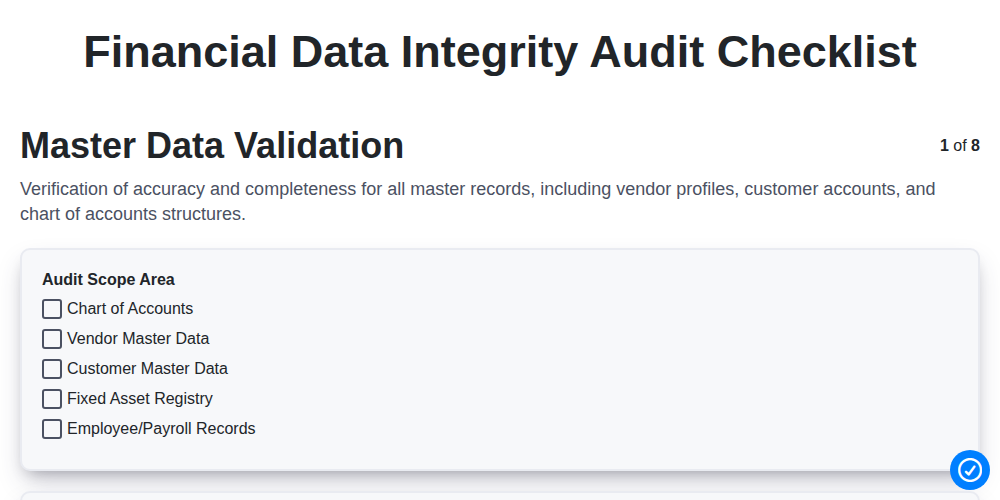
The Ultimate Financial Data Integrity Audit Checklist: A Step-by-Step Template for Precision and Compliance
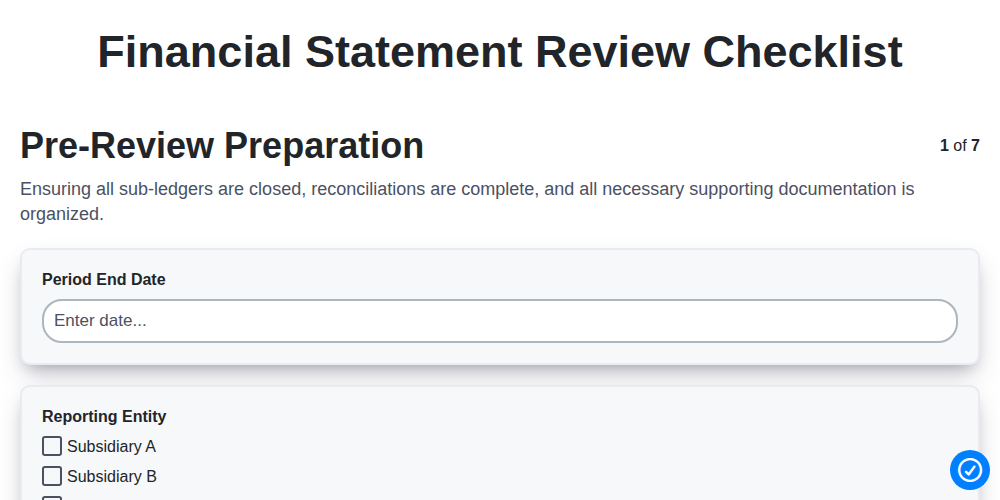
The Ultimate Financial Statement Review Checklist: A Step-by-Step Guide to Ensuring Accuracy and Compliance
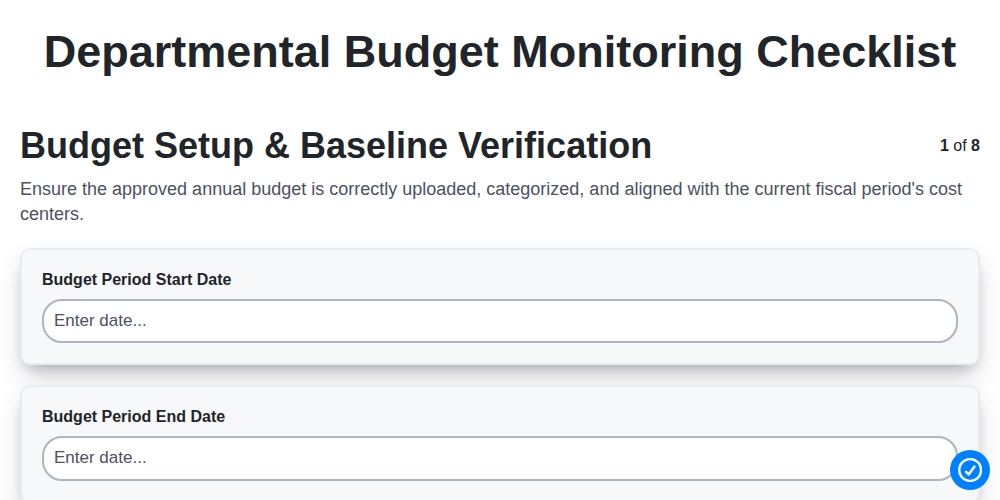
Mastering Financial Control: The Ultimate Departmental Budget Monitoring Checklist
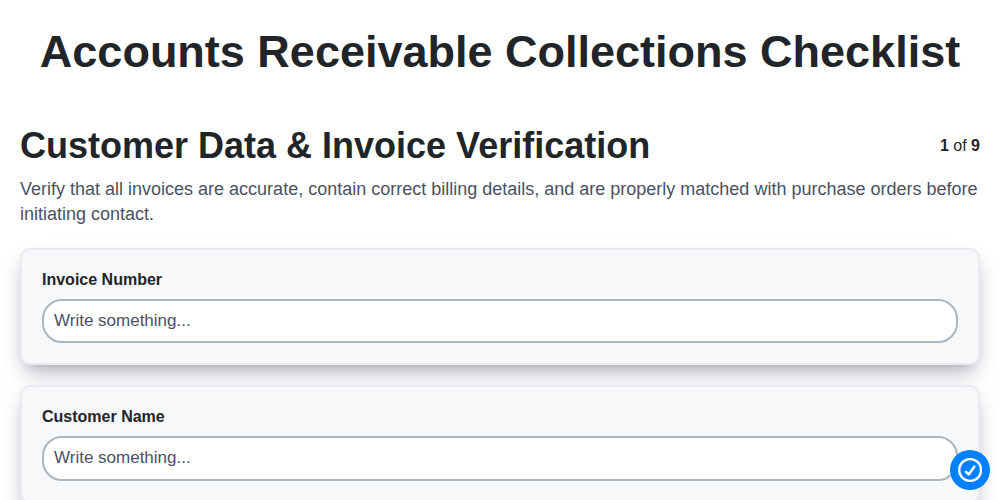
The Ultimate Accounts Receivable Collections Checklist: A Step-by-Step Guide to Streamlining Your Cash Flow
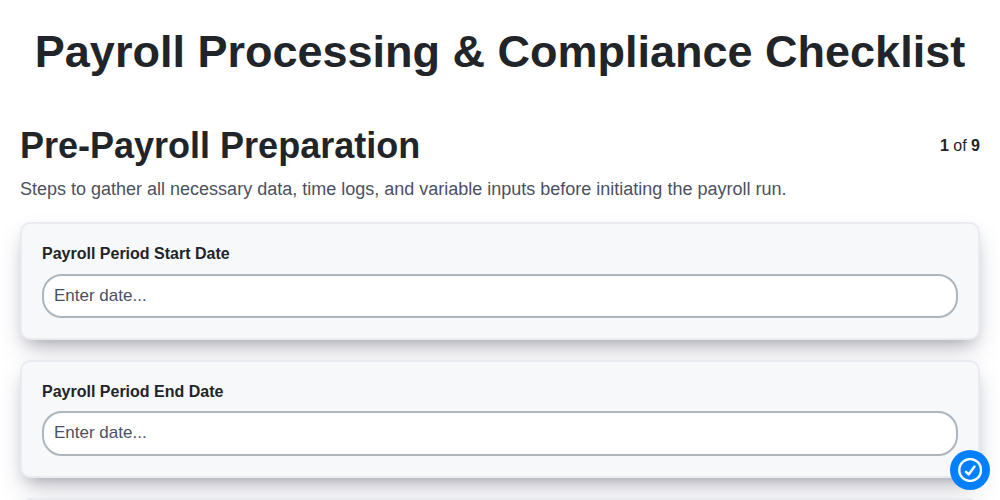
The Ultimate Payroll Processing & Compliance Checklist: A Step-by-Step Guide to Error-Free Payroll
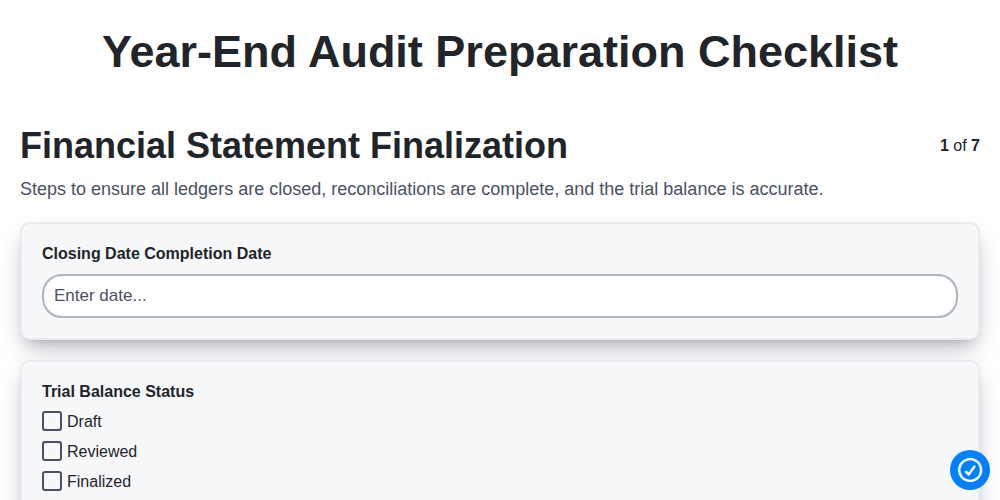
The Ultimate Year-End Audit Preparation Checklist: A Step-by-Step Guide to a Stress-Free Audit
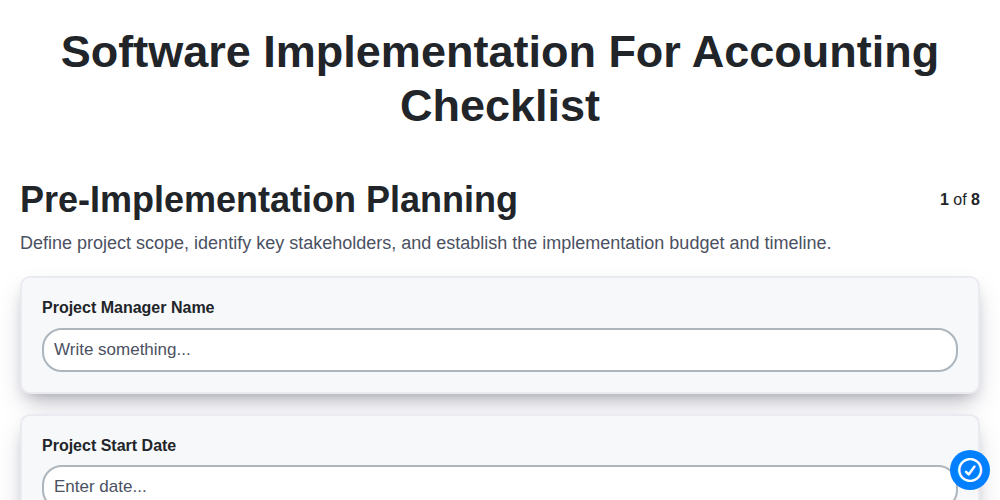
The Ultimate Software Implementation Checklist for Accounting Teams: A Step-by-Step Guide to a Seamless Transition
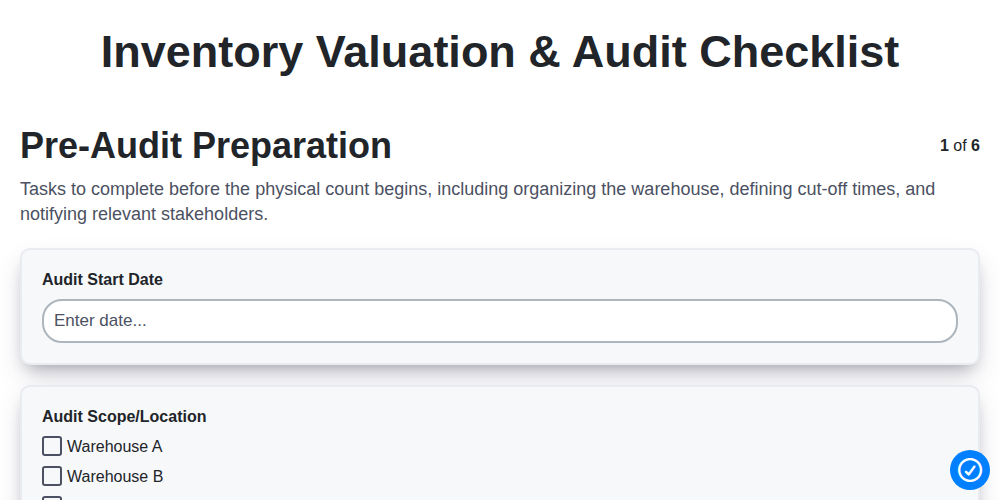
The Ultimate Inventory Valuation & Audit Checklist: A Step-by-Step Guide to Accuracy and Compliance
We can do it Together
Need help with
Accounting Management?
Have a question? We're here to help. Please submit your inquiry, and we'll respond promptly.