Ensuring Excellence: Your Paper Manufacturing Pulp Quality Checklist Guide
Published: 12/10/2025 10:00 PM Updated: 12/14/2025 7:55 AM
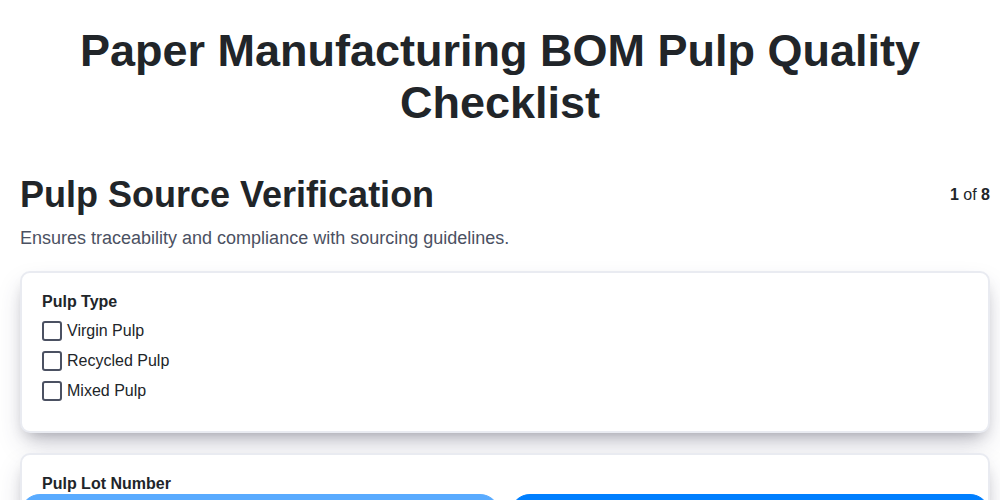
Table of Contents
- Introduction: The Foundation of Quality Paper
- Why a Pulp Quality Checklist is Essential
- Step 1: Pulp Source Verification - Traceability Matters
- Step 2: Fiber Characteristics - Assessing Strength and Structure
- Step 3: Chemical Composition Analysis - Balancing the Formula
- Step 4: Contaminant Screening - Minimizing Impurities
- Step 5: Moisture Content Control - Consistency is Key
- Step 6: Brightness & Opacity Evaluation - Achieving Desired Visuals
- Step 7: Record Keeping & Documentation - A Trail of Transparency
- Step 8: Supplier Compliance Audit - Partnering for Quality
- Interpreting Results: Setting Actionable Thresholds
- Troubleshooting Common Pulp Quality Issues
- Leveraging Technology for Enhanced Pulp Quality Monitoring
- Conclusion: Maintaining a Robust Pulp Quality System
- Resources & Links
TLDR: This checklist is your go-to guide for consistent, high-quality paper pulp! It covers everything from verifying your pulp source and analyzing fiber characteristics to controlling moisture and ensuring supplier compliance - helping you prevent defects, optimize production, and deliver top-notch paper.
Introduction: The Foundation of Quality Paper
The journey to producing high-quality paper begins long before the printing press. It starts with the pulp - the raw material that dictates everything from its strength and texture to its brightness and printability. Often overlooked, the Pulp Bill of Materials (BOM) and the rigorous quality control measures applied to it are the bedrock of a superior final product. This isn't just about checking boxes; it's about ensuring traceability, consistency, and ultimately, customer satisfaction. A comprehensive pulp quality checklist, consistently applied and meticulously documented, is vital for paper manufacturers striving for excellence. This post will delve into the key steps of such a checklist, highlighting why each one is critical to the overall paper manufacturing process.
Why a Pulp Quality Checklist is Essential
The quality of your paper hinges on the quality of its pulp. A seemingly small variation in pulp characteristics can drastically impact the final product - affecting printability, strength, appearance, and overall performance. Simply put, inconsistent pulp leads to inconsistent paper, creating production headaches, potential waste, and ultimately, dissatisfied customers.
A robust Pulp Quality Checklist isn't just a formality; it's a vital safeguard. It provides a structured, repeatable process for verifying pulp quality at every stage, from sourcing to delivery. By proactively identifying and addressing potential issues before they impact your paper manufacturing process, you're investing in consistent output, reduced downtime, and minimized material waste. Think of it as preventative medicine for your paper mill - a small investment upfront saves significantly in the long run. Ignoring pulp quality can lead to costly rejects, increased chemical usage to compensate for deficiencies, and damage to your reputation. A detailed checklist offers peace of mind and a foundation for continuous improvement.
Step 1: Pulp Source Verification - Traceability Matters
The foundation of high-quality paper begins long before the manufacturing process even starts: it begins with the pulp itself. Thorough pulp source verification is paramount to ensuring the consistent production of paper meeting your desired specifications. This isn't just about knowing where the pulp comes from, but also having a clear audit trail that details its entire journey.
Your verification process should encompass several key elements:
- Origin Confirmation: Precisely identify the geographic location and forest management practices of the pulp's origin. Are sustainable forestry practices employed? Is it sourced from responsibly managed forests?
- Supplier Assessment: Conduct rigorous assessments of your pulp suppliers. Understand their harvesting methods, processing techniques, and commitment to environmental responsibility.
- Chain of Custody Documentation: Require comprehensive documentation detailing the pulp's movement from forest to your facility. This includes records of transport, storage, and any intermediary processing.
- Certification Verification: Ensure suppliers possess relevant certifications (e.g., FSC, PEFC) and that these certifications are current and valid. Independently verify these certifications where possible.
- Risk Assessment: Evaluate potential risks associated with different pulp sources, considering factors like political instability, environmental regulations, and potential for contamination.
A robust pulp source verification program isn't just about compliance; it's about building trust with your customers and upholding your commitment to quality and sustainability. Without this initial step, any subsequent quality control efforts may be undermined.
Step 2: Fiber Characteristics - Assessing Strength and Structure
The characteristics of the fibers themselves are critical to the final paper's strength, printability, and overall quality. This goes beyond simply knowing the fiber type (e.g., softwood, hardwood, recycled). We need a granular understanding of their properties. Key metrics include fiber length, which directly impacts paper strength - longer fibers generally lead to stronger paper. We also assess fiber diameter, curl, and the presence of any fines (very short fibers). These are typically determined using microscopic analysis and sophisticated dispersion techniques. A well-structured fiber network, with a balance of fiber types and minimal damage, contributes to optimal paper performance. Deviations from expected fiber characteristics often indicate issues with the pulping process or the original wood source, requiring investigation and corrective action.
Step 3: Chemical Composition Analysis - Balancing the Formula
The pulp isn't just fiber; it's a complex chemical cocktail. A comprehensive chemical composition analysis is vital for consistent paper quality. We're talking about meticulously analyzing the proportions of key components like lignin, hemicellulose, cellulose, and extractives.
Why is this so critical? Lignin, for example, significantly impacts paper strength and stability. Too much can lead to yellowing and degradation over time. Hemicellulose influences the paper's bonding properties and contributes to its softness, but excessive levels can create issues with printability. Cellulose, the backbone of the fiber, dictates strength and flexibility, and its content needs to be optimized. Extractives, those soluble compounds, can affect color and contribute to unwanted odors.
Our chemical analysis goes beyond just identifying these components; it quantifies them. We use advanced techniques like spectrophotometry and chromatography to determine precise percentages. These results are compared against pre-defined target ranges to ensure the pulp aligns with our specifications. Deviations trigger investigations and corrective actions - perhaps adjustments to the pulping process or a reassessment of the pulp source. This level of precision ensures a uniform and predictable outcome for our paper manufacturing process.
Step 4: Contaminant Screening - Minimizing Impurities
Beyond the core fiber and chemical properties, the presence of contaminants in your pulp can significantly impact paper quality, processing efficiency, and even customer satisfaction. Contaminant screening is a crucial step in your Bill of Materials (BOM) and quality control checklist. These impurities can range from relatively harmless to actively detrimental, causing issues like discoloration, reduced strength, and even equipment damage.
Our checklist mandates rigorous contaminant screening, encompassing both visual inspection and laboratory analysis. We look for a broad spectrum of potential issues, including:
- Metals: Iron, copper, and other metals can cause discoloration and interfere with bleaching processes.
- Plastics and Synthetic Materials: These are frequently introduced during harvesting or processing and can compromise paper strength and printability.
- Plant Debris & Non-Fiber Materials: Fragments of leaves, bark, and other plant matter can lead to uneven paper texture and print defects.
- Inorganic Materials: Sand, clay, or other minerals can cause abrasion on equipment and reduce paper smoothness.
- Microbial Contamination: Bacteria and fungi can cause odor, staining, and degradation.
The frequency and scope of contaminant screening will depend on the pulp source and intended paper application. We recommend periodic analysis using techniques like microscopy, spectroscopy, and specific tests for targeted contaminants. Early detection and remediation - whether it's adjusting pulp sourcing or implementing pre-treatment processes - is far more cost-effective than dealing with quality issues downstream.
Step 5: Moisture Content Control - Consistency is Key
Moisture content is a deceptively simple metric with a huge impact on paper manufacturing. Too much moisture leads to sticking on the machine, reduced strength, and dimensional instability in the finished paper. Conversely, too little moisture can cause brittleness and difficulty in sheet formation.
Our checklist emphasizes rigorous moisture content control throughout the pulp processing. This isn't just about a single measurement; it's about consistent monitoring at various stages - from initial pulp delivery to the final stock preparation. We specify target ranges and acceptable tolerances, ensuring each batch adheres to pre-defined standards. Regular sampling and analysis, using calibrated equipment and following established procedures, are vital. The data collected must be meticulously tracked to identify any trends or deviations that require immediate attention. Adjustments to drying processes and stock preparation techniques are implemented proactively to maintain optimal moisture levels, ultimately contributing to a more consistent and higher-quality paper product.
Step 6: Brightness & Opacity Evaluation - Achieving Desired Visuals
Brightness and opacity are critical visual properties impacting the final print quality and overall appeal of paper. Brightness refers to how much light a paper reflects, influencing readability and perceived clarity. Opacity dictates how much light passes through the paper, affecting show-through and bleed-through issues when printing on both sides.
Our pulp quality checklist includes rigorous evaluation of these properties. We employ standardized testing methods (like TAPPI and ISO standards) to measure brightness using reflectance measurements and opacity using transmittance assessments. This goes beyond simple numbers; we consider the intended paper grade and its application. For example, a high-end coated paper demands significantly higher brightness and opacity than a newsprint.
Variations in pulp furnish, refining processes, and chemical additives can all impact these characteristics. Therefore, consistent monitoring and adjustment of these factors are vital. Our checklist ensures that brightness and opacity levels meet specified targets and remain consistent throughout production runs. Deviations trigger immediate investigation and corrective actions, maintaining the desired aesthetic qualities of the finished paper product. We also analyze the correlation between these properties and other pulp characteristics to optimize the overall furnish composition.
Step 7: Record Keeping & Documentation - A Trail of Transparency
Consistent and thorough record keeping is the backbone of any robust quality control system, and pulp manufacturing is no exception. This isn't just about ticking boxes; it's about building a traceable history of your pulp, demonstrating adherence to standards, and enabling continuous improvement.
What exactly should be documented? Everything! This includes:
- Pulp Source Information: Details of the supplier, lot numbers, and origin of the wood or other raw materials.
- Test Results: Meticulous records of all the data generated from the previous checklist steps - Fiber Characteristics, Chemical Composition Analysis, Contaminant Screening, Moisture Content Control, and Brightness & Opacity Evaluation.
- Calibration Logs: Records of equipment calibration to ensure testing accuracy.
- Deviation Reports: Any instances where results fall outside acceptable parameters, along with corrective actions taken.
- Supplier Communication: Records of any communication, agreements, or performance reviews with your pulp suppliers.
- Operator Logbooks: Noting personnel responsible for testing and observations made.
These records should be readily accessible, organized logically, and stored securely, both physically and digitally. Implementing a robust electronic record management system (ERMS) can significantly streamline this process. Regular review of these records can reveal trends, identify potential issues early, and provide valuable data for optimizing your manufacturing process. Remember, a comprehensive record-keeping system isn't just about compliance; it's an investment in the quality and reputation of your paper.
Step 8: Supplier Compliance Audit - Partnering for Quality
The journey to consistently high-quality paper begins not just within your own facility, but extends to your pulp suppliers. A robust Supplier Compliance Audit is a critical, often overlooked, element of your Paper Manufacturing Bill of Materials (BOM) and quality control process. This isn't about placing blame; it's about fostering a partnership built on shared commitment to excellence.
Regular audits should go beyond simply verifying certificates. They should involve on-site assessments of the supplier's operations, focusing on their own quality control procedures, environmental practices, and adherence to agreed-upon specifications. Key areas to examine include:
- Traceability: Can they accurately trace their pulp back to its origin?
- Quality Control Systems: Do they have documented and effective QC procedures mirroring yours?
- Process Control: How are they monitoring and controlling their pulping processes to ensure consistency?
- Environmental Responsibility: Do they adhere to sustainable forestry practices and waste management protocols?
- Labor Standards: Are ethical labor practices in place throughout their operations?
The audit process should be collaborative, with clear communication of your expectations and a willingness to work together to address any identified gaps. Findings from these audits should be documented and used to drive continuous improvement, not just for the supplier, but also for your own internal processes. Ultimately, a strong supplier relationship, built on trust and shared accountability, is essential for maintaining the consistently high-quality pulp your paper demands.
Interpreting Results: Setting Actionable Thresholds
Establishing clear, actionable thresholds for each checklist item is critical to translating data into meaningful improvements in pulp quality. Simply collecting data isn't enough; you need a framework for deciding what to do when results fall outside expected ranges.
Let's break down how to approach this for each area:
- Pulp Source Verification: Thresholds here focus on supplier reputation and historical performance. A history of non-compliance warrants immediate investigation and potentially alternative sourcing.
- Fiber Characteristics: Define acceptable ranges for fiber length, width, and coarseness based on the desired paper grade. Deviations may necessitate adjustments to pulping processes or blending strategies.
- Chemical Composition Analysis: Set limits for key chemicals like lignin, extractives, and resin acids. Exceeding these limits can impact paper strength, color, and printability.
- Contaminant Screening: Stringent thresholds are essential for contaminants like heavy metals and plastics. Any detection above established limits requires immediate corrective action and investigation.
- Moisture Content Control: Variations beyond a narrow band can affect paper strength and dimensional stability.
- Brightness & Opacity Evaluation: These are directly tied to paper aesthetics and print performance. Thresholds must align with customer expectations and target specifications.
- Record Keeping & Documentation: While not directly measured, incomplete or inaccurate records trigger immediate correction and process review.
- Supplier Compliance Audit: Failure to meet audit criteria results in intensified monitoring or supplier reassessment.
These thresholds shouldn't be arbitrary. They should be based on your paper's intended use, customer requirements, regulatory guidelines, and historical data. Regularly review and adjust these thresholds as processes evolve and new data becomes available. Furthermore, implement a system for escalating issues that exceed thresholds, ensuring rapid response and corrective action.
Troubleshooting Common Pulp Quality Issues
Maintaining consistent pulp quality is the bedrock of reliable paper manufacturing. Deviations from expected parameters can lead to a cascade of problems - from inconsistent paper strength and appearance to costly production downtime. Understanding the root causes of these issues and implementing proactive solutions is critical. Here's a breakdown of common problems and potential remedies, directly tied to points covered in a robust pulp quality checklist.
1. Fiber Characteristics & Paper Weakness: If your finished paper is exhibiting weakness, start with Fiber Characteristics verification. Are you receiving the promised fiber type (e.g., hardwood vs. softwood, virgin vs. recycled)? Inconsistent fiber length or diameter can significantly impact paper strength. Work with your supplier to review their pulping process and confirm adherence to specified fiber parameters. Consider adjusting refining techniques to optimize fiber bonding if the fiber itself is acceptable.
2. Brightness & Opacity Discrepancies: Unexpected shifts in brightness or opacity are often linked to Brightness & Opacity Evaluation failures. This could indicate issues with bleaching agents, improper mixing, or even contamination. Review chemical usage records and ensure accurate dosage. Investigate water quality - impurities in the process water can impact brightness. A thorough assessment of the optical brightening agent (OBA) performance is also essential.
3. Contaminant-Related Defects (Spots, Discoloration): Spots or discoloration in the paper are red flags pointing to a Contaminant Screening failure. Potential culprits include metals, dyes, or mineral deposits. Trace the contamination source - it could be within the pulp itself, from the water system, or even introduced during handling. Implement stricter filtration processes and reinforce supplier responsibility for contaminant control.
4. Moisture Content Instability (Wrinkling, Dimensional Changes): Paper that warps, wrinkles, or exhibits dimensional instability is frequently tied to Moisture Content Control issues. Analyze the drying process - are dryers functioning optimally? Is humidity consistently maintained? Check for uneven sheet formation - this can lead to localized moisture differences.
5. Chemical Imbalances (Color Shifts, Paper Strength): Unexpected color changes or inconsistent paper strength can signify problems with Chemical Composition Analysis. A deviation from the prescribed chemical balance in the pulp can drastically alter paper properties. Review the chemical recipes and ensure accurate addition and mixing. Regularly analyze the pulp's chemical composition to identify and correct any imbalances.
6. Supplier Performance & Traceability Concerns: If you're experiencing recurring quality problems, a Supplier Compliance Audit is crucial. Are your suppliers maintaining consistent pulping practices? Are their processes adequately controlled and documented? Request detailed quality control records and conduct on-site audits to ensure compliance. A lack of traceability can make it difficult to pinpoint the source of issues; robust Record Keeping & Documentation from both your organization and your suppliers is essential for identifying and resolving recurring problems.
Remember, proactive monitoring and meticulous record-keeping, driven by a comprehensive pulp quality checklist, are your best defense against these common issues.
Leveraging Technology for Enhanced Pulp Quality Monitoring
Manual checklists, while useful, can be time-consuming and prone to human error. Increasingly, paper manufacturers are leveraging technology to streamline and enhance pulp quality monitoring. Automated systems, often integrated with data analytics platforms, offer several advantages. Real-time data acquisition from sensors and laboratory equipment eliminates the need for manual data entry, minimizing errors and speeding up the process. Predictive analytics can identify potential quality issues before they impact production, allowing for proactive adjustments. For instance, continuous monitoring of fiber characteristics coupled with machine learning algorithms can predict potential sheet formation problems. Furthermore, cloud-based platforms facilitate collaboration and data sharing across departments and with suppliers, ensuring everyone is on the same page regarding pulp quality. Digital checklists, accessible via tablets or dedicated terminals, can guide operators through the required steps, ensuring consistency and providing instant feedback on adherence to quality standards. The integration of IoT devices and digital imaging technologies are also contributing to a more comprehensive and proactive approach to pulp quality control, ultimately leading to reduced waste and improved paper product consistency.
Conclusion: Maintaining a Robust Pulp Quality System
Ultimately, a consistent and high-quality paper product hinges on the integrity of the pulp used. The checklist outlined - encompassing Pulp Source Verification, Fiber Characteristics, Chemical Composition Analysis, Contaminant Screening, Moisture Content Control, Brightness & Opacity Evaluation, Record Keeping & Documentation, and Supplier Compliance Audit - isn't just a formality; it's the bedrock of a reliable manufacturing process. Implementing and diligently adhering to this robust system provides tangible benefits: reduced waste, improved paper strength and appearance, minimized production downtime, and enhanced customer satisfaction. Continuous improvement through regular review and adaptation of this checklist, alongside proactive collaboration with pulp suppliers, is key to sustaining a competitive edge and ensuring long-term success in the paper manufacturing industry.
Resources & Links
- Paper Age: A leading industry publication covering paper manufacturing news, technology, and market trends. Provides valuable insights into pulp quality, processes, and best practices. Good for staying updated on current industry standards and challenges.
- TAPPI (Technical Association of the Pulp and Paper Industry): The leading global professional organization for the pulp, paper, and packaging industries. Offers standards, training, technical resources, and networking opportunities related to pulp quality and paper manufacturing.
- ISWA (International Saving Paper Association): Dedicated to promoting sustainable paper manufacturing and consumption. Their resources can provide insights into responsible sourcing and quality considerations for environmental sustainability.
- FPInnovations: A Canadian research and development organization focused on the forest products industry. Provides technical reports, research findings, and expertise related to pulp and paper technology, including quality control.
- Pulp & Paper Week: Provides news and analysis of the pulp and paper industry. Features articles and reports covering pulp quality issues, advancements in technology, and market trends.
- Ritz Instruments: Specializes in testing equipment for the paper and pulp industry. Their website offers insights into different testing methods and equipment relevant to the checklist steps, particularly fiber characteristics, brightness, opacity and more.
- Fiber-teq: Provides testing services and equipment for pulp, paper, and packaging. Useful for understanding detailed fiber analysis techniques and interpreting results, focusing on specific fiber properties like length, fines content, and bonding.
- BÜHLER: A global supplier of paper manufacturing solutions, including equipment for pulping, refining, and bleaching. Their site offers detailed information about these processes that affect pulp quality.
- Andritz: Another major supplier of paper manufacturing equipment, with sections dedicated to pulping and refining processes. Provides insight on best practice and equipment that affects quality.
- Valmet: A technology and service company for the pulp, paper and bio-based industries, their website features insights into processes that affect pulp quality, including refining and screening.
- Millssmith: Supplier of paper making machines and chemical supplies. Offers a wide range of information about how different chemicals impact pulp quality and paper properties.
- Paper Chemicals: The trade association for suppliers of chemicals used in the paper industry. Their site will likely offer useful, if somewhat technically focused, resources on chemical aspects of pulp quality.
- ISO (International Organization for Standardization): Provides international standards relevant to paper manufacturing, including quality management systems (ISO 9001) and environmental management systems (ISO 14001). Important for ensuring compliance and demonstrating commitment to quality.
Frequently Asked Questions
What is pulp quality and why is it important for paper manufacturing?
Pulp quality refers to the physical and chemical properties of the wood pulp used to create paper. It directly impacts paper strength, brightness, smoothness, printability, and overall durability. Poor pulp quality can lead to production inefficiencies, increased costs, and substandard paper products.
Who is this checklist guide for?
This guide is designed for paper manufacturers, quality control personnel, pulp buyers, and anyone involved in the procurement and processing of wood pulp.
What are the key categories covered in this pulp quality checklist?
The checklist covers several key categories including fiber characteristics (length, width, fines), chemical composition (lignin, extractives), physical properties (brightness, opacity, strength), and contaminant levels.
What is the difference between 'fines' and 'fiber length' in the context of pulp quality?
Fiber length refers to the average length of the individual cellulose fibers in the pulp. Longer fibers generally contribute to paper strength. 'Fines' are very short fibers or fiber fragments that impact paper smoothness and opacity but contribute less to strength.
Why is lignin content important and how does it affect paper quality?
Lignin is a complex polymer that binds cellulose fibers together in wood. Excessive lignin content can cause discoloration and reduce paper strength. Bleaching processes are used to remove lignin, but this process can be costly and impact the environment.
What constitutes a 'contaminant' in pulp, and what are some examples?
Contaminants are unwanted materials found within the pulp, such as bark, sand, metal fragments, and plastics. They can damage papermaking machinery, cause defects in the paper, and compromise its quality.
How often should I review and update this pulp quality checklist?
The checklist should be reviewed and updated at least annually, or more frequently if there are changes in raw materials, processes, or quality requirements. Regular updates ensure the checklist remains relevant and effective.
What should I do if a pulp sample fails to meet the specified quality criteria?
If a pulp sample fails a quality test, you should investigate the cause of the failure. This may involve reviewing sourcing, processing, or handling procedures. Contacting the pulp supplier for clarification or requesting a different lot may also be necessary.
Where can I find more detailed information about specific pulp quality tests mentioned in the checklist?
The checklist provides general descriptions of tests. For more detailed information on testing procedures and acceptable limits, consult industry standards such as those provided by TAPPI (Technical Association of the Pulp and Paper Industry) and ISO (International Organization for Standardization).
Can this checklist be customized for my specific paper manufacturing needs?
Yes, the checklist is intended as a guideline. You should customize it to reflect your specific paper grades, processing capabilities, and quality standards. Consider adding or modifying parameters based on your unique requirements.
Found this Article helpful?
Comments
There are no comments yet. Be the first to add one!
BOM - Bill of Materials Management Solution Demo
Struggling with inaccurate BOMs & costly errors? ChecklistGuro provides a centralized BOM Management solution, connecting your design, engineering, & manufacturing teams for improved collaboration and control. Simplify operations & boost efficiency.
Related Articles
The Ultimate Logistics BOM Packaging Checklist: Ensuring Safe & Efficient Shipments
Mastering Leather Manufacturing: Your Tannery BOM & Compliance Checklist
Mastering Your BOM: A Comprehensive Checklist Template for Success
Ensuring Success: Your Oil & Gas BOM Component Approval Checklist Guide
Navigating Medical Device BOM Regulatory Compliance: Your Essential Checklist
The Ultimate Retail BOM Product Definition Checklist: A Step-by-Step Guide
Ensuring Quality: Your Rubber Manufacturing Polymer BOM Checklist Guide
Decoding Origins: Your Construction Materials BOM Origin Checklist Guide
We can do it Together
Need help with
Bill of Materials (BOM) Management?
Have a question? We're here to help. Please submit your inquiry, and we'll respond promptly.