The Ultimate Pre-Audit Accounting Cleanup Checklist: A Step-by-Step Guide to Audit Readiness
Published: 07/12/2026 Updated: 10/05/2026
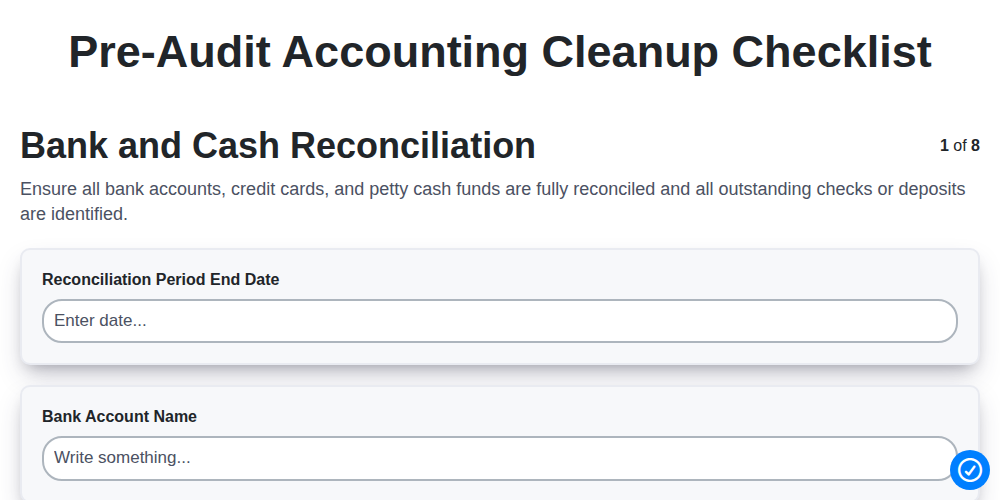
Table of Contents
- Introduction: Why Pre-Audit Cleanup is Essential for Success
- 1. Reconciling Bank and Cash Accounts
- 2. Performing a Thorough Accounts Payable Review
- 3. Verifying Accounts Receivable and Aging Reports
- 4. Ensuring General Ledger Integrity
- 5. Auditing Fixed Assets and Depreciation Schedules
- 6. Reviewing Revenue and Expense Recognition Accuracy
- 7. Confirming Tax and Regulatory Compliance
- 8. Organizing Documentation and Digital Filing Systems
- Conclusion: Turning Audit Stress into Audit Success
- Resources & Links
TLDR: Avoid audit stress and ensure financial accuracy with this comprehensive pre-audit cleanup checklist. This guide walks you through essential steps-from reconciling bank statements and verifying accounts receivable to ensuring tax compliance and digital documentation readiness-providing a structured roadmap to streamline your audit process and achieve seamless financial transparency.
Introduction: Why Pre-Audit Cleanup is Essential for Success
For many businesses, the word audit triggers an immediate sense of dread. The pressure of impending scrutiny from external auditors can lead to frantic, last-minute scrambles to find missing receipts, reconcile vague discrepancies, or hunt down undocumented transactions. However, an audit shouldn't be a period of panic; it should be a routine validation of your financial health.
The secret to a smooth, stress-free audit lies in the preparation that happens long before the auditors arrive. A proactive Pre-Audit Accounting Cleanup serves as your final line of defense, allowing you to identify and rectify errors, omissions, and inconsistencies while you still have the control to fix them. By systematically reviewing your books ahead of time, you do more than just satisfy compliance requirements; you reduce the risk of costly financial restatements, prevent audit findings that could damage your company's reputation, and ultimately save countless hours of expensive billable time for both your internal team and your auditors.
In short, a thorough cleanup transforms the audit process from a high-stakes investigation into a streamlined verification of your company's operational excellence.
1. Reconciling Bank and Cash Accounts
The foundation of any clean audit lies in the accuracy of your cash position. Before the auditors arrive, you must ensure that every cent recorded in your books matches the actual cash held in your bank accounts and petty cash funds. This step is not merely about checking balances; it is about identifying and resolving discrepancies that could trigger red flags during an inspection.
To effectively complete this step, perform a thorough comparison between your internal cash ledgers and your monthly bank statements. Every transaction-including service fees, interest earned, and automated transfers-must be accounted for. Pay close attention to outstanding checks and deposits in transit; ensure these items are legitimate and not simply errors or old entries that should have been voided. If you find unrecorded transactions or unexplained differences, resolve them immediately through adjusting entries. An unreconciled bank account is one of the most common ways to signal poor internal controls to an auditor.
2. Performing a Thorough Accounts Payable Review
One of the most common areas where discrepancies arise during an audit is within the Accounts Payable (AP) cycle. An audit of your AP processes isn't just about checking if the numbers match; it is about verifying the legitimacy and accuracy of every obligation your company owes to its vendors.
To prepare for an audit, you must ensure that all outstanding liabilities are recorded in the correct period and that no duplicate payments are lurking in your system. Start by reconciling your AP aging report with your general ledger to ensure they are perfectly aligned. Next, perform a cut-off test: review invoices received just before and after the period end to ensure they have been recorded in the appropriate accounting period.
Beyond the numbers, look for unvouchered liabilities-goods or services you have received but have not yet been invoiced for. Identifying these early prevents auditors from finding unrecorded liabilities, which is a major red flag. Finally, verify that all vendor files are up to date and that there are clear, documented approvals for every payment made. A clean AP process demonstrates strong internal controls and prevents the dreaded overstatement of expenses or understatement of liabilities findings.
3. Verifying Accounts Receivable and Aging Reports
Ensuring that your accounts receivable (AR) are accurate is one of the most critical steps in a pre-audit cleanup. An audit often fails or results in significant findings when there is a mismatch between recorded revenue and actual collectible cash. To prepare, you must perform a deep dive into your aging reports to ensure that every dollar listed as an asset is truly owed to the company and collectible within a reasonable timeframe.
Start by reconciling your AR sub-ledger with the general ledger to ensure the totals match perfectly. Once verified, scrutinize your AR Aging Report for any stale or overdue invoices. If you see significant balances sitting in the 90+ day category, investigate whether these should be written off as bad debt or if they require a specific allowance for doubtful accounts. Auditors will closely examine your write-off process to ensure it follows consistent company policy and isn't being used to manipulate earnings.
Finally, verify that all recent customer payments, credit memos, and discounts have been applied correctly. Confirming that your documentation-such as sales orders, shipping documents, and invoices-supports the recorded balances will provide the audit trail necessary to prove the legitimacy of your receivables.
4. Ensuring General Ledger Integrity
The General Ledger (GL) serves as the central repository for every financial transaction within your organization. Because it is the foundation upon which all financial statements are built, any inaccuracies here will cascade through your entire audit report. To ensure GL integrity, you must move beyond simple data entry and perform a deep-dive validation of your accounts.
Start by performing a systematic review of all account balances to ensure they are supported by underlying sub-ledgers. A common pitfall is orphaned entries-transactions that exist in the GL but lack corresponding documentation or supporting details in subsidiary modules. Additionally, check for abnormal balances; for example, a credit balance in a debit-heavy asset account or a debit balance in a liability account is a major red flag that requires immediate investigation.
Furthermore, scrutinize your journal entries for proper authorization and classification. Look for large or unusual manual journal entries, especially those made near the period-end, as these are high-priority areas for auditors. Verifying that every transaction is coded to the correct department, project, or cost center ensures that your departmental reporting is as accurate as your consolidated totals. Ultimately, a clean General Ledger means that every number can be traced back to a verifiable source, leaving no room for ambiguity during the audit process.
5. Auditing Fixed Assets and Depreciation Schedules
One of the most overlooked areas during a pre-audit cleanup is the management of long-term assets. Auditors will scrutinize your fixed asset register to ensure that what is recorded on your balance sheet actually exists and is valued correctly. To prepare, you must perform a thorough verification of your Fixed Asset & Depreciation Audit process.
Start by conducting a physical verification of significant assets to ensure they are still in use and located where your records claim they are. Discrepade or ghost assets-items that have been disposed of or scrapped but remain on the books-can lead to overstated asset values and inaccurate depreciation expenses.
Furthermore, you must review your depreciation schedules for mathematical accuracy and consistency. Ensure that the methods used (such as straight-line or declining balance) align with your company policy and that the useful lives assigned to assets are appropriate. A common pitfall is failing to account for impairments or changes in asset usage, which can lead to significant audit adjustments. By reconciling your depreciation entries with your general ledger and ensuring all disposals are properly documented, you significantly reduce the risk of errors in your long-term liability and asset reporting.
6. Reviewing Revenue and Expense Recognition Accuracy
One of the most critical areas scrutinized during an audit is the timing of your financial entries. Auditors look for cut-off errors-instances where revenue or expenses are recorded in the wrong accounting period to artificially inflate profits or hide liabilities. To ensure accuracy, you must verify that revenue is only recognized when it is earned and that expenses are recorded when they are incurred.
To prepare, perform a deep dive into your revenue recognition policies, ensuring that all service obligations or product deliveries align with your recorded income. Simultaneously, review your expense logs to ensure all costs associated with the current period have been captured, even if the invoice hasn't been paid yet. Comparing your reported figures against supporting contracts, shipping documents, and service agreements will help identify any discrepancies before the auditors arrive.
7. Confirming Tax and Regulatory Compliance
An audit isn't just about checking your internal books; it is also about ensuring your business remains in good standing with external authorities. Tax and regulatory compliance is often the area where auditors look most closely for discrepancies that could lead to significant liabilities or penalties.
To prepare, begin by ensuring all tax filings-including income tax, sales tax, and payroll tax-align perfectly with your recorded financial statements. Any discrepancy between your reported revenue and your tax returns will serve as a major red flag for auditors. Additionally, review your compliance with industry-specific regulations and local statutory requirements to ensure all necessary permits, licenses, and filings are up to date.
Check that your tax provisions are accurately calculated and that any recent changes in tax laws have been properly reflected in your current financial standing. By verifying that your tax obligations are fully documented and reconciled, you mitigate the risk of unexpected adjustments and demonstrate a commitment to transparency and integrity.
8. Organizing Documentation and Digital Filing Systems
An audit is not just about the accuracy of your numbers; it is about the audit trail. Even if your financial statements are perfect, an auditor cannot verify them without the supporting evidence to back them up. Disorganized documentation is one of the most common triggers for audit findings and can significantly extend the time-and the cost-of an audit.
To ensure a smooth process, you must ensure that every transaction recorded in your ledger is paired with its corresponding source document. This includes invoices, receipts, bank statements, contracts, and even email approvals for specific expenditures.
Consider implementing the following practices:
- Standardize Naming Conventions: Avoid vague filenames like
scan001.pdf. Instead, use a consistent, searchable format such asYYYY-MM-DD_VendorName_InvoiceNumber. This allows auditors to find specific documents instantly. - Centralize Digital Archives: Move away from scattered desktop folders. Use a secure, centralized cloud-based document management system where all financial records are organized by fiscal year and category.
- Verify the Paper Trail: Perform a spot check to ensure that large or unusual transactions have all necessary attachments (e.g., a purchase order paired with a receiving report and a vendor invoice).
- Audit Your Access Controls: Ensure that only authorized personnel can modify or delete digital files, and ensure that the auditors have read-only access to the folders they need to review.
By treating your digital filing system as an integral part of your accounting process rather than an afterthought, you transform the audit from a stressful investigation into a routine verification of your organized excellence.
Conclusion: Turning Audit Stress into Audit Success
An audit doesn't have to be a period of panic and sleepless nights. By viewing the audit preparation process not as a daunting hurdle, but as a strategic opportunity to refine your financial processes, you transform a high-stress event into a routine verification of your company's health.
Implementing this pre-audit accounting cleanup checklist does more than just satisfy auditors; it strengthens your internal controls, uncovers hidden inefficiencies, and ensures that your financial statements are a true reflection of your business performance. When you approach your audit with organized documentation, reconciled accounts, and verified data, you move from a defensive posture to a position of confidence. Use this checklist to build a foundation of financial integrity that protects your business long after the auditors have left the building.
Resources & Links
- AICPA (American Institute of Certified Public Accountants): The gold standard for official accounting standards, auditing guidelines, and professional regulatory updates.
- IFRS Foundation: Essential for ensuring your revenue and expense recognition processes align with international financial reporting standards.
- IRS Official Website: Critical resource for verifying tax compliance, payroll regulations, and federal tax filing accuracy.
- Accounting Today: Provides industry news and best practices regarding modern accounting workflows and audit preparation trends.
- NetSuite Financial Management: Insights into using automated tools for managing general ledger integrity, accounts payable, and real-time reconciliation.
- AuditBoard: Specialized resources on streamlining audit workflows, digital documentation, and internal control management.
Frequently Asked Questions
What is a pre-audit accounting cleanup?
A pre-audit accounting cleanup is a systematic process of reviewing, reconciling, and correcting financial records and internal controls before an official audit begins. Its goal is to identify and resolve errors, omissions, or discrepancies to ensure a smooth and successful audit process.
How far in advance should I start the audit cleanup process?
It is recommended to start the cleanup process at least 2 to 3 months before your scheduled audit. This provides sufficient time to investigate complex discrepancies, track down missing documentation, and implement necessary corrective actions without rushing.
What are the most critical items to check during a pre-audit cleanup?
The most critical items include bank reconciliations, accounts payable and receivable aging, fixed asset registers, payroll records, and ensuring all journal entries are supported by proper documentation. Verifying that all balance sheet accounts are reconciled to supporting sub-ledgers is also vital.
Why is documentation so important for audit readiness?
Auditors do not just look at the numbers; they look for evidence that the numbers are accurate and that your internal processes are followed. Proper documentation-such as invoices, receipts, approvals, and contracts-serves as the 'audit trail' that validates your financial transactions.
Can a pre-audit cleanup help reduce audit fees?
Yes. When your books are clean and organized, auditors spend significantly less time performing investigative work and correcting errors. This reduction in manual labor and-extended testing time can lead to a decrease in total audit hours and overall fees.
Who should be involved in the pre-audit cleanup process?
The cleanup process should involve the accounting team, the Controller, and potentially the CFO. If your company uses third-party vendors for payroll or tax preparation, their involvement may also be necessary to ensure all peripheral data is accurate.
Comments
There are no comments yet. Be the first to add one!
Accounting Management Solution Demo
Move beyond rigid, one-size-fits-all software. Leverage a fully programmable accounting environment designed to adapt to your unique workflows, complex hierarchies, and evolving business logic.
Related Articles
The Ultimate Financial Data Integrity Audit Checklist: A Step-by-Step Template for Precision and Compliance
The Ultimate Financial Statement Review Checklist: A Step-by-Step Guide to Ensuring Accuracy and Compliance
Mastering Financial Control: The Ultimate Departmental Budget Monitoring Checklist
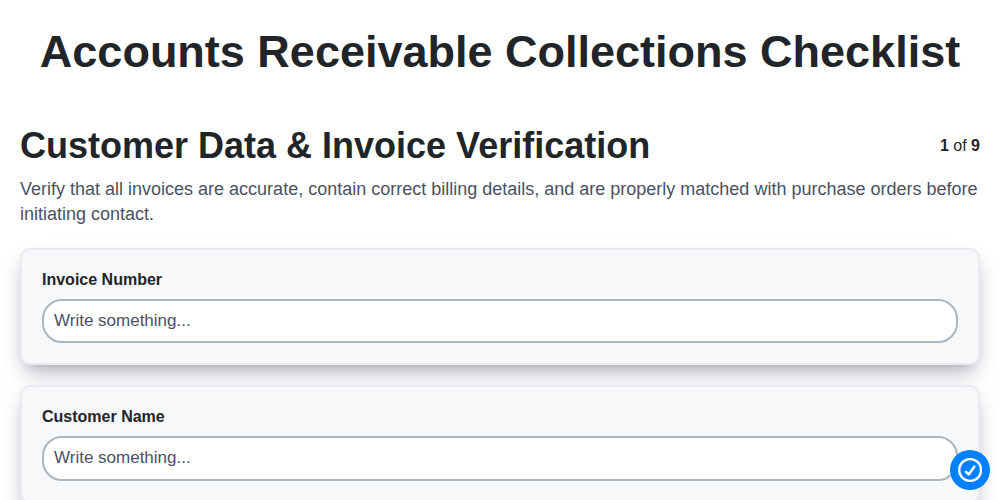
The Ultimate Accounts Receivable Collections Checklist: A Step-by-Step Guide to Streamlining Your Cash Flow
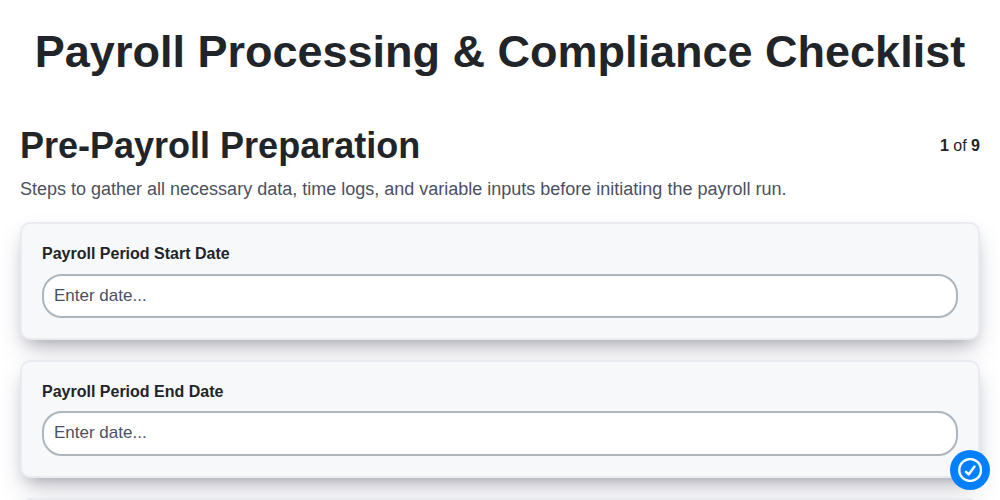
The Ultimate Payroll Processing & Compliance Checklist: A Step-by-Step Guide to Error-Free Payroll
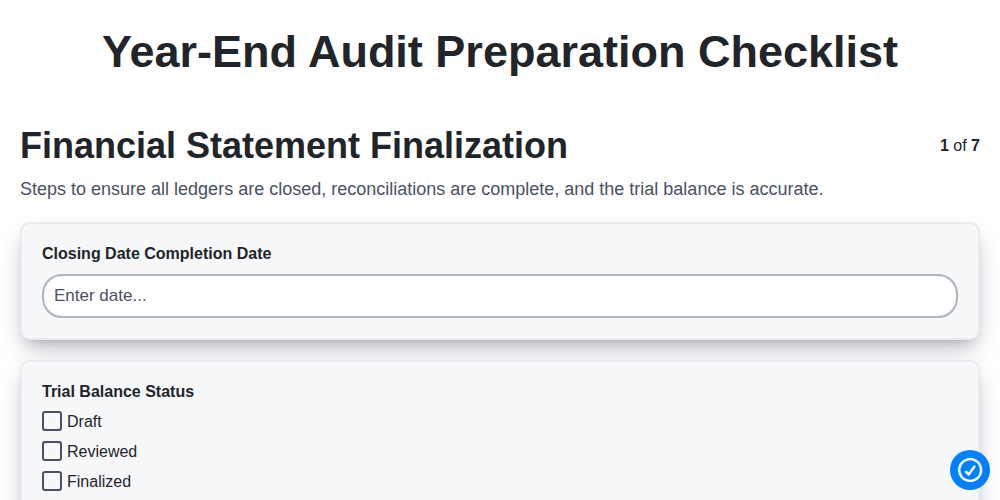
The Ultimate Year-End Audit Preparation Checklist: A Step-by-Step Guide to a Stress-Free Audit
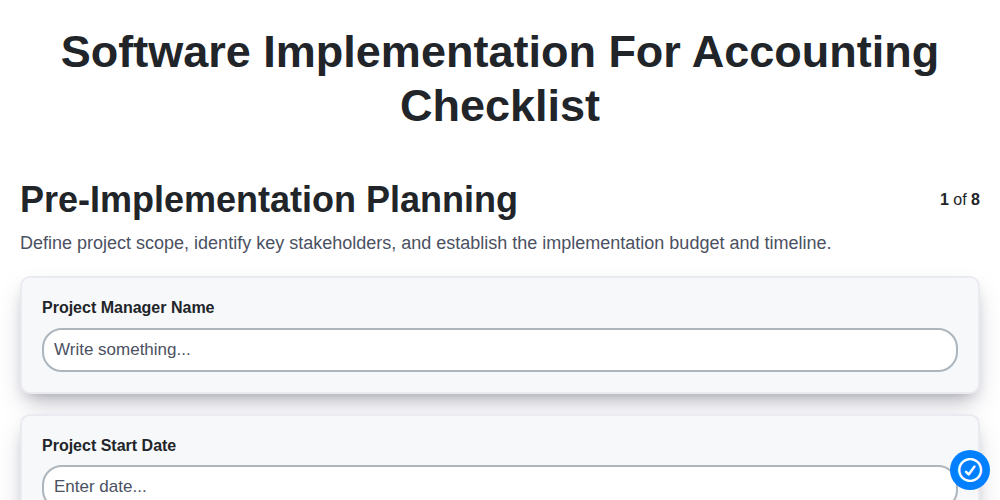
The Ultimate Software Implementation Checklist for Accounting Teams: A Step-by-Step Guide to a Seamless Transition
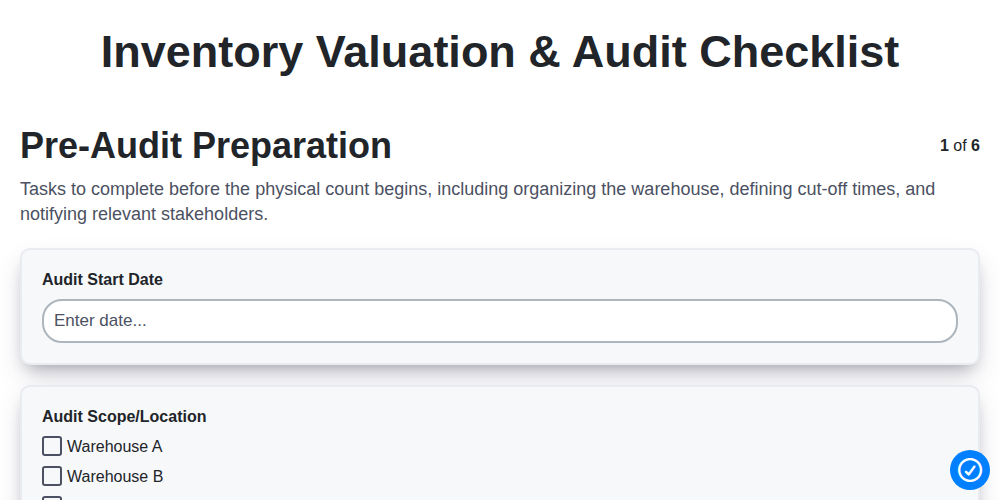
The Ultimate Inventory Valuation & Audit Checklist: A Step-by-Step Guide to Accuracy and Compliance
We can do it Together
Need help with
Accounting Management?
Have a question? We're here to help. Please submit your inquiry, and we'll respond promptly.