The Ultimate Procure-to-Pay (P2P) Process Checklist: A Step-by-Step Guide to Streamlining Your Procurement Workflow
Published: 07/12/2026 Updated: 07/13/2026
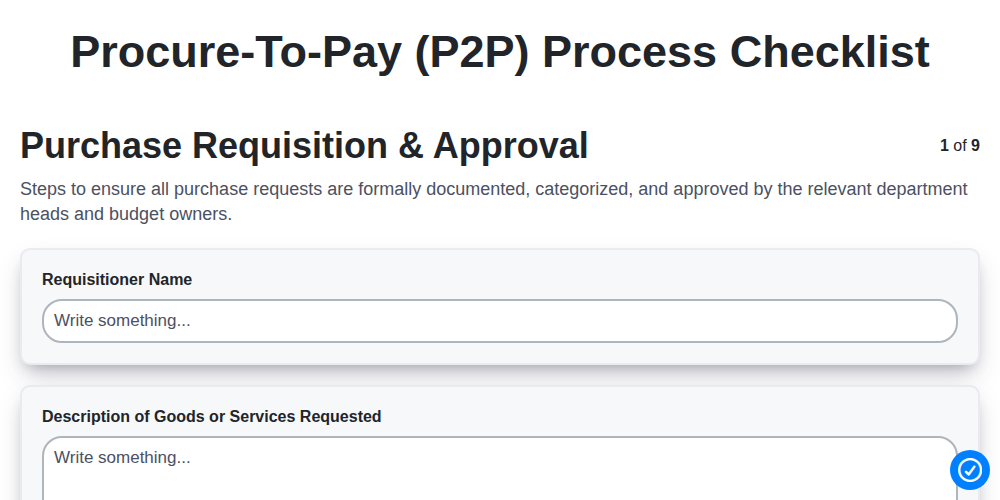
Table of Contents
- Introduction: Understanding the Importance of an Efficient P2P Process
- Step 1: Purchase Requisition & Approval
- Step 2: Vendor Selection & Onboarding
- Step 3: Purchase Order (PO) Creation
- Step 4: Goods & Services Receipt
- Step 5: Invoice Receipt & Data Entry
- Step 6: The Critical Three-Way Matching Process
- Step 7: Invoice Approval & Authorization
- Step 8: Payment Processing
- Step 9: Payment Reconciliation & Record Keeping
- Best Practices for Eliminating Bottlenecks in Your P2P Workflow
- Conclusion: Building a Scalable Procurement Strategy
- Resources & Links
TLDR: Master your procurement lifecycle with this comprehensive P2P checklist. This guide breaks down every essential stage-from initial requisition to final payment reconciliation-providing a scalable template to help your team eliminate manual errors, prevent fraud, and optimize working capital through a streamlined, automated workflow.
Introduction: Understanding the Importance of an Efficient P2P Process
In the complex ecosystem of modern supply chain management, the Procure-to-Pay (P2P) process serves as the fundamental backbone of operational efficiency. At its core, P2P encompasses the entire lifecycle of a transaction-starting from the moment an internal need is identified and ending only when the vendor is paid and the books are balanced.
An efficient P2P process is more than just a series of administrative tasks; it is a critical driver of financial health and strategic advantage. When this cycle operates seamlessly, it ensures that a company maintains healthy cash flow, optimizes working capital, and fosters strong, reliable relationships with suppliers. Conversely, a fragmented or manual P2P workflow can lead to catastrophic errors, such as duplicate payments, fraudulent activity, and costly bottlenecks that disrupt production and service delivery.
In an era of rising costs and global supply chain volatility, mastering the P2P cycle is no longer optional. By implementing a standardized, rigorous checklist, businesses can minimize human error, enhance transparency, and gain the real-time visibility necessary to make informed procurement decisions. The following guide provides a comprehensive roadmap to auditing and optimizing each stage of your procurement lifecycle.
Step 1: Purchase Requisition & Approval
The Procure-to-Pay cycle begins long before any money changes hands; it starts with a formal internal request. The Purchase Requisition & Approval stage is the foundational gatekeeper of your procurement process.
A purchase requisition is a formal document created by an employee or department indicating the need for specific goods or services. This step is critical because it provides a paper trail for every intended expenditure, ensuring that all spending is documented from the moment the need is identified.
To make this step effective, your process should include:
- Standardized Request Forms: Whether digital or manual, ensure all requisitions capture essential details such as quantity, description, estimated cost, and the budget code to be charged.
- Defined Approval Workflows: Establish clear authorization limits. For example, a department manager might approve requests under $500, while a CFO must sign off on anything exceeding $5,000.
- Budget Verification: Before moving to the next stage, the approval process must verify that the requested purchase aligns with the remaining departmental budget to prevent unplanned overspending.
By enforcing a rigorous requisition and approval phase, organizations can prevent maverick spending-unauthorized purchases made outside of established company policy-and maintain tight control over company cash flow.
Step 2: Vendor Selection & Onboarding
Once your requirements are approved, the next critical phase is choosing the right partners to fulfill them. Vendor selection and onboarding is not just about finding the lowest price; it is about mitigating risk and ensuring long-term supply chain stability.
The process begins with Vendor Selection, where you evaluate potential suppliers based on a predefined set of criteria, including quality standards, delivery capabilities, pricing, and financial stability. This stage often involves requesting quotes (RFQs) or proposals (RFPs) to ensure you are getting the best value for your organization.
Once a vendor is chosen, the Onboarding phase ensures they are officially integrated into your ecosystem. This involves:
- Due Diligence: Verifying business licenses, tax IDs (like W-9 forms), and checking for any compliance or legal red flags.
- Risk Assessment: Evaluating the vendor's ability to meet your security and sustainability standards.
- System Integration: Setting up the vendor in your ERP or accounting software with accurate banking details to prevent payment errors.
- Contract Finalization: Ensuring all terms, conditions, and Service Level Agreements (SLAs) are signed and documented.
A robust onboarding process prevents maverick spending and protects your company from fraudulent or unreliable suppliers, setting the stage for a smooth transaction cycle.
Step 3: Purchase Order (PO) Creation
Once the purchase requisition has been officially approved, the next critical step is the transition from an internal request to a legally binding document: the creation of the Purchase Order (PO).
The PO serves as the formal communication between your organization and the vendor. It is not merely a formality; it is a contractually significant document that outlines exactly what is being purchased, the agreed-upon prices, quantities, delivery dates, and specific terms and conditions.
A standardized PO creation process is vital for maintaining financial control. By generating a PO for every transaction, you ensure that:
- Budget Oversight: You create a commitment in your accounting system, allowing you to track pending liabilities before the invoice even arrives.
- Clarity and Accountability: Both your procurement team and the vendor have a single source of truth, reducing disputes regarding quantities or pricing.
- Audit Readiness: You establish a clear paper trail that links the original request to the eventual payment.
To ensure efficiency, your PO creation step should include automated workflows that pull data directly from the approved requisition to minimize manual entry errors. This step effectively bridges the gap between needing an item and ordering it, setting the stage for the successful receipt of goods.
Step 4: Goods & Services Receipt
Once the Purchase Order has been fulfilled by the vendor, the next critical step in the P2P cycle is the formal receipt of goods or services. This stage serves as the physical (or digital) verification that what was ordered has actually arrived and meets the agreed-upon specifications.
To ensure accuracy and prevent downstream errors, the receiving team must perform a thorough inspection. For physical goods, this involves checking the shipment against the packing slip and the original Purchase Order to verify quantities, identify any visible damage, and ensure the quality meets your standards. For services, this involves verifying that the milestones or deliverables outlined in the contract have been completed to satisfaction.
Key actions during this step include:
- Inspection: Checking for damaged, expired, or incorrect items.
- Verification: Confirming that the quantities received match the delivery note.
- Documentation: Recording the receipt in your ERP or procurement system (often referred to as a Goods Receipt Note or GRN).
Failing to document this step accurately is a common cause of payment disputes; if the system doesn't reflect that the goods have arrived, the subsequent matching process will fail, leading to delayed vendor payments and strained supplier relationships.
Step 5: Invoice Receipt & Data Entry
Once goods or services have been received, the next critical step is the formal intake of the vendor's invoice. This stage serves as the bridge between procurement and accounts payable. Accuracy at this stage is paramount; any errors made during the entry process can trigger downstream discrepancies that lead to payment delays or strained vendor relationships.
The process begins with invoice receipt, which can occur via various channels such as email, EDI (Electronic Data Interchange), or paper mail. To maintain efficiency, many modern organizations utilize OCR (Optical Character Recognition) technology to automatically scan and digitize these documents.
Once the invoice is received, the data entry phase involves capturing essential details into your accounting or ERP system. To ensure a seamless Three-Way Match later, the following data points must be recorded with precision:
- Invoice Number and Date: To track the document and monitor aging.
- Vendor Name: To ensure the liability is applied to the correct account.
- Line Item Details: Descriptions, quantities, and unit prices.
- Total Amount Due: Including any applicable taxes or shipping fees.
- Purchase Order (PO) Reference: The vital link that connects the invoice back to the original commitment.
The goal of this step is to transform a physical or digital document into actionable data that is ready for verification. Be wary of manual entry fatigue-implementing automated workflows here is one of the most effective ways to reduce human error and accelerate your entire P2P cycle.
Step 6: The Critical Three-Way Matching Process
The three-way matching process is the golden rule of the P2P cycle and serves as your organization's primary defense against fraud, overpayment, and accounting errors. It is a verification control that ensures the company only pays for exactly what was ordered and what was actually received.
To perform an effective three-way match, your accounts payable team must cross-reference three distinct documents:
- The Purchase Order (PO): What you intended to buy (price and quantity).
- The Goods Receipt Note (GRN) / Receiving Report: What actually arrived at your warehouse or office.
- The Vendor Invoice: What the supplier is asking you to pay.
The goal is to identify any discrepancies in quantity, unit price, or item description across these three points. If the quantities on the receiving report match the PO and the invoice, the match is successful, and the invoice can proceed to payment. However, if there is a mismatch-such as an invoice charging for 100 units when only 80 were received-the process should trigger an immediate exception workflow.
By implementing a rigorous three-way matching protocol, you significantly reduce the risk of duplicate payments, mitigate the impact of shipping errors, and ensure that your financial statements accurately reflect your true liabilities.
Step 7: Invoice Approval & Authorization
Once the three-way match is successfully completed, the invoice moves into the final stage of the verification workflow: Invoice Approval & Authorization. This step acts as the definitive internal control mechanism to ensure that funds are only released for legitimate, pre-authorized business expenses.
At this stage, the invoice is routed to the designated department head or budget owner. The goal is to confirm that the expenditure aligns with the original department budget and that the services or goods received meet the specific quality standards required by the organization.
To maintain a high-performing P2P cycle, this step should be governed by a clear Delegation of Authority (DoA) policy. This policy defines exactly who has the power to approve specific dollar amounts, preventing bottlenecking while simultaneously mitigating the risk of fraud. Implementing automated workflow routing is critical here; manual email chains often lead to lost invoices and late payment penalties. By automating the authorization path, you ensure that as soon as the three-way match is validated, the invoice is immediately queued for the final sign-off, keeping your payment cycle moving toward a timely settlement.
Step 8: Payment Processing
Once the three-way match is successfully completed and the invoice is fully authorized, the process moves into the final execution stage: Payment Processing. This is the critical point where the obligation to the vendor is fulfilled, and the actual movement of funds occurs.
Effective payment processing involves more than just clicking send on a bank transfer. To maintain financial integrity and ensure healthy vendor relationships, this step should involve:
- Method Execution: Executing the payment via the pre-determined method, whether it be ACH, wire transfer, corporate credit card, or paper check.
- Scheduled Timing: Adhering to the agreed-upon credit terms (e.g., Net 30) to avoid late fees while also optimizing company cash flow.
- Fraud Prevention: Implementing strict controls to ensure that the payment destination matches the verified vendor details established during the onboarding stage.
- Remittance Advice: Sending a notification to the vendor containing the invoice number and amount paid, which helps them apply the payment correctly on their end and reduces follow-up inquiries.
Efficiently managing this stage ensures that your supply chain remains uninterrupted by avoiding late payments and building a reputation as a reliable business partner.
Step 9: Payment Reconciliation & Record Keeping
The final stage of the P2P cycle is where the loop is closed and the financial integrity of the transaction is verified. Payment reconciliation is the critical process of comparing your internal payment records against bank statements to ensure that the amount disbursed matches the amount debited. This step is vital for identifying discrepancies, such as duplicate payments, unauthorized bank fees, or errors in automated clearing house (ACH) transfers.
Beyond simple reconciliation, diligent record-keeping serves as the backbone of your company's audit trail. Maintaining organized, digital, and easily accessible documentation-including the original purchase order, the receiving report, the invoice, and the proof of payment-is essential for several reasons:
- Audit Readiness: When tax authorities or external auditors arrive, having a seamless paper trail reduces the risk of compliance issues and simplifies the examination process.
- Dispute Resolution: Should a vendor claim non-payment or an error occurs in a future transaction, having organized records allows you to resolve the issue quickly without manual searching.
- Financial Accuracy: Proper record-keeping ensures that your general ledger accurately reflects your real-time liabilities and cash flow, preventing ghost expenses from skewing your financial reports.
By treating this step as more than just a formality, you transform your P2P process from a simple transaction cycle into a robust system of internal control.
Best Practices for Eliminating Bottlenecks in Your P2P Workflow
To maintain a smooth, high-velocity procurement cycle, simply following the steps of the P2P process is not enough; you must actively work to remove the friction points that cause delays. Bottlenecks in the Procure-to-Pay cycle often lead to late fees, strained vendor relationships, and inaccurate financial reporting.
To ensure your workflow remains seamless, implement these strategic best practices:
1. Automate the Approval Workflow
Manual email chains and physical signatures are the primary culprits of stalled requisitions. Transitioning to an automated approval workflow ensures that as soon as a Purchase Requisition is submitted, it is instantly routed to the correct stakeholder. Setting up automated escalation triggers-where a request is automatically flagged if not reviewed within 24-48 hours-prevents requisitions from sitting in an inbox indefinitely.
2. Standardize Vendor Onboarding
Bottlenecks often begin long before a purchase is even made. If your onboarding process is inconsistent, you will encounter missing tax documentation, incomplete banking details, or unverified credentials during the payment phase. Create a standardized, digital onboarding portal that requires all necessary compliance documentation upfront. This ensures that when it is time for the Three-Way Match, the vendor data is already verified and accurate.
3. Enforce Strict Three-Way Matching Protocols
Discrepancies between the Purchase Order, the Goods Receipt, and the Invoice are the most common cause of payment delays. To eliminate these friction points, move away from manual data entry and toward automated matching. By using software that can automatically flag discrepancies in quantity or price, your finance team can focus on resolving high-level errors rather than hunting for small clerical mistakes.
4. Centralize Data and Documentation
Fragmented information is a bottleneck's best friend. When receipt records are kept in one system and invoices in another, the reconciliation process becomes a manual nightmare. Ensure that every stage of the checklist-from the initial PO creation to the final payment record-is housed in a single source of truth. Centralized visibility allows any authorized user to see exactly where a transaction sits in the pipeline, reducing the need for repetitive follow-up inquiries.
5. Implement Real-Time Visibility and Auditing
Regularly audit your P2P cycle to identify where dwell time is highest. Are invoices sitting in the Data Entry phase for too long? Is the Goods Receipt step being delayed by warehouse inefficiencies? By monitoring the time elapsed between each step of your checklist, you can pinpoint specific departmental bottlenecks and apply targeted fixes, transforming your procurement from a reactive cost center into a streamlined, proactive powerhouse.
Conclusion: Building a Scalable Procurement Strategy
Mastering the Procure-to-Pay cycle is more than just a way to manage administrative tasks; it is about building a foundation for organizational resilience. By implementing a structured P2P checklist, you transition from a reactive, firefighting mode of procurement to a proactive, strategic function. This systematic approach minimizes human error, mitigates the risk of fraud, and ensures that every dollar spent is accounted for and optimized.
As your business grows, the complexity of your supply chain will inevitably increase. A standardized P2P process provides the scalability needed to handle higher transaction volumes and a more diverse vendor base without compromising accuracy or compliance. By automating the repetitive stages-such as three-way matching and invoice data entry-and focusing your team's energy on strategic vendor management and cost-saving negotiations, you transform procurement from a back-office necessity into a powerful driver of profitability and strategic advantage.
Resources & Links
- Gartner Procurement Research: In-depth industry reports and strategic insights into supply chain management and procurement technology trends.
- CFO Magazine: Expert resources on financial management, internal controls, and optimizing accounts payable workflows.
- Supply Chain Management Review: Professional insights into logistics, vendor management, and end-to-end supply chain optimization.
- APS Advanced Planning & Scheduling: Resources regarding the integration of procurement processes with production planning and resource management.
- Forbes Business Strategy: Thought leadership on scaling business operations and implementing digital transformation in corporate workflows.
- ProcureDesk Resource Center: Practical guides and tools for automating purchase orders and managing the P2P lifecycle digitally.
Frequently Asked Questions
What is the Procure-to-Pay (P2P) process?
The Procure-to-Pay (P2P) process refers to the end-to-end workflow that starts with the identification of a need for goods or services and ends with the final payment to the vendor. It encompasses everything from requisition and purchasing to receiving and invoicing.
What are the key stages included in a P2P checklist?
A comprehensive P2P checklist typically includes requisitioning, vendor selection, purchase order (PO) creation, goods/service receipt, invoice processing, and final payment reconciliation.
How can streamlining the P2P process benefit my organization?
Streamlining the P2P process can lead to increased operational efficiency, reduced manual errors, improved vendor relationships, better spend visibility, and significant cost savings through prevented duplicate payments and better contract compliance.
What is the difference between P2P and P2P automation?
While P2P refers to the actual sequence of procurement steps, P2P automation involves using software and technology to automate manual tasks within that sequence, such as automated invoice matching and digital approval workflows.
How does the P2P process help in preventing fraud?
A structured P2P process introduces essential controls, such as the 'three-way match' (comparing the purchase order, receiving report, and invoice), which ensures that the company only pays for what was actually ordered and received, thereby reducing the risk of fraudulent invoices.
What are some common bottlenecks in a standard procurement workflow?
Common bottlenecks include slow approval cycles, manual data entry errors, lack of communication between departments, and discrepancies between invoices and purchase orders.
Comments
There are no comments yet. Be the first to add one!
Accounting Management Solution Demo
Move beyond rigid, one-size-fits-all software. Leverage a fully programmable accounting environment designed to adapt to your unique workflows, complex hierarchies, and evolving business logic.
Related Articles
The Ultimate Financial Data Integrity Audit Checklist: A Step-by-Step Template for Precision and Compliance
The Ultimate Financial Statement Review Checklist: A Step-by-Step Guide to Ensuring Accuracy and Compliance
Mastering Financial Control: The Ultimate Departmental Budget Monitoring Checklist
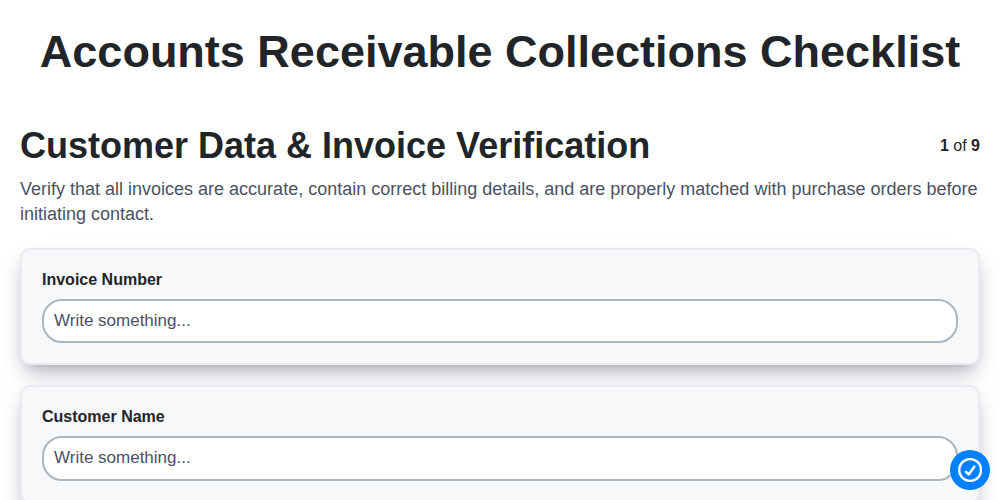
The Ultimate Accounts Receivable Collections Checklist: A Step-by-Step Guide to Streamlining Your Cash Flow
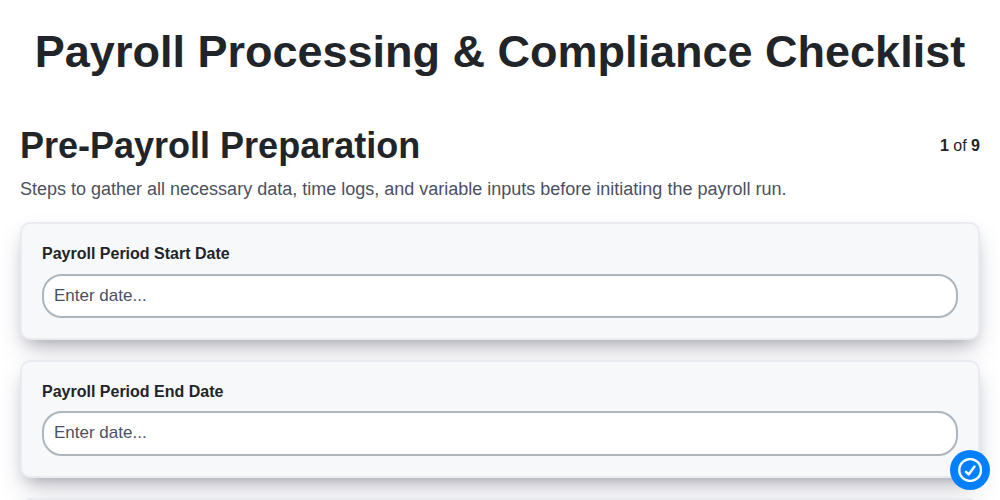
The Ultimate Payroll Processing & Compliance Checklist: A Step-by-Step Guide to Error-Free Payroll
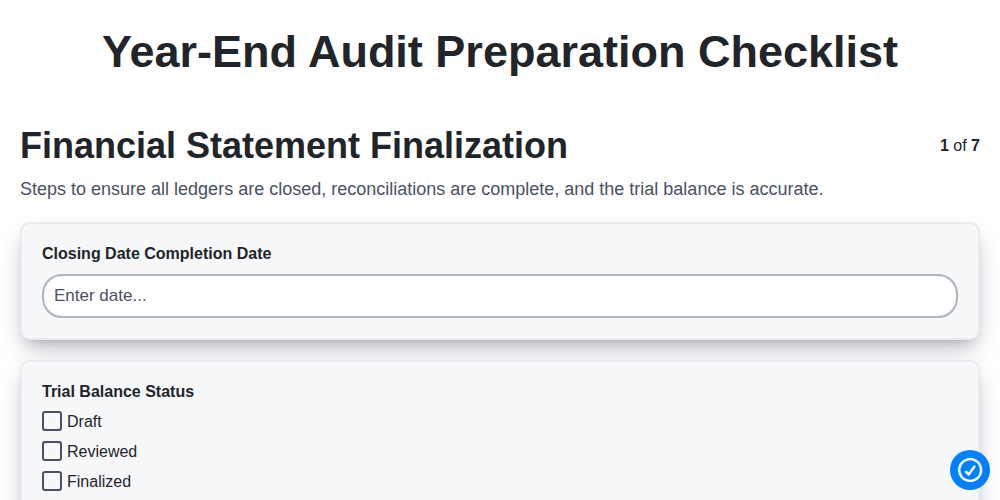
The Ultimate Year-End Audit Preparation Checklist: A Step-by-Step Guide to a Stress-Free Audit
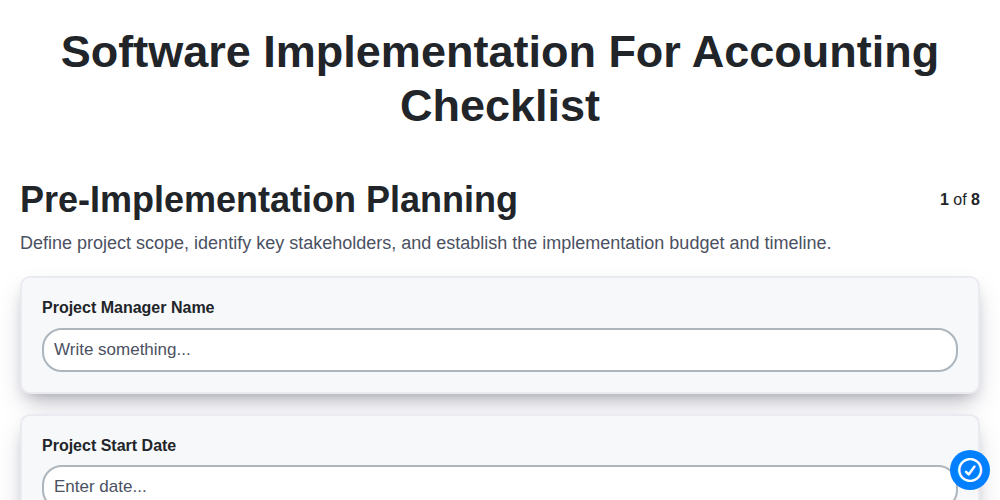
The Ultimate Software Implementation Checklist for Accounting Teams: A Step-by-Step Guide to a Seamless Transition
The Ultimate Inventory Valuation & Audit Checklist: A Step-by-Step Guide to Accuracy and Compliance
We can do it Together
Need help with
Accounting Management?
Have a question? We're here to help. Please submit your inquiry, and we'll respond promptly.