Ensuring Compliance: Your Renewable Energy BOM Component Certification Checklist
Published: 12/10/2025 10:00 PM Updated: 12/14/2025 7:54 AM
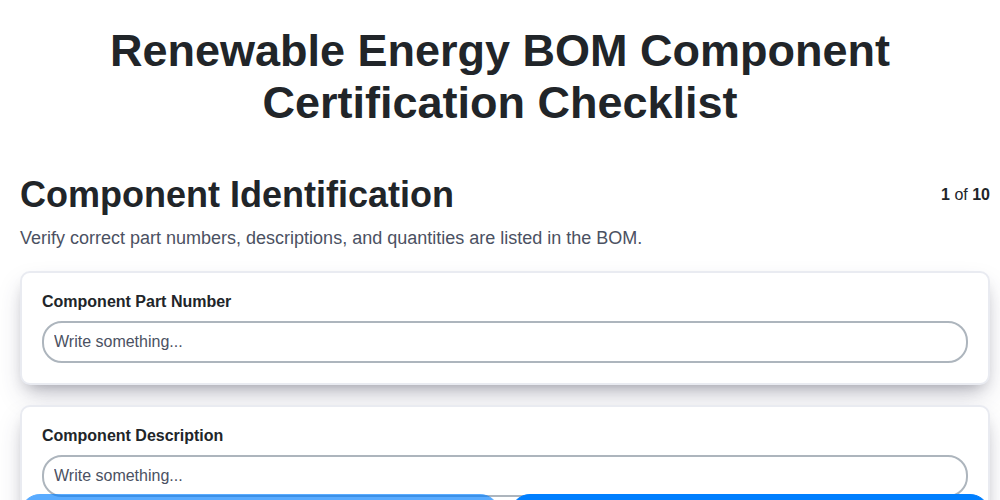
Table of Contents
- Introduction: The Critical Need for BOM Component Certification
- Understanding the Renewable Energy Landscape & Compliance
- Component Identification: Laying the Foundation
- Certification Verification: Ensuring Credibility
- Supplier Documentation Review: A Deep Dive
- Traceability Records: Following the Chain
- Compliance with Industry Standards: Meeting the Benchmarks
- Material Declaration (RoHS/REACH): Substance Management
- Testing and Inspection Records: Validating Performance
- Component Origin Verification: Transparency and Ethics
- Documentation Archiving: Maintaining a Robust Record
- Review & Approval: The Final Gatekeeper
- Common Pitfalls and How to Avoid Them
- Conclusion: Building Trust and Sustainability
- Resources & Links
TLDR: Building renewable energy systems? This checklist helps you verify all your components are certified and compliant! It covers everything from supplier documentation to origin verification and RoHS/REACH compliance, ensuring your BOM (Bill of Materials) meets industry standards and avoids costly delays or recalls. Download the template and simplify your certification process!
Introduction: The Critical Need for BOM Component Certification
Renewable energy systems, from solar panels to wind turbines, operate in demanding environments and rely on highly specialized components. The integrity and performance of these components are paramount - failures can lead to costly downtime, reduced energy output, safety hazards, and damage to reputation. That's why meticulous Bill of Materials (BOM) component certification isn't just a best practice; it's a necessity.
The increasing complexity of renewable energy technology, coupled with stringent regulatory requirements and growing concerns around ethical sourcing and environmental impact, necessitates a robust and documented approach to component validation. This checklist, and the process it outlines, provides a framework for verifying that each component within your BOM meets the required quality, performance, safety, and compliance standards. It's about building confidence - confidence in the reliability of your renewable energy systems and the long-term value they deliver. Ignoring this critical step can expose your organization to significant risks and ultimately compromise the success of your renewable energy projects.
Understanding the Renewable Energy Landscape & Compliance
The renewable energy sector is experiencing unprecedented growth, driven by global commitments to decarbonization and the falling costs of technologies like solar, wind, and hydro. This rapid expansion, however, brings heightened scrutiny regarding component quality, reliability, and adherence to increasingly stringent regulatory requirements. Unlike traditional energy infrastructure, renewable energy components often operate in challenging environments - exposed to fluctuating weather conditions, temperature extremes, and prolonged UV exposure - making component failure potentially costly and detrimental.
Beyond performance, ethical and environmental responsibility is paramount. Supply chain transparency and adherence to regulations like RoHS (Restriction of Hazardous Substances) and REACH (Registration, Evaluation, Authorization and Restriction of Chemicals) are no longer optional; they are fundamental to maintaining a sustainable and reputable renewable energy ecosystem. Failing to comply can lead to project delays, financial penalties, and reputational damage. Therefore, a robust and meticulous component certification process, utilizing a comprehensive checklist (like the one we're outlining below), is critical for ensuring the long-term success and integrity of renewable energy projects.
Component Identification: Laying the Foundation
Before any further certification steps can be reliably executed, meticulous component identification is absolutely crucial. This isn't simply about knowing the part number; it's a comprehensive process ensuring we're dealing with the exact component specified for renewable energy applications.
This begins with clearly defining the component being assessed. We need to capture its full designation, including manufacturer, part number, revision level, and any unique identifiers. Physical tagging of components with permanent, legible markings - ideally incorporating a unique tracking code - is highly recommended. This allows for unambiguous identification throughout the certification process and beyond.
Furthermore, a robust Bill of Materials (BOM) should be cross-referenced with the physically identified components. Discrepancies, no matter how minor they may seem, must be investigated and resolved before proceeding. A detailed record of the identification process, including photographs and any associated metadata, should be created and archived. This forms the bedrock of a defensible and auditable certification trail. Failing to properly identify the component from the outset can invalidate all subsequent steps, highlighting the vital importance of this initial phase.
Certification Verification: Ensuring Credibility
Renewable energy systems demand unwavering reliability. A component's performance directly impacts overall system efficiency, safety, and lifespan. Therefore, verifying the certification of each BOM (Bill of Materials) component isn't just a formality; it's a critical safeguard. This goes beyond simply acknowledging a certificate exists.
Effective verification involves a deep dive into the certifying body's reputation and accreditation. Is the certification body recognized and respected within the renewable energy industry? Do they adhere to rigorous auditing processes? We need to confirm the scope of the certification aligns precisely with the component's intended use and operating conditions. For example, a certification for indoor use won't suffice for an offshore wind turbine.
Look for evidence of ongoing surveillance and periodic re-certification. A certification obtained years ago without subsequent validation may not reflect the current manufacturing processes or component performance. Scrutinize the certificate's validity date and confirm the certification remains current. A robust verification process ensures the certifications presented are genuine, credible, and applicable to the specific application within your renewable energy project.
Supplier Documentation Review: A Deep Dive
The renewable energy sector demands unwavering reliability and adherence to stringent regulations. A thorough Supplier Documentation Review is a critical step in the BOM (Bill of Materials) component certification process - it's more than just a cursory glance at a stack of papers. This review validates that your supplier understands and actively participates in ensuring component quality and compliance.
What should this review entail? We're looking beyond the basics. It's not just about confirming the supplier's existence and registration. It involves scrutinizing their internal quality management systems, procedures for handling non-conformities, and their own component traceability programs.
Specifically, we're examining:
- Quality Manuals & Procedures: These documents outline the supplier's commitment to quality and provide insight into their operational processes. Look for evidence of continuous improvement and adherence to recognized quality management systems (e.g., ISO 9001).
- Change Control Procedures: Components evolve, and suppliers need robust change control processes to ensure any modifications are thoroughly assessed for impact on performance and compliance.
- Corrective Action/Preventive Action (CAPA) Records: Understanding how the supplier addresses issues and prevents recurrence is vital. Reviewing CAPA records provides visibility into their problem-solving abilities.
- Supplier Audits: Confirming that the supplier undergoes periodic audits (both internal and external) is crucial. These audits provide an independent verification of their processes.
- Non-Conformance Reports: Analyze non-conformance reports to understand the types of issues encountered and how effectively they were resolved.
A weak supplier documentation review can expose vulnerabilities in your supply chain. A robust review, on the other hand, reinforces trust, minimizes risk, and contributes significantly to the overall integrity of your renewable energy system.
Traceability Records: Following the Chain
In the renewable energy sector, component reliability and performance are paramount. A breakdown can lead to costly downtime, reduced energy production, and potential safety hazards. That's why robust traceability records are not just a "nice-to-have," but a critical element of BOM (Bill of Materials) component certification.
Traceability goes far beyond just knowing the manufacturer's name. It's about following the entire lifecycle of a component, from raw material extraction to final integration into your renewable energy system. This includes documenting the supplier, lot numbers, manufacturing dates, processing steps, and any modifications made along the way.
Why is this so important? Consider a scenario where a faulty batch of capacitors is identified. Without proper traceability records, pinpointing the affected components and quickly initiating a recall becomes incredibly difficult, potentially impacting multiple projects and significantly escalating the problem.
Our certification checklist places a strong emphasis on verifying that comprehensive traceability records are in place. This includes scrutinizing:
- Supplier Lot Numbers: Consistent and accurate recording of lot numbers at each stage.
- Manufacturing Processes: Documentation of each step in the manufacturing process, including equipment and personnel involved.
- Material Provenance: Records demonstrating the origin of the raw materials used in component manufacturing.
- Chain of Custody: Verification that the component's history is accurately tracked throughout the supply chain.
By diligently tracking these records, we ensure a complete picture of each component's journey, fostering accountability and enabling swift action in the event of any issues. Ultimately, strong traceability records contribute to the overall reliability and longevity of your renewable energy infrastructure.
Compliance with Industry Standards: Meeting the Benchmarks
Renewable energy components operate in demanding environments and contribute to critical infrastructure. Therefore, strict adherence to industry standards isn't just a best practice - it's a necessity. This section dives into how the checklist ensures compliance with key benchmarks.
Our checklist incorporates verification against recognized industry standards such as IEC, UL, IEEE, and others relevant to the specific component type. This goes beyond simply stating compliance; it requires documented evidence that the component meets the required performance, safety, and reliability criteria. We meticulously check for certifications from accredited testing laboratories, ensuring independent validation of the component's characteristics.
Beyond general industry standards, we also consider regional and project-specific requirements. This ensures the components meet the nuanced demands of different geographical locations and project specifications. The checklist requires confirmation that the component has been assessed and approved by relevant authorities where applicable. Failure to meet these standards can lead to project delays, performance issues, and potential safety hazards; our checklist aims to mitigate these risks proactively.
Material Declaration (RoHS/REACH): Substance Management
Ensuring compliance with the Restriction of Hazardous Substances (RoHS) and Registration, Evaluation, Authorisation and Restriction of Chemicals (REACH) regulations is paramount for renewable energy component manufacturers. These directives aim to protect human health and the environment by restricting the use of dangerous substances in electrical and electronic equipment.
For your BOM component certification checklist, meticulous attention must be paid to the Material Declaration (MD) provided by your suppliers. This declaration outlines the chemical composition of each component, detailing the presence and concentration of restricted substances. Here's what to focus on:
- Verify MD Accuracy: Compare the supplier's MD with the component's actual specifications and any available public data. Discrepancies require immediate clarification and potentially alternative component selection.
- RoHS Compliance: Confirm the absence (or presence below allowable limits) of substances like lead, mercury, cadmium, hexavalent chromium, polybrominated biphenyls (PBBs), and polybrominated diphenyl ethers (PBDEs).
- REACH Compliance: Ensure suppliers have registered substances used in the component under REACH, particularly those classified as Substances of Very High Concern (SVHCs). Look for SVHC notifications and potential authorization requirements.
- Traceability of Substances: Suppliers must be able to trace the origin of all substances used in the component and provide supporting documentation.
- Updated Declarations: Material Declarations are living documents. Regularly request updates from your suppliers, especially if changes are made to component design or manufacturing processes.
- Supplier Responsibility: Hold your suppliers accountable for accurate and transparent substance declarations. Implement a robust supplier qualification process that includes MD validation.
Failure to properly manage substance compliance can lead to significant legal repercussions, brand damage, and product recalls. Prioritizing rigorous MD review is a critical step in your renewable energy BOM component certification process.
Testing and Inspection Records: Validating Performance
Robust testing and inspection records are the backbone of renewable energy component certification. These records provide irrefutable evidence that components meet performance specifications and reliability standards - crucial for the long-term viability of solar farms, wind turbines, and other renewable energy systems.
This stage goes beyond simply verifying physical characteristics. It requires a detailed analysis of test data generated under various operating conditions, simulating real-world scenarios. We're talking about:
- Performance Testing: Measuring output, efficiency, and degradation rates under different environmental factors like temperature, humidity, and irradiance (for solar) or wind speed (for wind).
- Reliability Testing: Assessing the component's ability to withstand repeated stress and maintain functionality over its projected lifespan. This might include accelerated aging tests.
- Safety Testing: Confirming adherence to safety regulations and ensuring the component doesn't pose a hazard during operation.
- Visual Inspection Records: Documenting any physical defects or anomalies identified during examination.
These records must be meticulously maintained, including dates, testing equipment used, measurement results, and the name of the technician or engineer responsible. Clear pass/fail criteria, along with justification for any deviations, are essential. Independent third-party testing strengthens the credibility of these records and is often a requirement for certification. Without thorough and verifiable testing and inspection records, the integrity and long-term performance of renewable energy systems are significantly compromised.
Component Origin Verification: Transparency and Ethics
In the renewable energy sector, ethical sourcing and supply chain transparency are no longer optional - they're fundamental. Component Origin Verification is a critical step in ensuring this, going beyond simply knowing a component's manufacturer. It demands a deeper dive into its journey, from raw material extraction to final assembly.
This verification process involves scrutinizing the origins of the materials used in a component, identifying potential risks associated with conflict minerals, forced labor, or other unethical practices. It's about ensuring that the components powering our renewable energy solutions are produced responsibly and contribute to a sustainable future.
Our checklist requires rigorous investigation into the geographic sources of key materials. This often involves engaging with suppliers at multiple tiers - not just the direct manufacturer, but also their suppliers and even those providing raw materials. We are looking for evidence of due diligence, responsible mining practices, and adherence to internationally recognized standards. Simply put, we're asking, Where did this come from, and how was it made? This proactive approach minimizes reputational risks and ensures that our commitment to sustainability extends throughout the entire supply chain.
Documentation Archiving: Maintaining a Robust Record
Proper documentation archiving is the bedrock of a reliable renewable energy BOM (Bill of Materials) component certification process. It's not enough to simply have the records; they need to be securely stored, readily retrievable, and maintained for the entire lifecycle of the renewable energy system. This involves far more than just a digital folder.
Here's what robust documentation archiving entails:
- Defined Retention Periods: Establish clear retention periods aligned with industry regulations (e.g., warranty requirements, legal obligations). These periods should be documented and consistently enforced.
- Secure Storage: Utilize secure, often offsite, storage solutions (cloud-based or physical) that protect against data loss due to fire, natural disasters, or cyberattacks.
- Version Control: Implement strict version control procedures for all documents to ensure traceability and prevent accidental overwriting or use of outdated information.
- Metadata Tagging: Comprehensive metadata tagging (component name, supplier, revision number, certification date, etc.) makes searching and retrieval significantly faster and more efficient.
- Access Control: Limit access to sensitive documentation based on role and responsibility, maintaining confidentiality and accountability.
- Regular Audits: Conduct periodic audits of the archiving system to ensure compliance with procedures and identify areas for improvement.
- Disaster Recovery Plan: A robust disaster recovery plan outlining procedures for data restoration in case of unforeseen events is essential.
Without meticulous archiving, demonstrating compliance during audits or troubleshooting component issues becomes significantly more difficult, impacting the integrity and longevity of renewable energy projects.
Review & Approval: The Final Gatekeeper
The entire certification process culminates in the Review & Approval stage, and it's arguably the most critical. This isn't just a cursory glance; it's a thorough assessment of all previous steps to ensure complete accuracy and compliance. A designated, qualified individual or team - often encompassing engineering, quality, and potentially procurement - performs this final check.
They meticulously examine the collected data, confirming that all checklist items have been satisfactorily addressed. This includes verifying the accuracy of component identification, validating certification documents against recognized bodies, confirming supplier documentation completeness, and assessing the integrity of traceability records. Any discrepancies, inconsistencies, or gaps identified at this point necessitate immediate investigation and corrective action.
This review isn't just about finding errors; it's about building confidence. It ensures that all stakeholders - from design engineers to procurement specialists - can trust the renewable energy BOM components have met the required standards and regulations. A clear, documented approval sign-off, alongside a record of any observations or concerns, seals the process, guaranteeing a robust and defensible audit trail. Without this final gatekeeper, the entire certification effort is significantly compromised.
Common Pitfalls and How to Avoid Them
Navigating the renewable energy BOM (Bill of Materials) component certification process can be complex, and overlooking key details can lead to costly delays or, worse, non-compliance. Here's a look at some common pitfalls and how to avoid them:
1. Insufficient Component Identification: Assuming components are correctly identified based solely on part numbers is a frequent mistake. Ensure a thorough component identification process includes manufacturer, part number, revision level, and even specific sub-variants. Solution: Implement a standardized naming convention and cross-reference with the supplier's official documentation.
2. Relying Solely on Supplier Statements: While supplier documentation is vital, don't treat it as gospel. Independent verification is crucial. Solution: Implement your own verification processes, including spot checks and audits.
3. Neglecting Traceability Records: Weak traceability can be crippling in the event of a recall or failure investigation. Solution: Establish a robust system for tracking component origins, batches, and testing data throughout the entire supply chain. This should be more than just a spreadsheet - consider specialized tracking software.
4. Ignoring Subtle Standard Deviations: Renewable energy standards are constantly evolving. Failing to stay abreast of the latest revisions and nuances within those standards is a common error. Solution: Assign a designated individual or team responsible for monitoring standards updates and communicating changes to relevant stakeholders.
5. Overlooking Material Declaration Nuances (RoHS/REACH): Simply having a RoHS/REACH declaration isn't enough. Ensure the declared substances are compliant with the specific versions and thresholds applicable to your region and application. Solution: Regularly review and update material declarations against evolving regulatory requirements.
6. Assuming Testing Records are Sufficient: Testing records are key, but understand what was tested, how it was tested, and the methodologies used. Were the testing labs accredited? Solution: Audit testing labs and require detailed reports outlining test methodologies and calibration records.
7. Failing to Document Component Origin Thoroughly: Origin is more than just a country of manufacture. It includes the origin of raw materials used in the component. Solution: Require suppliers to provide detailed origin information for all significant materials used in the components.
8. Inadequate Documentation Archiving: Losing critical documentation, even temporarily, can derail the certification process. Solution: Implement a secure, centralized document management system with robust backup procedures and clear retention policies.
9. Rushing the Review & Approval Stage: Cutting corners in the final review and approval stage can lead to missed errors and compliance issues. Solution: Allocate sufficient time for thorough review by qualified personnel, incorporating a 'second set of eyes' approach.
By proactively addressing these potential pitfalls, you can streamline your BOM component certification process, minimize risk, and ensure the reliability and compliance of your renewable energy projects.
Conclusion: Building Trust and Sustainability
Ultimately, a robust Renewable Energy BOM Component Certification Checklist isn't just about ticking boxes; it's about building trust - trust from investors, consumers, and stakeholders who demand ethically sourced and sustainably manufactured renewable energy solutions. By diligently following this checklist, manufacturers demonstrate a commitment to transparency, accountability, and the long-term health of our planet. The meticulous verification of component origins, adherence to stringent standards, and complete documentation provide a tangible record of due diligence, fostering confidence in the reliability and environmental responsibility of renewable energy systems. This proactive approach contributes to a more sustainable future, ensuring the integrity of the renewable energy sector and accelerating the global transition to clean power.
Resources & Links
- International Energy Agency (IEA): Provides comprehensive data, analysis, and forecasts on renewable energy deployment, technologies, and policies globally. Essential for understanding the evolving regulatory landscape and market drivers.
- International Renewable Energy Agency (IRENA): A leading intergovernmental organization dedicated to renewable energy, offering policy guidance, technological expertise, and capacity building resources. Crucial for understanding global trends and best practices.
- RoHS Directive: Official website providing information and updates regarding the Restriction of Hazardous Substances (RoHS) directive. Essential for understanding and complying with material restrictions.
- REACH Regulation: European Chemicals Agency (ECHA) website detailing the Registration, Evaluation, Authorisation and Restriction of Chemicals (REACH) regulation. Vital for substance management and declaration requirements.
- American National Standards Institute (ANSI): ANSI coordinates the U.S. voluntary standardization system. Provides access to a wide range of standards relevant to component certification and performance, though specific renewable energy-related standards will need to be searched within ANSI's catalog.
- International Organization for Standardization (ISO): The ISO website provides information about ISO standards, including those applicable to quality management, environmental management, and sustainability which can inform certification processes. Look for specific ISO standards relevant to the renewable energy sector.
- National Institute of Standards and Technology (NIST): Offers metrology and testing expertise, including information on measurement science and standards. Might be useful when dealing with testing and inspection records and validating performance.
- European Telecommunications Standards Institute (ETSI): While primarily focused on telecommunications, ETSI develops standards that can be relevant to the electronic components used in renewable energy systems, particularly concerning grid integration and data communication. Check for component-specific standards.
- SGS: A leading inspection, verification, testing, and certification company. Their website provides general information about their services, though specific renewable energy certification programs would need to be explored further on their site. Good for understanding third-party verification processes.
- TÜV SÜD: Another major provider of testing, inspection, and certification services, offering expertise across various industries, including renewable energy. Look for their specific renewable energy certification programs and services.
- Underwriters Laboratories (UL): Provides product safety testing and certification. Can be useful in verifying the safety and performance of components, especially electrical components used in renewable energy systems. Check for their specific renewable energy certifications.
- Bureau Veritas: A global leader in inspection, compliance, testing and certification services. Their site offers a wide range of testing capabilities relevant to component certification, particularly focusing on compliance and safety.
- LinkedIn: A professional networking platform. Use LinkedIn to find professionals specializing in renewable energy compliance, supply chain management, and component certification. Useful for networking and seeking expert advice.
Frequently Asked Questions
What is a BOM component certification and why is it important for renewable energy projects?
A Bill of Materials (BOM) component certification verifies that components used in renewable energy systems (like solar panels, wind turbines, and energy storage) meet specified performance, safety, and quality standards. It's crucial for ensuring system reliability, longevity, performance guarantees, and compliance with regulations and investor requirements.
Why does my renewable energy project need a BOM component certification checklist?
A checklist provides a structured and systematic approach to verify all necessary certifications for components listed in your BOM. It helps prevent overlooking crucial certifications, reducing risks associated with non-compliance, equipment failure, and project delays.
What types of certifications are typically included in a renewable energy BOM component certification checklist?
Common certifications include, but are not limited to: IEC standards (e.g., IEC 61215 for solar modules), UL listings, TUV Rheinland certifications, CSA certifications, REACH compliance, RoHS compliance, and performance guarantees aligned with manufacturer data. Specific requirements vary based on component type and regional regulations.
What are the potential consequences of using non-certified components in my renewable energy project?
Using non-certified components can lead to several negative consequences, including voided warranties, decreased system performance, safety hazards, regulatory fines, project delays, difficulty securing financing, and reputational damage.
Who is responsible for ensuring BOM component certifications are in place - the project owner, the EPC contractor, or the component supplier?
Responsibility is often shared. Component suppliers provide the initial certifications. EPC (Engineering, Procurement, and Construction) contractors are typically responsible for verifying and validating these certifications. The project owner ultimately holds responsibility for overall compliance.
How frequently should my BOM component certification checklist be reviewed and updated?
The checklist should be reviewed and updated regularly (at least annually or whenever there are changes to component suppliers, regulations, or project requirements) to ensure continued compliance.
What is IEC 61215 and why is it relevant to my solar panel BOM?
IEC 61215 is a performance test standard for crystalline silicon terrestrial photovoltaic (PV) modules. It outlines rigorous testing procedures to verify module efficiency, durability, and performance under various environmental conditions. Compliance with this standard ensures the solar panels meet defined performance and safety expectations.
What role does RoHS and REACH compliance play in BOM certification for renewable energy components?
RoHS (Restriction of Hazardous Substances) limits the use of specific hazardous materials in electrical and electronic equipment. REACH (Registration, Evaluation, Authorisation and Restriction of Chemicals) regulates the production and use of chemical substances. Compliance with these regulations is often required to ensure environmental responsibility and market access.
Found this Article helpful?
Comments
There are no comments yet. Be the first to add one!
BOM - Bill of Materials Management Solution Demo
Struggling with inaccurate BOMs & costly errors? ChecklistGuro provides a centralized BOM Management solution, connecting your design, engineering, & manufacturing teams for improved collaboration and control. Simplify operations & boost efficiency.
Related Articles
The Ultimate Logistics BOM Packaging Checklist: Ensuring Safe & Efficient Shipments
Mastering Leather Manufacturing: Your Tannery BOM & Compliance Checklist
Mastering Your BOM: A Comprehensive Checklist Template for Success
Ensuring Success: Your Oil & Gas BOM Component Approval Checklist Guide
Navigating Medical Device BOM Regulatory Compliance: Your Essential Checklist
The Ultimate Retail BOM Product Definition Checklist: A Step-by-Step Guide
Ensuring Quality: Your Rubber Manufacturing Polymer BOM Checklist Guide
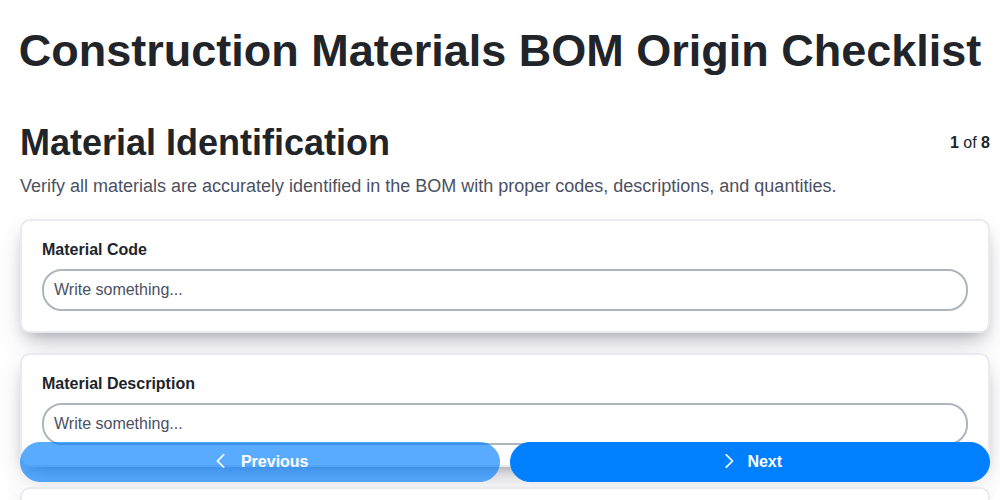
Decoding Origins: Your Construction Materials BOM Origin Checklist Guide
We can do it Together
Need help with
Bill of Materials (BOM) Management?
Have a question? We're here to help. Please submit your inquiry, and we'll respond promptly.