The Ultimate Tax Compliance & Filing Checklist: A Step-by-Step Guide to Stress-Free Tax Season
Published: 07/12/2026 Updated: 10/05/2026
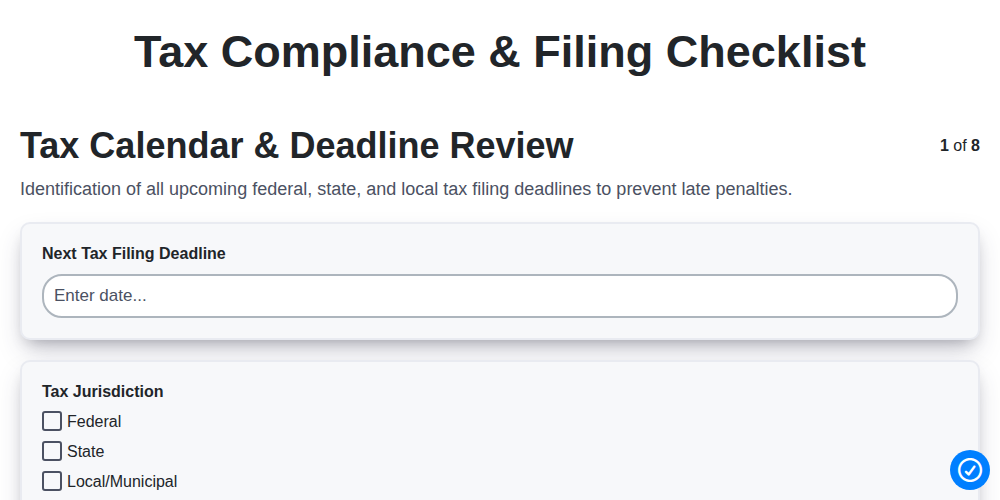
Table of Contents
- Introduction: Why a Systematic Tax Checklist is Essential
- Step 1: Tax Calendar & Deadline Review
- Step 2: Documentation & Record Keeping
- Step 3: Income & Revenue Reconciliation
- Step 4: Expense & Deduction Verification
- Step 5: Payroll & Employment Tax Review
- Step 6: Sales & Use Tax Audit
- Step 7: Asset & Depreciation Review
- Step 8: Final Review & Filing Submission
- Conclusion: Staying Ahead of Future Tax Seasons
- Resources & Links
TLDR: Avoid the last-minute tax season scramble with our comprehensive Tax Compliance & Filing Checklist. This guide provides a structured, step-by-step framework-covering everything from deadline tracking and document organization to payroll audits and final submission-designed to help businesses ensure accuracy, maximize deductions, and maintain total regulatory compliance.
Introduction: Why a Systematic Tax Checklist is Essential
Tax season is often viewed as a period of high stress and administrative chaos, characterized by frantic searches for lost receipts and last-minute calculations. However, the difference between a seamless filing experience and a costly nightmare lies in preparation. A systematic tax compliance and filing checklist serves as your strategic roadmap, transforming a daunting mountain of paperwork into a manageable, step-by-step process.
By implementing a structured approach, you do more than just meet deadlines; you build a safeguard against the risks of audits, penalties, and interest charges. A comprehensive checklist ensures that no deduction is overlooked, no revenue stream is miscounted, and no regulatory requirement is forgotten. Beyond mere organization, this systematic method provides the peace of mind that comes from knowing your financial records are accurate, your obligations are met, and your business is positioned for long-term fiscal health. In an era of increasing tax complexity, a checklist is not just a convenience-it is an essential tool for professional financial integrity.
Step 1: Tax Calendar & Deadline Review
The foundation of a stress-free tax season begins long before the filing deadline arrives. The first and most critical step in your compliance journey is conducting a comprehensive Tax Calendar & Deadline Review.
Missing a deadline can lead to more than just late fees; it can trigger audits, interest penalties, and significant administrative headaches. To avoid these pitfalls, start by mapping out all relevant dates for the upcoming fiscal period. This includes federal income tax deadlines, state-level filing dates, estimated tax payment windows, and quarterly reporting requirements.
Don't stop at just the major deadlines. Your calendar should also account for:
- Monthly/Quarterly Sales Tax Filings: Ensuring your period-end reports are due.
- Payroll Tax Deadlines: Coordinating with your payroll cycle to ensure timely deposits.
- Information Return Deadlines: Such as 1099 or W-2 issuance dates.
By integrating these dates into a centralized system-whether it's a shared team calendar, a project management tool, or a dedicated tax dashboard-you create a proactive roadmap. This allows your team to allocate resources effectively and ensures that surprise deadlines never derail your compliance efforts.
Step 2: Documentation & Record Keeping
The foundation of a stress-free tax season lies in the quality of your records. Without organized documentation, even the most diligent taxpayer risks missing out on eligible deductions or triggering costly audits. This stage is about moving from searching for lost receipts to verifying information.
To ensure accuracy, you must gather and categorize all financial evidence that supports your reported income and claimed expenses. This includes bank statements, canceled checks, credit card statements, and invoices. For businesses, this also involves maintaining a clear paper trail for any significant transactions or changes in business structure.
A robust record-keeping process involves:
- Digitization: Maintaining scanned copies of all physical receipts to prevent loss due to fading or damage.
- Categorization: Sorting documents by type (e.g., travel, office supplies, utilities) to streamline the verification process.
- Audit Trail Construction: Ensuring that every number entered into your tax software or spreadsheet can be traced back to a primary source document.
Remember, the burden of proof lies with the taxpayer. If the IRS or your local tax authority requests clarification, your documentation is your only line of defense. Investing time in organized record-keeping now can save you countless hours of frantic searching during the final filing window.
Step 3: Income & Revenue Reconciliation
Ensuring that your reported income aligns perfectly with your internal financial records is the backbone of a successful tax filing. Revenue reconciliation is the process of cross-referencing your sales records, invoices, and bank deposits against your accounting software to ensure every cent earned is accounted for.
To execute this step effectively, you must identify any discrepancies between your point-of-sale (POS) systems, payment processors (like Stripe or PayPal), and your general ledger. Discrepancies often arise from unrecorded refunds, processing fees, or timing differences between when a sale occurs and when the cash hits your bank account. By reconciling these figures before you begin your tax preparation, you prevent the risk of underreporting income-which can trigger audits-or overreporting income, which leads to unnecessary tax liabilities. Focus on verifying that your total gross receipts match your documented sales for the entire fiscal period.
Step 4: Expense & Deduction Verification
One of the most critical stages of tax preparation is ensuring that you are not leaving money on the table. Expense and deduction verification is your opportunity to scrutinize every outgoing dollar to ensure you are maximizing your tax benefits while maintaining strict compliance.
To complete this step effectively, you should perform a deep dive into your business expenditures to distinguish between deductible business expenses and non-deductible personal costs. Focus on the following key areas:
- Categorize Deductible Expenses: Systematically review categories such as office supplies, rent, utilities, insurance, and professional services. Ensure each expense is categorized correctly according to current tax laws.
- Validate Business Necessity: For every deduction claimed, be prepared to demonstrate that the expense was ordinary and necessary for your business operations. This is the first thing auditors look for.
- Identify Missing Substantiation: Cross-reference your expenses against your receipts and digital logs. If a transaction lacks a supporting document, flag it immediately for follow-up.
- Review Travel and Meal Compliance: Tax regulations regarding meals and travel are often complex and subject to specific percentage limits. Ensure your meal deductions adhere to current statutory limits and that travel expenses are strictly business-related.
- Check for Double-Counting: Scrutinize your records to ensure that no single expense has been accidentally recorded twice, which could lead to errors and red flags during an audit.
By meticulously verifying your deductions, you transform your tax filing from a mere obligation into a strategic tool for optimizing your cash flow.
Step 5: Payroll & Employment Tax Review
Ensuring that your payroll processes align with tax regulations is one of the most critical components of tax compliance. Errors in payroll reporting can trigger significant penalties, interest, and even audits from both federal and state authorities. This step involves a meticulous audit of your employee-related tax obligations to ensure that everything withheld and reported matches your actual payroll runs.
To complete this review effectively, focus on the following key areas:
- Verification of Withholdings: Cross-check that federal, state, and local income taxes, as well as Social Security and Medicare (FICA), have been accurately calculated and withheld from employee paychecks.
- Payroll Tax Deposits: Reconcile your payroll registers with your actual tax deposits to ensure that all liabilities were paid to the IRS and relevant state agencies on time.
- Form W-2 and W-3 Accuracy: Review the data used for year-end reporting to ensure that wages, tips, and supplemental wages are correctly documented for all employees and contractors.
- Independent Contractor Classification: Audit your 1099-NEC filings to ensure that workers are correctly classified. Misclassifying an employee as an independent contractor is a major red flag for tax authorities.
- Unemployment Tax Compliance: Verify that State Unemployment Tax (SUTA) or Federal Unemployment Tax (FUTA) rates are applied correctly and that all quarterly filings are up to date.
- Benefit-Related Taxes: Ensure that pre-tax contributions (such as 401(k) or health insurance premiums) are properly accounted for in your taxable wage calculations.
By conducting a thorough payroll and employment tax review, you mitigate the risk of hidden liabilities that often surface during unexpected tax audits.
Step 6: Sales & Use Tax Audit
Conducting a sales and use tax audit is a critical safeguard for maintaining compliance and preventing unexpected liabilities. For businesses that sell products or services across multiple jurisdictions, the complexity of tax nexus-the connection that triggers a tax obligation in a specific state-can be overwhelming.
This step involves reviewing your transactions to ensure that the correct amount of sales tax was collected on taxable items and that the appropriate tax rates were applied based on the customer's location. Furthermore, you must verify that use tax was properly self-assessed and paid on items purchased for business use where no sales tax was charged by the vendor. A thorough audit helps identify discrepancies, such as missed tax collections or over-collection, which could otherwise lead to significant penalties and interest during a formal state audit.
Step 7: Asset & Depreciation Review
To ensure your tax filings are accurate, you must look beyond your daily operational expenses and examine your long-term investments. An Asset & Depreciation Review involves verifying your fixed asset register to ensure that all significant purchases, improvements, and disposals are correctly recorded.
During this step, focus on the following key areas:
- Depreciation Accuracy: Verify that depreciation methods (such as straight-line or MACRS) are being applied correctly and consistently according to current tax laws.
- New Acquisitions & Disposals: Ensure that any new equipment, vehicles, or property purchased during the fiscal year have been added to your books, and that any retired or sold assets have been properly removed to avoid overstating your asset base.
- Capitalization Thresholds: Review your spending to ensure that items meeting your company's capitalization threshold are treated as assets rather than immediate expenses.
- Section 179 & Bonus Depreciation: Check for eligibility regarding immediate expensing options, which can significantly impact your taxable income.
An error in this stage can lead to either an inflated tax liability or, more dangerously, an underpayment that triggers an audit. Proper tracking of your asset lifecycle is essential for maintaining a clean balance sheet and optimizing your tax strategy.
Step 8: Final Review & Filing Submission
The final stage of your tax compliance process is the most critical: the moment of truth. Before you hit submit, you must perform a comprehensive audit of the entire dataset you have prepared. This is your last opportunity to catch discrepancies, mathematical errors, or missed entries that could trigger an audit or result in unnecessary penalties.
A thorough final review involves cross-referencing your total tax liability against your internal projections to ensure the numbers align with your expectations. Verify that all supporting documentation is correctly attached to your electronic filing and that all digital signatures are valid. Once you have confirmed that every decimal point is in its proper place, proceed with the formal submission.
After the filing is complete, do not simply close the file. Ensure you receive a time-stamped confirmation or a digital receipt from the tax authority. Save this confirmation alongside your completed return and all supporting workpapers. This paper trail is your primary defense in the event of a future inquiry or dispute. Successfully completing this step marks the transition from active preparation to secure record retention.
Conclusion: Staying Ahead of Future Tax Seasons
Managing your taxes doesn't have to be a frantic, last-minute scramble. By implementing this checklist and integrating these steps into your regular business operations, you transform tax season from a period of high stress into a manageable, routine administrative task. The key to long-term success is consistency; don't wait for the tax deadline to start your documentation or reconciliation process.
As your business grows, your tax complexity will inevitably increase. Use this checklist as a foundational framework that evolves alongside your company. By maintaining organized records and performing regular audits of your expenses, payroll, and assets throughout the year, you protect your bottom line, ensure compliance, and build a solid defense against potential audits. Start implementing these habits today to ensure that when the next tax season arrives, you are not just prepared, but ahead of the curve.
Resources & Links
- IRS Official Website: The primary resource for federal tax laws, deadlines, forms, and official filing instructions for individuals and businesses.
- Accounting Today: A leading news source for the accounting profession, providing insights into tax regulations, compliance updates, and industry trends.
- U.S. Small Business Administration: Essential resources for small business owners regarding financial management, tax obligations, and operational compliance.
- Gartner Tax & Finance Insights: Provides high-level strategic insights into tax technology, digital transformation in finance, and enterprise-level compliance management.
- QuickBooks Resource Center: A practical guide for small business owners on managing receipts, tracking expenses, and automating bookkeeping for tax readiness.
- Bloomberg Tax: In-depth analysis and professional-grade research for complex tax compliance, audit preparation, and regulatory changes.
Frequently Asked Questions
When should I start preparing my tax documents?
It is best to start gathering your documents in early January. This allows you to organize your information well before the filing deadline, reducing stress and preventing last-minute errors.
What are the most important documents I need for my tax filing?
Essential documents include your Social Security number (or ITIN), income statements (W-2s, 1099s), records of deductible expenses, mortgage interest statements (1098), and any records of previous year's tax returns.
How can I ensure I am not missing any potential tax deductions?
Keep a detailed log of all tax-related expenses throughout the year, such as business expenses, charitable donations, and medical costs. Reviewing this checklist alongside a professional can also help identify missed opportunities.
What is the difference between tax avoidance and tax evasion?
Tax avoidance is the legal method of minimizing tax liability through deductions and credits, while tax evasion is the illegal practice of deliberately misrepresenting or concealing income to avoid paying taxes.
Do I need to hire a professional tax preparer?
While simple tax situations can be handled using DIY software, hiring a professional is highly recommended if you have complex income streams, rental properties, or business ownership to ensure full compliance and maximize returns.
What should I do if I realize I made a mistake on a previously filed return?
If you discover an error after filing, you should file an amended return (such as Form 1040-X in the US) as soon as possible to correct the information and avoid potential penalties.
Comments
There are no comments yet. Be the first to add one!
Accounting Management Solution Demo
Move beyond rigid, one-size-fits-all software. Leverage a fully programmable accounting environment designed to adapt to your unique workflows, complex hierarchies, and evolving business logic.
Related Articles
The Ultimate Financial Data Integrity Audit Checklist: A Step-by-Step Template for Precision and Compliance
The Ultimate Financial Statement Review Checklist: A Step-by-Step Guide to Ensuring Accuracy and Compliance
Mastering Financial Control: The Ultimate Departmental Budget Monitoring Checklist
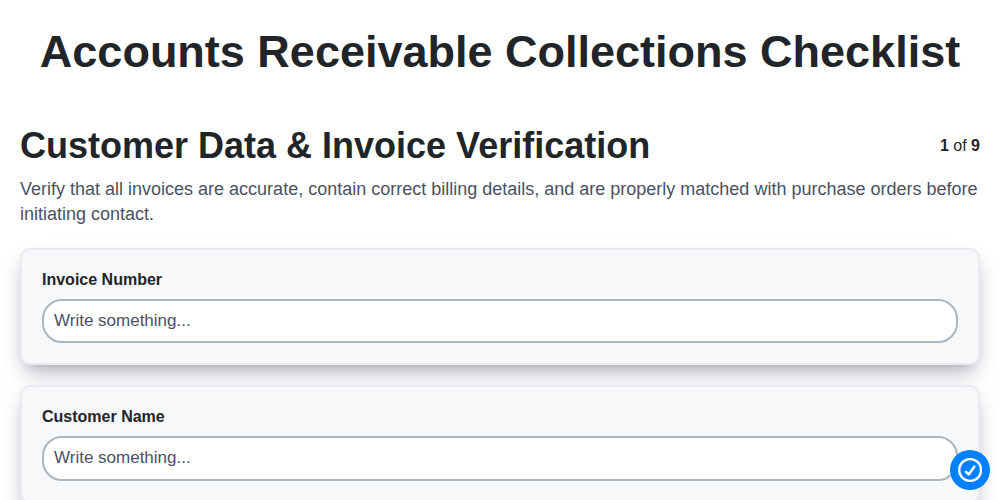
The Ultimate Accounts Receivable Collections Checklist: A Step-by-Step Guide to Streamlining Your Cash Flow
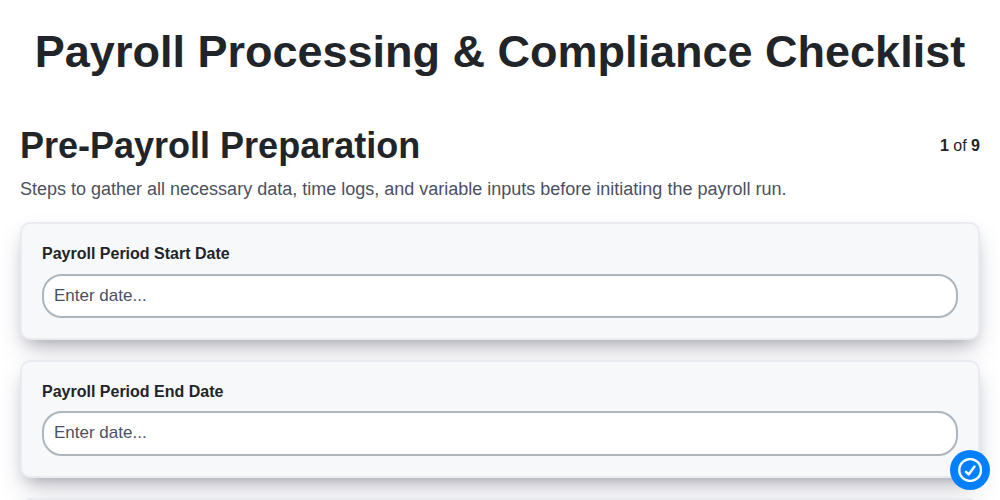
The Ultimate Payroll Processing & Compliance Checklist: A Step-by-Step Guide to Error-Free Payroll
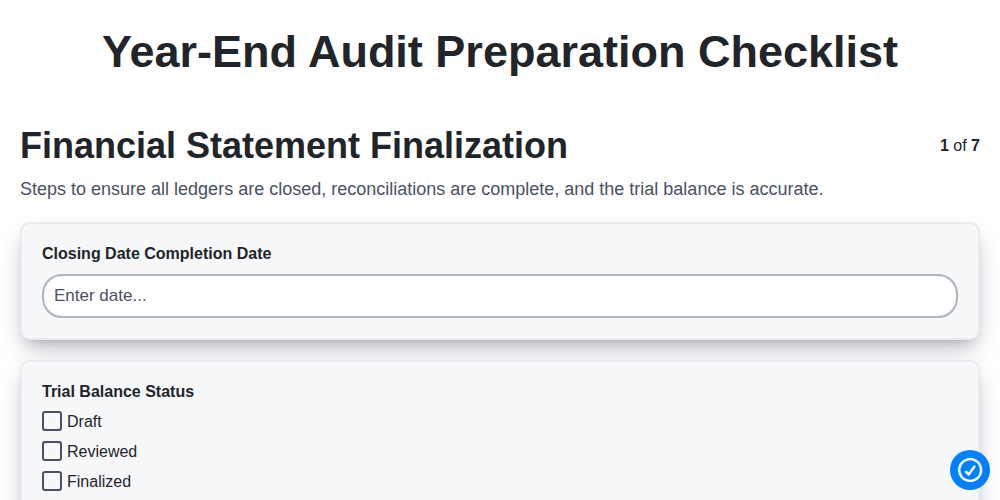
The Ultimate Year-End Audit Preparation Checklist: A Step-by-Step Guide to a Stress-Free Audit
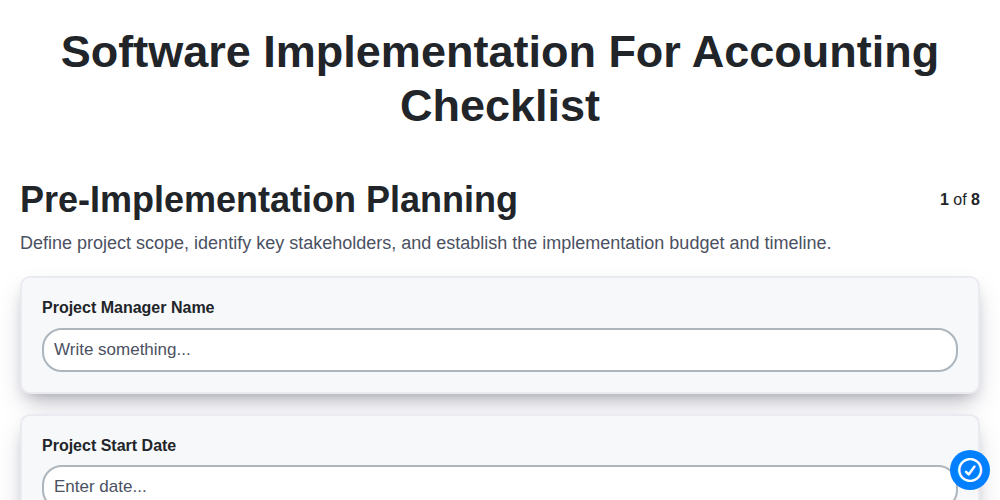
The Ultimate Software Implementation Checklist for Accounting Teams: A Step-by-Step Guide to a Seamless Transition
The Ultimate Inventory Valuation & Audit Checklist: A Step-by-Step Guide to Accuracy and Compliance
We can do it Together
Need help with
Accounting Management?
Have a question? We're here to help. Please submit your inquiry, and we'll respond promptly.