Underground Mine Ventilation Monitoring: An End-to-End Automated Safety Workflow
Published: 06/04/2026 Updated: 10/05/2026
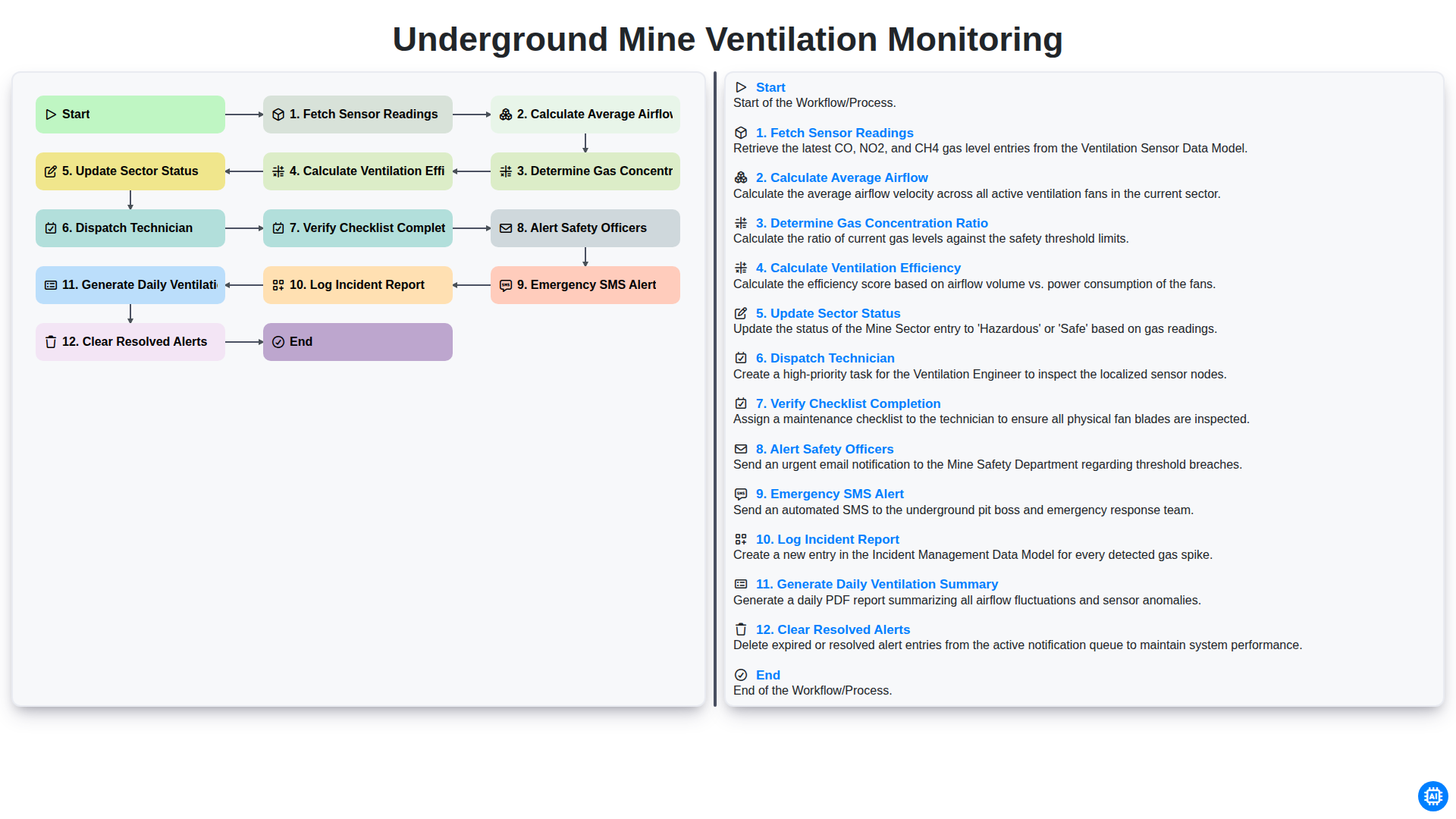
Table of Contents
- Introduction to Automated Ventilation Monitoring
- Step 1: Real-Time Data Acquisition via Sensor Fetching
- Step 2: Analyzing Airflow Dynamics and Average Flow Calculations
- Step 3: Monitoring Hazardous Gas Concentration Ratios
- Step 4: Assessing Ventilation Efficiency and Air Distribution
- Step 5: Real-Time Sector Status Updates
- Step 6: Automated Technician Dispatch Protocols
- Step 7: Post-Inspection Verification and Checklist Completion
- Step 8: Escalation Procedures and Safety Officer Notification
- Step 9: Emergency SMS Alert Systems for Critical Failures
- Step 10: Incident Documentation and Automated Log Reporting
- Step 11: Generating Daily Ventilation Summary Reports
- Step 12: System Normalization and Clearing Resolved Alerts
- Conclusion: The Benefits of a Closed-Loop Monitoring Workflow
- Resources & Links
TLDR: Learn how to automate underground mine safety by streamlining the entire ventilation monitoring lifecycle-from real-time sensor data processing and gas concentration analysis to automated technician dispatching and emergency SMS alerting-ensuring rapid incident response and continuous regulatory compliance.
Introduction to Automated Ventilation Monitoring
In the high-stakes environment of underground mining, maintaining optimal air quality is not just an operational necessity-it is a critical lifeline for every worker underground. Traditional manual monitoring methods, while foundational, are increasingly being replaced by automated systems capable of real-time oversight. An automated ventilation monitoring workflow integrates a continuous stream of data from a network of intelligent sensors to ensure that oxygen levels, airflow velocity, and hazardous gas concentrations are kept within strictly regulated safety parameters.
By transitioning from periodic manual checks to a continuous, automated loop, mining operations can move from a reactive stance to a proactive one. This automated approach allows for the instantaneous detection of anomalies, such as sudden methane spikes or drops in airflow, triggering immediate corrective actions. The goal of implementing such a structured workflow is to eliminate human error, reduce the latency between hazard detection and response, and create a self-documenting safety ecosystem that protects both the workforce and the mine's long-term productivity.
Step 1: Real-Time Data Acquisition via Sensor Fetching
The foundation of an effective underground ventilation management system lies in the continuous,-uninterrupted stream of real-time data. The process begins with the Fetch Sensor Readings stage, where automated IoT-enabled sensors positioned throughout the mine network transmit critical environmental metrics to a centralized monitoring hub.
These sensors are strategically deployed at key intake and return airways, as well as near active working faces, to capture a high-fidelity snapshot of the mine's atmosphere. During this step, the system pulls raw data points including air velocity, volumetric flow rates, and concentrations of hazardous gases such as methane ($CH_4$), carbon monoxide ($CO$), and nitrogen dioxide ($NO_2$). By automating the data fetching process, we eliminate the risks associated with manual sampling and ensure that the monitoring workflow is powered by the most current, accurate, and granular information available, providing the necessary baseline for all subsequent analytical calculations.
Step 2: Analyzing Airflow Dynamics and Average Flow Calculations
Once the raw data has been successfully retrieved from the underground sensor network, the system moves into the critical phase of processing the raw telemetry into actionable intelligence. The primary objective of this stage is to move beyond looking at individual, localized data points and instead focus on the broader movement of air through the mine's primary airways.
The core of this process involves calculating the average airflow across designated ventilation circuits. By aggregating the real-time readings from multiple anemometers and airflow sensors, the system can establish a baseline of the total volume of fresh air being delivered to the working faces. This isn't merely a mathematical mean; it is a continuous monitoring process that identifies fluctuations in air velocity that could indicate blockages, leakage, or a failure in the primary fan performance. By establishing a stable average, the system can differentiate between a temporary sensor anomaly and a genuine drop in ventilation pressure, ensuring that the monitoring workflow remains both highly sensitive to danger and resilient against false alarms.
Step 3: Monitoring Hazardous Gas Concentration Ratios
Once the average airflow has been established, the system moves into a critical phase: Determining the Gas Concentration Ratio. In an underground environment, monitoring airflow alone is insufficient; we must analyze the composition of that air.
During this step, the system compares real-time readings from multi-gas sensors (measuring levels of $CH_4$, $CO$, $NO_2$, and $O_2$) against predefined safety thresholds. The workflow automatically calculates the ratio of hazardous gases relative to the total air volume. By identifying even minute fluctuations in gas concentrations, the system can detect pockets of dangerous buildup before they reach explosive or toxic levels. This automated analysis removes the risk of human error in interpretation, ensuring that every breath of air in the mine is scrutinized for safety and compliance.
Step 4: Assessing Ventilation Efficiency and Air Distribution
Once the raw sensor data is collected and the gas concentrations are analyzed, the system moves into a critical analytical phase: Calculating Ventilation Efficiency. This step goes beyond simply reading numbers; it involves evaluating how effectively the fresh air supply is reaching the working faces of the mine.
By comparing the volume of intake air against the actual air distribution at various secondary headings, the system can identify dead zones or areas of leakage. This calculation is vital for detecting inefficiencies in the ventilation circuit, such as blocked airways, failing auxiliary fans, or compromised brattices. This assessment ensures that the airflow isn't just present, but is performing its essential job of diluting contaminants and maintaining breathable atmospheric conditions across all active sectors.
Step 5: Real-Time Sector Status Updates
Once the system has processed the raw sensor data and calculated critical metrics like gas concentration ratios and ventilation efficiency, the workflow moves into the critical phase of Updating Sector Status.
In this step, the processed data is fed back into the central monitoring dashboard, transforming complex numbers into actionable visual intelligence. Instead of manual oversight, the system automatically reclassifies specific underground zones (sectors) based on the real-time data. For example, a sector may transition from Normal to Warning if gas levels breach a predefined threshold, or to Critical if airflow drops below the required safety limit.
This automated update ensures that the mine's digital twin reflects the exact atmospheric state of the mine at any given second. By maintaining an up-to-the-minute status for every sector, the system eliminates the information lag that often leads to delayed responses, providing the foundation for the subsequent automated dispatch and emergency alerting protocols.
Step 6: Automated Technician Dispatch Protocols
Once the system detects a deviation in ventilation efficiency or a critical gas concentration ratio, the workflow transitions from passive monitoring to active intervention. At this stage, the system automatically triggers the Dispatch Technician protocol.
Instead of waiting for a manual discovery during a routine patrol, the software identifies the specific sector requiring attention and immediately transmits a work order to the nearest available technician's mobile device. This automated dispatch ensures that the response time is minimized, significantly reducing the window of exposure to hazardous conditions. By removing the delay caused by manual communication, the system ensures that personnel are deployed precisely where the data indicates a potential risk, transforming the ventilation management from a reactive struggle into a proactive, data-driven operation.
Step 7: Post-Inspection Verification and Checklist Completion
Once the technician has completed the physical inspection of the ventilation controls and sensors, the workflow transitions from active field work to the critical verification phase. This step ensures that all physical interventions-such as adjusting regulators, cleaning sensor heads, or repairing ducting-have been executed according to standard operating procedures.
The system requires the technician to systematically review and digitally sign off on a pre-defined inspection checklist. This is not merely a formality; it serves as a vital data-validation layer. By verifying that every task-from checking air curtain integrity to testing gas sensor responsiveness-has been addressed, the workflow prevents human error from introducing false safe readings into the monitoring system. Only once the checklist is marked as complete does the workflow proceed to the next stage of safety notification and status updates.
Step 8: Escalation Procedures and Safety Officer Notification
When ventilation parameters exceed predefined safety thresholds, the system moves beyond routine monitoring into an active escalation phase. Once the automated system detects a critical breach in safety standards, the workflow triggers an immediate Alert to Safety Officers. This ensures that designated safety personnel are notified in real-time, allowing for rapid oversight and decision-making.
In high-risk scenarios where gas concentrations or airflow drops reach life-threatening levels, the system initiates an Emergency SMS Alert. This high-priority communication bypasses standard notification channels to reach responders instantly, ensuring that even those away from a computer terminal are aware of the unfolding situation. This dual-layered approach-notifying both the safety team and deploying urgent mobile alerts-minimizes response latency and is a critical component in preventing underground incidents.
Step 9: Emergency SMS Alert Systems for Critical Failures
When the ventilation monitoring system detects a critical breach-such as an unprecedented spike in methane levels or a sudden loss of airflow-seconds are the difference between a controlled situation and a catastrophe. Step 9 of our workflow, the Emergency SMS Alert System, serves as the immediate failsafe.
Unlike standard notifications that may sit in an inbox, the emergency SMS protocol is designed for high-priority, instantaneous delivery to the mobile devices of all on-site responders and safety managers. This automated trigger bypasses the latency of traditional communication channels, ensuring that even if personnel are away from their primary workstations, they are immediately notified of the precise location and nature of the danger. By integrating SMS alerts directly into the monitoring loop, the system bridges the gap between automated detection and human intervention, initiating the emergency response sequence the moment a life-threatening threshold is crossed.
Step 10: Incident Documentation and Automated Log Reporting
Once the immediate threat has been addressed and the ventilation parameters have returned to safe levels, the system transitions from active crisis management to formal documentation. The Log Incident Report phase is a critical component of the workflow, ensuring that every anomaly, gas spike, or equipment failure is recorded with precision and transparency.
This step automates the creation of a digital audit trail. The system captures a comprehensive snapshot of the event, including the exact timestamp of the initial sensor trigger, the peak gas concentration levels recorded, the specific sector affected, and the real-time actions taken by the dispatched technicians. By removing the risk of human error or memory bias during manual reporting, the automated log provides an immutable record that is essential for regulatory compliance and forensic analysis.
Beyond simple record-keeping, this automated logging serves as the foundation for long-term predictive maintenance and safety audits. It ensures that every deviation from the standard operating procedure is searchable, traceable, and ready for review by safety investigators and mine management.
Step 11: Generating Daily Ventilation Summary Reports
Once the final incident reports have been logged and all active alerts have been cleared, the system moves into its most critical-for-compliance phase: Generating the Daily Ventilation Summary Report.
This automated step aggregates all the data collected throughout the last 24-hour cycle-including airflow averages, gas concentration trends, and technician inspection outcomes-into a single, comprehensive document. Rather than forcing safety managers to manually piece together data from disparate logs, the system compiles a structured overview that highlights any recurring patterns or systemic issues within specific mine sectors.
These reports serve two vital purposes: they provide a high-level snapshot for management to assess operational stability, and they create an immutable audit trail for regulatory compliance. By transforming raw sensor data and real-time alerts into an actionable summary, the workflow ensures that even when the shift ends, the continuous pulse of the mine's atmosphere remains documented, transparent, and ready for review.
Step 12: System Normalization and Clearing Resolved Alerts
Once all critical issues have been addressed and the safety parameters have returned to their baseline levels, the workflow enters its final, crucial phase: System Normalization. This stage is about more than just closing a ticket; it is about restoring the operational equilibrium of the mine's monitoring environment.
The automated system initiates a process to Clear Resolved Alerts, systematically removing notifications from the active dashboard that no longer pose a threat to personnel. This prevents alarm fatigue among operators, ensuring that the control room remains focused only on active, high-priority threats. By automating the clearing of resolved status updates, the system ensures that the monitoring interface remains clean, readable, and actionable.
This final step closes the loop on the entire ventilation monitoring lifecycle, transitioning the mine from a state of emergency response back to a state of proactive, continuous surveillance.
Conclusion: The Benefits of a Closed-Loop Monitoring Workflow
Implementing an automated, closed-loop monitoring workflow transforms underground mine ventilation from a reactive struggle into a proactive safety strategy. By seamlessly connecting real-time sensor data-such as airflow averages and gas concentration ratios-to immediate actionable outputs like technician dispatch and emergency SMS alerts, mines can significantly reduce the window of risk.
The true value lies in the continuity of the loop: the process doesn't just identify a problem; it ensures the problem is addressed, verified through checklist completion, and officially resolved within the daily summary. This end-to-end automation eliminates manual oversight errors, reduces the administrative burden on safety officers, and ensures that every critical atmospheric shift is met with a documented, standardized response. Ultimately, this systematic approach fosters a culture of high-precision safety, protecting both the workforce and the long-term operational integrity of the mine.
Resources & Links
- Mining Technology: Global industry news and technical insights into mining automation, ventilation systems, and digital transformation in underground mining.
- National Center for Occupational Safety and Health: Resources regarding safety standards, gas concentration regulations, and best practices for underground mine ventilation safety.
- International Electrotechnical Commission (IEC): Information on international standards for sensor interoperability, automated monitoring systems, and industrial communication protocols.
- NIOSH (National Institute for Occupational Safety and Health): Research-based guidelines on mine air quality, monitoring hazardous gases, and preventing respiratory hazards in underground environments.
- SoftwareWorld - IoT & Automation: Technical resources regarding the implementation of IoT workflows, automated alert systems, and real-time data processing architectures.
- ScienceDirect: Access to peer-reviewed studies on airflow dynamics, ventilation efficiency modeling, and computational fluid dynamics in mining.
Frequently Asked Questions
What is the primary goal of an end-to-end automated mine ventilation monitoring workflow?
The primary goal is to enhance underground safety and operational efficiency by providing real-time, continuous tracking of air quality, airflow, and gas levels, reducing the need for manual sampling and enabling rapid response to hazardous conditions.
What key parameters are typically monitored in an automated ventilation system?
The system monitors critical environmental parameters including concentrations of gases such as CO, CO2, NO2, and CH4, as well as physical parameters like airflow velocity, air pressure, humidity, and temperature.
How does an 'end-to-end' automated workflow differ from traditional monitoring methods?
Unlike traditional methods that rely on periodic manual readings and human intervention, an end-to-end automated workflow integrates sensor data collection, wireless transmission, real-time data processing, and automated alert generation into a single, continuous loop.
What role does IoT technology play in underground mine ventilation monitoring?
IoT (Internet of Things) technology enables the deployment of networked sensors that can wirelessly transmit critical environmental data from deep underground to surface-level control centers, allowing for remote oversight and instantaneous data visualization.
How does automated monitoring improve emergency response times in mines?
Automated monitoring systems are programmed to trigger immediate alarms and notifications to mine operators the moment predefined safety thresholds are breached, significantly reducing the time between a hazardous event occurring and the initiation of rescue or evacuation protocols.
What are the main benefits of implementing this automated workflow for mine management?
Key benefits include improved worker safety, reduced operational costs through optimized fan usage (Ventilation on Demand), higher data accuracy, and enhanced regulatory compliance through continuous digital record-keeping.
Comments
There are no comments yet. Be the first to add one!
Mining Management Solution Demo
Maximize efficiency & safety in mining operations! ChecklistGuro streamlines task management, equipment tracking, and compliance reporting. Optimize workflows, reduce risk, & boost productivity. Manage it all with our Work OS.
Related Articles
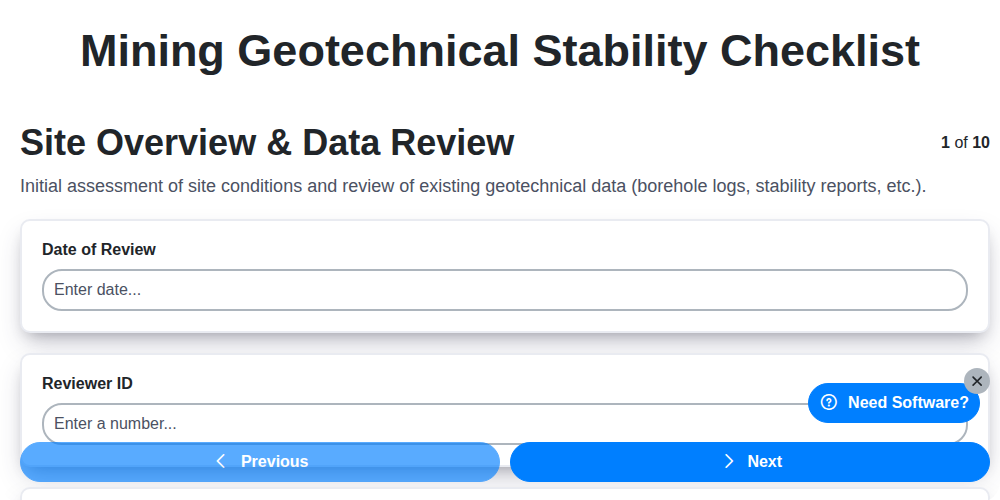
Ensuring Mine Safety: Your Geotechnical Stability Checklist Guide
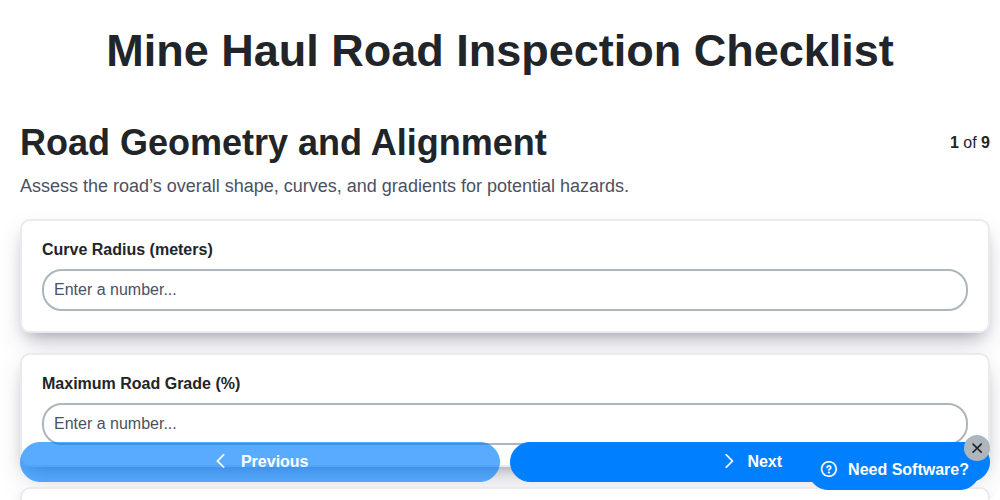
Ensuring Safety & Efficiency: Your Mine Haul Road Inspection Checklist Guide
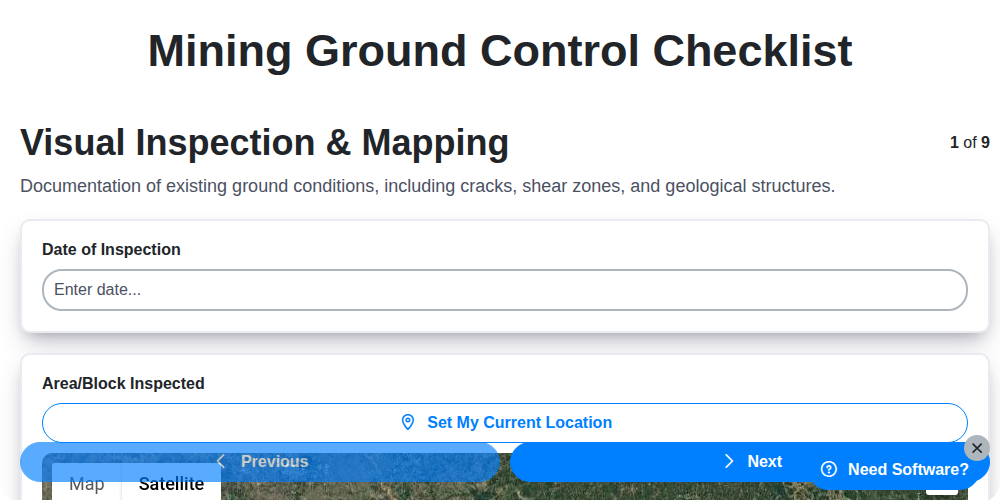
Mastering Mine Safety: Your Guide to the Ground Control Checklist
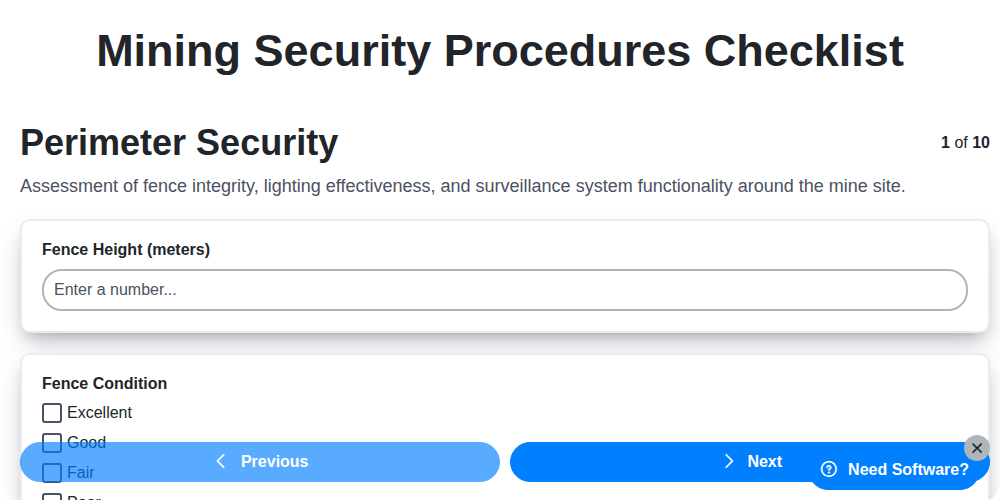
Mining Security Procedures Checklist: A Comprehensive Template for Safety
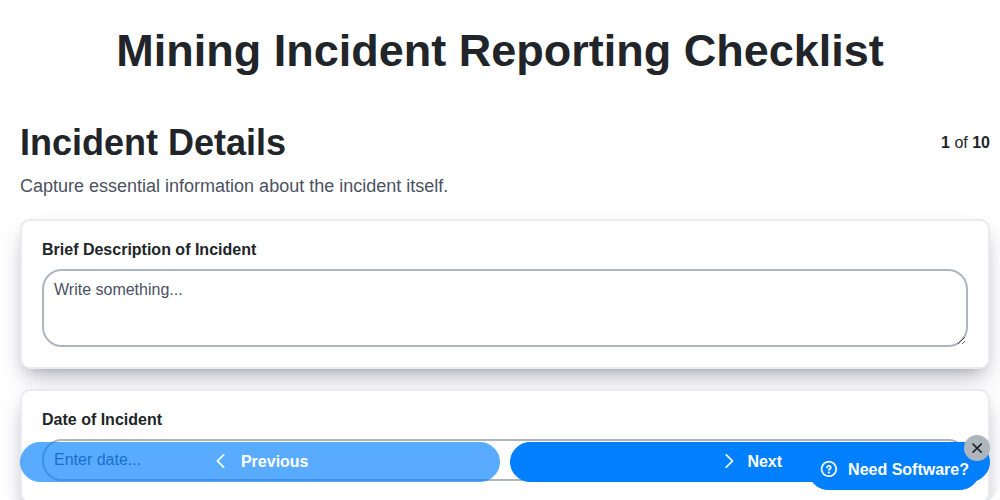
Ensuring Safety: Your Mining Incident Reporting Checklist Guide
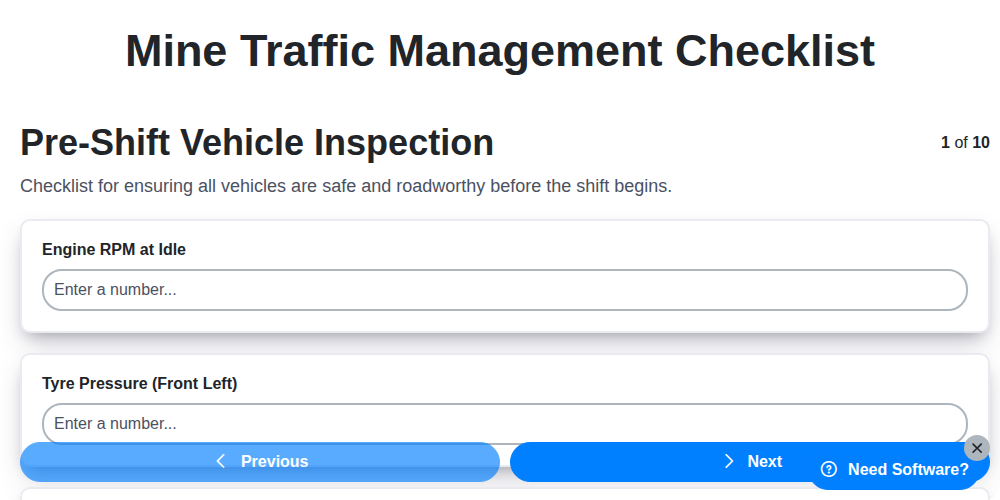
Ensuring Safety Underground: Your Mine Traffic Management Checklist Guide
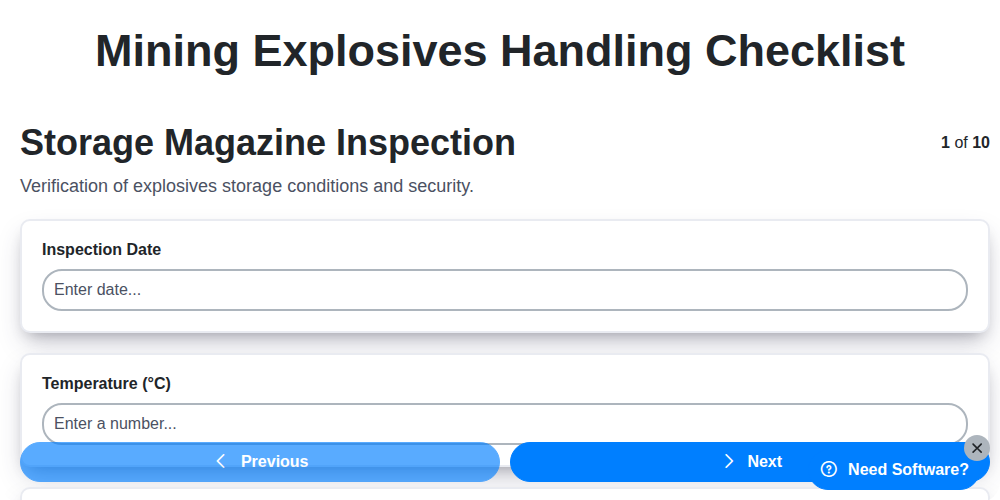
Ensuring Safety: Your Mining Explosives Handling Checklist Template
Ensuring Safety & Compliance: Your Mining Noise Monitoring Checklist Guide
Need help with
Checklists?
Have a question? We're here to help. Please submit your inquiry, and we'll respond promptly.