Mastering Utilities Infrastructure: Your Comprehensive BOM Checklist
Published: 12/10/2025 10:00 PM Updated: 12/14/2025 7:58 AM
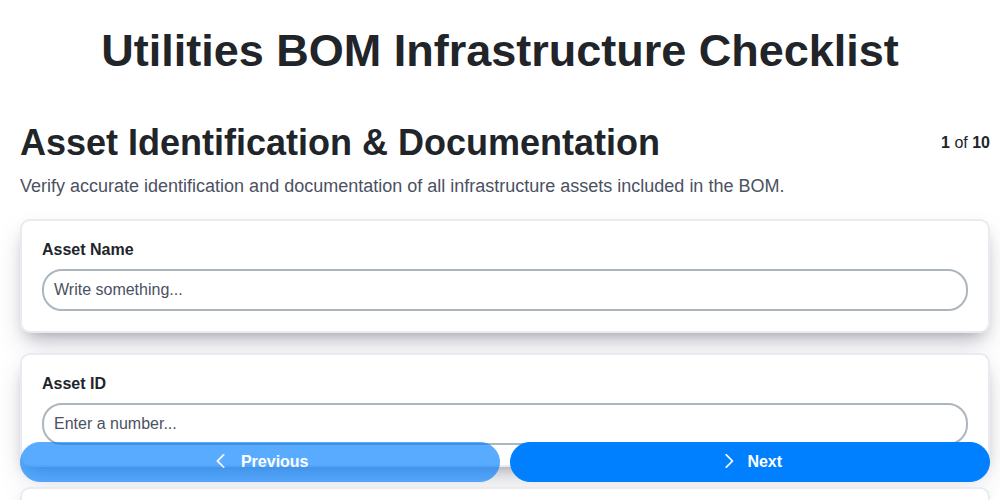
Table of Contents
- Introduction: Why a Utilities Infrastructure BOM is Crucial
- 1. Asset Identification & Documentation: Laying the Foundation
- 2. Material Specifications & Standards: Ensuring Quality and Consistency
- 3. Supplier Information & Contracts: Building Reliable Partnerships
- 4. Location & Installation Details: Mapping Your Infrastructure
- 5. Lifecycle & Maintenance Schedules: Proactive Management
- 6. Regulatory Compliance & Permits: Staying on the Right Side of the Law
- 7. Risk Assessment & Safety Data: Prioritizing Safety
- 8. Cost & Budget Allocation: Managing Financial Resources
- 9. Version Control & Revision History: Tracking Changes Over Time
- 10. Integration with Asset Management Systems: Streamlining Operations
- 11. The Importance of Data Accuracy and Validation
- 12. Best Practices for Maintaining Your Utilities BOM
- Conclusion: Building a Resilient and Efficient Utilities Infrastructure
- Resources & Links
TLDR: Building and maintaining utilities infrastructure is complex. This checklist is your shortcut to success! It covers everything from identifying assets & materials to budgets, safety, and regulatory compliance - ensuring accuracy, efficiency, and long-term sustainability. Download the template and streamline your infrastructure management today!
Introduction: Why a Utilities Infrastructure BOM is Crucial
Managing utility infrastructure - encompassing everything from power grids and water pipelines to communication networks - is a complex undertaking. Traditional methods often rely on fragmented data, siloed information, and reactive maintenance, leading to inefficiencies, increased costs, and potential operational disruptions. This is where a comprehensive Bill of Materials (BOM) for your utilities infrastructure becomes absolutely critical.
A Utilities Infrastructure BOM isn't just a list of assets; it's a living document providing a single source of truth about every component, material, and process involved in your infrastructure's operation. It connects the physical assets with the data needed for effective management - allowing for proactive maintenance, accurate cost tracking, improved regulatory compliance, and enhanced safety. In an era of aging infrastructure and increasing demands, a robust Utilities Infrastructure BOM isn't a luxury; it's a necessity for long-term sustainability, reliability, and resilience. It's the foundation for data-driven decisions and optimized performance, safeguarding your operations and protecting your investment.
1. Asset Identification & Documentation: Laying the Foundation
Before you can effectively manage utilities - whether it's power, water, gas, or HVAC - you need a solid foundation: comprehensive asset identification and documentation. This isn't just about knowing what you have; it's about understanding everything about it.
This initial step involves creating a detailed inventory of each utility asset. Think beyond just the main equipment. Include everything from pumps and transformers to pipes, valves, and control panels. Each asset needs a unique identifier - a consistent naming convention is key. Alongside the ID, document crucial details: manufacturer, model number, serial number, original purchase date, and initial commissioning details.
Don't underestimate the power of visuals. Include photographs and, increasingly, digital twins. Detailed drawings and schematics are vital for understanding system layout and interconnectivity. A centralized repository, ideally accessible to authorized personnel, is essential for maintaining accuracy and facilitating easy retrieval of information. Poor asset identification leads to confusion, delays during maintenance, and increased risk - so get this right from the start.
2. Material Specifications & Standards: Ensuring Quality and Consistency
A robust utilities BOM (Bill of Materials) isn't just a list; it's a guarantee of quality and operational efficiency. Central to this is meticulously defining material specifications and standards. This section of your checklist focuses on precisely that.
It's not enough to simply note pipe or cable. You need to detail exactly what type of pipe or cable is required, and why. This includes specifying:
- Material Type: (e.g., PVC, HDPE, copper, aluminum, etc.) - Clearly define the material composition.
- Dimensions & Tolerances: Precise measurements and acceptable deviations.
- Performance Characteristics: (e.g., pressure rating, tensile strength, insulation resistance, etc.) - What performance levels are expected?
- Industry Standards & Certifications: (e.g., ASTM, ANSI, UL, CE) - Demonstrates compliance and quality assurance.
- Manufacturer Part Numbers: Ensures procurement consistency and avoids confusion.
- Approved Alternatives: Documenting acceptable substitutes in case of supply chain disruptions.
By providing this level of detail, you ensure consistent material quality, facilitate accurate cost estimations, streamline procurement processes, and simplify troubleshooting and repairs down the line. Failure to do so can lead to mismatched materials, premature failure, and potentially dangerous situations. This section isn't a formality; it's a critical foundation for a reliable and long-lasting utilities infrastructure.
3. Supplier Information & Contracts: Building Reliable Partnerships
A robust utilities BOM (Bill of Materials) isn't just about knowing what you have; it's about knowing who provides it. This section of your checklist focuses on building and maintaining strong supplier relationships and ensuring contractual obligations are clearly defined and accessible.
Here's what this critical component of your checklist should cover:
- Supplier Contact Details: Comprehensive records including primary contacts, emergency contacts, addresses, and phone numbers. Centralize this information to avoid delays in critical situations.
- Contractual Agreements: Detailed records of all contracts, including scope of supply, warranties, service level agreements (SLAs), pricing, and payment terms. Ensure contracts are regularly reviewed and renewed as needed.
- Performance Metrics: Track supplier performance based on agreed-upon metrics such as on-time delivery, quality, and responsiveness. This data informs supplier evaluations and helps identify potential areas for improvement.
- Supplier Risk Assessment: Evaluate suppliers based on financial stability, geographic location, and potential disruptions to their operations. Develop contingency plans for critical suppliers.
- Insurance Certificates: Maintain copies of supplier insurance certificates, ensuring adequate coverage for liabilities related to supplied assets and services.
- Communication Logs: Keep a record of all communication with suppliers, including quotes, order confirmations, and issue resolution.
A well-maintained supplier information and contracts section isn't just about compliance; it's about fostering proactive partnerships that contribute to operational efficiency and reduce risk.
4. Location & Installation Details: Mapping Your Infrastructure
Knowing exactly where your utilities and infrastructure assets are located, and how they were installed, is foundational to effective management. This isn't just about having a map; it's about capturing comprehensive data that allows for efficient troubleshooting, planning for upgrades, and ensuring safety during maintenance.
This section of your checklist should cover:
- Precise Geographic Coordinates: Use GPS or GIS data to pinpoint the location of each asset. Don't rely on vague descriptions.
- Installation Dates & Methods: Record when the asset was installed and the specific methods used. This can be crucial for understanding potential issues related to aging materials or improper installation techniques.
- Depth and Burial Information: For underground utilities, the depth of burial is vital. Accurately documenting this minimizes the risk of accidental strikes during excavation.
- Connection Points: Detail how the asset connects to other utilities or systems. Clearly identify connection points and the types of connectors used.
- Supporting Structures & Anchoring: Document any supporting structures (e.g., foundations, manholes) and how the asset is anchored or secured.
- As-Built Drawings: Include or reference detailed as-built drawings that accurately reflect the installation. These should be updated as changes occur.
- Photographic Documentation: Include photos of the installation process and the finished asset. Visual records can be invaluable for future reference.
Failing to thoroughly document location and installation details can lead to costly errors, delays, and even safety hazards. Make this a priority in your infrastructure BOM checklist.
5. Lifecycle & Maintenance Schedules: Proactive Management
Neglecting scheduled maintenance is a recipe for unexpected failures, costly downtime, and compromised safety. A robust checklist should dedicate significant attention to lifecycle and maintenance schedules. This isn't just about reacting to breakdowns; it's about preventing them.
Your checklist should detail:
- Preventative Maintenance (PM) Schedules: Clearly define the frequency and tasks for routine inspections, lubrication, cleaning, and minor repairs. This should be tailored to each asset's criticality and manufacturer recommendations. Consider factors like operating environment (temperature, humidity, etc.) as they impact maintenance needs.
- Predictive Maintenance (PdM) Integration: Implement PdM techniques (vibration analysis, infrared thermography, oil analysis) to predict potential failures before they occur. The checklist should outline how data from these analyses will trigger specific maintenance tasks.
- Condition-Based Maintenance (CBM) Triggers: Define specific performance thresholds or conditions that necessitate immediate maintenance. For instance, a gradual increase in energy consumption for a pump might signal the need for inspection and repair.
- Refurbishment and Replacement Planning: Assets don't last forever. The checklist must include projected lifecycles and plan for eventual refurbishment or replacement. This avoids reactive, emergency replacements that often incur higher costs and disrupt operations.
- Documentation of Completed Maintenance: Detailed records of all maintenance activities performed-including dates, tasks completed, materials used, and technician observations-are crucial for tracking trends, identifying recurring issues, and optimizing schedules.
A well-defined lifecycle and maintenance schedule, diligently tracked using this checklist, translates directly into improved asset reliability, extended asset life, and reduced overall operational expenses.
6. Regulatory Compliance & Permits: Staying on the Right Side of the Law
Utilities infrastructure is heavily regulated, and navigating this landscape is crucial for operational longevity and avoiding costly penalties. This section of your checklist focuses on ensuring your assets adhere to all applicable local, regional, and national regulations.
What to include:
- Identification of Applicable Regulations: This isn't a one-size-fits-all process. Regulations vary wildly depending on your location, asset type (e.g., power, water, gas), and the specific operational activities. Compile a comprehensive list of all relevant laws, codes, and industry standards.
- Permit Documentation: Detailed records of all required permits-building permits, environmental permits, operational permits, etc.-must be meticulously maintained. Include application dates, expiration dates, renewal procedures, and any specific conditions attached to the permit.
- Compliance Monitoring: Implement a system to actively monitor changes to regulations and assess their impact on your infrastructure. This might involve subscribing to regulatory updates, attending industry forums, or consulting with legal experts.
- Reporting Requirements: Identify and document all reporting obligations to regulatory bodies, including frequency, format, and content.
- Inspections & Audits: Keep records of all inspections and audits performed by regulatory agencies, including findings, corrective actions taken, and follow-up verification.
- Environmental Considerations: Specific attention should be given to environmental regulations related to emissions, waste disposal, and protection of natural resources.
- Safety Compliance: Ensure all safety regulations (OSHA, etc.) are followed and documented, including employee training records and safety equipment maintenance.
Failure to maintain this critical area of the checklist can lead to fines, operational shutdowns, legal action, and reputational damage. Proactive compliance isn't just about avoiding penalties; it's about demonstrating responsible stewardship of your infrastructure and the communities you serve.
7. Risk Assessment & Safety Data: Prioritizing Safety
Utilities infrastructure, from power grids to water treatment plants, presents inherent risks. A robust checklist must prioritize safety by encompassing thorough risk assessment and readily accessible safety data. This isn't just about ticking boxes; it's about proactively identifying potential hazards and mitigating them.
This section of your checklist should include:
- Hazard Identification: Document all potential hazards associated with the utility, including environmental factors (flooding, extreme temperatures), operational risks (equipment failure, human error), and security threats (vandalism, cyberattacks).
- Risk Severity & Likelihood: Evaluate the potential impact (severity) of each identified hazard and the probability of its occurrence. Utilize a risk matrix or scoring system to quantify risk levels.
- Safety Data Sheets (SDS): Maintain a centralized repository of SDS for all chemicals, materials, and fuels used in operations. Ensure easy access for all relevant personnel.
- Emergency Response Plans: Detail specific procedures for handling emergencies, including contact information, evacuation routes, and spill containment protocols.
- Safety Training Records: Track employee training on safety procedures, hazard recognition, and emergency response.
- Incident Reporting & Analysis: Establish a clear process for reporting and investigating incidents, near misses, and safety concerns. Analyze findings to identify root causes and implement corrective actions.
- Lockout/Tagout Procedures: Document and enforce strict lockout/tagout procedures for maintenance and repair activities.
Prioritizing risk assessment and safety data ensures a safer working environment, minimizes potential liabilities, and safeguards valuable infrastructure assets. This section shouldn't be an afterthought; it should be integral to the entire utility management lifecycle.
8. Cost & Budget Allocation: Managing Financial Resources
A robust utilities BOM (Bill of Materials) isn't just about identifying assets and tracking specifications; it's inextricably linked to financial responsibility. Accurate cost and budget allocation is critical for justifying investments, optimizing operational spending, and ensuring long-term financial sustainability.
This section of your checklist should detail everything related to the financial aspects of your utilities infrastructure. That includes initial acquisition costs (equipment, materials, labor), installation expenses, ongoing operational costs (energy consumption, water usage, waste disposal), and future planned upgrades or replacements.
Key considerations within this checklist item:
- Detailed Cost Breakdown: Document the cost of each asset, including procurement, transportation, installation, and any associated fees.
- Budget Allocation: Establish clear budget allocations for each phase of the asset lifecycle - from initial investment to decommissioning.
- Energy Consumption Modeling: Project future energy costs based on usage patterns and potential rate fluctuations. This enables proactive energy management and budgeting.
- Lifecycle Cost Analysis: Account for the total cost of ownership (TCO) over the entire lifespan of each asset, considering maintenance, repairs, and eventual replacement.
- Contingency Planning: Allocate funds for unforeseen expenses, like emergency repairs or unexpected regulatory changes.
- Cost Tracking & Reporting: Implement a system to track actual costs against budgeted amounts, allowing for regular analysis and adjustments.
- ROI (Return on Investment) Analysis: Evaluate the financial benefits of upgrades and replacements to justify investments and prioritize projects.
By meticulously tracking and managing costs, you can make informed decisions, avoid overspending, and maximize the value of your utilities infrastructure investment.
9. Version Control & Revision History: Tracking Changes Over Time
Maintaining a robust version control and revision history is absolutely critical for any Utilities BOM (Bill of Materials) infrastructure checklist. It's not enough to simply have the information; you need to know when and why it changed. Think of it as an audit trail for your vital asset data.
Why is this so important? Imagine trying to troubleshoot a failing component without knowing if the original specifications were updated to address a known issue. Or trying to comply with a new regulation when you're unsure which version of your documentation is currently active.
Your version control system should clearly indicate:
- Date and Time of Changes: When was the change made?
- Author/Responsible Party: Who made the change?
- Description of Changes: What specifically was altered? Be detailed - "Updated material specs" isn't sufficient. Replaced material X with material Y due to supply chain disruption and improved corrosion resistance is much better.
- Reason for Change: Why was the change necessary? Was it a correction, an upgrade, a regulatory update, or something else?
- Version Number: Implement a clear versioning system (e.g., 1.0, 1.1, 2.0) to easily identify different iterations.
Utilize a centralized repository and ideally leverage digital tools (like dedicated BOM management software or even version-controlled documents in platforms like SharePoint) to facilitate this. This not only prevents data loss and ensures accuracy but also supports traceability and accountability - essential for utilities facing increasingly stringent regulatory oversight.
10. Integration with Asset Management Systems: Streamlining Operations
The real power of a comprehensive Utilities BOM (Bill of Materials) infrastructure checklist isn't just in the data it collects, but in how that data is used. That's where integration with your existing Asset Management Systems (AMS) becomes absolutely critical. Without it, you're essentially creating a beautiful, detailed document that sits isolated, requiring manual updates and prone to errors.
Integrating your checklist data with your AMS - whether it's Maximo, SAP, CMMS software, or a custom solution - offers a wealth of benefits. This allows for:
- Automated Data Flow: Eliminate manual entry and reduce the risk of human error. Data captured during the BOM infrastructure build-out is automatically populated into your AMS.
- Enhanced Reporting & Analytics: Combine BOM data with performance metrics, maintenance history, and cost data to gain deeper insights into asset utilization and efficiency.
- Improved Work Order Management: Automatically generate and assign work orders based on maintenance schedules outlined in your checklist, ensuring timely interventions.
- Real-Time Visibility: Provide stakeholders with a single source of truth for asset information, facilitating informed decision-making.
- Predictive Maintenance: Leverage the BOM data to feed predictive maintenance algorithms, anticipating potential failures before they occur.
Successfully integrating your checklist requires careful planning. Consider data mapping, API connections, and potentially custom development. However, the long-term gains in efficiency, cost savings, and improved asset performance make the investment worthwhile. Don't let your detailed BOM infrastructure become a silo - connect it to your AMS and unlock its full potential.
11. The Importance of Data Accuracy and Validation
A meticulously crafted Utilities BOM (Bill of Materials) Infrastructure Checklist is only as effective as the data within it. Inaccurate or outdated information can lead to costly errors, project delays, and safety hazards. Imagine a maintenance schedule based on incorrect equipment specifications - the result could be improper repairs and further damage.
Data accuracy isn't just about getting the numbers right; it's about ensuring the meaning behind those numbers is correct. A material specification might be technically accurate but irrelevant if it refers to a discontinued product. Supplier information needs to be verified regularly to avoid communication breakdowns and procurement issues.
Validation is the key to achieving this accuracy. Implement robust validation processes at each step of the checklist completion - cross-referencing data with multiple sources, performing visual inspections, and involving subject matter experts. Automated checks within asset management systems can also flag potential inconsistencies.
Investing in data accuracy upfront saves significant time and resources down the line. It minimizes risks, improves decision-making, and ultimately, contributes to a more resilient and efficient utilities infrastructure. Regularly auditing your BOM data and updating validation processes is crucial to maintaining its integrity and maximizing its value.
12. Best Practices for Maintaining Your Utilities BOM
Your Utilities Bill of Materials (BOM) isn't a one-and-done document. It's a living, breathing representation of your critical infrastructure, and its accuracy directly impacts operational efficiency, cost management, and regulatory compliance. Here's how to keep it in top shape:
- Regular Audits: Schedule periodic audits - at least annually, but ideally quarterly - to compare the BOM against the physical assets in the field. This uncovers discrepancies and ensures data remains current.
- Automate Updates: Integrate your BOM with work order management systems, CMMS (Computerized Maintenance Management System), and even IoT sensors. This automatically updates the BOM with changes made during maintenance or installations.
- Standardize Data Input: Enforce consistent naming conventions, data formats, and measurement units. This prevents confusion and simplifies analysis. Develop clear guidelines and training materials for all contributors.
- Role-Based Access Control: Limit editing access to authorized personnel. Clearly define roles and responsibilities for BOM maintenance to prevent unauthorized changes.
- Feedback Loops: Encourage feedback from field technicians and other stakeholders. They often have valuable insights that can improve the BOM's accuracy and completeness. Create a simple system for reporting errors or suggested additions.
- Training & Awareness: Provide ongoing training to all personnel involved in utilities operations and BOM maintenance. This reinforces the importance of data accuracy and ensures everyone understands the process.
- Proactive Data Enrichment: Don't just wait for changes to trigger updates. Actively seek opportunities to add information, such as manufacturer part numbers, warranty details, and performance metrics.
- Embrace Digitalization: Migrate to a digital BOM platform. These platforms offer enhanced collaboration, version control, and integration capabilities compared to spreadsheets or paper-based systems.
- Lifecycle Management Integration: Connect your BOM to your asset lifecycle management strategy. Use the BOM data to inform decisions about replacement, upgrades, and decommissioning.
- Data Validation Rules: Implement data validation rules within your BOM system to prevent errors during input. This could include range checks, mandatory fields, and format validation.
- Continuous Improvement: Treat BOM maintenance as an ongoing process of continuous improvement. Regularly review your processes, identify areas for optimization, and implement changes accordingly.
- Communication is Key: Establish clear communication channels to inform stakeholders about updates and changes to the Utilities BOM.
Conclusion: Building a Resilient and Efficient Utilities Infrastructure
Ultimately, a comprehensive Utilities BOM (Bill of Materials) Infrastructure Checklist, encompassing asset identification, material specifications, supplier details, installation records, maintenance schedules, regulatory compliance, risk assessments, cost tracking, version control, and system integration, isn't just a nice-to-have - it's a foundation for resilience and efficiency. By meticulously documenting and managing these critical aspects, organizations can proactively mitigate risks, optimize maintenance strategies, ensure regulatory adherence, and ultimately reduce operational costs. This isn't a one-time effort; continuous improvement and regular updates to the checklist itself are essential to keep pace with evolving technologies, regulations, and organizational needs. Embracing this structured approach unlocks a clear path towards a more robust, sustainable, and cost-effective utilities infrastructure for the future.
Resources & Links
- International Organization for Standardization (ISO): Provides international standards that often underpin utilities infrastructure quality and asset management. Explore standards relevant to asset tracking, quality management (ISO 9001), and environmental management (ISO 14001).
- International Energy Agency (IEA): Offers data, analysis, and research on energy infrastructure and utilities, providing context for BOM considerations related to energy distribution and efficiency.
- American National Standards Institute (ANSI): Coordinates the development of standards, many of which are critical to utilities infrastructure components and safe operation. Explore standards related to materials, safety, and design.
- IEC (International Electrotechnical Commission): Develops and publishes international standards for all electrical, electronic and related technologies, vital for electrical utilities BOM components.
- IAM (Institute of Asset Management): Provides resources, training, and certification in asset management, which is fundamental to utilities BOM creation and maintenance. Their framework provides a solid basis.
- APICS (The Association for Supply Chain Management): Offers expertise and resources relating to material management, inventory control, and supply chain efficiency - all crucial elements for a robust BOM.
- ReliabilityFirst: Focuses on improving the reliability and resilience of electric power systems. Their resources can inform risk assessment and maintenance scheduling aspects of your BOM.
- U.S. Environmental Protection Agency (EPA): Provides regulations and information regarding environmental compliance for utilities, particularly relevant to permitting and safety data sections of your BOM.
- U.S. Occupational Safety and Health Administration (OSHA): Provides regulations and guidance on workplace safety. Relevant for risk assessment and safety data related to utilities infrastructure BOM items.
- National Institute of Standards and Technology (NIST): Develops and promotes standards and technology, often related to measurement, material science, and data integrity - all important for accurate BOM data.
- Smartsheet: Provides a collaborative work management platform that can be used to create and manage a utilities BOM. Offers templates and features for data tracking, task assignments, and reporting.
- Autodesk: Offers software for design and engineering, which can be invaluable for accurate asset identification, 3D modeling of utilities infrastructure, and BOM documentation.
- Oracle: Provides comprehensive enterprise resource planning (ERP) and asset management solutions which can facilitate the integration of your utilities BOM with other critical business systems.
Frequently Asked Questions
What is a BOM in the context of utilities infrastructure?
A Bill of Materials (BOM) in this context is a comprehensive list of all components, materials, and sub-assemblies required to build, maintain, or replace utilities infrastructure assets (e.g., pipelines, substations, power lines). It's more detailed than a simple inventory list, including specifications, quantities, vendor information, and often, lifecycle data.
Why is a detailed BOM checklist important for utilities infrastructure?
A thorough BOM checklist ensures accuracy in procurement, reduces errors during construction and maintenance, optimizes inventory management, streamlines asset tracking, facilitates lifecycle cost analysis, and supports regulatory compliance. It minimizes downtime and potential safety hazards by ensuring the right parts are available when needed.
Who should use this BOM checklist?
This checklist is beneficial for various roles including engineers, project managers, procurement specialists, maintenance technicians, asset managers, and anyone involved in the planning, execution, and management of utilities infrastructure projects or maintenance activities.
What types of assets are typically included in a utilities infrastructure BOM?
Common assets include pipelines (materials, fittings, valves), substations (transformers, circuit breakers, relays), power lines (poles, insulators, conductors), and related support structures and control systems. The list is highly variable depending on the specific utility and asset type.
What level of detail should be included in a BOM for utilities infrastructure?
The level of detail depends on the complexity of the asset and the intended use of the BOM. Ideally, it should include part numbers, manufacturer, specifications, quantities, vendor information, installation requirements, and potentially, historical maintenance records. Standardizing detail is vital for usability and data analysis.
How does this checklist differ from a standard inventory list?
An inventory list simply tracks what's currently in stock. A BOM is a planned list specifying *what* is needed, *why*, and with what precise requirements. A BOM can be used *to generate* an inventory list, or as a forward-looking guide for procurement and planning.
Are there any software solutions that can help manage utilities infrastructure BOMs?
Yes, several Enterprise Asset Management (EAM) and Computerized Maintenance Management Systems (CMMS) offer robust BOM management capabilities. Specialized utilities infrastructure software solutions are also available that cater to the unique needs of the sector. Spreadsheets can be used for smaller projects, but they quickly become unwieldy for larger, complex assets.
What is the role of lifecycle data in a utilities infrastructure BOM?
Lifecycle data (e.g., warranty information, expected lifespan, maintenance schedules, failure history) allows for proactive maintenance planning, optimized asset replacement strategies, and more accurate lifecycle cost assessments. It's essential for long-term asset management.
How can I ensure the accuracy and currency of my utilities infrastructure BOM?
Regular audits, feedback from field technicians, integration with asset management systems, and establishing clear processes for updates are crucial. Designating a BOM owner responsible for data integrity is also recommended. Changes should be documented with version control.
What are some common challenges in creating and maintaining accurate BOMs for utilities infrastructure?
Challenges include data silos, legacy systems, a lack of standardization, complex asset configurations, frequent changes to infrastructure, and the sheer volume of data involved. Overcoming these requires cross-functional collaboration and a commitment to data governance.
Found this Article helpful?
Comments
There are no comments yet. Be the first to add one!
BOM - Bill of Materials Management Solution Demo
Struggling with inaccurate BOMs & costly errors? ChecklistGuro provides a centralized BOM Management solution, connecting your design, engineering, & manufacturing teams for improved collaboration and control. Simplify operations & boost efficiency.
Related Articles
The Ultimate Logistics BOM Packaging Checklist: Ensuring Safe & Efficient Shipments
Mastering Leather Manufacturing: Your Tannery BOM & Compliance Checklist
Mastering Your BOM: A Comprehensive Checklist Template for Success
Ensuring Success: Your Oil & Gas BOM Component Approval Checklist Guide
Navigating Medical Device BOM Regulatory Compliance: Your Essential Checklist
The Ultimate Retail BOM Product Definition Checklist: A Step-by-Step Guide
Ensuring Quality: Your Rubber Manufacturing Polymer BOM Checklist Guide
Decoding Origins: Your Construction Materials BOM Origin Checklist Guide
We can do it Together
Need help with
Bill of Materials (BOM) Management?
Have a question? We're here to help. Please submit your inquiry, and we'll respond promptly.