Master Your Cash Flow: The Ultimate Accounts Receivable Management Checklist Template
Published: 07/12/2026 Updated: 10/05/2026
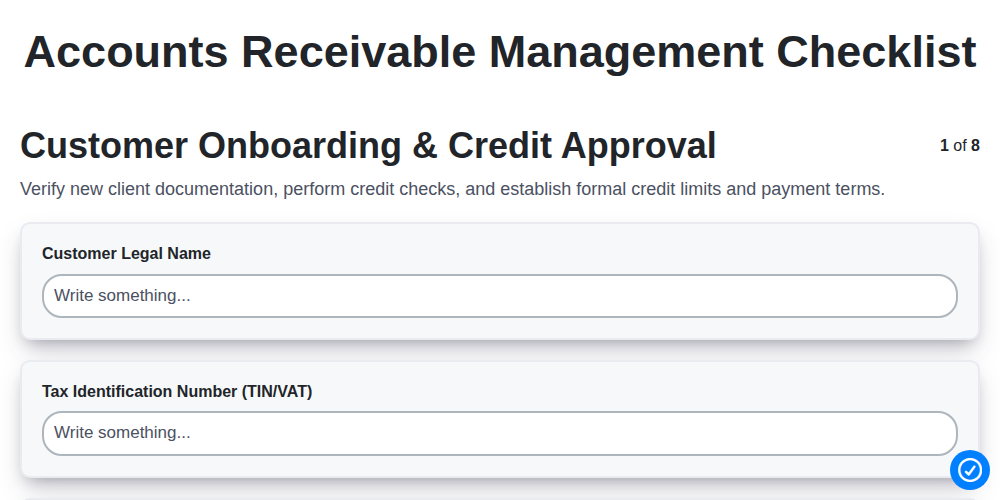
Table of Contents
- Introduction: Why Effective AR Management is the Lifeline of Your Business
- Step 1: Strengthening the Foundation with Customer Onboarding & Credit Approval
- Step 2: Eliminating Errors through Invoicing & Billing Accuracy
- Step 3: Streamlining Payment Processing & Application
- Step 4: Proactive Oversight via Accounts Receivable Monitoring
- Step 5: Establishing Consistent Collections & Follow-up Procedures
- Step 6: Resolving Friction with Dispute & Credit Memo Management
- Step 7: Ensuring Accuracy with Reconciliation & Month-End Closing
- Step 8: Managing Risk with Bad Debt & Write-off Management
- Conclusion: Building a Sustainable Cash Flow Strategy
- Resources & Links
TLDR: Stop struggling with late payments and inconsistent cash flow. This guide provides a comprehensive Accounts Receivable Management Checklist template designed to streamline your entire revenue cycle-from customer onboarding and accurate invoicing to collections and month-end reconciliation. Learn how to implement these essential steps to minimize bad debt, reduce errors, and ensure your business stays financially healthy.
Introduction: Why Effective AR Management is the Lifeline of Your Business
Cash flow is the lifeblood of any thriving enterprise. While top-line revenue and high sales figures often grab the spotlight, the true health of your business is determined by how much of that revenue actually makes it into your bank account. This is where Accounts Receivable (AR) management becomes critical.
At its core, effective AR management is about more than just sending out invoices; it is about optimizing the entire lifecycle of a transaction-from the moment a customer is vetted for credit to the final reconciliation of a payment. When your AR processes are disorganized, you face a dangerous cycle of mounting unpaid invoices, strained vendor relationships, and a tightening cash crunch that can stifle growth or even threaten solvency.
In contrast, a streamlined, proactive approach to receivables ensures predictable cash flow, reduces the risk of bad debt, and fosters stronger, more professional relationships with your clients. By implementing a structured, repeatable process, you transform your finance department from a reactive debt collector into a strategic driver of operational stability. The following checklist is designed to help you audit your current workflows and implement the best practices necessary to protect your bottom line.
Step 1: Strengthening the Foundation with Customer Onboarding & Credit Approval
The journey of a healthy accounts receivable cycle doesn't begin when an invoice is sent; it starts the moment a potential client enters your ecosystem. Effective AR management is proactive rather than reactive, and that proactivity is rooted in a rigorous onboarding and credit approval process.
By implementing a standardized onboarding workflow, you ensure that every new customer is vetted before any goods or services are rendered. This phase serves as your first line of defense against bad debt. A robust credit approval process involves verifying the financial stability of new clients, performing credit checks, and establishing clear, documented credit limits.
When you establish clear payment terms and credit boundaries upfront, you eliminate ambiguity. This prevents the assumption gap where customers believe they have more leeway than they actually do, ultimately reducing the likelihood of payment friction and late fees down the line. Remember, the goal is not to avoid all risk, but to manage it through informed decision-making.
Step 2: Eliminating Errors through Invoicing & Billing Accuracy
The foundation of a healthy cash flow lies in the precision of your initial billing. Even the most efficient collection process cannot compensate for an invoice that is fundamentally flawed. Errors in invoicing do more than just delay payments; they erode customer trust and create unnecessary friction in your professional relationships.
To ensure your billing process supports, rather than hinders, your revenue cycle, focus on these critical areas:
- Verification of Data Accuracy: Before an invoice is dispatched, double-check that quantities, unit prices,- and descriptions align perfectly with the original purchase order or contract. Discrepancies here are the primary cause of payment disputes.
- Complete and Transparent Documentation: An invoice should be self-explanatory. Ensure that all line items are clearly detailed,- tax calculations are explicit, and any applicable discounts or credits are visible. If a customer has to call you to ask what a specific charge represents, the invoice has already failed.
- Precision in Billing Details: Verify that the correct billing address, contact person, and even the specific purchase order (PO) number are present. Many large organizations will automatically reject an invoice simply because a required PO number is missing.
- Timely Dispatch: The clock on your payment terms only starts ticking once the invoice is in the customer's hands. Implementing automated invoicing systems can help ensure that invoices are sent immediately upon delivery of goods or completion of services, minimizing the dead time between work performed and billing initiation.
By prioritizing accuracy at this stage, you significantly reduce the volume of disputes and streamline the entire downstream collection process.
Step 3: Streamlining Payment Processing & Application
Once your invoices are sent out accurately, the next critical stage is the actual movement of funds and the subsequent recording of those payments. Efficiency in payment processing and application is what prevents hidden cash flow bottlenecks. The goal here is to minimize the time between a customer clicking pay and that cash being reflected in your available balance.
To streamline this stage, focus on these three core pillars:
- Diversify Payment Methods: Reduce friction by offering multiple ways to pay. While ACH and wire transfers are standard for B2B, integrating credit card processing and even digital wallets can significantly speed up the collection cycle. The easier you make it for a customer to pay, the faster you will be paid.
- Automate Payment Application: Manual data entry is the enemy of accuracy. When a payment arrives, it should be automatically matched against the corresponding invoice in your accounting software. Manual application is prone to human error, which leads to customers being incorrectly flagged as overdue even when they have paid.
- Maintain a Clean Audit Trail: Every transaction must be documented. Ensure that your process includes a clear record of the payment date, the method used, and the specific invoice numbers covered. This level of detail is indispensable when performing reconciliations later in the month.
By automating the link between receiving funds and updating your ledger, you eliminate the manual workload and ensure your real-time cash position is always an accurate reflection of your business health.
Step 4: Proactive Oversight via Accounts Receivable Monitoring
Monitoring your accounts receivable is the difference between being reactive and being proactive. Instead of waiting for a payment to become overdue, effective monitoring allows you to identify potential cash flow bottlenecks before they impact your bottom line.
To maintain a healthy cash flow, your monitoring process should focus on three key metrics:
- Aging Reports: Regularly review your Accounts Receivable (AR) Aging Report to categorize outstanding invoices by the number of days they have been unpaid (e.g., 0-30, 31-60, 61-90, and 90+ days). This helps you prioritize which customers require immediate attention.
- Days Sales Outstanding (DSO): Track your DSO to measure the average number of days it takes to collect payment after a sale has been made. A rising DSO is a red flag that your collection processes may be slowing down or your credit policies are too lenient.
- Collection Effectiveness Index (CEI): This metric measures how much of your available receivables you actually collected during a specific period. It provides a clearer picture of your team's efficiency in managing the collection lifecycle.
By implementing automated alerts for upcoming due dates and setting up scheduled weekly reviews of your aging buckets, you can ensure that no invoice falls through the cracks and that your working capital remains stable.
Step 5: Establishing Consistent Collections & Follow-up Procedures
Even the most streamlined invoicing process can hit a wall if you don't have a structured approach to following up on overdue payments. Establishing a consistent collections and follow-up procedure is about moving from a reactive wait and see mindset to a proactive, disciplined rhythm. The goal is to maintain steady cash flow without damaging your valued customer relationships.
To build an effective follow-up workflow, implement the following best practices:
- Define a Standardized Timeline: Create a predictable schedule for communication. For example, send a polite friendly reminder three days before a due date, a formal notice on the day it becomes overdue, and increasing levels of urgency (including phone calls) at the 15, 30, and 60-day marks.
- Utilize Multi-Channel Communication: Don't rely solely on email. While email is great for documentation, a well-timed phone call can often resolve a misunderstanding faster than a dozen ignored messages. For long-overdue accounts, a formal letter sent via mail can signal the seriousness of the situation.
- Personalize the Approach: While the process should be standardized, the tone should be professional yet empathetic. Start with the assumption that the oversight was an error rather than intentional non-payment. This preserves the rapport necessary for future business.
- Document Every Interaction: Maintain a detailed log of every email sent, every voicemail left, and every promise to pay made by the client. This paper trail is vital if an account eventually needs to be escalated to a collections agency or legal counsel.
- Offer Flexible Payment Solutions: If a customer is experiencing genuine financial hardship, be prepared to offer a temporary payment plan. It is often better to receive smaller, consistent payments than to face a total default.
By removing the guesswork from your collections process, you ensure that your team knows exactly when to act, reducing the Days Sales Outstanding (DSO) and keeping your cash flow predictable.
Step 6: Resolving Friction with Dispute & Credit Memo Management
Even with the most efficient billing processes, discrepancies are inevitable. Whether it's a disagreement over the quantity of goods received, a discrepancy in pricing, or a service-level issue, unresolved disputes are one of the primary drivers of overdue accounts. If left unaddressed, these disputes can stall the entire payment cycle and damage customer relationships.
Effective management in this stage requires a structured approach to two critical areas:
1. Establishing a Clear Dispute Resolution Workflow
To prevent disputes from falling through the cracks, your team must have a standardized protocol for when a customer flags an invoice. This includes:
- Immediate Documentation: Every dispute should be logged with a specific reason code (e.g., damaged goods, pricing error, or missing documentation).
- Cross-Departmental Communication: A streamlined channel between Sales, Shipping, and Billing is essential to investigate the root cause of the discrepancy quickly.
- Timely Resolution Targets: Set internal KPIs for how long a dispute can remain open before it must be escalated or resolved.
2. Precise Credit Memo Management
When a mistake is identified and a price adjustment is necessary, the issuance of a credit memo must be handled with extreme precision.
- The Paper Trail Requirement: Never issue a credit memo without supporting evidence (such as a return authorization or a corrected quote). This ensures an audit trail that protects your revenue integrity.
- Automatic Linkage: Ensure that credit memos are digitally linked to the original invoice within your ERP or accounting software. This prevents ghost balances where the original invoice appears unpaid because the credit was applied manually or incorrectly.
- Impact Analysis: Regularly review the volume of credit memos being issued. A sudden spike in credits is often a canary in the coal mine signaling deeper systemic issues in your order fulfillment or billing accuracy.
By proactively managing disputes and maintaining strict control over credit memos, you transform a potential point of friction into an opportunity to demonstrate reliability and build long-term trust with your clients.
Step 7: Ensuring Accuracy with Reconciliation & Month-End Closing
The final stage of the accounts receivable cycle is the critical process of reconciliation and month-end closing. This step acts as the ultimate safety net to ensure that your records reflect the true financial reality of your business. Reconciliation involves comparing your internal accounts receivable ledgers against your general ledger and bank statements to ensure every penny recorded is actually accounted for.
A successful month-end close requires a systematic review to identify discrepancies, such as unapplied payments, timing differences, or data entry errors. By performing this deep dive monthly, you prevent small errors from compounding into massive discrepancies that can derail your financial reporting. Effective reconciliation ensures that your aging reports are reliable, your cash flow projections are accurate, and your financial statements are prepared with the integrity required for informed decision-making and tax compliance.
Step 8: Managing Risk with Bad Debt & Write-off Management
Despite the best efforts in credit approval and proactive collections, even the most robust Accounts Receivable processes will occasionally encounter uncollectible accounts. The final stage of your checklist involves defining a clear, consistent strategy for handling bad debt and managing the write-off process.
Managing this stage effectively requires two distinct actions:
- Establishing a Write-Off Policy: Do not make decisions about bad debt on a case-by-case basis driven by emotion. Instead, create a formal policy that dictates exactly when an account is deemed uncollectible (e.g., after 120 days of inactivity or after all collection legal remedies have been exhausted). This ensures consistency for your accounting records and prevents bias in your financial reporting.
- Standardizing the Write-Off Procedure: When an account is officially deemed uncollectible, follow a standardized workflow. This includes updating your sub-ledger, notifying relevant stakeholders (such as Sales and Management), and ensuring the entry is recorded correctly in your general ledger to maintain an accurate tax position.
By formalizing these procedures, you transform a potentially chaotic financial loss into a predictable, manageable part of your business operations, ensuring your balance sheet remains a true reflection of your company's health.
Conclusion: Building a Sustainable Cash Flow Strategy
Mastering your Accounts Receivable is not just about chasing unpaid invoices; it is about building a proactive, structured system that protects your company's liquidity. By implementing this checklist, you transition from a reactive state of firefighting late payments to a proactive strategy of predictable cash flow.
A disciplined approach to AR-from the moment a customer is onboarded to the final month-end reconciliation-minimizes errors, reduces the risk of bad debt, and strengthens your professional relationships with clients. Remember, consistency is the key to success. Regularly auditing your processes and refining your collection procedures will ensure that your business remains resilient, even during economic fluctuations. Start implementing these steps today to secure the financial foundation your business needs to grow.
Resources & Links
- Investopedia: Accounts Receivable Guide: A deep dive into the fundamentals of accounting principles and how accounts receivable impacts a company's balance sheet.
- Forbes Advisor: Small Business Finance: Expert insights and articles on managing business cash flow and maintaining healthy working capital.
- Accounting Today: Industry news and professional resources for managing complex financial processes and credit management strategies.
- SCORE: Small Business Mentorship: Resources and templates for small business owners to improve operational efficiency and financial management.
- NetSuite: Accounts Receivable Management: Information on automating invoicing, payment processing, and streamlining the order-to-cash lifecycle.
Frequently Asked Questions
What is accounts receivable management?
Accounts receivable management is the process of monitoring and optimizing the money owed to your business by customers to ensure timely payments and maintain healthy liquid cash flow.
Why is a checklist important for managing cash flow?
A checklist provides a structured, repeatable process that helps prevent missed invoices, reduces late payments, and ensures that no step in the collection cycle is overlooked, ultimately stabilizing your business's cash flow.
What are the key components included in this checklist template?
The template includes essential steps such as establishing credit policies, timely invoicing, automated payment reminders, monitoring aging reports, and standardized follow-up procedures for overdue accounts.
How can I reduce my Days Sales Outstanding (DSO)?
You can reduce DSO by implementing stricter credit terms, sending invoices immediately after service delivery, offering early payment discounts, and using automated reminders to prompt quicker customer responses.
How often should I review my accounts receivable aging report?
It is recommended to review your aging report at least once a week to identify overdue accounts early and take immediate action before they become uncollectible.
Comments
There are no comments yet. Be the first to add one!
Accounting Management Solution Demo
Move beyond rigid, one-size-fits-all software. Leverage a fully programmable accounting environment designed to adapt to your unique workflows, complex hierarchies, and evolving business logic.
Related Articles
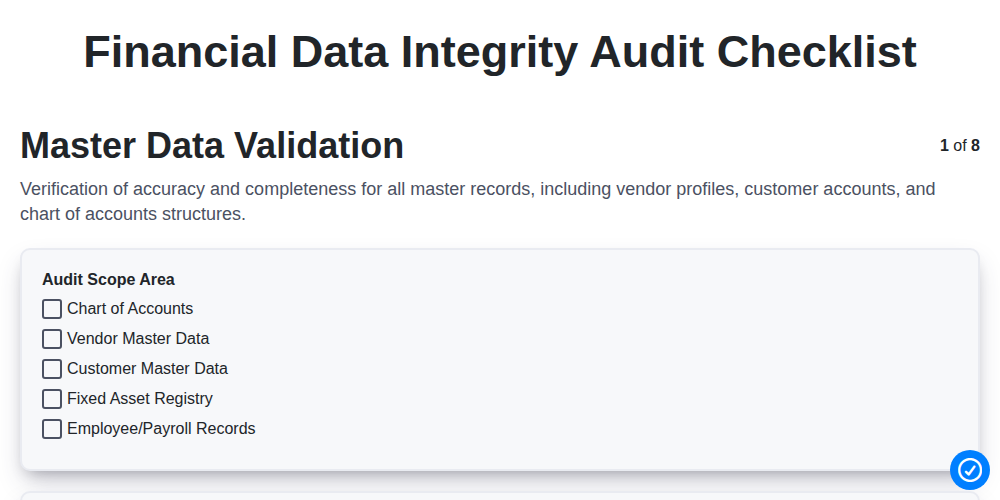
The Ultimate Financial Data Integrity Audit Checklist: A Step-by-Step Template for Precision and Compliance
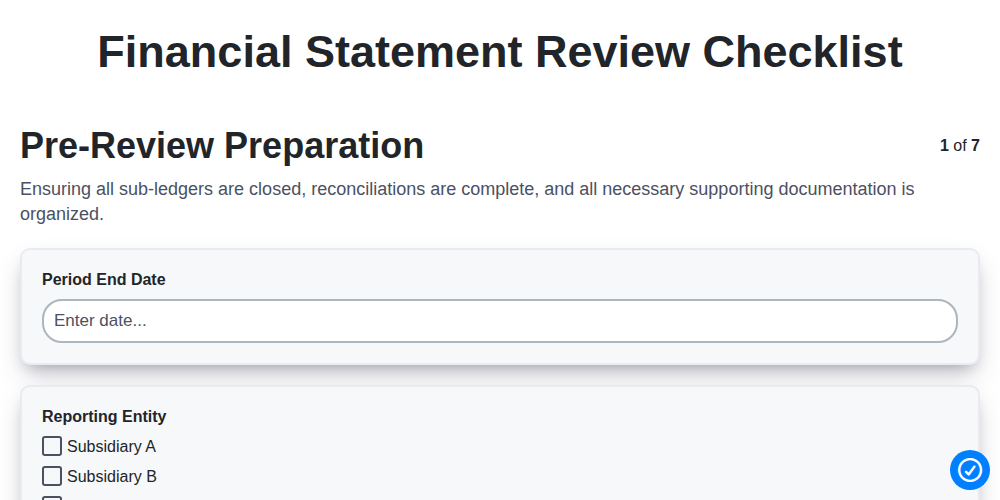
The Ultimate Financial Statement Review Checklist: A Step-by-Step Guide to Ensuring Accuracy and Compliance
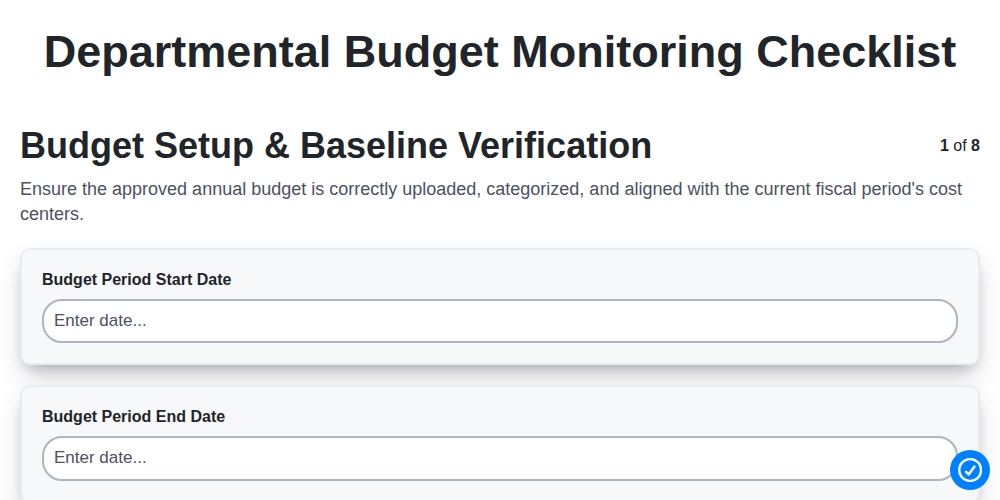
Mastering Financial Control: The Ultimate Departmental Budget Monitoring Checklist
The Ultimate Accounts Receivable Collections Checklist: A Step-by-Step Guide to Streamlining Your Cash Flow
The Ultimate Payroll Processing & Compliance Checklist: A Step-by-Step Guide to Error-Free Payroll
The Ultimate Year-End Audit Preparation Checklist: A Step-by-Step Guide to a Stress-Free Audit
The Ultimate Software Implementation Checklist for Accounting Teams: A Step-by-Step Guide to a Seamless Transition
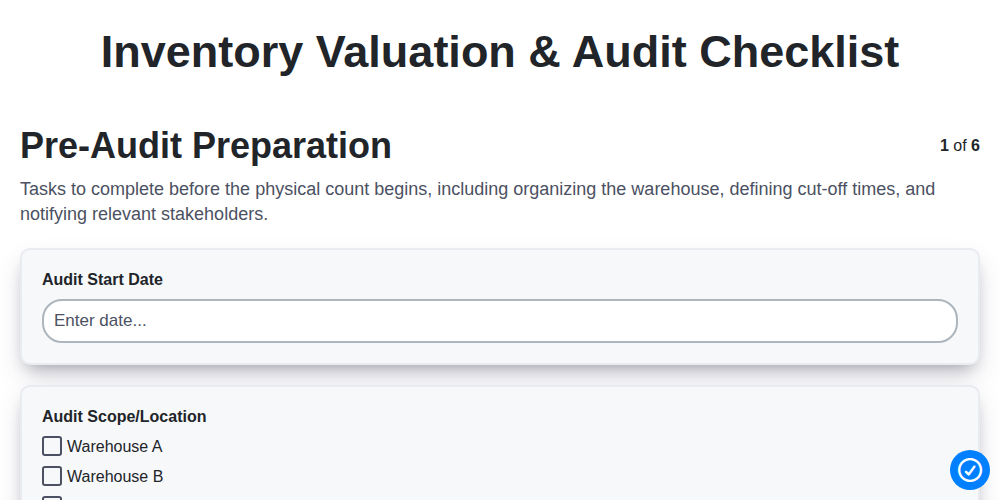
The Ultimate Inventory Valuation & Audit Checklist: A Step-by-Step Guide to Accuracy and Compliance
We can do it Together
Need help with
Accounting Management?
Have a question? We're here to help. Please submit your inquiry, and we'll respond promptly.