Aerospace BOM Revision Control: Your Checklist for Success
Published: 12/10/2025 10:00 PM Updated: 12/14/2025 7:57 AM
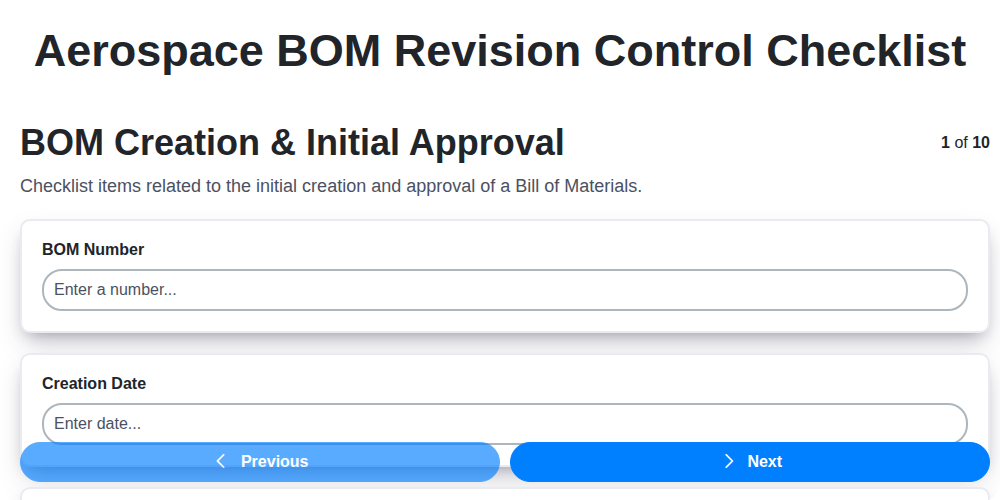
Table of Contents
- Introduction: Why BOM Revision Control is Critical in Aerospace
- 1. BOM Creation & Initial Approval: Laying the Foundation
- 2. Revision Management: Establishing a Clear History
- 3. Engineering Change Order (ECO) Integration: A Seamless Workflow
- 4. Part Number & Description Accuracy: Eliminating Ambiguity
- 5. Quantity and Unit of Measure Verification: Preventing Costly Errors
- 6. Supplier & Lead Time Validation: Ensuring Availability
- 7. Regulatory Compliance & Traceability: Meeting Stringent Requirements
- 8. BOM Distribution & Access Control: Managing Confidentiality
- 9. Data Integrity & Audit Trail: Maintaining Accountability
- 10. BOM Freeze & Release: Controlling Changes
- 11. Automation Opportunities for BOM Revision Control
- 12. Common Pitfalls and How to Avoid Them
- Conclusion: Achieving BOM Excellence
- Resources & Links
TLDR: Managing aerospace Bills of Materials (BOMs) is critical for safety and compliance. This checklist ensures your BOMs are accurate, controlled, and traceable through creation, revisions, ECO integration, supplier validation, and release. It minimizes errors, streamlines workflows, and helps you meet regulatory requirements - saving time, money, and potential headaches.
Introduction: Why BOM Revision Control is Critical in Aerospace
In aerospace, where precision and safety are paramount, the Bill of Materials (BOM) isn't just a list - it's the foundational document underpinning every aircraft, satellite, or component. A single error or undocumented change in a BOM can have catastrophic consequences, impacting everything from manufacturing efficiency and cost to airworthiness and, ultimately, passenger safety. This isn't hyperbole; the complexity of aerospace systems demands meticulous management of BOM revisions. Without robust control, you risk mis-manufactured parts, delayed deliveries, increased costs, and even regulatory non-compliance. This blog post will delve into a comprehensive checklist to ensure your aerospace BOM revisions are handled with the rigor and precision they require. Let's explore why establishing and maintaining strict BOM revision control is not just a best practice, but a vital necessity for aerospace success.
1. BOM Creation & Initial Approval: Laying the Foundation
The Bill of Materials (BOM) is the backbone of aerospace manufacturing, and its creation requires meticulous attention to detail. This initial phase isn't just about listing parts; it's about establishing a single, reliable source of truth. Before any production or modification begins, a robust process for BOM creation and initial approval is critical.
Here's what should be included:
- Defined Scope: Clearly outline what the BOM encompasses - which aircraft, system, or component it applies to. Ambiguity here leads to errors down the line.
- Engineering Input: Involve design engineers from the outset. They possess the intimate knowledge of the parts, their interactions, and any specific considerations.
- Part Identification & Sourcing: Properly identify each component with its manufacturer's part number (MPN) and any associated industry standard part numbers (like NAS or MS). Document the initial sourcing information.
- Detailed Specifications: Beyond the part number, include detailed specifications - material, dimensions, performance characteristics - to avoid ambiguity and ensure the correct part is used. Reference relevant engineering drawings and specifications.
- Formal Review & Approval: Establish a formal review process involving cross-functional teams (engineering, procurement, quality). Document the reviewers and their approvals. A signed and dated approval is mandatory.
- Baseline Establishment: The initial BOM becomes the baseline. This is the starting point for all subsequent revisions and changes. Clearly mark it as 'Baseline' or 'Original Release'.
2. Revision Management: Establishing a Clear History
A robust Bill of Materials (BOM) isn't just about the data itself; it's about how that data changes over time. Effective revision management is critical in aerospace, where even minor modifications can have significant implications for safety, performance, and regulatory compliance. Without a structured approach, tracking changes becomes a chaotic and error-prone nightmare.
Here's what needs to be established for a reliable revision management system:
- Unique Revision Numbers: Implement a clear and consistent numbering system (e.g., A, B, C; or numerical sequences) for each BOM revision. Avoid arbitrary or overlapping numbers.
- Date-Based Revisioning: Link each revision number to a specific date. This provides a definitive timeline for changes.
- Detailed Change Logs: Require comprehensive change logs for every revision. These logs should detail:
- What changed (specific part numbers, descriptions, quantities, etc.)
- Why the change was made (the reason for the modification)
- Who authorized the change (name and title of the approver)
- Date of the change
- Revision History Preservation: Never delete previous BOM revisions. Archive them securely. This provides a vital audit trail and allows for rollback to prior states if necessary.
- Automated Tracking (Ideal): Whenever possible, automate revision tracking within your PLM or ERP system. This reduces manual errors and ensures a complete record.
- User Training: Ensure all personnel involved in BOM creation and modification are properly trained on the revision management process.
By diligently managing BOM revisions, you create a transparent and auditable record of changes, crucial for maintaining quality, minimizing risks, and ensuring regulatory compliance within the aerospace industry.
3. Engineering Change Order (ECO) Integration: A Seamless Workflow
The aerospace industry thrives on meticulous change management. Engineering Change Orders (ECOs) are the backbone of this process, dictating how modifications to designs, materials, and manufacturing processes are implemented. A robust Bill of Materials (BOM) system must seamlessly integrate with your ECO process - anything less is a recipe for errors, delays, and potential safety issues.
This integration isn't just about updating the BOM after an ECO is approved. It's about a synchronized workflow. Ideally, the BOM system should facilitate the ECO process, not just react to it. Here's what a successful integration looks like:
- ECO Triggering: The BOM system should allow users to initiate ECOs directly from the BOM record. This captures the initial observation and ensures all relevant BOM information is readily available during the review process.
- Automated Notifications: When an ECO is submitted or approved, the BOM system should automatically notify affected stakeholders - engineers, procurement, manufacturing, and quality - ensuring everyone is informed of the change.
- Impact Assessment: The system should ideally highlight which BOM items are impacted by a proposed ECO. This allows engineers to assess the potential consequences of the change and identify dependencies.
- Revision Linking: ECO records should be directly linked to the corresponding BOM revisions they impact. This creates a clear audit trail and simplifies the tracking of changes.
- Automated BOM Updates: Upon ECO approval, the BOM should automatically update to reflect the changes, minimizing manual intervention and reducing the risk of human error.
- Approval Workflow Integration: The BOM system should align with your existing ECO approval workflows, ensuring changes are properly reviewed and authorized before implementation.
By establishing this tight integration, you transform your BOM from a static document into a dynamic, responsive tool that actively supports your engineering change management process, improving efficiency and significantly reducing the risk of costly mistakes.
4. Part Number & Description Accuracy: Eliminating Ambiguity
In aerospace, ambiguity is a luxury you simply can't afford. A misplaced decimal point in a part number, or a vague description, can lead to incorrect components being installed, impacting safety, performance, and ultimately, cost. This section of the BOM revision control checklist focuses squarely on eliminating that ambiguity.
It's not enough to just have part numbers and descriptions; they need to be consistently accurate and understandable across all stakeholders - engineers, procurement, manufacturing, and quality assurance. This requires a multi-faceted approach:
- Standardized Naming Conventions: Implement clear and consistent naming conventions for part numbers. These should follow industry best practices (like SAE AS9142) and be documented and enforced. This minimizes the risk of misinterpretation and facilitates easy identification.
- Detailed Descriptions: Descriptions shouldn't just state what a part is, but also why it's used and critical specifications. Include material, finish, dimensions, and any relevant performance characteristics.
- Cross-Referencing: Where applicable, include manufacturer part numbers alongside internal part numbers for ease of communication and sourcing.
- Regular Audits & Verification: Periodically review part numbers and descriptions against supplier documentation and physical samples to ensure accuracy. This is especially crucial when sourcing from new or non-traditional suppliers.
- Single Source of Truth: Ensure all part number and description data originates from and is maintained in a central, controlled database - preventing conflicting information from different sources.
Ultimately, meticulous attention to part number and description accuracy is a foundational element of a robust BOM revision control system, contributing directly to safety, efficiency, and regulatory compliance.
5. Quantity and Unit of Measure Verification: Preventing Costly Errors
In aerospace, even seemingly minor discrepancies in a Bill of Materials (BOM) can lead to significant financial repercussions, schedule delays, and even safety concerns. One area particularly prone to these issues is the accuracy of quantities and units of measure. Imagine ordering 1000 instead of 10, or specifying meters when inches were intended - the consequences can be devastating.
This step of the BOM revision control process goes beyond simply noting the quantity; it demands meticulous verification. Here's what's involved:
- Review Against Engineering Drawings & Specifications: The listed quantity of each part must directly correlate to what's indicated on the corresponding engineering drawings and specifications. Discrepancies are red flags demanding immediate investigation.
- Verify Unit of Measure Consistency: Ensure that the unit of measure (e.g., each, meters, kilograms, gallons) is consistent across the BOM and the associated engineering documents. A common error is a simple typo leading to a misinterpretation.
- Consider Assembly Requirements: Account for any assembly processes that may require multiple parts to create a single finished product. Ensure the BOM quantities reflect these requirements accurately.
- Cross-Reference with Procurement Data: Compare BOM quantities to historical procurement data to identify potential anomalies or trends that might indicate an error.
- Automated Checks: Implement automated checks within your BOM management system to flag discrepancies in quantity and unit of measure based on pre-defined rules and tolerance levels.
Failing to rigorously verify quantities and units of measure introduces unnecessary risk. This verification step protects against overspending, minimizes material waste, and ultimately contributes to a more efficient and reliable aerospace supply chain.
6. Supplier & Lead Time Validation: Ensuring Availability
A meticulously crafted BOM is useless if the parts aren't available when needed. Supplier & Lead Time Validation is a critical step often overlooked, yet vital for avoiding production delays and cost overruns. This isn't just about listing suppliers; it's a robust process ensuring their capacity, responsiveness, and reliability.
Here's what should be included:
- Supplier Assessment: Regularly review supplier performance based on quality, on-time delivery, and cost. Conduct periodic audits if necessary.
- Lead Time Verification: Confirm lead times with suppliers, taking into account potential fluctuations due to demand or supply chain disruptions. Don't rely solely on initial quotes; validate regularly.
- Capacity Planning: Assess supplier capacity to meet projected demand for each part. Identify potential bottlenecks and work with suppliers to mitigate risks.
- Alternative Sourcing: Establish approved alternative suppliers for critical components. This provides a backup plan in case of issues with the primary supplier.
- Inventory Buffer Analysis: Determine appropriate inventory buffer levels based on lead times, demand variability, and supplier reliability.
- Communication & Collaboration: Maintain open communication channels with suppliers to proactively address potential issues and ensure alignment on expectations.
- Lead Time Updates in BOM: Ensure any changes to lead times are immediately reflected within the BOM itself to provide accurate planning information to production. This requires a feedback loop to keep the BOM data current.
7. Regulatory Compliance & Traceability: Meeting Stringent Requirements
The aerospace industry operates under a rigorous regulatory landscape. Maintaining meticulous records and demonstrating full traceability within your Bill of Materials (BOM) isn't just best practice; it's a legal and safety imperative. This section focuses on ensuring your BOM supports and documents adherence to relevant regulations.
Understanding the Landscape: Regulations like REACH, RoHS, FAA regulations (particularly those pertaining to Part 21), and country-specific import/export controls all have a direct impact on the materials and components used in aerospace manufacturing. Your BOM must reflect these requirements.
Key Checklist Actions:
- Material Declarations: Each component listed in the BOM should have a readily available Material Declaration (RoHS, REACH, etc.). These declarations should be current and from the supplier.
- Traceability Records: Implement a system for tracking material origins and processing steps. This includes supplier certifications, batch numbers, and any modifications made to components.
- Compliance Documentation: Maintain comprehensive records of all compliance assessments, audits, and certifications related to the BOM.
- Regulatory Updates: Establish a process for monitoring and incorporating changes to regulatory requirements. This includes automatic updates and notifications when regulations change.
- Auditing Capabilities: Ensure your BOM system can generate reports and data that facilitate audits by regulatory bodies.
- Conflict Minerals Reporting: Comply with conflict minerals reporting requirements (e.g., Dodd-Frank Act) and document due diligence efforts within your BOM data.
- Unique Identification: Consider implementing unique identification methods (e.g., serial numbers, barcodes) for key components to facilitate tracking and traceability throughout the supply chain.
Failing to address regulatory compliance and traceability can lead to costly recalls, production delays, and, most importantly, compromise safety. Your BOM is a critical tool for demonstrating compliance - treat it accordingly.
8. BOM Distribution & Access Control: Managing Confidentiality
The Bill of Materials (BOM) is a treasure trove of proprietary information - design specifics, supplier details, costs, and more. Controlling who can access and modify it is paramount in the aerospace industry, where intellectual property and safety are critical. A robust BOM distribution and access control system prevents unauthorized changes, minimizes the risk of leaks, and maintains data integrity.
Here's what a solid approach looks like:
- Role-Based Access: Implement granular permissions based on job function. Engineering might have full edit access, procurement might view supplier details, manufacturing might only see assembly instructions, and leadership might have overview access.
- Secure Platform: Utilize a BOM management system with built-in security features - password protection, multi-factor authentication, and encryption - to safeguard data at rest and in transit. Avoid relying solely on shared spreadsheets.
- Watermarking and Versioning: Watermark BOM documents with user identification and timestamps to trace usage and modifications. Clearly label version numbers and ensure all users are working with the correct version.
- Controlled Distribution: Establish a process for distributing BOMs. Limit distribution to those who absolutely require it. Consider utilizing secure portals or encrypted file transfer protocols.
- Regular Audits: Periodically review access permissions and audit access logs to identify potential vulnerabilities or unauthorized access.
- Training and Awareness: Ensure all users understand their responsibilities regarding data security and proper handling of the BOM.
A well-defined and consistently enforced distribution and access control policy isn't just about security; it's a cornerstone of your overall BOM management process.
9. Data Integrity & Audit Trail: Maintaining Accountability
In aerospace, a single error in a Bill of Materials (BOM) can have catastrophic consequences. That's why a robust data integrity and audit trail isn't just a "nice-to-have" - it's a critical necessity. This section focuses on ensuring the BOM data remains accurate and verifiable throughout its lifecycle.
What Does a Good Audit Trail Look Like?
A comprehensive audit trail should capture who made what changes, when they made them, and why. This goes beyond simple version control; it's about understanding the context behind each revision. Key elements include:
- User Identification: Every change must be tied to a specific user account. Anonymous edits are unacceptable.
- Timestamping: Each modification needs a clear timestamp, allowing for chronological tracking.
- Change Description: Requiring users to provide a brief explanation for each change adds vital context. Was it a correction, an engineering modification, or a supplier update?
- Version History: The system should automatically track all versions of the BOM, enabling easy rollback to previous states if needed.
- Approval Records: Documenting who approved each revision is vital for accountability.
- System Log Analysis: Implement robust logging to track system access, user activity, and potential data access anomalies.
Why is Traceability Essential?
- Regulatory Compliance: Aerospace regulations (like AS9145) mandate traceability for all engineering changes. A clear audit trail is your proof of compliance.
- Problem Solving: When issues arise (quality defects, non-conformances), a detailed audit trail allows engineers to quickly pinpoint the origin of the error and implement corrective actions.
- Continuous Improvement: Analyzing trends in the audit trail can reveal areas for process improvement, such as training gaps or system usability issues.
- Liability Protection: In the event of an incident, a comprehensive audit trail provides a documented history, crucial for investigations and liability mitigation.
Beyond Basic Tracking: Invest in a BOM management system that automates audit trail creation and reporting. Regularly review audit trails to identify and address any anomalies or gaps in the process.
10. BOM Freeze & Release: Controlling Changes
The final stage in a robust BOM management process is the controlled freeze and release. This isn't simply a technical procedure; it's a critical gatekeeper ensuring that only validated and approved BOMs are used for production.
What is a BOM Freeze?
A BOM freeze period is a designated timeframe during which the BOM is locked down and no further changes are permitted. This is typically implemented before manufacturing begins or at specific milestones in a project. The purpose is to establish a stable baseline for production, reducing the risk of errors and inconsistencies stemming from late-stage modifications.
Release Criteria & Authorization:
Before a BOM is released, specific criteria must be met and documented. These typically include:
- All ECOs are fully integrated and approved: Any outstanding Engineering Change Orders must be fully incorporated and verified.
- Complete Verification: Thorough review of all data fields (part numbers, quantities, supplier information, etc.) ensuring accuracy and alignment with design intent.
- Design Validation: Confirmation that the design and BOM collectively meet all performance and regulatory requirements.
- Authorized Sign-Off: Formal authorization from designated personnel (e.g., Engineering Manager, Production Manager) to release the BOM.
Release Procedure:
The release process itself should be clearly defined and documented. It includes:
- Formal Announcement: Communication to all relevant stakeholders (manufacturing, procurement, quality) regarding the release of the BOM.
- Version Control: Clear marking of the released BOM version.
- Distribution: Controlled distribution to authorized users and systems.
- Documentation: Records of who released the BOM, when, and under what conditions.
Post-Release Monitoring:
Even after release, continuous monitoring is important. Any issues arising during production related to the BOM need to be investigated and addressed through a controlled change management process. This helps identify areas for improvement in the BOM creation and revision control system. Failing to maintain this disciplined approach risks costly rework and potential safety or compliance issues.
11. Automation Opportunities for BOM Revision Control
Manual BOM revision control is a breeding ground for errors, delays, and frustration. Thankfully, technology offers solutions to streamline the process and minimize those pitfalls. Let's explore some key automation opportunities:
1. Automated Workflow Routing: Implementing a digital BOM system allows you to define automated workflows. When a change is proposed (triggering an ECO), the system can automatically route it to the appropriate engineers, managers, and suppliers for review and approval, eliminating manual email chains and delays.
2. Real-time Data Synchronization: Integrate your BOM system with other enterprise systems - ERP, PLM, MES - to ensure data consistency. Automatic synchronization minimizes discrepancies between departments and across the product lifecycle. This is especially crucial for accurate costing and inventory management.
3. ECO Management Automation: Automate the creation, routing, and tracking of Engineering Change Orders. Systems can generate ECOs directly from BOM revisions, link changes to relevant documentation, and track approval status in real-time.
4. Automated Part Number & Description Validation: Integrate with component databases to automatically validate part numbers and descriptions during BOM updates. This reduces the risk of using obsolete or incorrect components. Consider implementing rule-based validation checks for format and required fields.
5. Automated Reporting and Notifications: Generate automated reports on BOM revision history, change status, and compliance. Configure notifications to alert stakeholders to critical updates and potential issues.
6. Digital Signatures & Electronic Approvals: Replace paper-based approvals with digital signatures within the BOM system. This improves efficiency, enhances security, and simplifies audit trails.
7. Rule-Based Validation: Define rules within the BOM system to automatically flag potential errors or inconsistencies. For example, a rule could ensure that a specific part cannot be changed without prior approval from a designated engineer.
8. Integration with Supplier Portals: Connect your BOM system with supplier portals to share updated BOM data and facilitate collaborative design and procurement processes.
9. AI-Powered Error Detection: Explore AI-powered solutions that can analyze BOM data and identify anomalies or potential errors that might be missed by human review.
10. Version Control with Git-like Functionality: Some advanced BOM systems are incorporating Git-like branching and merging capabilities to manage complex BOM changes and ensure traceability.
11. Robotic Process Automation (RPA): Use RPA to automate repetitive tasks like data entry, report generation, and data migration between systems, freeing up human resources for more strategic activities.
By strategically implementing these automation opportunities, aerospace companies can significantly improve the accuracy, efficiency, and reliability of their BOM revision control processes, ultimately leading to reduced costs, faster time-to-market, and improved product quality.
12. Common Pitfalls and How to Avoid Them
Even with a robust Aerospace BOM Revision Control Checklist in place, challenges can arise. Here's a breakdown of common pitfalls and practical advice to steer clear of them:
1. Siloed BOMs & Lack of Communication: Too often, BOMs exist in separate spreadsheets or systems used by different teams (Engineering, Procurement, Manufacturing). This leads to conflicting data and delays. Solution: Implement a centralized, integrated BOM management system accessible to all stakeholders. Foster regular communication and cross-functional collaboration.
2. Insufficient Training: Users not properly trained on the BOM system and revision control procedures are a recipe for errors. Solution: Provide comprehensive training on all aspects of BOM management, including revision history, ECO processes, and data entry best practices. Reinforce training periodically.
3. Overlooking Minor Changes: Teams sometimes dismiss seemingly insignificant changes as not warranting a revision. This can accumulate into larger, critical issues down the line. Solution: Establish clear guidelines defining what constitutes a change requiring a revision. Err on the side of caution - even small alterations should be documented.
4. Confusing ECO Process: A poorly defined or bypassed ECO process creates chaos. Changes are implemented without proper review or authorization, jeopardizing safety and compliance. Solution: Formalize the ECO process, outlining clear steps for submission, review, approval, and implementation. Ensure all changes flow through the ECO process.
5. Neglecting Part Number Standardization: Inconsistent or non-standard part numbering makes searching, tracking, and identifying components a nightmare. Solution: Enforce strict part numbering conventions. Use a centralized part library and avoid free-form part descriptions.
6. Ignoring Supplier Feedback: Suppliers often have critical information about material availability, lead times, and potential substitutions. Failing to incorporate this input can lead to procurement delays and supply chain disruptions. Solution: Establish a feedback loop with suppliers and actively solicit their input on BOM accuracy and feasibility.
7. Weak Audit Trails: Without a clear audit trail, tracing the origin of errors or understanding the history of a particular BOM revision is impossible. Solution: Utilize a BOM system with robust audit trail capabilities, logging all changes, users, and timestamps.
8. Lack of Validation After Release: Releasing a BOM without thorough validation can lead to costly rework and production delays. Solution: Implement a verification process that validates the released BOM against design documentation, manufacturing plans, and quality requirements.
9. Over-Reliance on Manual Processes: Excessive manual data entry and approval workflows increase the risk of human error and slow down the revision process. Solution: Automate as many processes as possible, such as data validation, approval workflows, and reporting.
10. Failing to Account for Configuration Items: Aerospace BOMs often control more than just parts; they encompass assemblies, sub-assemblies, and even software. Solution: Ensure your BOM scope is comprehensive and includes all relevant configuration items.
11. Not Regularly Reviewing and Updating the Checklist: Aerospace regulations and internal processes evolve. A static checklist becomes obsolete. Solution: Schedule regular reviews of your BOM Revision Control Checklist (at least annually, or more frequently if changes occur) to ensure it remains accurate and effective.
12. Treating the BOM as a Static Document: The BOM is a living document that needs to be updated as designs evolve and new information becomes available. Solution: Foster a culture that embraces continuous improvement and encourages proactive BOM maintenance.
Conclusion: Achieving BOM Excellence
Mastering the Aerospace BOM Revision Control Checklist isn't just about ticking boxes; it's about cultivating a culture of precision and accountability. By diligently following each step - from initial creation and approval to freeze and release - aerospace manufacturers can significantly reduce errors, improve efficiency, and enhance overall product quality. Remember, a robust BOM isn't a static document but a living, breathing reflection of your product's evolution. Continuous improvement, regular audits, and proactive adaptation to industry changes are key to achieving BOM excellence and maintaining a competitive edge in the demanding aerospace landscape. Embrace the checklist as a guide, refine it with your own best practices, and prioritize data integrity - the future of your aerospace program depends on it.
Resources & Links
- SAE International: SAE International develops standards for aerospace engineering, including those related to product lifecycle management and configuration management. Crucial for understanding industry best practices and relevant specifications. Focus on their ARP (Aerospace Recommended Practice) series for configuration management guidance.
- ISO (International Organization for Standardization): ISO standards, particularly ISO 9001 (Quality Management) and ISO 9000 (Quality management systems - Fundamentals and vocabulary), provide a framework for documented processes, essential for BOM revision control. Look for details on document control and change management.
- NIST (National Institute of Standards and Technology): NIST provides resources on measurement science, standards, and technology, which can inform your approach to data integrity and traceability within your BOM system. They also frequently publish guidance on cybersecurity - relevant for protecting sensitive BOM data.
- ASQ (American Society for Quality): ASQ provides training, certification, and resources on quality management principles, including change management and process control - key elements of BOM revision control. Their publications often cover best practices for managing technical documentation.
- FDA (U.S. Food and Drug Administration): While focused on medical devices, FDA regulations (particularly 21 CFR Part 11) provide valuable insight into electronic record-keeping and audit trails, highly relevant for aerospace BOM management, especially if your aerospace component integrates with medical applications.
- Business Information Architecture (BIA): BIA offers specialized PLM and BOM training, webinars, and consulting services. They are experts in how to best manage product data, including the BOM, and provide practical guidance on data governance.
- PTC: PTC offers PLM software solutions (Windchill) that provide comprehensive BOM management capabilities, including revision control, ECO integration, and data traceability. Their website offers case studies and resources on implementing PLM systems.
- Dassault Systèmes: Dassault Systèmes (ENOVIA) provides PLM solutions with robust BOM management features, including revision control and ECO workflows. Their website provides resources on digital twins and product lifecycle management.
- Oracle: Oracle offers PLM solutions (Oracle PLM) with BOM management and revision control features. Their website offers white papers and customer stories demonstrating implementation.
- Aerospace Standards: This website serves as a compilation of various aerospace standards and specifications. A quick reference for ensuring compliance in your BOM practices.
- Tech Clarity: Tech Clarity specializes in PLM and BOM consulting and offers various resources, including articles, webinars, and guides on best practices in BOM management and revision control.
Frequently Asked Questions
What is an Aerospace BOM (Bill of Materials)?
In aerospace, a BOM is a comprehensive list of raw materials, parts, assemblies, and subassemblies required to manufacture an aircraft or spacecraft component. It details quantity, part numbers, supplier information, and other crucial specifications, ensuring consistent build quality and traceability - critical for regulatory compliance and safety.
Why is revision control so important for Aerospace BOMs?
Aerospace BOMs are subject to frequent changes due to design modifications, supplier updates, regulatory changes, and engineering corrections. Without robust revision control, discrepancies between BOM versions can lead to errors in manufacturing, impacting safety, increasing costs, and causing significant delays. It's a legal and regulatory requirement to maintain accurate records of all changes.
What are the key challenges in Aerospace BOM revision control?
Common challenges include managing a large number of parts, dealing with complex hierarchical structures, coordinating changes across multiple departments and suppliers, maintaining traceability of changes, ensuring compliance with strict aerospace standards (e.g., AS9102), and preventing unauthorized modifications.
What's AS9102 and how does it relate to BOM revision control?
AS9102 is a widely adopted standard (now superseded by AS9145) for Configuration Management. While AS9145 is now the current standard, understanding the principles of AS9102 remains important. It outlines the requirements for establishing and maintaining a configuration management system, which includes rigorous BOM revision control procedures - ensuring consistency and traceability throughout the product lifecycle.
What's the difference between a controlled BOM and an uncontrolled BOM?
A controlled BOM is a version that's officially approved, distributed, and actively managed. It's the definitive source for manufacturing. An uncontrolled BOM is an unapproved version that hasn't been formally released, making it unsuitable for production and potentially leading to errors.
What are some essential steps in creating a checklist for Aerospace BOM revision control?
A good checklist should include: defining clear roles and responsibilities, establishing a standardized numbering system for revisions, implementing an approval workflow, integrating with ERP/PDM systems, conducting regular audits, and providing comprehensive training for all users.
What types of systems or tools can help with Aerospace BOM revision control?
Popular options include Product Data Management (PDM) systems, Enterprise Resource Planning (ERP) systems with BOM management capabilities, and specialized configuration management software. These tools often provide features like version control, workflow automation, change tracking, and reporting.
How do I ensure traceability of changes made to my Aerospace BOM?
Traceability is achieved by documenting *who* made the change, *when* it was made, *what* was changed, and *why* the change was necessary. Change orders, engineering change notices (ECNs), and associated approvals are critical components of this process. A robust system links changes back to their original request and justification.
What role do suppliers play in Aerospace BOM revision control?
Suppliers need to be integrated into the revision control process. They need to receive and acknowledge changes, provide updated part data, and adhere to the approved BOM versions. Secure communication channels and standardized data exchange protocols are essential for successful supplier collaboration.
What are some common red flags indicating a BOM revision control problem?
Red flags include discrepancies between drawings and BOMs, difficulty locating the correct BOM version, frequent errors in manufacturing due to BOM inaccuracies, lack of change order documentation, and a general lack of confidence in the BOM's accuracy.
How often should I audit my Aerospace BOM revision control process?
Audits should be conducted regularly, at least annually, and more frequently if significant changes are being implemented or if issues are identified. The frequency should be based on a risk assessment and compliance requirements.
Found this Article helpful?
Comments
There are no comments yet. Be the first to add one!
BOM - Bill of Materials Management Solution Demo
Struggling with inaccurate BOMs & costly errors? ChecklistGuro provides a centralized BOM Management solution, connecting your design, engineering, & manufacturing teams for improved collaboration and control. Simplify operations & boost efficiency.
Related Articles
The Ultimate Logistics BOM Packaging Checklist: Ensuring Safe & Efficient Shipments
Mastering Leather Manufacturing: Your Tannery BOM & Compliance Checklist
Mastering Your BOM: A Comprehensive Checklist Template for Success
Ensuring Success: Your Oil & Gas BOM Component Approval Checklist Guide
Navigating Medical Device BOM Regulatory Compliance: Your Essential Checklist
The Ultimate Retail BOM Product Definition Checklist: A Step-by-Step Guide
Ensuring Quality: Your Rubber Manufacturing Polymer BOM Checklist Guide
Decoding Origins: Your Construction Materials BOM Origin Checklist Guide
We can do it Together
Need help with
Bill of Materials (BOM) Management?
Have a question? We're here to help. Please submit your inquiry, and we'll respond promptly.