The Ultimate Internal Audit Control Checklist: A Step-by-Step Guide to Strengthening Your Audit Process
Published: 07/12/2026 Updated: 10/05/2026
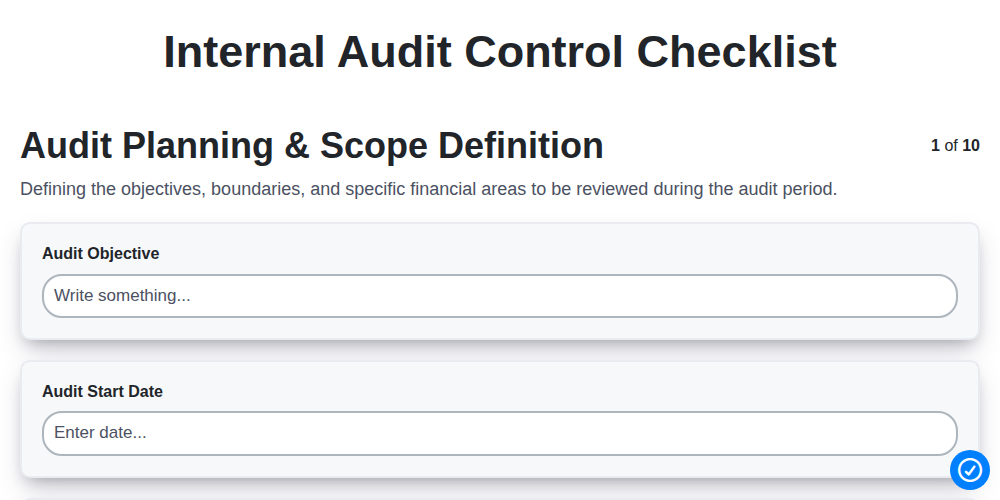
Table of Contents
- Introduction: The Importance of a Robust Internal Audit Framework
- Phase 1: Setting the Foundation with Audit Planning & Scope Definition
- Phase 2: Ensuring Accountability through Documentation & Record Keeping
- Phase 3: Mitigating Risk with Segregation of Duties (SoD) Review
- Phase 4: Validating Integrity via Authorization & Approval Verification
- Phase 5: Securing Digital Assets: Data Integrity & System Access Controls
- Phase 6: Maintaining Financial Precision: Reconciliation Accuracy Check
- Phase 7: Protecting Physical Resources: Asset Safeguarding & Physical Verification
- Phase 8: Ensuring Legal Alignment: Compliance & Regulatory Adherence
- Phase 9: Establishing Robust Error Detection & Correction Procedures
- Phase 10: Closing the Loop: Audit Reporting & Remediation Tracking
- Conclusion: Building a Culture of Continuous Improvement
- Resources & Links
TLDR: Master your auditing process with this comprehensive internal control checklist. This guide provides a step-by-step roadmap-covering everything from initial audit planning and Segregation of Duties (SoD) to data integrity and remediation tracking-designed to help auditors identify vulnerabilities, ensure regulatory compliance, and implement robust error-correction procedures to strengthen organizational oversight.
Introduction: The Importance of a Robust Internal Audit Framework
In an era of increasing regulatory scrutiny and complex operational landscapes, an organization's internal audit function serves as its most critical line of defense. A robust internal audit framework is not merely a compliance requirement; it is a strategic asset that ensures operational efficiency, mitigates risks, and safeguards institutional integrity. Without a structured approach to oversight, organizations become vulnerable to undetected errors, fraudulent activities, and systemic inefficiencies that can lead to significant financial and reputational damage.
A well-structured audit framework provides a roadmap for identifying vulnerabilities before they escalate into crises. By systematically evaluating the effectiveness of internal controls, an organization can move from a reactive posture-dealing with issues after they occur-to a proactive one-preventing them from happening in the first place. Implementing a comprehensive checklist is the first step in establishing this discipline, ensuring that no critical area of the business is left unexamined and that every process remains aligned with the company's overarching goals and regulatory obligations.
Phase 1: Setting the Foundation with Audit Planning & Scope Definition
Every successful internal audit begins long before the first piece of data is examined. The Audit Planning & Scope Definition phase is the most critical stage of the process, as it establishes the boundaries and objectives of the entire engagement. Without a well-defined scope, an audit can easily suffer from scope creep, where the investigation expands uncontrollably, wasting valuable time and resources on non-essential areas.
During this phase, auditors must identify the specific processes, departments, or systems that are subject to review. This involves performing a preliminary risk assessment to determine which areas pose the greatest threat to the organization's stability. By clearly defining the what, where, and why, you ensure that the audit team remains focused on high-risk vulnerabilities and that the final findings provide actionable insights for management. A robust planning phase ensures that the audit is purposeful, targeted, and efficient.
Phase 2: Ensuring Accountability through Documentation & Record Keeping
A robust internal audit cannot exist in a vacuum; it relies entirely on a verifiable paper trail. The essence of what gets documented gets done, and in the eyes of an auditor, if a process wasn't documented, it effectively never happened. This phase focuses on creating a continuous, traceable loop of evidence that validates your controls are functioning as intended.
To ensure accountability, your checklist for this phase should focus on three critical pillars:
- Completeness of Audit Trails: Every significant transaction, decision, and adjustment must leave a digital or physical footprint. This includes timestamps, user IDs, and the specific nature of the change made.
- Standardized Record Retention: Establishing clear protocols for how long records are kept and how they are archived is vital. Inconsistent retention periods can lead to blind spots during retrospective audits.
- Accessibility and Verifiability: Documentation is useless if it cannot be retrieved during a review. Ensure that logs, meeting minutes, and transaction reports are organized in a manner that allows an independent party to reconstruct the sequence of events without needing constant guidance from the department heads.
By prioritizing rigorous record-keeping, you transform your audit from a simple check-the-box exercise into a powerful tool for organizational transparency and long-term institutional memory.
Phase 3: Mitigating Risk with Segregation of Duties (SoD) Review
One of the most critical vulnerabilities in any internal control framework is the concentration of power within a single individual. A Segregation of Duties (SoD) review is designed to ensure that no single employee has enough control to both perpetrate and conceal errors or fraud. By distributing tasks across multiple people, you create a system of checks and balances that inherently promotes transparency.
During this phase of the audit, you must evaluate whether the person who initiates a transaction is also the one who authorizes it, records it, and reconciles it. For example, in a financial context, the individual responsible for managing accounts payable should never be the same person authorized to sign checks or approve new vendors.
To conduct an effective SoD review, follow these key steps:
- Identify High-Risk Functions: Pinpoint roles that involve handling cash, managing sensitive data, or authorizing large expenditures.
- Map User Permissions: Audit system access logs to ensure digital permissions align with physical job responsibilities.
- Detect Overlapping Duties: Look for toxic combinations where a single user possesses conflicting permissions that could allow them to bypass controls.
- Implement Compensating Controls: In smaller teams where total segregation isn't possible, identify secondary oversight measures-such as mandatory management reviews-to mitigate the residual risk.
A robust SoD review does more than just prevent fraud; it reduces the likelihood of unintentional human error, ensuring that even if a mistake is made, it is caught by a second pair of eyes during the normal course of operations.
Phase 4: Validating Integrity via Authorization & Approval Verification
The integrity of an organization's financial and operational workflows relies heavily on a robust system of checks and balances. The Authorization & Approval Verification step in your internal audit is designed to ensure that no single individual has the power to execute high-risk transactions without oversight.
During this phase, auditors must move beyond simply confirming that a signature exists; you must validate that the person approving the transaction had the appropriate delegated authority to do so. This involves cross-referencing transaction logs against the company's formal Delegation of Authority (DoA) matrix.
Key focus areas for this audit step include:
- Threshold Compliance: Verifying that expenditures or contract signings did not exceed the specific monetary limits assigned to the approver.
- Sequential Approval Integrity: Ensuring that approvals followed the required workflow (e.g., a purchase order requiring both Department Head and Finance Manager sign-offs).
- Detection of Self-Approval: Scanning for instances where individuals have bypassed controls to approve their own requests or those of close subordinates.
- Digital Audit Trails: Confirming that electronic signatures and system-stamped approvals are immutable and cannot be retroactively altered.
By rigorously verifying these controls, you mitigate the risk of fraud, unauthorized spending, and operational errors that stem from unchecked decision-making power.
Phase 5: Securing Digital Assets: Data Integrity & System Access Controls
In the modern business landscape, the audit trail is no longer just on paper-it is digital. As organizations migrate to the cloud and rely heavily on automated workflows, verifying the integrity of your data and the strength of your digital perimeter is critical. This phase of the internal audit focuses on ensuring that your information remains accurate, complete, and protected from unauthorized manipulation.
During this stage of the checklist, auditors must focus on two primary pillars:
- Data Integrity Verifications: The goal is to ensure that data remains unaltered and reliable throughout its entire lifecycle. This involves testing for garbage in, garbage out scenarios by checking input validation controls, ensuring that data transfers between systems are seamless without loss or corruption, and verifying that automated processes are functioning as intended without unauthorized manual overrides.
- System Access Controls (Identity & Access Management): This involves a rigorous review of who has access to what. Auditors must verify the principle of least privilege-ensuring employees have only the minimum level of access necessary to perform their functions. Key tasks include reviewing user provisioning and de-provisioning processes (especially for terminated employees), inspecting password complexity policies, and auditing Multi-Factor Authentication (MFA) implementation to prevent unauthorized entry.
By meticulously auditing these controls, you mitigate the risk of data breaches, insider threats, and the catastrophic silent errors that occur when corrupted data leads to flawed business decisions.
Phase 6: Maintaining Financial Precision: Reconciliation Accuracy Check
A reconciliation accuracy check is the heartbeat of financial integrity. It serves as the ultimate fail-safe to ensure that your internal records align perfectly with external reality. During this phase of the audit, the objective is to verify that your general ledger, bank statements, and sub-ledgers are in complete agreement.
To execute an effective check, auditors must look beyond simple balancing and dive into the why behind any discrepancies. This involves scrutinizing outstanding checks, deposits in transit, and any unrecorded transactions that could signal underlying errors or potential fraud. An effective audit process ensures that reconciliations are not just being performed, but are being reviewed for mathematical accuracy and timely resolution of reconciling items. By strictly validating these figures, you prevent small, overlooked imbalances from snowballing into significant financial distortions that could compromise your entire reporting structure.
Phase 7: Protecting Physical Resources: Asset Safeguarding & Physical Verification
At the heart of every robust internal control system lies the fundamental principle of protecting a company's tangible and intangible assets. While digital controls protect data, Asset Safeguarding & Physical Verification focus on the physical security and existence of the resources that drive your business operations.
An effective audit in this phase involves more than just a cursory glance around the office; it requires a systematic approach to ensuring that what is recorded on your balance sheet matches what is actually present in your possession. To perform a thorough check, auditors must evaluate whether there are adequate physical barriers, surveillance, and access restrictions in place to prevent theft, loss, or damage.
Key components of this checklist item include:
- Inventory Audits: Conducting periodic, unannounced physical counts of raw materials, finished goods, and supplies to identify discrepancies between physical stock and digital records.
- Fixed Asset Verification: Verifying the existence and condition of high-value equipment, machinery, vehicles, and IT hardware through regular tagging and inspection.
- Access Control Testing: Reviewing the security protocols for restricted areas, such as warehouses, server rooms, and cash vaults, to ensure only authorized personnel can enter.
- Damage & Obsolescence Assessment: Evaluating whether physical assets are being stored in a manner that prevents deterioration and identifying items that may need to be written off due to damage or expiration.
By verifying the physical existence of assets, you bridge the gap between paper records and reality, significantly reducing the risk of misappropriation and ensuring that the company's capital is being utilized effectively.
Phase 8: Ensuring Legal Alignment: Compliance & Regulatory Adherence
No internal audit is complete without verifying that your organization is operating within the boundaries of both industry-specific regulations and broader legal frameworks. This phase of the checklist focuses on identifying potential gaps between your current operational practices and the mandatory standards imposed by governing bodies.
During this stage, auditors must evaluate adherence to critical frameworks such as GDPR, HIPAA, SOX, or ISO standards, depending on your industry. The goal is to ensure that the organization is not only following its own internal policies but is also shielded from the significant legal, financial, and reputational risks associated with non-compliance. A thorough review involves examining updated regulatory requirements, assessing the effectiveness of compliance training programs, and ensuring that all necessary certifications and permits are current and documented. By integrating compliance scrutiny into your audit, you transform the audit process from a mere check-the-box exercise into a strategic safeguard for the company's legal integrity.
Phase 9: Establishing Robust Error Detection & Correction Procedures
An effective internal audit is not merely about identifying where things went wrong; it is about evaluating how quickly and accurately your organization can identify and rectify discrepancies. A robust error detection and correction framework acts as your organization's immune system, ensuring that mistakes do not evolve into systemic failures or financial leaks.
When auditing this phase, your checklist should focus on two critical dimensions:
1. Detection Capabilities
The goal here is to assess the visibility of your monitoring tools. You must evaluate whether your current controls-such as automated alerts, exception reports, and periodic reconciliations-are capable of flagging anomalies in real-time. Are the triggers sensitive enough to catch significant errors, or are they missing subtle trends that indicate underlying process decay?
2. The Correction Lifecycle
Once an error is detected, the audit must examine the remediation loop. A high-functioning control environment requires a standardized, documented process for:
- Root Cause Analysis (RCA): Moving beyond fixing the symptom to identifying why the error occurred (e.g., human error, system glitch, or bypassed control).
- Timeliness of Correction: Measuring the latency between error detection and final resolution to prevent compounding effects.
- Verification of Fixes: Ensuring that the corrective action taken actually resolved the issue and did not inadvertently introduce new vulnerabilities.
By auditing the rigor of your detection and correction procedures, you transition your internal audit function from a reactive policing role to a proactive driver of continuous operational improvement.
Phase 10: Closing the Loop: Audit Reporting & Remediation Tracking
The final and arguably most critical stage of the internal audit process is ensuring that findings do not simply sit in a folder, but instead drive meaningful organizational change. The audit process is only as valuable as the actions taken in its aftermath. This phase focuses on two core pillars: communicating the results and verifying that identified gaps are being closed.
Comprehensive Audit Reporting
Once the fieldwork is complete, the audit team must synthesize complex data into a clear, actionable report. A high-quality audit report should be transparent, objective, and constructive. It must clearly outline:
- The Audit Observations: A factual description of what was found during the review.
- The Risk Assessment: An evaluation of the potential impact (financial, operational, or reputational) if the identified weakness is left unaddressed.
- The Root Cause Analysis: Moving beyond the what to explain the why, helping management understand the underlying breakdown in the control environment.
Remediation Tracking & Follow-Up
An audit loses its purpose if the identified vulnerabilities are ignored. The remediation phase involves collaborating with department heads to develop Corrective Action Plans (CAPs). Each plan should include specific ownership and a realistic timeline for implementation.
Effective tracking requires a rigorous follow-up mechanism to:
- Monitor Progress: Regularly check in on the status of management's action items to ensure they are on schedule.
- Verify Effectiveness: Once a control is fixed, the auditor must perform follow-up testing to ensure the new process actually mitigates the risk and hasn't introduced new complications.
- Maintain Accountability: Use a centralized tracking log to hold stakeholders accountable for their deadlines, ensuring that closed truly means the risk has been remediated.
By treating the audit report as a roadmap for improvement rather than just a list of failures, organizations can transform the internal audit function from a policing mechanism into a strategic partner in continuous improvement.
Conclusion: Building a Culture of Continuous Improvement
An internal audit checklist should never be viewed as a one-time check-the-box exercise or a mere compliance hurdle. Instead, it should serve as the foundation for a broader organizational commitment to excellence. By systematically implementing these controls-from planning and segregation of duties to error detection and remediation tracking-you transition your internal audit function from a reactive policing mechanism to a proactive driver of strategic value.
The true strength of an audit program lies in its ability to evolve. As your organization grows, faces new technological challenges, or enters new regulatory landscapes, your checklist must also shift and adapt. When your team views audits as a tool for uncovering insights rather than just identifying faults, you foster a culture of continuous improvement. This proactive mindset ensures that internal controls do not just exist on paper, but actively safeguard your company's integrity, operational efficiency, and long-term resilience.
Resources & Links
- ISACA (Information Systems Audit and Control Association): The leading professional association for IT governance, risk, and control, providing essential frameworks like COBIT for audit planning and system access controls.
- The Institute of Internal Auditors (IIA): The global authority on internal audit standards, offering resources on professional practices, compliance, and audit reporting excellence.
- AICPA (American Institute of Certified Public Accountants): Provides comprehensive guides on financial accuracy, reconciliation, and regulatory adherence for accounting and auditing professionals.
- NIST (National Institute of Standards and Technology): A vital resource for technical audit phases, specifically regarding data integrity, system access controls, and cybersecurity frameworks.
- COSO (Committee of Sponsoring Organizations of the Treadway Commission): The gold standard for internal control frameworks, useful for developing strategies for risk management, segregation of duties, and error detection.
- SOX Compliance Resources: Specialized insights into authorization, approval verification, and maintaining the documentation required for regulatory compliance and asset safeguarding.
Frequently Asked Questions
What is the primary purpose of an internal audit control checklist?
The primary purpose is to provide a structured framework that ensures all critical control activities are consistently evaluated, helping to identify gaps, mitigate risks, and strengthen the overall internal control environment.
Who should be responsible for using this audit control checklist?
While the internal audit team leads the execution, the checklist should be used collaboratively with department heads and process owners to ensure accuracy and accountability across the organization.
How often should an internal audit control checklist be updated?
The checklist should be reviewed and updated at least annually, or whenever significant changes occur within the organization, such as new regulations, structural reorganizations, or major updates to operational processes.
What are the key components of an effective audit control checklist?
An effective checklist should include clear control objectives, specific testing procedures, predefined sampling methods, clear criteria for success, and designated sections for observations and corrective action plans.
Can this checklist be adapted for different industries?
Yes, while the fundamental principles of risk management and control evaluation remain the same, the specific controls and testing criteria should be customized to align with the unique regulatory and operational landscape of your specific industry.
Comments
There are no comments yet. Be the first to add one!
Accounting Management Solution Demo
Move beyond rigid, one-size-fits-all software. Leverage a fully programmable accounting environment designed to adapt to your unique workflows, complex hierarchies, and evolving business logic.
Related Articles
The Ultimate Financial Data Integrity Audit Checklist: A Step-by-Step Template for Precision and Compliance
The Ultimate Financial Statement Review Checklist: A Step-by-Step Guide to Ensuring Accuracy and Compliance
Mastering Financial Control: The Ultimate Departmental Budget Monitoring Checklist
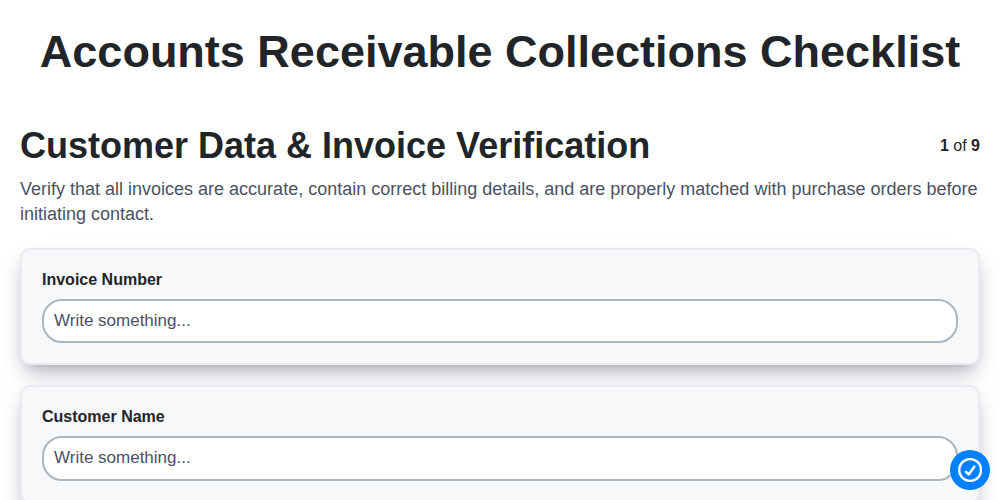
The Ultimate Accounts Receivable Collections Checklist: A Step-by-Step Guide to Streamlining Your Cash Flow
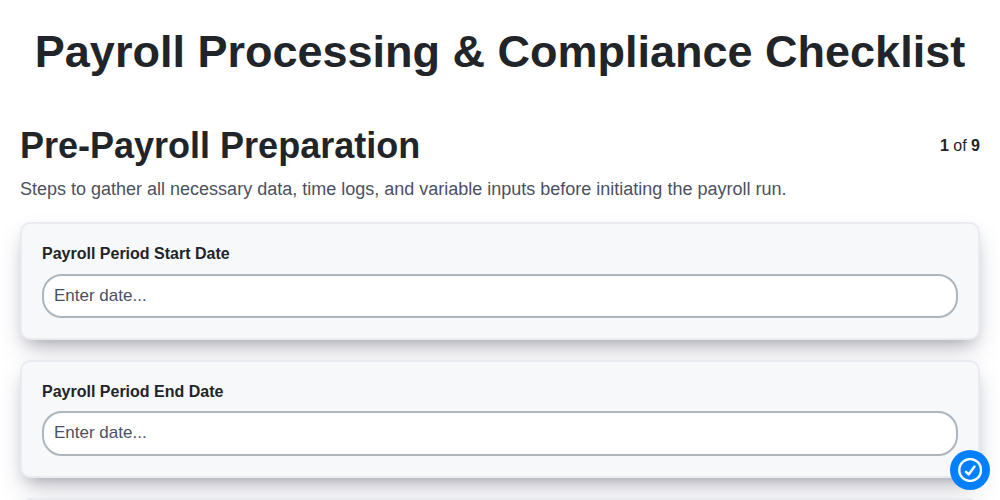
The Ultimate Payroll Processing & Compliance Checklist: A Step-by-Step Guide to Error-Free Payroll
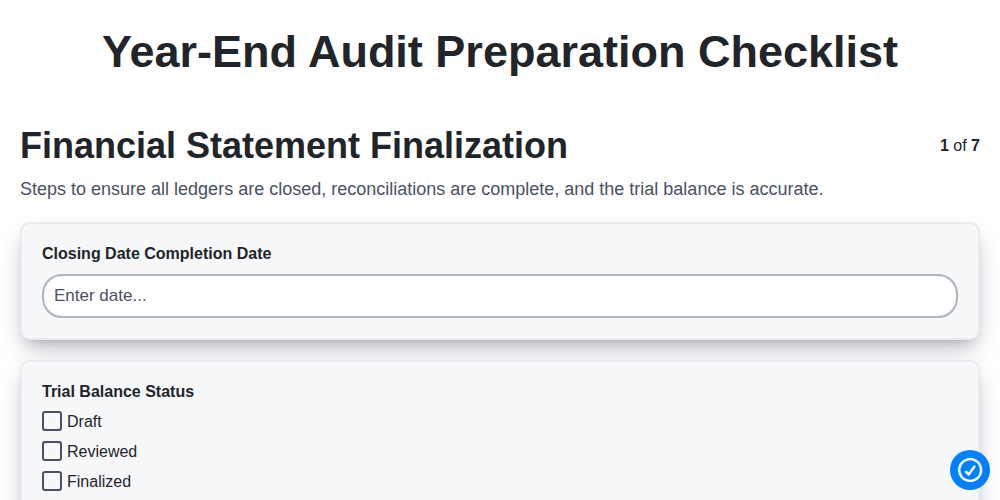
The Ultimate Year-End Audit Preparation Checklist: A Step-by-Step Guide to a Stress-Free Audit
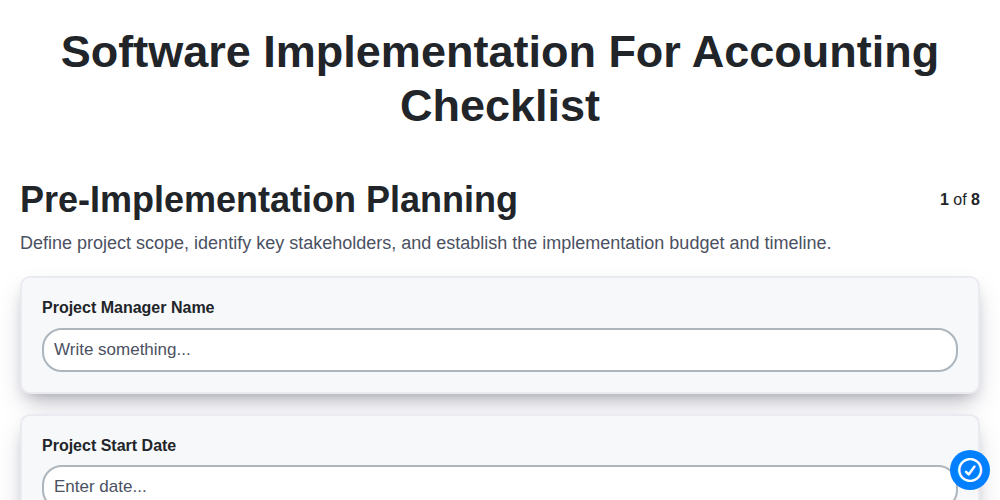
The Ultimate Software Implementation Checklist for Accounting Teams: A Step-by-Step Guide to a Seamless Transition
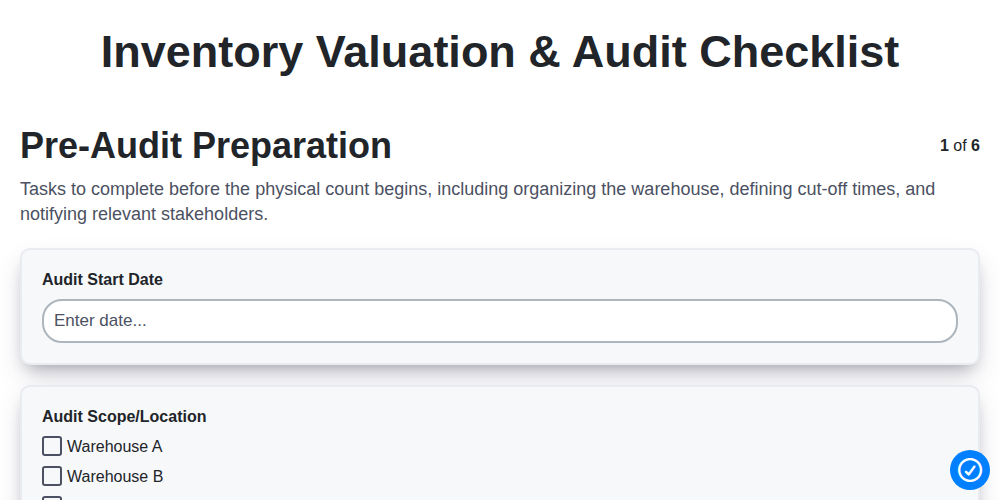
The Ultimate Inventory Valuation & Audit Checklist: A Step-by-Step Guide to Accuracy and Compliance
We can do it Together
Need help with
Accounting Management?
Have a question? We're here to help. Please submit your inquiry, and we'll respond promptly.