Ensuring Safety and Success: Your Mining Blast Plan Review Checklist
Published: 11/20/2025 Updated: 07/02/2026
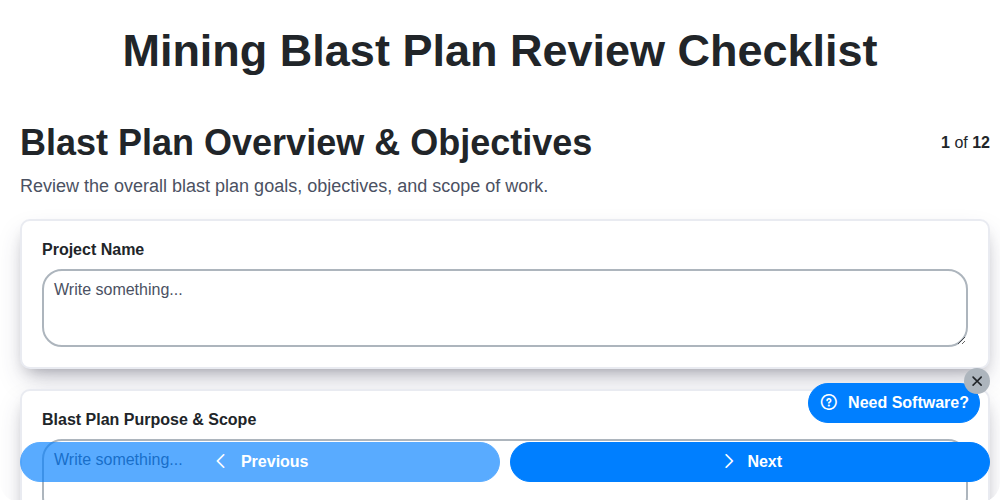
Table of Contents
- Introduction: Why a Robust Blast Plan Review is Crucial
- 1. Blast Plan Overview & Objectives: Defining the Scope
- 2. Geotechnical Data & Site Conditions: Understanding the Foundation
- 3. Blast Design Parameters: Setting the Stage for Performance
- 4. Drilling & Fragmentation: Achieving Optimal Rock Breakdown
- 5. Explosives Selection & Calculation: Choosing the Right Charge
- 6. Sequence and Timing: Orchestrating the Blast
- 7. Ground Control and Stability: Preventing Unexpected Movement
- 8. Vibration & Airblast Mitigation: Minimizing Disturbance
- 9. Environmental Considerations: Protecting the Surroundings
- 10. Regulatory Compliance & Approvals: Meeting Legal Requirements
- 11. Risk Assessment & Mitigation: Identifying and Addressing Potential Hazards
- 12. Competency & Training: Ensuring Qualified Personnel
- Conclusion: A Proactive Approach to Blast Planning
- Resources & Links
TLDR: This checklist is your essential guide for reviewing mining blast plans! It covers everything from geology and blast design to safety, environmental impact, and legal compliance. Use it to catch potential issues, minimize risks, and ensure a successful and responsible blasting operation. Think of it as your safety net for a powerful process.
Introduction: Why a Robust Blast Plan Review is Crucial
Mining operations rely on blasting to liberate valuable resources, but the process inherently carries significant risks. A poorly planned or executed blast can lead to disastrous consequences - from ground instability and damage to nearby infrastructure to environmental harm and, most critically, injuries or fatalities. Therefore, a thorough and meticulous review of the blast plan before any blasting activity commences isn't just a best practice; it's a necessity.
This review isn't merely about ticking boxes; it's about ensuring a holistic understanding of the risks and implementing comprehensive mitigation strategies. It's about validating that every aspect of the plan-from the initial objectives to the final cleanup-has been carefully considered and accounted for. A robust review process minimizes risks, optimizes blast performance, protects the workforce and surrounding environment, and ensures regulatory compliance. Ultimately, it's the cornerstone of a safe, efficient, and responsible mining operation.
1. Blast Plan Overview & Objectives: Defining the Scope
A robust blast plan begins with a crystal-clear understanding of its purpose. This initial overview establishes the 'why' behind the blast, setting the foundation for all subsequent decisions. The checklist item Blast Plan Overview & Objectives demands more than just stating the obvious - it requires a detailed articulation of the project's goals.
Consider these key questions: What is the primary goal of this blast? Is it to extract ore, level terrain for construction, or another purpose? What are the specific production targets (e.g., tons of material per shift)? What are the limitations or constraints impacting the project (e.g., proximity to infrastructure, environmental sensitivities)?
This section should also define the scope of the blast - precisely outlining the area to be blasted, the anticipated depth of cut, and any specific boundaries or restrictions. A well-defined scope minimizes misunderstandings and ensures all team members are aligned on the objectives. Ultimately, a clear overview lays the groundwork for a safe, efficient, and successful blasting operation.
2. Geotechnical Data & Site Conditions: Understanding the Foundation
A robust blast plan hinges on a comprehensive understanding of the ground you're working with. This isn't simply about knowing the rock type; it's about a deep dive into its properties and the surrounding environment. Ignoring this foundational data is a recipe for disaster, leading to unpredictable blasts, excessive damage, and potential safety hazards.
What We Need to Know:
- Rock Type & Strength: Detailed geological mapping identifying rock types (e.g., granite, sandstone, shale) is crucial. We need to ascertain their compressive, tensile, and shear strengths - often determined through laboratory testing and in-situ measurements (like borehole tests). Varying rock strengths within the blast area require adjusted blast parameters.
- Geological Structures: Faults, joints, bedding planes, and fractures significantly impact blast behavior. Their orientation, spacing, and persistence need to be mapped and understood. These discontinuities create preferential pathways for fracturing and can lead to unwanted rock movement.
- Groundwater Conditions: The presence and level of groundwater can significantly reduce rock strength and increase the likelihood of instability. Hydrostatic pressure can also affect fragmentation and blasting efficiency.
- Slope Stability: If blasting occurs near slopes, a thorough assessment of slope stability is vital. Blasting can trigger landslides or collapses if not carefully planned.
- Surrounding Structures: Identify all nearby structures (buildings, tunnels, utilities) and their vulnerability to ground vibrations and air pressure. Their condition and construction type are important factors.
- Existing Ground Movement: Previous ground movement or instability in the area needs to be documented and considered, as blasting could exacerbate existing problems.
Why it Matters:
The data gathered informs critical decisions regarding blast design, including:
- Burden & Spacing: Adjustments based on rock strength and geological structures.
- Drill Hole Angle & Depth: Optimizing for fracture propagation in fractured rock.
- Explosive Type & Amount: Modifying to compensate for variations in rock strength.
- Sequence & Timing: Managing potential ground movement in unstable areas.
3. Blast Design Parameters: Setting the Stage for Performance
The blast design parameters are the heart of a successful mining blast. They translate the broader objectives (detailed in the overview) and site conditions (understood from geotechnical data) into specific, actionable numbers. This section defines how the blast will be executed, and a rigorous review here is crucial for safety, efficiency, and achieving the desired fragmentation.
This checklist focuses on verifying the appropriateness and consistency of these parameters. We're looking for a clear rationale behind each chosen value and how it integrates with the overall plan.
Key Review Points:
- Burden and Spacing: Are the burden and spacing values optimized for the rock type, formation dip, and desired fragmentation size? Is there a documented justification for the chosen values, considering rock strength and geological structures? Deviations from standard practices need robust explanations.
- Bench Height: Is the bench height appropriate for equipment capabilities, fragmentation needs, and ground control considerations? Too high, and you risk instability; too low, and you'll increase the number of blasts required.
- Angle of Cut: The angle of the blast hole cut needs careful consideration to maximize rock breakage and minimize backbreak. Does the angle align with the anticipated rock competence and formation dip?
- Hole Diameter: The hole diameter must be appropriately sized for the explosives being used and the anticipated rock strength. Too small, and explosives won't transmit energy effectively; too large, and you're wasting explosives and potentially compromising stability.
- Stem Length: Is the stem length sufficient to contain the explosive charge and direct the energy towards fragmentation, preventing overburden throw and backbreak? Is it aligned with the hole diameter and explosives type?
- Delay Pattern: The delay pattern is paramount for controlling the blast's shape and direction. Is the pattern designed to initiate breakage from the weaker face and progress towards the undisturbed ground, preventing overbreak? Are the delays calibrated to achieve the desired sequence of rock failure?
- Fragmentation Size Distribution (FSD) Target: A specific FSD target should be defined and the design parameters should be demonstrably aligned with achieving that target.
A thorough review of these blast design parameters, supported by calculations and simulations where appropriate, is vital for a safe and productive mining operation.
4. Drilling & Fragmentation: Achieving Optimal Rock Breakdown
Effective fragmentation is the cornerstone of a successful blast. It's not just about breaking the rock; it's about creating predictable, manageable fragments that can be easily excavated and processed. This section of the Blast Plan Review Checklist focuses on ensuring drilling and fragmentation parameters are meticulously planned and executed.
Drilling Accuracy & Pattern: The checklist will scrutinize the drilling plan, verifying hole depth, diameter, angle, and spacing. Deviation from the designed pattern can significantly impact fragmentation and potentially introduce instability. We're looking for documentation outlining procedures for quality control - how are drill crews ensuring accuracy and consistency? Are downhole surveys conducted to confirm hole location and inclination?
Fragmentation Size Distribution: The desired particle size distribution is critical. Too large, and excavation becomes difficult and costly; too small, and it can lead to increased explosive use and potentially ground instability. The review will check for calculations and simulations predicting fragmentation size based on rock properties, explosive type, and drilling parameters. Factors like rock competence, joint orientation, and stress conditions will be assessed to ensure the fragmentation targets are realistic and achievable.
Drill Pattern Optimization: The checklist evaluates the rationale behind the chosen drill pattern - is it optimized for the specific rock type and geological structure? Are techniques like fan, stripe, or V-patterns utilized effectively to control fracture propagation? A thorough understanding of the site's geological context is paramount.
Hole Orientation & Stress: Consideration of the in-situ stress field is crucial. Hole orientation relative to stress can significantly impact fracture creation. The plan should demonstrate an understanding of this relationship and utilize it to promote controlled fracturing.
Monitoring & Adjustment: Finally, the checklist will inquire about a plan for post-blast assessment. How will fragmentation be evaluated? Are there mechanisms for adjusting drill patterns or explosive loadings based on observed results to continuously improve fragmentation performance?
5. Explosives Selection & Calculation: Choosing the Right Charge
Selecting the appropriate explosives and accurately calculating the required charge weight is arguably the most critical aspect of a safe and effective blast plan. It's a complex process that directly impacts fragmentation, ground vibration, and overall blast performance. A mismatch between explosives and rock properties, or an incorrect charge calculation, can lead to costly rework, equipment damage, and potential safety hazards.
Here's a breakdown of considerations:
- Rock Properties: Different rock types require different explosives. Hard, abrasive rocks like granite benefit from high-velocity explosives, while softer formations might respond better to emulsions or water gels. Understanding the rock's compressive strength, tensile strength, and fracture characteristics is paramount.
- Explosive Type: Numerous explosive types exist, each with unique properties - detonation velocity, sensitivity, water resistance, and cost. Ammonium nitrate-based explosives (ANFO) are common for their cost-effectiveness, while emulsions offer better water resistance and control. Dynamites, while less common now, also have specific applications. The choice must align with site conditions and desired outcomes.
- Charge Factor: This is the key calculation that determines the charge weight per unit volume of rock. It's influenced by rock type, hole diameter, and desired fragmentation. Standard charge factors exist as guidelines, but site-specific adjustments are often necessary. Overcharging can lead to excessive vibration and flyrock; undercharging can result in poor fragmentation.
- Density & Weight Calculations: Accurately determine the density of the chosen explosive and use this to calculate the total weight of explosive required per drill hole. Proper stemming calculations are also essential to contain the blast energy.
- Sensitivity to Confine: Some explosives are more sensitive to confinement than others. This needs to be taken into account when designing the blast pattern and selecting appropriate stemming materials.
Important Note: Always consult with a qualified blasting expert and refer to the manufacturer's recommendations for explosive selection and charge calculation. Site-specific testing (e.g., bench scale trials) are often invaluable in refining charge weight estimations.
6. Sequence and Timing: Orchestrating the Blast
The sequence and timing of a blast - often referred to as the blast pattern - is critical for achieving desired fragmentation, minimizing ground vibrations, and ensuring overall safety. It's more than just detonating explosives; it's about orchestrating the fracturing process.
This section of the Blast Plan Review Checklist delves into how the blast sequence and timing parameters have been meticulously planned and justified. Key considerations include:
- Delay Sequencing: Are the delay times between individual detonators and groups of detonators appropriate for the rock mass structure and the desired fragmentation size? Short delays encourage fracturing within a defined area, while longer delays allow for stress waves to propagate further. The rationale behind the chosen delay range needs to be clearly documented.
- Burden and Spacing: The relationship between the delay times and the blast hole spacing (burden) must be carefully considered. Incorrect matching can lead to inefficient breakage or adverse ground movements.
- Wave Propagation: Has the plan accounted for the anticipated wave propagation characteristics, considering the geological conditions? Is the delay sequence designed to ensure effective stress wave interaction and breakage?
- Free Face Design: Where applicable, is the free face (exposed rock face created by the blast) strategically designed and timed to maximize its contribution to fragmentation and rock displacement?
- Simulation & Modeling: Was any simulation or modeling performed to predict the blast's behavior and optimize the sequence and timing? If so, the results and their impact on the final plan need to be reviewed.
- Practical Experience: Does the plan leverage previous blasting experience in similar geological conditions to inform the timing parameters? Deviations from standard practice require thorough justification.
A well-defined sequence and timing plan demonstrates a deep understanding of how the blast will interact with the surrounding rock mass, contributing significantly to the overall success and safety of the operation.
7. Ground Control and Stability: Preventing Unexpected Movement
Blasting inherently disrupts the ground, and ensuring ground control and stability before, during, and after a blast is paramount for safety and operational continuity. A thorough review of this section of the blast plan should encompass more than just looking for obvious signs of instability.
Key considerations in the review include:
- Pre-Blast Conditions: Detailed geological mapping, including fault lines, bedding planes, and zones of weakness, should be documented and referenced. Did the plan accurately represent these conditions? Were any potential instability issues (e.g., squeezing ground, swelling ground) adequately identified?
- Support Systems: The plan must outline the necessary ground support systems (e.g., rock bolts, cable bolts, shotcrete, mesh) and their placement, type, and spacing. Are these systems appropriately sized and designed to withstand the anticipated ground movements from the blast? Has the plan accounted for potential changes in ground behaviour after blasting?
- Influence Zone: The plan needs to clearly define the influence zone - the area potentially affected by ground movement. This area dictates the scope of ground support measures and monitoring requirements. Is the influence zone calculation accurate and conservative?
- Monitoring Plan: A comprehensive monitoring plan, including visual inspections, extensometer readings, and convergence measurements, is essential. This allows for early detection of any ground deformation and allows for adjustments to the blast or ground support strategy. Review the frequency and methodology of these monitoring activities.
- Post-Blast Observations: The plan should outline a system for post-blast visual inspections and documentation of ground behaviour. Are clear procedures established for reporting and addressing any observed instability?
- Scaling & Mucking: The plan should outline scaling and mucking procedures to remove loose rock and debris, further stabilizing the excavation.
Failing to adequately address ground control and stability can result in rockfalls, sidewall collapses, and significant delays. A diligent review of this section of the blast plan is a critical investment in safety and project success.
8. Vibration & Airblast Mitigation: Minimizing Disturbance
Controlling vibration and airblast is crucial for maintaining positive relationships with surrounding communities and infrastructure. Excessive vibration can damage structures, while airblast (the audible pressure wave) can be disruptive and annoying. A robust blast plan must incorporate comprehensive strategies to minimize these impacts.
Key considerations within this checklist item include:
- Pre-Blast Surveys: Conducting thorough pre-blast surveys of nearby structures (residential, commercial, critical infrastructure) to establish baseline conditions. This provides documentation of existing conditions and helps differentiate blast-induced damage.
- Geophone Placement & Monitoring: Strategic placement of geophones to accurately measure ground vibration levels at critical distances and directions. Continuous monitoring during blasting is essential.
- Airblast Monitoring: Using airblast meters to measure overpressure at sensitive locations.
- Blast Design Adjustments: Implementing blast design modifications to reduce vibration and airblast. This can include:
- Stemming Optimization: Ensuring adequate stemming to contain the explosive charge.
- Delaying Burdens: Utilizing longer delays between blasts to reduce the buildup of pressure.
- Reducing Charge Weight: Carefully evaluating and potentially reducing the explosive charge weight per blast hole.
- Blast Pattern Adjustments: Modifying the blast pattern shape and density.
- Use of Electronic Detonators: Utilizing electronic detonators for precise timing and control.
- Community Liaison: Maintaining open communication with nearby residents and businesses. Addressing concerns and providing explanations for blasting activities.
- Complaint Management: Establishing a clear and responsive system for addressing complaints related to vibration and airblast.
- Post-Blast Inspections: Conducting post-blast inspections of nearby structures to identify and address any potential damage.
9. Environmental Considerations: Protecting the Surroundings
Mining operations have a responsibility to minimize their environmental footprint, and blasting is no exception. A thorough blast plan review must deeply consider potential environmental impacts and incorporate proactive mitigation strategies. This goes beyond simply adhering to legal requirements; it's about demonstrating a commitment to responsible resource extraction.
Key areas of scrutiny should include:
- Water Quality: Blasting can potentially mobilize heavy metals and other contaminants into groundwater and surface water sources. The plan should outline measures to prevent this, such as dust suppression, erosion control, and potentially, water treatment protocols. Consider the potential for acid mine drainage and how blasting activities could exacerbate it.
- Air Quality: Dust generation is a significant concern. The plan should detail dust control measures, including water sprays, chemical suppressants, and enclosure strategies. The impact on local air quality, particularly for nearby communities, needs careful evaluation.
- Noise Pollution: Blasting noise can disturb wildlife and impact nearby residents. The plan should detail noise reduction techniques, such as using less sensitive explosives, optimizing blast timing, and employing noise barriers where feasible.
- Vegetation and Habitat: Consider the potential impact on surrounding vegetation and wildlife habitat. Pre-blast surveys should be conducted to identify sensitive areas and inform blast design to minimize disturbance. Rehabilitation plans should include details on restoring affected areas.
- Soil Stability: Blasting can destabilize soil and increase the risk of erosion. Mitigation measures should address this, including contouring and vegetation planting to stabilize slopes.
- Impact on Sensitive Ecosystems: Are there nearby wetlands, forests, or other sensitive ecosystems? The blast plan must detail how these areas will be protected from harm, potentially requiring modified blast parameters or alternative extraction methods.
A comprehensive environmental assessment integrated into the blast plan review demonstrates a commitment to sustainable mining practices and helps maintain positive relationships with local communities.
10. Regulatory Compliance & Approvals: Meeting Legal Requirements
Before a single blast can occur, meticulous attention must be paid to regulatory compliance and securing all necessary approvals. This isn't just about avoiding fines; it's about ensuring public safety, environmental protection, and responsible mining practices.
The specific regulations governing blasting vary significantly by jurisdiction - from national and state/provincial levels down to local ordinances. These regulations often dictate parameters like maximum permissible vibration levels, airblast limits, permissible blasting hours, required notifications to stakeholders, and reporting requirements.
Key Considerations:
- Identify Applicable Regulations: Conduct a thorough review of all federal, state/provincial, and local regulations pertaining to blasting operations. Engage legal counsel or a regulatory specialist if needed.
- Permitting: Secure all required permits before commencing any blasting activities. This typically involves submitting detailed plans, including the blast plan itself, and demonstrating adherence to regulatory standards.
- Notification Procedures: Strictly follow all notification protocols, informing relevant authorities, nearby residents, and businesses of planned blasting events. This includes providing timing schedules and contact information.
- Record Keeping: Maintain meticulous records of all regulatory documentation, permits, notifications, and monitoring data. These records serve as evidence of compliance and are crucial for audits and inspections.
- Ongoing Updates: Regulatory requirements are subject to change. Stay informed about updates and revisions to ensure ongoing compliance. Regularly review and update your procedures accordingly.
Failing to comply with these requirements can result in significant penalties, project delays, and potential legal action. Proactive and diligent adherence to regulatory compliance is an integral part of a robust blast plan review.
11. Risk Assessment & Mitigation: Identifying and Addressing Potential Hazards
A robust blast plan isn't just about optimizing fragmentation; it's about proactively minimizing risk. This section focuses on systematically identifying potential hazards associated with the blasting operation and outlining specific mitigation strategies. This isn't a one-time activity; it's a continuous process interwoven throughout the entire planning and execution phase.
Hazard Identification: We begin with a comprehensive hazard identification process. This includes, but isn't limited to:
- Geological Hazards: Potential for unstable ground, fault lines, and unexpected geological formations.
- Structural Hazards: Proximity to buildings, infrastructure (pipelines, power lines), and other structures.
- Human Error: Mistakes in calculations, loading, firing, or miscommunication.
- Equipment Failure: Malfunctions in drilling rigs, explosives handling equipment, or firing systems.
- Environmental Hazards: Potential for water contamination, dust generation, and noise pollution.
- Security Risks: Unauthorized access to explosives and blasting materials.
Risk Assessment Matrix: Once hazards are identified, a risk assessment matrix (severity x likelihood) is applied. This prioritizes risks, focusing on those with the highest potential for harm.
Mitigation Strategies: For each identified risk, specific mitigation measures are defined. These can include:
- Engineering Controls: Implementing physical barriers, reinforcing ground, using vibration dampeners.
- Administrative Controls: Establishing clear procedures, checklists, and communication protocols.
- Personal Protective Equipment (PPE): Ensuring all personnel wear appropriate safety gear.
- Redundancy: Incorporating backup systems and alternative plans.
- Contingency Planning: Developing responses for unexpected events (e.g., premature detonation, flyrock).
Regular Review & Updates: The risk assessment isn't static. It needs to be revisited regularly, especially after any near misses, incidents, or changes to the site conditions or blasting parameters. This ensures the mitigation strategies remain effective and address emerging risks. A lessons learned process should be integrated to continually improve safety performance.
12. Competency & Training: Ensuring Qualified Personnel
A meticulously crafted blast plan is only as effective as the team executing it. This section underscores the critical importance of competency and training for all personnel involved, from the blast planner to the loading crew and surveyors. Simply put, insufficient training can negate even the best-laid plans, leading to safety risks, environmental damage, and operational inefficiencies.
This checklist requires verification that all individuals participating in the blasting operation possess the necessary qualifications and have received appropriate training. This includes, but isn't limited to:
- Blast Planner: Must hold relevant certifications (e.g., Certified Blaster) and possess a deep understanding of blast design principles, rock mechanics, and explosives handling.
- Blast Foreman/Supervisor: Requires experience and training in overseeing blasting operations, ensuring adherence to the blast plan, and addressing on-site challenges.
- Charging Crew: Extensive training in explosives handling, safety procedures, and proper charging techniques is mandatory. Refresher courses are essential.
- Drill & Blast Crew: Comprehensive training on drill operation, blast hole cleanliness, and potential hazards.
- Surveyors & Monitoring Personnel: Trained in utilizing monitoring equipment and interpreting data related to ground movement and vibration.
Documentation of training records, certifications, and ongoing competency assessments must be readily available. Regular refresher training and updates on industry best practices are not just recommended - they are vital for maintaining a safe and effective blasting operation. A documented process for evaluating and addressing competency gaps is also crucial.
Conclusion: A Proactive Approach to Blast Planning
Ultimately, a thorough Blast Plan Review Checklist isn't just about ticking boxes; it's about embedding a culture of safety and operational excellence. By consistently utilizing and refining this checklist, mining operations can proactively identify potential risks, optimize blast performance, and minimize environmental impact. A robust review process translates to safer working conditions, increased productivity, reduced costs associated with damage and delays, and improved community relations. Investing the time and resources upfront to critically evaluate blast plans pays dividends in the long run, fostering a resilient and sustainable mining operation. Don't treat it as an afterthought - make the Blast Plan Review Checklist an integral part of your workflow.
Resources & Links
- Mine Safety and Health Administration (MSHA): The primary federal agency responsible for ensuring the safety and health of miners. Provides regulations, guidance, and publications related to blasting and mine operations. Crucial for understanding legal requirements and best practices.
- Society for Mining, Metallurgy & Exploration (SME): A professional society offering technical publications, training courses, and conferences related to mining, including blasting. Valuable for engineers and professionals seeking deeper knowledge and industry best practices.
- International Committee on Rock Mechanics (ICRM): A global body promoting research and disseminating knowledge in rock mechanics, including topics directly relevant to blasting and ground control. Provides a broader international perspective on blast planning principles.
- Australian Institute of Mining and Metallurgy (AusIMM): Similar to SME, provides resources, courses, and publications focused on mining and related industries, often with a strong focus on safety and operational efficiency - blasting techniques and design are frequently covered.
- Dyno Nobel: A leading explosives manufacturer and provider of blasting services. Their website includes technical information, product details, and resources related to explosives selection and blasting design - useful for understanding charge calculation and handling.
- Eaton (Detonator and Blasting Systems): A major supplier of blasting systems, detonators, and related equipment. Their website offers technical documentation, product specifications, and guidance on safe handling and operation - particularly important for sequence and timing considerations.
- Terra Insight (formerly Komex): Provides drilling and blasting solutions including software, services, and expertise. Useful for understanding drilling & fragmentation and optimizing blast performance through advanced analysis.
- GeoStabilis: Specializes in ground control and slope stabilization. Offers expertise and solutions applicable to assessing ground stability and preventing unexpected movement - relevant to sections 7 of the blog post.
- Vibroworks: Specializes in vibration monitoring and analysis. Helpful for sections 8 (Vibration & Airblast Mitigation) to understand how to effectively measure and manage vibration and airblast impacts.
- RockWare: Offers software and resources for rock mechanics analysis, including applications for blast design and ground control assessment. Supports geotechnical data analysis and risk assessment.
- International Journal of Rock Mechanics and Mining Sciences: A peer-reviewed scientific journal providing in-depth research articles on all aspects of rock mechanics, mining, and tunneling - useful for advanced technical understanding.
- International Organization for Standardization (ISO): Develops and publishes international standards, some of which may be relevant to mining safety management systems. Can help ensure consistency and best practices in blast planning and execution.
Frequently Asked Questions
What is a Blast Plan Review and why is it important?
A Blast Plan Review is a comprehensive assessment of a blasting plan before execution. It's crucial for ensuring the safety of personnel, minimizing environmental impact, maintaining operational efficiency, and complying with legal regulations. A thorough review identifies potential hazards and allows for corrective actions before blasting commences.
Who should be involved in a Blast Plan Review?
The review team should include qualified and experienced personnel, typically encompassing a Mining Engineer, Geologist, Blasting Supervisor, Surveyor, Environmental Specialist, and representatives from local authorities if required. The expertise of each role ensures a holistic evaluation.
What are the key elements covered in a Blast Plan Review checklist?
A typical checklist covers aspects like geological assessment (rock type, structure), blast design (hole pattern, burden, spacing, delay sequences), ground control measures, vibration predictions and mitigation, flyrock control, environmental considerations (noise, dust), regulatory compliance, and emergency procedures.
What does 'geological assessment' entail within the review?
Geological assessment involves analyzing the rock mass characteristics - its strength, orientation, and potential weaknesses. The review verifies that the plan accounts for fault lines, joint sets, and bedding planes, preventing unexpected ground movement or instability.
Why is understanding the 'burden' and 'spacing' so critical?
Burden (distance from blast face to nearest free surface) and spacing (distance between blast holes) are fundamental parameters impacting fragmentation and ground control. Improper values can lead to undercutting, overbreak, or ineffective fragmentation, all of which are safety and efficiency risks.
How are vibration predictions assessed in a Blast Plan Review?
The review verifies that vibration predictions have been conducted using accepted methodologies and consider the distance to sensitive structures (buildings, pipelines). Mitigation strategies (reduced charge, delay sequences) are assessed for effectiveness in meeting regulatory limits.
What constitutes adequate 'flyrock control'?
Flyrock control measures include pre-blast surveys, proper stemming, blast design optimization, and the use of blast mats. The review confirms that these measures are sufficient to prevent flyrock from impacting surrounding areas or personnel.
What's the role of 'regulatory compliance' in the review process?
The review confirms that the blasting plan adheres to all applicable local, state, and federal regulations pertaining to explosives handling, noise levels, air quality, and ground vibration. Necessary permits and approvals are verified.
How should emergency procedures be incorporated into the Blast Plan Review?
The review ensures that clear and documented emergency procedures are in place, outlining steps to take in case of unexpected events like uncontrolled blasts, ground instability, or injuries. Communication protocols and evacuation plans are also assessed.
What happens if deficiencies are found during the Blast Plan Review?
Identified deficiencies must be documented, and corrective actions must be implemented and approved before blasting can proceed. The review process should involve a clear chain of approval and responsibility to ensure that all concerns are addressed effectively.
Comments
There are no comments yet. Be the first to add one!
Mining Management Solution Demo
Maximize efficiency & safety in mining operations! ChecklistGuro streamlines task management, equipment tracking, and compliance reporting. Optimize workflows, reduce risk, & boost productivity. Manage it all with our Work OS.
Related Articles
Ensuring Mine Safety: Your Geotechnical Stability Checklist Guide
Ensuring Safety & Efficiency: Your Mine Haul Road Inspection Checklist Guide
Mastering Mine Safety: Your Guide to the Ground Control Checklist
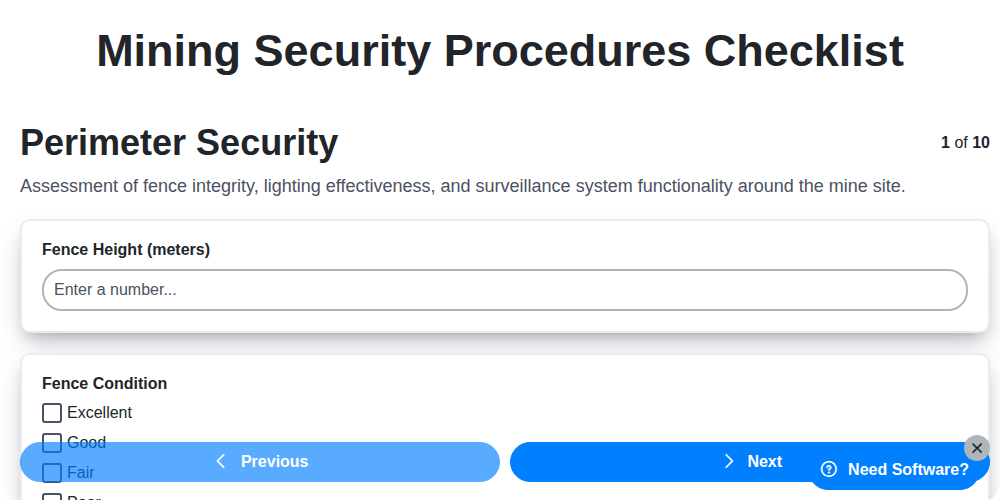
Mining Security Procedures Checklist: A Comprehensive Template for Safety
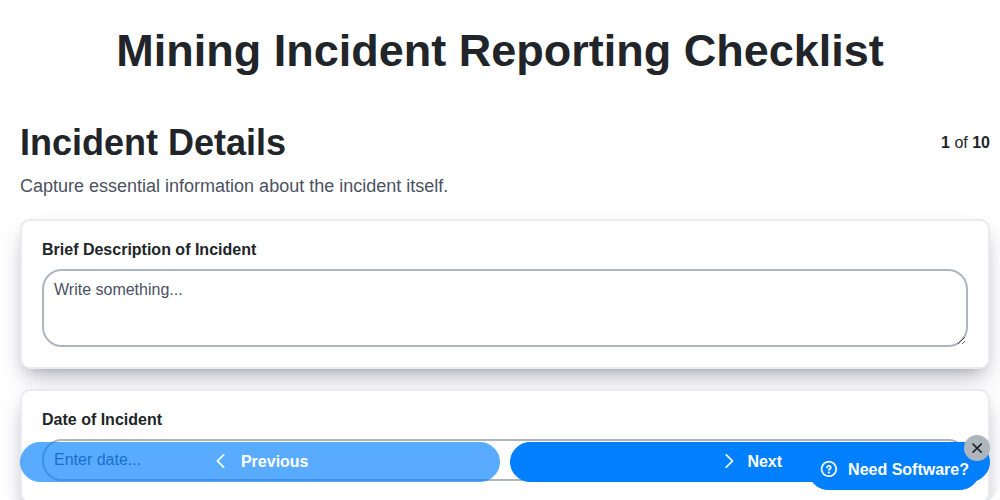
Ensuring Safety: Your Mining Incident Reporting Checklist Guide
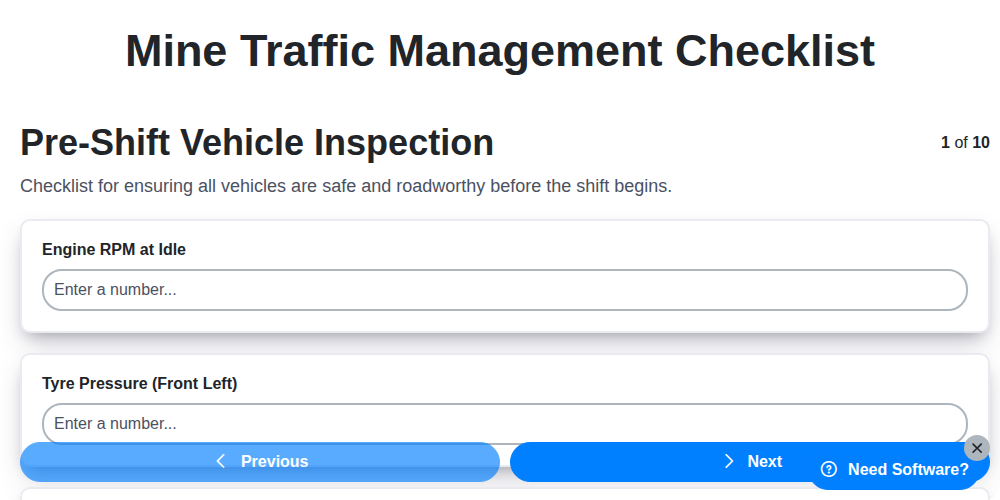
Ensuring Safety Underground: Your Mine Traffic Management Checklist Guide
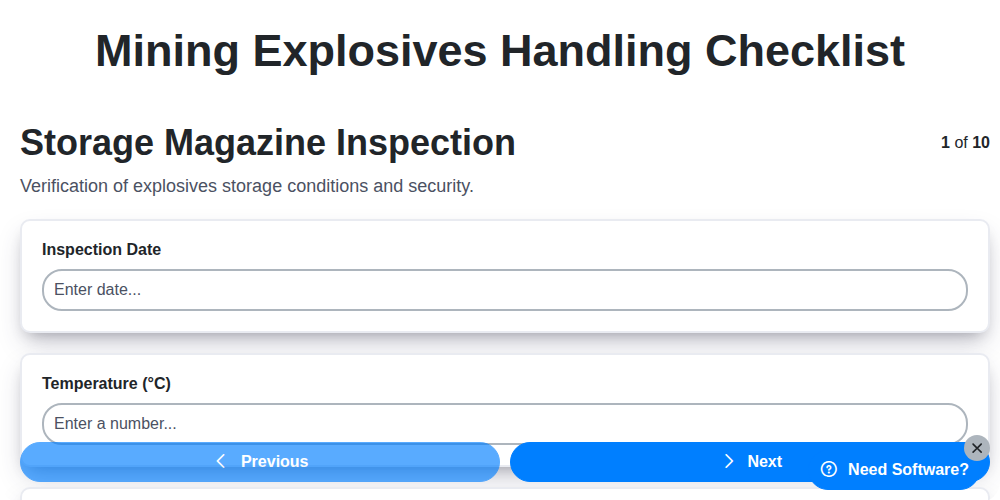
Ensuring Safety: Your Mining Explosives Handling Checklist Template
Ensuring Safety & Compliance: Your Mining Noise Monitoring Checklist Guide
Need help with
Mining Management?
Have a question? We're here to help. Please submit your inquiry, and we'll respond promptly.