Mining Safety Essentials: Your Lockout Tagout (LOTO) Checklist Template
Published: 20/11/2025 Updated: 02/07/2026
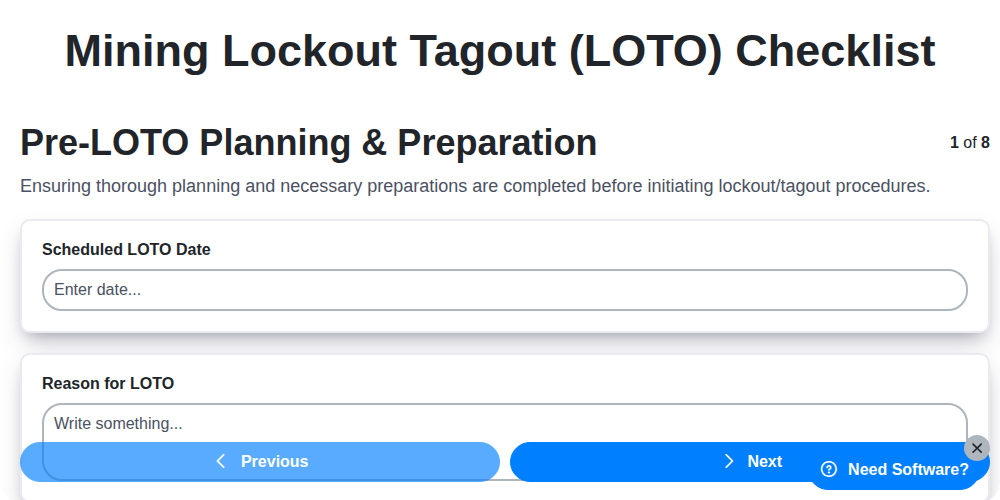
Table of Contents
- Introduction: Why Lockout Tagout is Critical in Mining
- Understanding the Risks: What Happens Without LOTO?
- Lockout Tagout Checklist: A Step-by-Step Guide
- 1. Pre-LOTO Planning & Preparation: Laying the Foundation
- 2. Equipment Identification & Isolation: Pinpointing the Hazards
- 3. Energy Source Isolation: Cutting Off the Power
- 4. Lock and Tag Application: Securing the Isolation
- 5. Verification of Isolation: Confirming Safety
- 6. Communication & Authorization: Keeping Everyone Informed
- 7. LOTO Removal & Re-Energization: Restoring Operations Safely
- 8. Documentation & Record Keeping: Maintaining a Traceable System
- Conclusion: Elevating Mining Safety with LOTO
- Resources & Links
TLDR: Keep your mining operations safe with this Lockout Tagout (LOTO) checklist template! It guides you through every critical step - from planning and equipment ID to verification, removal, and record-keeping - ensuring machines are properly de-energized for maintenance and preventing accidents. Download the template and prioritize worker safety!
Introduction: Why Lockout Tagout is Critical in Mining
Mining operations are inherently complex and hazardous, involving heavy machinery, high-voltage electricity, and pressurized systems. A single lapse in safety can lead to catastrophic consequences, including serious injuries or even fatalities. That's where Lockout/Tagout (LOTO) procedures become absolutely critical. LOTO isn't just a regulatory requirement; it's a vital safety practice designed to protect miners from unexpected and dangerous energy releases during maintenance, repair, or servicing of equipment. This proactive approach minimizes the risk of accidental startup or release of hazardous energy, ensuring a safer working environment for everyone involved. Ignoring or cutting corners on LOTO can have devastating results, emphasizing the importance of a comprehensive and consistently followed procedure.
Understanding the Risks: What Happens Without LOTO?
The consequences of skipping or inadequately performing Lockout/Tagout (LOTO) procedures can be devastating. It's not just about minor inconveniences; it's about preventing serious injury or even fatalities. Imagine a maintenance worker unknowingly starting a machine while another is performing repairs - the potential for crushing, amputation, burns, or electrocution is incredibly high.
Beyond the immediate physical harm, failing to follow LOTO protocols exposes your company to significant legal and financial repercussions. OSHA citations can result in hefty fines, and lawsuits arising from workplace accidents can cripple a business. The reputational damage alone - the loss of trust from employees, customers, and the community - can be a lasting blow. Think about the impact on employee morale when they feel their safety isn't prioritized. Ultimately, skipping LOTO isn't a shortcut; it's a gamble with potentially catastrophic outcomes. It's a risk no responsible organization should ever take.
Lockout Tagout Checklist: A Step-by-Step Guide
A robust Lockout/Tagout (LOTO) program is vital for ensuring workplace safety and preventing accidental energization of equipment during maintenance or servicing. A comprehensive checklist is the backbone of any successful LOTO program, ensuring consistency and minimizing risk. Here's a detailed breakdown of the steps typically included, along with considerations for each:
1. Pre-LOTO Planning & Preparation:
- Hazard Assessment: Identify all potential energy sources (electrical, mechanical, hydraulic, pneumatic, chemical, thermal) associated with the equipment.
- Procedure Development: Establish a written LOTO procedure specific to the equipment, outlining step-by-step instructions. This should include designated authorized employees.
- Training: Ensure all employees involved in the LOTO process (authorized employees, affected employees) receive thorough training on procedures, hazards, and proper use of LOTO devices.
- Gather Supplies: Collect necessary locks, tags, personal protective equipment (PPE), and tools.
2. Equipment Identification & Isolation:
- Define Boundaries: Clearly identify the specific equipment or portion of equipment to be isolated.
- Identify Isolation Points: Determine the locations where energy sources can be effectively isolated (e.g., disconnect switches, valves, circuit breakers).
- Diagram/Sketch: Create or review existing diagrams showing isolation points and energy flow.
3. Energy Source Isolation:
- De-energize Equipment: Follow the documented procedure to shut down and de-energize the equipment. This often involves turning off power switches, closing valves, or bleeding pressure.
- Double Disconnect (Where Applicable): For certain energy sources, a double disconnection method is required - isolating the energy source using two independent devices.
- Vent/Discharge (Where Applicable): Safely vent or discharge any residual energy (e.g., hydraulic fluid, compressed air) from the equipment.
4. Lock and Tag Application:
- Apply Locks: Secure each isolation point with a personal lock, clearly identifying the authorized employee. Never use a shared lock.
- Apply Tags: Attach a tag to each lock, clearly stating:
- Employee's name
- Date and time of application
- Equipment being worked on
- Reason for LOTO
- Warning message (e.g., "Do Not Start," "Danger - Maintenance in Progress")
- Group Locks (If Necessary): When multiple employees are working on equipment, use a lockout box or a system to manage multiple locks.
5. Verification of Isolation:
- Test Procedures: Perform tests to verify that the equipment is completely de-energized and isolated. This might involve using a voltage meter, pressure gauge, or other appropriate testing equipment. Never rely solely on the appearance of the equipment.
- Visual Inspection: Visually inspect the equipment to confirm that no energy is being released or applied.
- "Bump Test" (With Caution): Carefully and cautiously perform a bump test (gently attempt to start the equipment) to further confirm isolation, only after other verification methods have been employed.
6. Communication & Authorization:
- Affected Employees Notification: Inform all affected employees (those who may need to approach or work near the isolated equipment) about the LOTO procedure.
- Authorization: Obtain authorization from the designated supervisor or authorized employee before work begins. Document this authorization.
7. LOTO Removal & Re-Energization:
- Notify Personnel: Inform all authorized employees who placed locks and tags that the maintenance or servicing is complete.
- Lock & Tag Removal: Each authorized employee removes their own lock and tag.
- System Restoration: Follow the documented procedure to restore power and re-energize the equipment.
- Affected Employees Notification: Notify affected employees that the equipment is being re-energized.
8. Documentation & Record Keeping:
- LOTO Procedures: Maintain up-to-date LOTO procedures.
- Training Records: Keep records of employee training.
- Audit Records: Regularly audit the LOTO program to identify areas for improvement.
- Incident Reports: Document any incidents or near misses related to LOTO procedures.
1. Pre-LOTO Planning & Preparation: Laying the Foundation
Effective Lockout/Tagout (LOTO) procedures begin long before any equipment is physically locked out. This crucial Pre-LOTO Planning & Preparation phase is the bedrock of a safe and compliant process. Rushing this step can lead to serious errors and, potentially, catastrophic incidents.
Here's what needs to be addressed:
- Hazard Assessment: Conduct a thorough hazard assessment of the equipment and tasks involved. This identifies potential energy sources and associated risks. Don't assume - investigate!
- Develop Written Procedures: A detailed, written LOTO procedure must exist for each piece of equipment. This procedure should be specific, clear, and easy to understand. It shouldn't be a generic document; it needs to reflect the equipment's unique configuration.
- Employee Training: Ensure all authorized employees are properly trained on the specific LOTO procedures for the equipment they'll be working on. Training should cover the reasons for LOTO, procedure steps, hazard recognition, and the importance of following the established protocols. Refreshers are vital.
- Gather Necessary Tools & Materials: This includes locks, tags, tools to isolate energy sources (e.g., valve wrenches, electrical test equipment), and personal protective equipment (PPE). Having everything readily available streamlines the process and minimizes the potential for shortcuts.
- Review & Update: Regularly review and update LOTO procedures. Changes in equipment, processes, or regulations necessitate revisions to maintain accuracy and effectiveness.
A well-executed Pre-LOTO Planning & Preparation phase directly contributes to the overall success and safety of your LOTO program.
2. Equipment Identification & Isolation: Pinpointing the Hazards
This stage is critical - rushing it can have devastating consequences. Before you even think about locks and tags, you need to know what you're isolating. It's not enough to simply assume you understand the equipment; a thorough, documented identification process is vital.
Here's what this step entails:
- Comprehensive Inventory: Begin with a detailed inventory of all equipment within the work area that could potentially release hazardous energy. Don't limit your scope; consider everything from obvious power sources to seemingly minor pneumatic or hydraulic systems.
- Hazard Assessment: Identify all potential energy sources associated with each piece of equipment. This includes electrical, mechanical, hydraulic, pneumatic, chemical, thermal, and gravity energy. Consider both obvious and hidden energy sources - a compressed air line might be less obvious than a high-voltage cable.
- Detailed Schematics & Diagrams: Utilize equipment schematics, piping & instrumentation diagrams (P&IDs), and other relevant documentation to understand the equipment's construction and energy pathways. These diagrams are invaluable for identifying all potential isolation points. If documentation is missing or outdated, stop and obtain it before proceeding.
- Clear Marking & Labeling: Clearly mark each isolation point with a durable and readily understandable label. The label should specify the equipment being isolated and, ideally, the specific energy source being controlled. Consistency in labeling across all equipment is key.
- Team Collaboration: Involve experienced personnel who are familiar with the equipment's operation and potential hazards in the identification process. Their insight is invaluable.
- Document the Findings: Maintain a detailed record of the equipment identified, the associated energy sources, and the isolation points. This documentation is essential for training, future LOTO procedures, and auditing purposes.
Failure to accurately identify and isolate equipment sets the stage for a potential incident. Take your time, be thorough, and prioritize accuracy.
3. Energy Source Isolation: Cutting Off the Power
This is arguably the most critical step in the LOTO process. Improper isolation can lead to catastrophic accidents. It's not enough to simply turn something off. This stage involves physically disconnecting energy sources from the equipment being serviced.
Understanding Your Energy Sources: Before you even touch anything, be absolutely certain you know all potential energy sources. This includes:
- Electrical: Motors, circuits, control panels - identify all connections and disconnect them appropriately using circuit breakers, disconnect switches, and pullers. Ensure proper grounding.
- Mechanical: Springs under pressure, rotating shafts, gravity-powered systems. Block and chock these to prevent unexpected movement.
- Hydraulic: Pressure lines need to be bled or blocked. Verify zero pressure readings using gauges.
- Pneumatic: Air lines must be disconnected and bled down.
- Chemical: Disconnect and purge lines to eliminate hazardous materials.
- Thermal: Hot surfaces or fluids need to be allowed to cool down and insulated.
- Gravitational Potential Energy: Secure equipment elevated or at an incline.
The Isolation Process:
- Disconnect: Physically disconnect the energy source. Don't rely on a simple switch; actively isolate.
- De-Energize: Confirm the energy source is de-energized. For electrical systems, use a voltage tester to verify zero voltage. For hydraulics and pneumatics, monitor pressure gauges.
- Blind & Lock: Where possible, physically block (blind) lines or valves after disconnection to prevent accidental reconnection. Then, apply a lock.
- Double-Check: Before moving on, double-check your isolation procedures with a knowledgeable colleague. A second pair of eyes can catch errors you might have missed.
Important Note: Never assume a system is de-energized. Always verify.
4. Lock and Tag Application: Securing the Isolation
This is the critical step where you physically secure the isolation points. Simply isolating energy sources isn't enough; you need to prove that isolation remains intact and prevent unauthorized re-energization.
Lock Application: Each authorized employee performing LOTO must apply a personal lock to each isolation point. These locks must be unique to the individual, key-controlled (meaning only they have the key), and clearly labeled with their name and department. Avoid master lock systems as they compromise the integrity of the process. The lock should be secured in a way that visibly indicates the point is locked out and prevents anyone from easily bypassing it.
Tag Application: Alongside each lock, a durable, weather-resistant tag must be attached. These tags serve as vital warnings to others. They should clearly state:
- The reason for the lockout: (e.g., Maintenance - Do Not Operate)
- The name of the authorized employee who applied the lock.
- The date and time of application.
- Any specific hazards present.
Tags shouldn't be generic; they should be tailored to the specific equipment and task. Use bold and clear lettering for maximum visibility. Remember, the tag is a communication tool - it's there to prevent accidental or unauthorized re-energization.
Important Considerations:
- Multiple Lockout/Tagout Points: If multiple employees are involved, each must apply their own lock and tag. No single employee can lock out for another.
- Group Lockout Procedures: For situations requiring group lockout, a designated person, usually a qualified supervisor, must oversee the process and ensure that all required locks and tags are in place. A specific, documented process for group LOTO is essential.
- Lock Management: Lost or damaged locks must be replaced immediately. A strict lock inventory and management system should be in place to prevent unauthorized lock usage.
5. Verification of Isolation: Confirming Safety
Verification isn't just a box to check; it's the critical step that confirms your LOTO procedures are actually working. It's your final assurance that hazardous energy sources are truly controlled before work begins. This isn't a visual inspection alone - it's an active, deliberate process.
Here's what effective verification entails:
- Testing the Isolation: After applying locks and tags, actively test the equipment to ensure it's de-energized. This might involve using a voltage meter to confirm power is off, checking a pressure gauge to ensure pressure is released, or observing a rotating shaft to ensure it's stopped. The specific test depends on the energy source involved.
- Independent Verification: Whenever possible, have a second qualified person perform the verification. This independent check helps catch any errors or omissions in the process. Their role is to confirm the lockout/tagout devices are correctly applied and the equipment is demonstrably isolated.
- Document the Verification: Record the verification process, including the tools used, the results obtained, and the name of the person performing the verification. This documentation serves as evidence of due diligence and provides a valuable record for future audits.
- Don't Assume: Never assume isolation is complete. Always verify. A false sense of security can lead to serious injury or even fatality.
Remember, verification is your last line of defense - make sure it's robust and reliable.
6. Communication & Authorization: Keeping Everyone Informed
Lockout/Tagout (LOTO) isn't just about securing equipment; it's about ensuring everyone involved - from the authorized employee performing the work to supervisors and potentially other personnel in the area - understands what's happening and why. This section highlights the critical role communication and authorization play in a safe and effective LOTO program.
Who Needs to Know?
The list includes, but isn't limited to:
- Authorized Employee: The individual performing the work who applies the locks and tags.
- Affected Employees: Those working near the isolated equipment or whose job duties could be affected by the LOTO.
- Supervisors/Management: Responsible for ensuring procedures are followed and that work is properly authorized.
- Maintenance Personnel: Those who may need to be aware of the isolation for their own tasks.
The Communication Process:
- Pre-LOTO Briefing: Conduct a brief meeting to discuss the scope of the work, potential hazards, and the LOTO procedures that will be followed. Ensure everyone understands the isolation points and the rationale behind them.
- Clear Tagging: Tags should clearly state the reason for the LOTO, the date and time, the name of the authorized employee, and any specific warnings.
- Visual Communication: Use signage to indicate that equipment is locked out and tagout procedures are in effect. This can be especially important in shared workspaces.
- Regular Updates: Keep everyone informed of any changes to the LOTO status.
Authorization is Key:
- Written Authorization: Obtain written authorization from the appropriate supervisor or management before beginning the LOTO process. This validates that the work is necessary and that the employee is qualified.
- Verification of Understanding: Ensure all involved parties understand the hazards and the LOTO procedures.
- No Unauthorized Removal: Strict protocols must be in place to prevent unauthorized removal of locks and tags.
Effective communication and authorization aren't optional; they are integral to creating a safe working environment and preventing accidental re-energization.
7. LOTO Removal & Re-Energization: Restoring Operations Safely
Removing LOTO devices and re-energizing equipment is just as critical as the initial lockout/tagout procedure. Rushing this final stage can negate all the safety precautions taken beforehand and lead to serious injury. Here's a breakdown of the steps to ensure a safe return to operations:
1. Verify Authorization: Before any LOTO device is removed, confirm that all authorized personnel who initially applied the locks and tags have acknowledged that the work is complete and they are ready for re-energization. This often involves a formal check-off process on the LOTO permit.
2. Inspect Equipment: A quick visual inspection of the equipment is vital. Confirm that any temporary modifications or bypasses used during maintenance are removed and that the equipment is in the condition it was before LOTO was implemented. Look for any signs of damage that might have occurred during maintenance.
3. Remove Locks and Tags (in Reverse Order): Locks and tags should be removed in the reverse order they were applied. This ensures a systematic and controlled return to operation. Each removal should be witnessed and documented (see section on documentation).
4. Communicate Re-Energization: Clearly communicate to all personnel in the area that the equipment is about to be re-energized. A verbal announcement and visual signals (like a horn or flashing light) are common practices.
5. Gradual Re-Energization (where applicable): For complex equipment, consider a gradual re-energization process. This can help identify any unforeseen issues before full operation begins.
6. Post-Re-Energization Observation: After re-energizing, observe the equipment's operation for a short period. Verify that it's functioning correctly and that all safety features are operating as intended.
7. Record Removal: Document the removal of each lock and tag, including the names of the individuals who removed them, the time of removal, and any relevant observations.
Important Note: Never remove a LOTO device if you are unsure about the procedure or if you suspect any hazards remain. Immediately report any concerns to your supervisor.
8. Documentation & Record Keeping: Maintaining a Traceable System
Lockout/Tagout (LOTO) isn't complete until meticulous records are kept. Proper documentation isn't just a box to check; it's a vital element of a robust LOTO program, proving compliance, facilitating audits, and aiding in incident investigation.
What Needs to Be Documented?
Your LOTO documentation should comprehensively cover the entire process, including:
- LOTO Procedures: Clearly documented procedures, readily accessible to all authorized employees. These should detail the specific steps for each piece of equipment.
- Equipment-Specific LOTO Plans: For complex equipment, create detailed plans outlining isolation points, locking/tagging requirements, and specific energy sources.
- Lock and Tag Inventory: Maintain a record of all locks and tags issued, including who has them and for which equipment. This prevents unauthorized use or loss.
- Authorized Employee List: Keep an updated list of employees authorized to perform LOTO procedures. Include training dates and expiry dates.
- LOTO Logs: A detailed log should record each LOTO activity, including:
- Date and Time
- Employee Performing LOTO
- Equipment Isolated
- Energy Sources Isolated
- Lock and Tag Numbers Used
- Verification Results
- Shift/Employee Taking Over (if applicable)
- Audit Records: Document all LOTO audits conducted, detailing findings and corrective actions taken.
Why is Documentation Critical?
- Compliance: Demonstrates adherence to OSHA regulations and company policies.
- Accountability: Provides a clear audit trail for each LOTO activity.
- Continuous Improvement: Allows for review and improvement of LOTO procedures based on past experiences and audits.
- Incident Prevention: Helps identify potential hazards and gaps in the LOTO program.
- Training Reinforcement: Provides a readily available reference for training and refresher training.
Best Practices for Record Keeping:
- Use a Consistent Format: Standardized forms ensure uniformity and ease of review.
- Secure Storage: Protect records from damage or unauthorized access. Consider digital storage with appropriate security measures.
- Regular Review: Periodically review records to identify trends and areas for improvement.
- Retention Policy: Establish a clear retention policy for LOTO records.
Effective documentation transforms LOTO from a procedural obligation into a powerful tool for workplace safety.
Conclusion: Elevating Mining Safety with LOTO
Implementing a robust Lockout Tagout (LOTO) program isn't just about ticking boxes; it's about fostering a safety-first culture within your mining operation. As we've explored, a thorough checklist - encompassing pre-planning, equipment identification, isolation procedures, verification, communication, and meticulous documentation - is the cornerstone of effective LOTO.
By consistently adhering to a detailed checklist, you're not just minimizing the risk of accidental energization and potential injuries; you're empowering your workforce with the knowledge and procedures to work safely. Investing in LOTO training, regularly reviewing and updating your checklist to reflect changes in equipment and processes, and ensuring unwavering commitment from all levels of management are critical for sustained success. Ultimately, a well-executed LOTO program transforms potential hazards into preventable incidents, contributing to a safer, more productive, and more reliable mining environment for everyone.
Resources & Links
- OSHA Lockout/Tagout Standard: The official OSHA page detailing the Lockout/Tagout standard (29 CFR 1910.147), including regulations, guidelines, and FAQs. Essential for understanding legal requirements.
- NIOSH Lockout/Tagout Resources: The National Institute for Occupational Safety and Health (NIOSH) provides research, publications, and resources related to Lockout/Tagout, often focusing on best practices and preventing incidents.
- American Society of Safety Professionals (ASSP): ASSP provides training, publications, and resources related to safety management, including Lockout/Tagout. Members can access specialized tools and best practices.
- EHS Insight - Lockout Tagout: EHS Insight offers articles, templates, and resources related to environmental, health, and safety topics, including comprehensive information and insights on Lockout Tagout procedures.
- Reliable Controls - Lockout Tagout Solutions: Reliable Controls provides LOTO hardware, training, and consulting. Their website offers insights into LOTO equipment and best practices.
- Banner Engineering - Lockout Tagout Solutions: Banner Engineering specializes in industrial safety solutions, including LOTO hardware and systems. Their website provides product information and safety guidance.
- Wide-Open West - Lockout Tagout: Wide-Open West provides safety training and consulting services. Their website provides insight into best practice to develop an effective LOTO program.
- Global Safety Solutions: Global Safety Solutions offer a wide range of safety services, including LOTO training and consulting. Explore their resources for comprehensive support.
- Safety Solutions, Inc.: Safety Solutions, Inc. is a provider of safety equipment and services. They may offer Lockout/Tagout hardware and resources.
- Lockout Tagout Training Company: Specialized in LOTO training, offering courses and resources to enhance understanding and compliance.
Frequently Asked Questions
Where can I find more information about LOTO regulations?
Regulations vary by location. In the US, consult OSHA's LOTO standard (29 CFR 1910.147). Contact your local safety authority or consult industry best practices for more information.
Comments
There are no comments yet. Be the first to add one!
Mining Management Solution Demo
Maximize efficiency & safety in mining operations! ChecklistGuro streamlines task management, equipment tracking, and compliance reporting. Optimize workflows, reduce risk, & boost productivity. Manage it all with our Work OS.
Related Articles
Ensuring Mine Safety: Your Geotechnical Stability Checklist Guide
Ensuring Safety & Efficiency: Your Mine Haul Road Inspection Checklist Guide
Mastering Mine Safety: Your Guide to the Ground Control Checklist
Mining Security Procedures Checklist: A Comprehensive Template for Safety
Ensuring Safety: Your Mining Incident Reporting Checklist Guide
Ensuring Safety Underground: Your Mine Traffic Management Checklist Guide
Ensuring Safety: Your Mining Explosives Handling Checklist Template
Ensuring Safety & Compliance: Your Mining Noise Monitoring Checklist Guide
Need help with
Mining Management?
Have a question? We're here to help. Please submit your inquiry, and we'll respond promptly.