Mastering Pharmaceutical Traceability: Your BOM Checklist Template
Published: 12/10/2025 10:00 PM Updated: 12/14/2025 7:56 AM
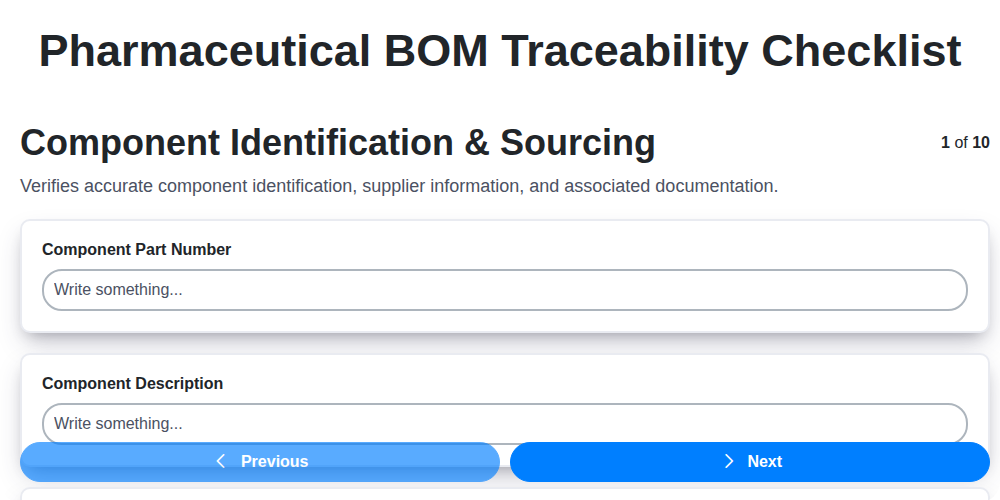
Table of Contents
- Introduction: Why BOM Traceability is Critical in Pharma
- Understanding the Pharmaceutical BOM (Bill of Materials)
- 1. Component Identification & Sourcing: The Foundation of Traceability
- 2. Lot & Serial Number Tracking: Establishing a Chain of Custody
- 3. Supplier Qualification & Audits: Ensuring Material Integrity
- 4. Material Certificates & Testing: Verifying Specifications
- 5. Change Control & Approvals: Managing Material Modifications
- 6. Documentation & Record Keeping: The Backbone of Compliance
- 7. Deviation Reporting & Investigation: Addressing Anomalies
- 8. Regulatory Compliance & Validation: Meeting Stringent Requirements
- 9. Training & Competency: Empowering Your Team
- 10. System Integration & Data Integrity: Connecting the Dots
- 11. Common Challenges in Pharmaceutical BOM Traceability
- Conclusion: Building a Robust Traceability System
- Resources & Links
TLDR: Pharmaceutical traceability is vital! This checklist template guides you through the process - from sourcing components to regulatory validation - ensuring full BOM (Bill of Materials) visibility, accurate lot/serial number tracking, and solid documentation. Use it to minimize risk, streamline audits, and guarantee product quality and patient safety.
Introduction: Why BOM Traceability is Critical in Pharma
In the pharmaceutical industry, precision and accountability aren't just best practices - they're life-saving necessities. A Bill of Materials (BOM) is the foundation of any drug product, meticulously outlining every ingredient, component, and packaging material needed for manufacturing. Traceability, the ability to track these components throughout the entire supply chain, isn't just a nice-to-have; it's a regulatory imperative and a cornerstone of product safety and quality.
Without robust BOM traceability, identifying the root cause of issues - whether it's a contamination event or a quality defect - becomes a complex and potentially dangerous guessing game. It can lead to costly recalls, production delays, and, most importantly, put patients at risk. Regulatory bodies like the FDA and EMA increasingly emphasize the importance of traceability, demanding detailed records and demonstrable control over the entire manufacturing process. Implementing a comprehensive BOM traceability system isn't merely about meeting compliance; it's about safeguarding patient health and building trust in your pharmaceutical products. This checklist will guide you through the key elements of a successful pharmaceutical BOM traceability program.
Understanding the Pharmaceutical BOM (Bill of Materials)
A Bill of Materials (BOM) in the pharmaceutical industry is far more than a simple list of ingredients. It's a comprehensive, hierarchical representation of everything required to manufacture a drug product. This includes not just the active pharmaceutical ingredient (API) and excipients, but also the packaging components (containers, closures, labels), processing aids, cleaning agents, and even the raw materials used to create those items.
Think of it as a detailed recipe, but one with far greater scrutiny and regulatory implications. A robust BOM is the foundation for traceability, ensuring that every component, from its origin to its inclusion in the final product, can be accounted for. This is critical for patient safety, product quality, and regulatory compliance. Inaccurate or incomplete BOMs can lead to recalls, delays in approvals, and potential harm to patients. Therefore, a well-defined and meticulously maintained BOM is absolutely essential for pharmaceutical manufacturers.
1. Component Identification & Sourcing: The Foundation of Traceability
The journey to robust pharmaceutical BOM (Bill of Materials) traceability begins long before a single product is manufactured. It starts with meticulous component identification and sourcing. This isn't simply about knowing what you're using; it's about knowing exactly what, where it came from, and its inherent characteristics.
Key Elements of Effective Component Identification & Sourcing:
- Unique Identifiers: Each component, regardless of size or complexity, needs a unique identifier. This could be a standardized part number, internal code, or a combination. This identifier must be consistently applied across all documentation and systems.
- Detailed Specifications: Clearly defined specifications for each component are crucial. These should include technical specifications, purity levels, acceptable ranges, and any relevant performance criteria.
- Approved Supplier List (ASL): Maintaining a rigorously vetted ASL is paramount. Components should only be sourced from approved suppliers who meet predefined quality standards.
- Supplier Documentation Requirements: Explicitly require suppliers to provide comprehensive documentation for each component, including certificates of analysis, safety data sheets (SDS), and potentially more detailed testing results.
- Material Composition Disclosure: Demand full transparency regarding the material composition of components, including excipients and potential contaminants.
- Component Genealogy: Strive to understand the origin and manufacturing process of the components themselves - the 'genealogy' of the material.
Without a strong foundation in component identification and sourcing, traceability efforts further down the process become significantly more difficult and unreliable. Investing time and resources here is the bedrock of a successful traceability program.
2. Lot & Serial Number Tracking: Establishing a Chain of Custody
In the pharmaceutical industry, a robust system for lot and serial number tracking isn't just good practice - it's a regulatory requirement. This level of granularity is critical for complete product traceability, allowing you to pinpoint the origin of any component and follow its journey throughout the manufacturing process. Without it, responding to recalls, identifying root causes of quality issues, and demonstrating compliance becomes significantly more challenging, and potentially devastating.
Implementing effective lot and serial number tracking involves more than simply assigning numbers. It requires a comprehensive strategy. Each component, from raw materials to packaging materials, should be assigned a unique identifier - a lot number to denote a specific production batch and a serial number for individual, trackable units where applicable.
Here's what a successful lot & serial number tracking system should include:
- Unique Identifiers: Assigning clear, unambiguous lot and serial numbers, adhering to a predefined and documented system.
- Comprehensive Tracking: Recording every transaction, including receiving, dispensing, processing, testing, and shipping, linking it directly to the relevant lot and/or serial number.
- Real-time Visibility: Utilizing systems that offer real-time visibility into the location and status of materials. Barcode scanners, RFID tags, and integrated software solutions are invaluable tools.
- Data Integrity: Ensuring the accuracy and reliability of tracking data. This requires strict access controls, audit trails, and validation of tracking systems.
- Systematic Retrieval: Having a system capable of quickly and efficiently retrieving all information associated with a specific lot or serial number, allowing for rapid investigation and corrective action.
By meticulously tracking lot and serial numbers, pharmaceutical manufacturers build a robust chain of custody, providing unwavering confidence in the integrity and traceability of their products.
3. Supplier Qualification & Audits: Ensuring Material Integrity
The integrity of your pharmaceutical Bill of Materials (BOM) hinges not only on meticulous internal processes but also on the reliability of your suppliers. A robust supplier qualification and audit program is paramount for ensuring the quality and traceability of your raw materials, excipients, and packaging components. This goes beyond simply having a list of approved vendors; it's about verifying their capabilities and ongoing commitment to quality.
Key Components of a Strong Supplier Program:
- Initial Qualification: Before onboarding any supplier, a comprehensive assessment is crucial. This includes evaluating their quality management system (QMS), manufacturing processes, financial stability, and their understanding of your specific requirements. Questionnaires, on-site visits, and review of documentation are essential.
- Risk-Based Approach: Prioritize suppliers based on the criticality of the materials they provide. Materials impacting patient safety or product efficacy should be subject to more rigorous assessments.
- Periodic Audits: Regular audits, both announced and unannounced, are vital to verify ongoing compliance. These should encompass aspects like raw material sourcing, testing procedures, change control processes, and adherence to Good Manufacturing Practices (GMP).
- Audit Findings & Corrective Actions: Documented audit findings must be addressed with robust corrective and preventive actions (CAPA). Follow-up audits are necessary to ensure effectiveness.
- Supplier Performance Monitoring: Track supplier performance metrics (e.g., on-time delivery, quality complaints, deviations) to identify trends and potential issues.
- Approved Supplier List (ASL) Maintenance: Regularly review and update your ASL based on performance, audit results, and changing regulatory requirements.
A proactive and diligent supplier qualification and audit program provides assurance that your materials meet the stringent quality standards expected within the pharmaceutical industry, contributing directly to the traceability and integrity of your BOM.
4. Material Certificates & Testing: Verifying Specifications
Ensuring the quality and integrity of your pharmaceutical product begins with rigorous verification of incoming materials. This section of your BOM traceability checklist focuses on confirming that all raw materials and components meet pre-defined specifications. Simply accepting a supplier's statement isn't sufficient; independent verification is essential.
Key Activities:
- Certificate of Analysis (CoA) Review: Each material delivery should be accompanied by a CoA from the supplier. This document outlines the material's properties and test results against defined specifications. Thoroughly review each CoA, checking for adherence to agreed-upon limits for parameters like purity, potency, particle size, and heavy metal content. Discrepancies should trigger immediate investigation and potential rejection of the material.
- Incoming Material Testing: Implement a robust incoming material testing program. This program should include sampling plans and defined acceptance criteria aligned with your specifications and regulatory requirements. Testing should be performed by qualified personnel using validated methods and calibrated equipment. Consider both routine and statistically relevant testing.
- Method Validation/Verification: Ensure the testing methods used are validated or verified to demonstrate their accuracy, precision, and reliability. This is especially critical for in-house testing labs.
- Reference Standards & Controls: Utilize appropriate reference standards and controls to ensure the accuracy and comparability of testing results. Regularly calibrate and maintain these standards.
- Retain Samples: Maintain retain samples of all incoming materials for future reference, testing, or investigations. These samples should be stored under appropriate conditions and be readily accessible.
- Documentation: Meticulously document all testing results, CoA reviews, and any deviations from specifications. Include the date, analyst initials, and any corrective actions taken.
Effective material certificate and testing protocols are a cornerstone of pharmaceutical BOM traceability, providing crucial evidence of material quality and supporting regulatory compliance.
5. Change Control & Approvals: Managing Material Modifications
The pharmaceutical industry thrives on precision and consistency. Any alteration to a Bill of Materials (BOM), even seemingly minor ones, can have cascading effects on product quality, safety, and efficacy. A robust change control process is therefore paramount for maintaining BOM traceability.
This section of your traceability checklist must explicitly address how material modifications are managed from initiation to implementation. It's not enough to simply react to changes; proactive control is key. Consider these critical elements:
- Formal Change Request Process: Establish a documented process for requesting material changes. This should include a standardized form capturing details like the proposed change, rationale, impact assessment, and requester information.
- Impact Assessment: A thorough assessment is vital. Evaluate the potential impact of the change on product quality, performance, manufacturing processes, equipment, documentation, and regulatory compliance. This requires cross-functional input (e.g., Manufacturing, Quality, R&D).
- Risk Assessment: Always incorporate a risk assessment to quantify the potential risks associated with the change. This helps prioritize changes and determine the level of scrutiny required.
- Approval Workflow: Define a clear and documented approval workflow with defined roles and responsibilities. Changes typically require approval from individuals with the appropriate expertise and authority.
- Documentation of Changes: Meticulously document all changes, including the original request, the impact assessment, risk assessment, approval history, and the updated BOM.
- Communication & Notification: Ensure that all affected parties (suppliers, manufacturing personnel, quality control) are promptly notified of approved changes.
- Validation & Verification: Following implementation, validation or verification activities should be performed to ensure the change has been successfully implemented and does not negatively impact product quality.
- Traceability Linkage: The change control system must be integrated with your overall BOM traceability system. This ensures that the rationale and approval history for a material change are readily accessible alongside other traceability information.
Failure to effectively manage change control can lead to significant compliance issues, product recalls, and damage to your company's reputation.
6. Documentation & Record Keeping: The Backbone of Compliance
Pharmaceutical BOM (Bill of Materials) traceability isn't just about tracking components; it's about proving you're doing so. Robust documentation and record keeping form the bedrock of a successful traceability program and are often the first area regulators scrutinize during audits. It's not enough to have a process; you need demonstrable evidence that it's being followed consistently and correctly.
This encompasses a wide range of records, including:
- BOM revisions: Meticulously track every change to your BOM, clearly outlining the reason for the change, who approved it, and the effective date.
- Supplier Agreements: Maintain copies of all supplier contracts, qualification documents, and audit reports, readily accessible for review.
- Material Certificates of Analysis (CoA): Securely archive all CoAs received from suppliers, ensuring they accurately reflect the materials received and meet specified quality attributes.
- Testing Records: Document all testing performed on materials and components, including results, methods, and equipment used.
- Traceability Logs: Maintain detailed logs for each component, capturing its origin, lot/serial numbers, processing steps, and current location throughout the supply chain.
- Deviation Reports: As discussed earlier, records of all deviations and their subsequent investigations are critical.
- Training Records: Document all training provided to personnel involved in the traceability process, including dates, topics covered, and assessment results.
Best Practices for Effective Documentation:
- Electronic Systems: Leverage electronic systems (e.g., LIMS, MES, ERP) to automate data capture, reduce errors, and improve accessibility. Ensure these systems are validated and adhere to ALCOA principles (Attributable, Legible, Contemporaneous, Original, and Accurate).
- Version Control: Implement robust version control for all documents, preventing unauthorized modifications and ensuring everyone is working with the most current information.
- Controlled Access: Restrict access to critical records to authorized personnel only.
- Retention Policies: Establish clear record retention policies in accordance with regulatory requirements.
- Regular Audits: Periodically review your documentation practices to identify areas for improvement.
Without comprehensive and well-maintained documentation, your traceability efforts will be incomplete, vulnerable to regulatory scrutiny, and difficult to defend in the event of a recall or quality issue.
7. Deviation Reporting & Investigation: Addressing Anomalies
In the pharmaceutical industry, deviations are inevitable. They represent any unplanned event or observation that deviates from established procedures, specifications, or expected outcomes. Ignoring or inadequately addressing these deviations can have serious consequences, impacting product quality, patient safety, and regulatory compliance. A robust deviation reporting and investigation process is therefore a critical component of a comprehensive Bill of Materials (BOM) traceability system.
What constitutes a Deviation?
Deviations can range from minor inconsistencies in component characteristics to more significant issues like incorrect lot numbers used in a batch or unexpected material behavior. Examples might include:
- A slight variation in a component's dimensions outside of the defined tolerance.
- An expired material used unintentionally.
- A labeling error on a component container.
- A discrepancy between a purchase order and the received goods.
The Importance of a Structured Process:
A well-defined deviation management process should encompass the following elements:
- Clear Reporting Channels: Establish easy-to-use and accessible methods for personnel to report deviations. This includes anonymous reporting options to encourage transparency.
- Prompt Investigation: Initiate investigations promptly upon receiving a deviation report. A cross-functional team, including representatives from quality, manufacturing, and potentially sourcing, should be involved.
- Root Cause Analysis: Move beyond superficial observations and delve into the underlying root causes of the deviation. Techniques like the 5 Whys or Fishbone diagrams can be helpful.
- Corrective and Preventive Actions (CAPA): Develop and implement CAPA plans to not only address the immediate deviation but also prevent recurrence. These actions must be documented and their effectiveness monitored.
- Trend Analysis: Regularly analyze deviation data to identify patterns or systemic issues that may require broader process improvements within the BOM traceability system.
- Documentation: Meticulously document all aspects of the deviation, investigation, and CAPA process, linking it back to the specific BOM item and associated records.
Integration with Traceability:
Deviation reports should be directly linked to the component's traceability records. This allows for a complete picture of the deviation's impact - which lot numbers were affected, which suppliers were involved, and which downstream processes were potentially impacted. This enhanced visibility strengthens the BOM's overall integrity and allows for targeted corrective actions.
8. Regulatory Compliance & Validation: Meeting Stringent Requirements
The pharmaceutical industry operates under incredibly strict regulatory oversight - think FDA, EMA, and other global bodies. Demonstrating compliance with these regulations isn't just about ticking boxes; it's about establishing a robust, auditable system that assures product quality and patient safety. For a Bill of Materials (BOM) traceability system, this means meticulous validation and ongoing adherence to guidelines like 21 CFR Part 11 (for electronic records and signatures) and potentially Annex 1 (for medicinal products for human use).
Validation isn't a one-time event. It's a lifecycle activity. You need to validate the system itself - confirming it performs as intended and meets pre-defined acceptance criteria - and then continuously validate its use within the broader manufacturing process. Key aspects to address include:
- Data Integrity: Ensure data is attributable, legible, contemporaneous, original, and accurate (ALCOA principles). Validation protocols should specifically test these aspects.
- Audit Trails: Comprehensive audit trails are critical for tracking changes, user actions, and data access. Validation must confirm these trails are functioning correctly and are tamper-proof.
- System Security: Validation must address security measures to protect the BOM data from unauthorized access and modification.
- Process Validation: Demonstrate that the traceability process itself, when integrated into the manufacturing workflow, consistently delivers the intended results - accurate material tracking and accountability.
- Periodic Review: Regularly review validation documentation and update it as needed to reflect changes in processes, regulations, or technology.
Proactive regulatory compliance and thorough validation are not just about avoiding penalties; they're essential for maintaining the trust of patients and stakeholders.
9. Training & Competency: Empowering Your Team
Traceability isn't just about processes and systems; it's fundamentally about people. A robust Pharmaceutical Bill of Materials (BOM) traceability program is only as strong as the team executing it. Adequate training and ensuring competency are critical pillars supporting a successful implementation and ongoing maintenance.
This goes beyond simply showing employees how to use the tracking system. It involves a layered approach:
- Initial Onboarding: New hires must receive comprehensive training on the principles of traceability, the specific BOM, relevant SOPs (Standard Operating Procedures), and the systems they'll be using. This should include hands-on practice and assessments to confirm understanding.
- Role-Specific Training: Different roles within the traceability process require tailored training. For example, procurement specialists need in-depth knowledge of supplier qualification processes, while manufacturing personnel need a strong grasp of material handling and documentation.
- Refresher Training: Traceability requirements and best practices evolve. Regular refresher training ensures continued competency and reinforces best practices. This can be facilitated through workshops, online modules, or mentoring programs.
- System-Specific Training: As systems are updated or new ones are implemented, focused training is vital. This should cover all new features and functionalities related to BOM traceability.
- Competency Assessment: Regular assessment - through observations, audits, and knowledge checks - helps identify gaps in understanding and provides opportunities for further training and improvement. Documenting these assessments is crucial for demonstrating compliance.
Investing in your team's knowledge and skills isn't just a regulatory requirement; it fosters a culture of accountability, reduces errors, and strengthens the overall integrity of your pharmaceutical BOM traceability program. A well-trained and competent team is your greatest asset in ensuring product quality and patient safety.
10. System Integration & Data Integrity: Connecting the Dots
Pharmaceutical BOM (Bill of Materials) traceability isn't just about individual checks; it's about how those checks connect. A fragmented, manual process using spreadsheets and paper records is inherently susceptible to errors and lacks the real-time visibility needed for robust traceability. This is where system integration and data integrity become absolutely critical.
Ideally, your BOM traceability checklist should be supported by an integrated system - think Electronic Lab Notebooks (ELNs), Manufacturing Execution Systems (MES), Quality Management Systems (QMS), and Enterprise Resource Planning (ERP) platforms. This isn't just about convenience; it's about foundationally improving data integrity.
Here's why system integration is vital:
- Automated Data Flow: Eliminate manual data entry and the associated transcription errors. Data flows automatically from component sourcing to finished product release, creating an unbroken chain of custody.
- Real-time Visibility: Gain instant access to the status of components, materials, and batches throughout the entire supply chain. This allows for proactive risk mitigation and rapid response to issues.
- Data Consistency & Accuracy: Integrated systems enforce data standards and validation rules, reducing inconsistencies and improving data accuracy. Think controlled vocabularies, mandatory fields, and automated calculations.
- Audit Trail Enhancement: A centralized, integrated system provides a comprehensive, tamper-proof audit trail of all actions and changes made throughout the BOM traceability process.
- Data Security: Robust systems often include security features to protect sensitive data and control access based on user roles.
Focus on Data Integrity: System integration is only as good as the data within it. Data validation, user training, and periodic system integrity checks are essential to ensuring the reliability of your traceability information. Remember, "garbage in, garbage out" applies here. Prioritize robust data governance procedures to safeguard the integrity of your BOM traceability data.
11. Common Challenges in Pharmaceutical BOM Traceability
Implementing and maintaining a robust Bill of Materials (BOM) traceability system in the pharmaceutical industry isn't always straightforward. Several hurdles can arise, hindering efficiency and potentially impacting compliance. Here are some of the most common challenges:
Data Silos & System Fragmentation: Many pharmaceutical companies utilize disparate systems for procurement, inventory management, quality control, and production. This creates data silos, making it difficult to connect the dots across the entire BOM lifecycle and establish a single, auditable trail. Integration is often complex and costly.
Supplier Variability & Data Quality: Reliance on external suppliers introduces variability. Suppliers may have differing levels of data quality, format consistency, and willingness to participate in traceability efforts. Inconsistent supplier data can compromise the integrity of the entire BOM.
Manual Processes & Human Error: While digitalization is gaining traction, many organizations still rely on manual data entry and tracking. This increases the risk of human error, which can lead to inaccurate records and traceability gaps.
Complexity of Global Supply Chains: Pharmaceutical supply chains are often global, involving multiple tiers of suppliers and distributors. This complexity makes it difficult to maintain visibility and control over all components and materials.
Lack of Standardized Data Formats: The absence of universally adopted data formats for material certificates, testing results, and supplier audits creates challenges in data exchange and comparability.
Resistance to Change & Training Gaps: Implementing a new traceability system often requires significant changes to existing workflows and employee training. Resistance to change and a lack of competency can slow down adoption and undermine effectiveness.
Cost of Implementation & Maintenance: Implementing a comprehensive traceability system, especially one leveraging digital technologies, can be a substantial investment. Ongoing maintenance, system upgrades, and data validation also contribute to the overall cost.
Balancing Traceability with Efficiency: While traceability is crucial, overly complex and burdensome processes can negatively impact production efficiency and increase costs. Finding the right balance is critical.
Managing Legacy Systems: Many pharmaceutical companies operate with legacy systems that are difficult to integrate with modern traceability solutions, creating a hybrid environment with compatibility issues.
Scalability Challenges: A traceability system that works well for a smaller product portfolio might struggle to scale as a company expands its operations or introduces new products.
Maintaining Data Integrity Over Time: Ensuring data accuracy and completeness requires ongoing validation, cleansing, and archival efforts, particularly as data ages and personnel change.
Conclusion: Building a Robust Traceability System
Implementing a Pharmaceutical Bill of Materials (BOM) Traceability Checklist isn't simply about ticking boxes; it's about establishing a culture of accountability and continuous improvement. As we've explored, a robust system encompassing Component Identification, Lot & Serial Number Tracking, Supplier Qualification, Material Certificates, Change Control, Deviation Reporting, Regulatory Compliance, Training, System Integration, and diligent Record Keeping, is absolutely critical for ensuring product safety, quality, and regulatory adherence.
The journey to full traceability requires commitment from all levels of the organization, from procurement to quality control to manufacturing. Regular reviews of your checklist, adapting to evolving regulations and internal process improvements, are essential. Remember, a reactive approach to traceability will always be more costly and potentially damaging than a proactive, well-documented system. Ultimately, a comprehensive traceability system isn't just a requirement - it's a cornerstone of a successful and trustworthy pharmaceutical operation.
Resources & Links
- U.S. Food and Drug Administration (FDA): The FDA website is the primary source for pharmaceutical regulations, guidance documents, and compliance requirements. Navigate to sections on drug manufacturing, supply chain security, and recalls for essential information on traceability obligations. Includes information on DSCSA.
- European Medicines Agency (EMA): Similar to the FDA, the EMA provides regulatory guidelines and information specific to the European Union's pharmaceutical market. Explore their publications on quality management, GMP, and serialization.
- United States Pharmacopeia (USP): USP sets standards for pharmaceutical ingredients, excipients, and manufacturing processes. Their publications provide detailed specifications and testing methods, crucial for material verification and compliance.
- International Society for Pharmaceutical Engineering (ISPE): ISPE provides industry best practices, guidance documents, and training on pharmaceutical manufacturing and quality systems, including topics related to traceability and serialization.
- Parenteral Drug Association (PDA): PDA focuses on sterile products and quality. They offer resources and webinars on aseptic processing, contamination control, and quality assurance, all relevant to maintaining traceability in pharmaceutical manufacturing.
- GS1: GS1 is a standards organization that defines barcodes, RFID, and other identifiers used for product tracking. Understanding GS1 standards is essential for implementing a robust traceability system.
- Pharmaceutical Online: A comprehensive online resource for the pharmaceutical industry, including articles, webinars, and white papers on various aspects of manufacturing, quality, and regulatory compliance. Search for 'traceability,' 'BOM,' and 'serialization'.
- Quality Digest: A website offering a broad range of content related to quality management, including case studies, articles, and analysis relevant to pharmaceutical traceability.
- Pharmaceutical Manufacturing: This website delivers news and insights into pharmaceutical manufacturing processes, quality control, and technology adoption. Provides real-world examples and trends in pharmaceutical traceability.
- American Society for Quality (ASQ): ASQ offers training, certification, and resources for quality professionals, including topics related to quality management systems, risk management, and regulatory compliance which are crucial for traceability.
- LinkedIn (Search): Use LinkedIn's search function to find groups and experts focused on pharmaceutical manufacturing, quality, and serialization. Join relevant groups and participate in discussions. Search terms: 'Pharmaceutical Traceability,' 'BOM Management,' 'Serialization'.
- National Institute for Economic and Social Research (NIESR): NIESR is a research institute providing analytical insights and research related to business and economics. Their publications might contain information on the economic impact and complexity of pharmaceutical supply chains and traceability initiatives.
- Saegling Corporation: Saegling is a company specializing in serialization and traceability solutions for the pharmaceutical industry. Their website offers information about their products and services and insights into the challenges and trends in pharmaceutical traceability.
Frequently Asked Questions
What is pharmaceutical traceability and why is it important?
Pharmaceutical traceability is the ability to track a product's journey through the supply chain, from raw materials to the patient. It's crucial for ensuring product authenticity, safety, and compliance with regulations like the Drug Supply Chain Security Act (DSCSA). Traceability helps prevent counterfeiting, diversion, and recalls, ultimately protecting public health.
What is a Bill of Materials (BOM) in the context of pharmaceutical traceability?
A BOM is a comprehensive list of all raw materials, components, packaging, and instructions required to manufacture a pharmaceutical product. In traceability, it serves as a critical record linking each ingredient and process step to the finished product, enabling tracking and verification throughout the supply chain.
Why should I use a BOM checklist template for pharmaceutical traceability?
A BOM checklist template provides a structured and organized approach to documenting and managing your BOM. It reduces errors, ensures consistency, simplifies audits, and serves as a vital foundation for building a robust traceability system. Templates ensure you cover all necessary elements and help maintain compliance.
What are the key components typically included in a pharmaceutical traceability BOM checklist template?
Common elements include: raw material names & codes, supplier information, lot numbers, manufacturing processes, equipment used, packaging details, serial numbers (where applicable), expiry dates, and any variations or substitutions. The template will also often include spaces to record validation and change control documentation.
How does the Drug Supply Chain Security Act (DSCSA) relate to BOMs and traceability?
The DSCSA mandates increased traceability of prescription drugs. A complete and accurate BOM, documented using a checklist template, is a fundamental requirement to comply with DSCSA requirements for unit-level traceability. It helps demonstrate a clear audit trail.
What if I need to make changes to my BOM? How should this be handled?
All changes to the BOM must be documented through a formal change control process. This includes recording the rationale for the change, the date of the change, who approved it, and the impact on traceability. The checklist template should incorporate a section for change control documentation.
Can this checklist template be used for both drug substance and drug product manufacturing?
Yes, the template is designed to be adaptable. However, you may need to customize sections depending on whether you're dealing with the drug substance (active pharmaceutical ingredient) or the final drug product. Specific raw materials and processes will vary.
Who should be involved in creating and maintaining the BOM checklist template and associated BOM?
A multidisciplinary team including procurement, manufacturing, quality assurance, regulatory affairs, and supply chain representatives should be involved. This ensures all perspectives are considered and that the BOM accurately reflects the manufacturing process.
How do I best integrate this BOM checklist template into my existing quality management system?
The template should be incorporated into your standard operating procedures (SOPs) for materials management and manufacturing. It should be clearly referenced and used consistently throughout the product lifecycle, and be subject to periodic review and updates.
Found this Article helpful?
Comments
There are no comments yet. Be the first to add one!
BOM - Bill of Materials Management Solution Demo
Struggling with inaccurate BOMs & costly errors? ChecklistGuro provides a centralized BOM Management solution, connecting your design, engineering, & manufacturing teams for improved collaboration and control. Simplify operations & boost efficiency.
Related Articles
The Ultimate Logistics BOM Packaging Checklist: Ensuring Safe & Efficient Shipments
Mastering Leather Manufacturing: Your Tannery BOM & Compliance Checklist
Mastering Your BOM: A Comprehensive Checklist Template for Success
Ensuring Success: Your Oil & Gas BOM Component Approval Checklist Guide
Navigating Medical Device BOM Regulatory Compliance: Your Essential Checklist
The Ultimate Retail BOM Product Definition Checklist: A Step-by-Step Guide
Ensuring Quality: Your Rubber Manufacturing Polymer BOM Checklist Guide
Decoding Origins: Your Construction Materials BOM Origin Checklist Guide
We can do it Together
Need help with
Bill of Materials (BOM) Management?
Have a question? We're here to help. Please submit your inquiry, and we'll respond promptly.