The Ultimate Project Cost Accounting & Job Costing Audit Checklist 2026: A Comprehensive Template for Financial Accuracy
Published: 10/28/2026 Updated: 10/29/2026
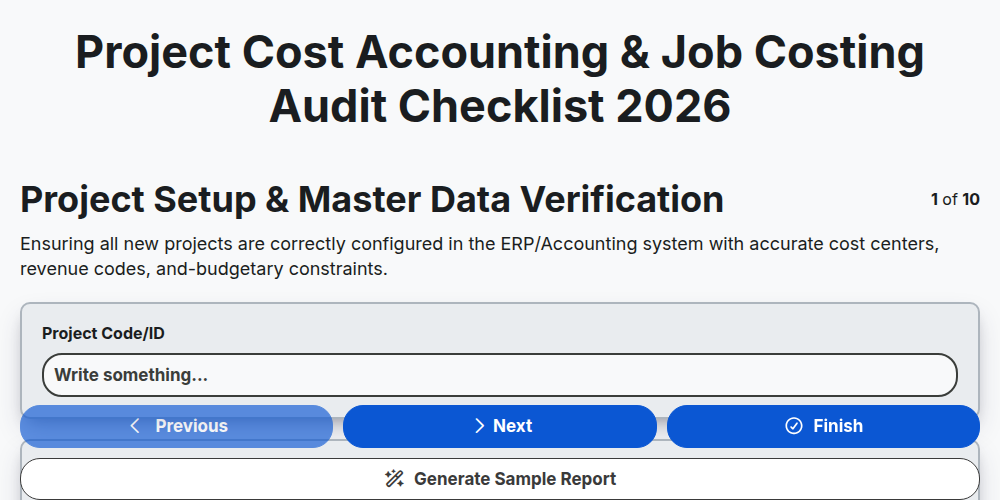
Table of Contents
- Introduction: Why Robust Job Costing Audits Matter in 2026
- 1. Project Setup & Master Data Verification: The Foundation of Accuracy
- 2. Direct Labor Cost Allocation Audit: Ensuring Time Tracking Integrity
- 3. Material & Subcontractor Cost Verification: Validating Procurement & Commitments
- 4. Indirect Cost & Overhead Allocation Review: Preventing Margin Erosion
- 5. Revenue Recognition & Percentage of Completion (POC) Audit
- 6. Budget vs. Actual (BVA) Variance Analysis: Identifying Cost Overruns Early
- 7. Work-in-Progress (WIP) Schedule Reconciliation
- 8. Change Order & Contract Amendment Tracking: Managing Scope Creep
- 9. Project Closeout & Final Cost Reconciliation
- 10. Compliance & Documentation Audit Trail: Maintaining Regulatory Standards
- Best Practices for Implementing a Continuous Audit Workflow
- Conclusion: Driving Profitability through Financial Oversight
- Resources & Links
TLDR: Ensure financial precision and regulatory compliance in your 2026 projects with this definitive audit checklist. This guide provides a step-by-step framework for auditing everything from master data setup and direct labor allocation to complex revenue recognition (POC), WIP reconciliation, and change order tracking, ensuring every project cost is accurately captured and accounted for.
Introduction: Why Robust Job Costing Audits Matter in 2026
As we navigate the complexities of the 2026 economic landscape, the margin for error in project-based industries has never been thinner. With rising volatility in global supply chains, fluctuating labor costs, and the increasing integration of AI-driven predictive analytics, the ability to maintain absolute precision in project profitability is no longer just a best practice-it is a survival imperative.
The High Stakes of Cost Leakage
In an era where project margins are frequently squeezed by unforeseen inflationary pressures and resource scarcity, even a minor discrepancy in job costing can lead to catastrophic downstream effects. Poorly audited project costs don't just impact a single balance sheet; they distort your entire enterprise-wide financial visibility, leading to inaccurate bidding, skewed revenue recognition, and eroded stakeholder trust.
Moving Beyond Simple Bookkeeping
In 2026, a successful audit is no longer about merely checking if the numbers add up. It is about verifying the integrity of the entire data lifecycle-from the moment a project is initialized in your ERP to the final closeout of the Work-in-Progress (WIP) schedule. An effective audit must bridge the gap between operational reality (what happened on the job site) and financial reporting (what appears in the general ledger).
The Strategic Value of a Systematic Audit
Implementing a structured audit checklist allows your finance team to transition from reactive troubleshooting to proactive margin management. By systematically verifying each layer of the cost stack, you can:
- Detect Cost Overruns Early: Identify variances in labor and materials before they become unrecoverable losses.
- Ensure Regulatory Compliance: Maintain an ironclad audit trail that satisfies increasingly stringent tax regulations and industry-specific compliance standards.
- Optimize Future Bidding: Use verified historical cost data to refine your estimation models and improve win rates on future contracts.
- Strengthen Cash Flow Management: Ensure that revenue recognition aligns perfectly with the Percentage of Completion (POC), preventing the dangerous mismatch of unbilled receivables and actual costs.
The following checklist is designed to serve as your definitive roadmap for ensuring that every dollar allocated to a project is accounted for, verified, and strategically optimized for profitability.
1. Project Setup & Master Data Verification: The Foundation of Accuracy
Ensuring a Flawless Audit Trail from Day One
The integrity of your entire project lifecycle depends on the quality of your initial data entry. In the realm of 2026 auditing standards, garbage in, garbage out is no longer just a cliché-it is a significant financial risk. An audit failure often doesn't begin at the end of a project; it begins during the setup phase when master data is improperly configured.
When auditors review your project cost accounting, they are looking for consistency between your project management software, your ERP, and your general ledger. If the foundation is shaky, every subsequent cost allocation and revenue recognition calculation will be inherently flawed.
Key Audit Verification Points
To ensure your project setup is audit-ready, your internal review should focus on the following critical elements:
- Project Code Uniformity: Verify that all project codes are unique, standardized, and aligned across all departments (Operations, Accounting, and Procurement). Duplicate or overlapping codes are a primary cause of cost leakage and allocation errors.
- Master Data Integrity: Cross-reference project names, client IDs, and contract dates against the original signed legal agreements. Discrepancies here can lead to significant issues during the Revenue Recognition and POC audits.
- Cost Center Mapping: Ensure that every project is mapped to the correct cost center and department within your GL. Misalignment here distorts departmental profitability reports and undermines your Budget vs. Actual (BVA) analysis.
- Budget Baseline Validation: Confirm that the initial approved budget is locked in the system and serves as the single source of truth. Auditors will check if the baseline used for variance analysis matches the officially sanctioned project scope.
- Resource & Rate Card Verification: Audit the labor rates and unit costs assigned to the project setup. Ensure that the predefined rates match the current 2026 approved labor agreements and subcontractor fee schedules to prevent inflated or understated direct costs.
Pro-Tip for 2026 Compliance
As automation and AI-driven accounting become more prevalent, auditors are increasingly looking at the logic of automated workflows. Ensure that your automated data-import processes from procurement modules to your cost accounting module have built-in validation rules that flag discrepancies in real-time.
2. Direct Labor Cost Allocation Audit: Ensuring Time Tracking Integrity
Precision in the Payroll-to-Project Pipeline
In the landscape of 2026's automated construction and project management environments, direct labor remains one of the most volatile variables in your project budget. An audit of labor allocation is not merely about checking if hours were worked; it is about verifying that every minute billed to a specific job code is mathematically and contractually justifiable.
When labor costs are misallocated, it creates a domino effect: your project margins appear artificially inflated or deflated, your tax compliance is jeopardized, and your future bidding accuracy is compromised.
Key Audit Verification Points
To ensure your direct labor costs are accurately reflected in your job costing reports, your audit process should focus on the following four pillars:
1. Timekeeping Accuracy & Digital Traceability
With the rise of geofencing and biometric time-tracking, the audit must verify the integrity of the digital breadcrumb.
- Clock-in/Clock-out Validation: Cross-reference GPS or biometric timestamps with the manual entries made by project managers.
- Automated Sync Audit: Ensure that data flowing from field management software (like Procore or Autodesk) to your ERP (like Sage or NetSuite) is seamless and free of manual entry errors.
- Unassigned Hours Investigation: Identify and investigate floating hours-labor time recorded in the system but not assigned to a specific cost code or job ID.
2. Labor Rate & Burden Accuracy
The cost of a worker is more than just their hourly wage. An audit must verify that the fully burdened rate is applied correctly.
- Wage Rate Verification: Reconcile payroll registers against project cost reports to ensure the correct hourly rates (including overtime premiums) are being applied to the specific job.
- Burden Rate Consistency: Verify that fringe benefits, payroll taxes, workers' compensation, and other labor-related overheads are being allocated at the predetermined percentage across all active projects.
3. Allocation Logic & Cost Code Integrity
Misclassification is the most common cause of margin erosion. An audit must ensure that labor is hitting the correct buckets.
- Cost Code Alignment: Confirm that labor hours are being coded to the specific activity (e.g., Foundation vs. Framing) rather than being lumped into a generic Site Work category.
- Cross-Project Leakage Check: Scan for labor bleeding, where hours from a high-margin project are inadvertently being charged to a low-margin or fixed-price project to hide cost overruns.
4. Compliance & Regulatory Alignment
In 2026, audit trails must be audit-ready for both internal stakeholders and external regulators.
- Prevailing Wage & Davis-Bacon Compliance: For government-funded projects, verify that labor allocations strictly adhere to required prevailing wage rates and that documentation supports these specific classifications.
- Overtime Impact Analysis: Evaluate whether excessive overtime on specific jobs is driven by project scope creep or inefficiency, and ensure this is reflected in the project's profitability analysis.
3. Material & Subcontractor Cost Verification: Validating Procurement & Commitments
Ensuring Accuracy in Third-Party Expenditures
In the landscape of 2026 project management, where supply chain volatility and fluctuating vendor rates are the norms, the verification of material and subcontractor costs is one of the most critical pillars of a job costing audit. This stage of the checklist is designed to ensure that every dollar committed to external partners is accurately reflected in your project margins and that no hidden liabilities are lurking in your accounts payable.
Auditing Material Procurement & Inventory Integration
The goal here is to bridge the gap between the purchase order (PO) and the final project cost. You must verify that the physical arrival of goods matches the financial recording.
- Three-Way Match Validation: Perform systematic checks between Purchase Orders, Receiving Reports (GRNs), and Vendor Invoices. Discrepancies here are the primary drivers of margin erosion.
- Unit Price Variance Analysis: Audit whether the materials were billed at the contracted rates or if unexpected price hikes have been absorbed by the project without proper adjustment.
- Inventory & Shrinkage Review: For projects utilizing on-site storage, reconcile material consumption logs against total purchased quantities to identify unaccounted-for waste or theft.
- Freight and Logistics Audit: Ensure that landed costs-including shipping, duties, and handling-are correctly allocated to the specific job rather than being buried in general overhead.
Subcontractor Performance & Obligation Review
Subcontractor costs are often the largest variable in a project budget. An audit must go beyond simple invoice verification to ensure that the work performed aligns with the contractual obligations.
- Scope-to-Invoice Alignment: Cross-reference subcontractor progress claims against verified milestones or physical site inspections to prevent overpayment for incomplete work.
- Lien Waiver & Compliance Verification: Confirm that all payments are accompanied by executed lien waivers and that subcontractor insurance certificates are up to date to mitigate legal and financial exposure.
- Retainage Tracking: Audit the accuracy of retention amounts withheld from subcontractor payments. Ensure these amounts are correctly recorded as a liability and are slated for release only upon meeting contractual completion criteria.
- Unbilled Commitments Audit: Review all open Purchase Orders and Subcontracts that have not yet been invoiced. This encumbrance check is vital for an accurate view of your true remaining budget.
4. Indirect Cost & Overhead Allocation Review: Preventing Margin Erosion
The Hidden Drain on Profitability: Auditing Your Allocation Logic
If direct costs are the visible face of a project, indirect costs are the silent killers of project margins. While direct materials and labor are easy to track, indirect costs-such as utilities, rent, administrative salaries, and equipment depreciation-can easily obscure the true profitability of a job if they are allocated incorrectly.
An audit of your overhead allocation is not just about verifying numbers; it is about ensuring that your allocation methodology remains mathematically sound and contractually compliant as market conditions shift in 2026.
Key Audit Objectives for Indirect Costs
During this phase of the audit, your primary goal is to ensure that overhead is being distributed across projects in a way that reflects actual consumption and stays within the bounds of your predetermined overhead rates.
Critical Audit Steps:
Verification of Allocation Bases: Review the drivers used to distribute overhead (e.g., direct labor hours, total direct costs, or machine hours). Are these bases still appropriate for your current project mix, or is a shift in project complexity causing an unfair burden on certain jobs?
Testing the Accuracy of Predetermined Overhead Rates (POH): Compare your applied overhead rates against actual overhead expenditures. Significant discrepancies here often signal that your budgeted rates are out of sync with actual spending, leading to under or over-costing of projects.
Under-applied Overhead: Leads to artificially inflated margins and potential liquidity issues.
Over-applied Overhead: Leads to uncompetitive bidding and hidden profit erosion.
Review of Shared Cost Segregation: Examine how costs that benefit multiple projects (such as warehouse rent or fleet maintenance) are split. Ensure that no single project is being disproportionately burdened by unrelated administrative expenses.
Audit of Period-End Adjustments: Verify that any year-end adjustments made to reconcile applied overhead to actual overhead are documented, justified, and reflected accurately in the final job costing reports.
The 2026 Compliance Lens: Automation and Real-Time Tracking
In 2026, manual spreadsheets are a major audit risk. An effective audit should confirm that your ERP or accounting software is automating these allocations based on real-time data. Ensure that the logic programmed into your system matches your documented accounting policy to prevent algorithmic bias in your cost reporting.
5. Revenue Recognition & Percentage of Completion (POC) Audit
Ensuring Accuracy in Long-Term Project Revenue
When managing multi-period projects, the way you recognize revenue is just as critical as the costs you incur. In 2026, with increasing scrutiny from auditors and more complex revenue recognition standards (such as ASC 606/IFRS 15), auditing your Percentage of Completion (POC) calculations is non-negotiable. An error here doesn't just misrepresent a single project; it distorts your entire company's profitability and bottom line.
Key Audit Objectives for POC Verification
The goal of this audit step is to ensure that the revenue reported in your income statement aligns perfectly with the actual physical and financial progress made on-site.
Critical Audit Checkpoints:
- Input Method Verification: If you use the cost-to-cost method, verify that the costs incurred to date are calculated using only valid, audited project costs. Ensure that excluded costs (like inefficient waste or abnormal delays) are not being used to artificially inflate the completion percentage.
- Revenue Earned vs. Revenue Recognized: Perform a reconciliation between the revenue recognized based on the POC formula and the actual billings sent to the client. Discrepancies here often signal over-billing or under-billing issues that need immediate investigation.
- Milestone Alignment Check: For projects using milestone-based recognition, audit the contract terms against the accounting entries. Ensure that revenue is only recognized when the specific, predefined contractual obligations have been met and documented.
- Estimation of Remaining Costs: Review the Estimated Cost at Completion (EAC). An audit must confirm that the denominator in your POC formula is based on the most recent, realistic budget updates, not outdated estimates from the project start date.
- Unbilled Receivables & Deferred Revenue Analysis: Analyze the aging of unbilled revenue. If a project shows high costs incurred but zero revenue recognized or billings, it may indicate a breakdown in the documentation of project progress.
Red Flags to Watch For
- Consistent Over-estimation of Progress: An upward trend in margin that isn't supported by physical site inspections or subcontractor progress reports.
- Lagging Cost Updates: Using stale data to calculate completion, which leads to catch-up adjustments in later periods that can trigger audit failures.
- Mismatch in Contract Scope: Recognizing revenue for work that falls outside the original scope of work without an approved change order.
6. Budget vs. Actual (BVA) Variance Analysis: Identifying Cost Overruns Early
The Core of Proactive Financial Control
The Budget vs. Actual (BVA) variance analysis is where the detective work of a project audit truly begins. While other steps in this checklist focus on verifying accuracy, the BVA analysis focuses on identifying trends. In 2026, with rising material volatility and labor shifts, simply knowing your costs are correct isn't enough-you must know if they are deviating from your strategic plan.
An effective audit of your BVA processes should move beyond identifying that a discrepancy exists and focus on identifying why it exists.
Key Audit Objectives for BVA Analysis
When auditing your variance analysis, your goal is to ensure that every deviation from the baseline is captured, categorized, and investigated. Use the following sub-steps to evaluate your performance:
- Threshold Definition Audit: Verify that the organization has clearly defined materiality thresholds. An audit should confirm that only variances exceeding a specific percentage or dollar amount trigger a formal investigation, preventing noise from overwhelming management.
- Root Cause Categorization: Check if variances are being categorized correctly. Are cost overruns being labeled as Price Variance (market fluctuations) or Usage Variance (inefficiency/waste)? A failure to distinguish between these two can mask systemic operational issues.
- Timeliness of Reporting: Analyze the gap between the period end and the variance report distribution. In a modern construction or manufacturing environment, a BVA report delivered 30 days late is an autopsy, not a diagnostic tool.
- Trend Analysis Validation: Ensure the audit looks at longitudinal data. A single month's variance might be an anomaly, but a three-month upward trend in labor costs indicates a structural problem that requires immediate intervention.
Red Flags to Watch For
During your audit, be on high alert for these common BVA failures:
- The Smoothing Trap: Management intentionally ignoring small, recurring overruns to keep project performance looking stable.
- Misaligned Baselines: Comparing current actuals against an outdated budget that hasn't been updated to reflect approved change orders.
- Lump-Sum Error: Grouping disparate cost types into a single General Cost line, which hides specific leakage in high-risk areas like fuel or specialized tooling.
By rigorously auditing your BVA processes, you transform your cost accounting from a historical record into a predictive powerhouse, allowing you to course-correct before a project's margin is permanently eroded.
7. Work-in-Progress (WIP) Schedule Reconciliation
Mastering the WIP Reconciliation Process
The Work-in-Progress (WIP) schedule is the heartbeat of project-based accounting. For the 2026 fiscal year, auditors are looking beyond simple math; they are scrutinizing the integrity of the bridge between your balance sheet and your project management software. A failure to reconcile your WIP schedule effectively is one of the most common drivers of overstated profits and unexpected year-end write-downs.
The Core Objective of WIP Reconciliation
The primary goal of this audit step is to ensure that the costs accumulated in your general ledger (GL) align perfectly with the progress reported in your project management modules. In an era of real-time data, near enough is no longer acceptable. Auditors will verify that the costs recorded as completed in your project files are the same costs reflected in your financial statements.
Key Audit Verifications for 2026
1. Sub-ledger to General Ledger Alignment The most critical check is ensuring the total costs sitting in your WIP sub-ledger match the cumulative cost totals on your Trial Balance. Discrepancies here often signal unposted journal entries, manual overrides, or timing errors in automated data transfers.
2. Underbillings and Overbillings Accuracy Your WIP schedule must clearly distinguish between:
- Costs in Excess of Billings (Underbillings): Verifying that these represent legitimate earned revenue that has not yet been invoiced.
- Billings in Excess of Costs (Overbillings): Ensuring that these represent deferred revenue (liabilities) and not phantom profit.
3. Verification of Costs to Date Integrity Auditors will perform sample testing to ensure that the Total Estimated Costs used to calculate your Percentage of Completion (POC) haven't been artificially deflated to boost reported margins. This involves cross-referencing the WIP report with the original project estimates and recent change orders.
Red Flags to Watch For
During your internal audit, be on high alert for these common WIP discrepancies:
- Unallocated Accruals: Costs that have been incurred but haven't been assigned to a specific job code.
- Stale WIP: Projects that show significant costs but zero progress or billing for extended periods, suggesting potential impairment.
- Manual Adjustments: Frequent manual plug entries made to the WIP schedule to force alignment with the GL.
Pro-Tip for 2026 Compliance
With the increasing use of AI-driven construction ERPs, auditors will now look for the automated audit trail. Ensure your system logs every time a cost is moved or a WIP value is adjusted. A transparent, automated trail is your best defense during a high-stakes financial audit.
8. Change Order & Contract Amendment Tracking: Managing Scope Creep
Preventing Margin Erosion Through Rigorous Change Management
In the complex landscape of 2026 project management, scope creep remains the single greatest threat to project profitability. An audit of your change order processes is not merely about checking for paperwork; it is about verifying that every deviation from the original contract scope has been accurately captured, priced, and integrated into the project's financial baseline.
Validating the Audit Trail for Contract Amendments
To ensure your cost accounting reflects reality, your audit must verify that every change order follows a standardized lifecycle. Auditors should look for a seamless link between the initial contract, the approved amendment, and the updated budget.
- Authorization Verification: Confirm that every change order carries formal, documented approval from authorized stakeholders. Unapproved handshake agreements are the primary drivers of unrecoverable costs.
- Impact Assessment Accuracy: Review whether the cost impact (both direct and indirect) was evaluated at the time of the change. An audit should check if the amended scope includes necessary adjustments to labor hours, material quantities, and updated timelines.
- Integration with the Master Budget: Verify that once a change order is approved, the project budget and cost estimates are updated in the system immediately to prevent stale data from skewing variance analysis.
Detecting Leakage in the Approval Workflow
A breakdown in change order tracking often leads to hidden costs-work performed that is never billed or captured in the job costing system.
Key Audit Checkpoints:
- The Ghost Work Test: Cross-reference site logs and labor hours against approved change orders. If labor is being applied to tasks outside the original scope without a corresponding approved amendment, you have identified a high-risk area for margin leakage.
- Pricing Consistency: Ensure that the unit rates used in change order pricing align with the master contract rates. Discrepancies here can lead to significant revenue loss or contractual disputes.
- Timely Notification: Audit the latency between the occurrence of a scope change and the formal documentation of that change. Delayed tracking leads to inaccurate Percentage of Completion (POC) calculations and flawed revenue recognition.
By auditing your change order and contract amendment tracking, you move from a reactive stance to a proactive one, ensuring that the project's financial boundaries expand only when the budget and timeline expand alongside them.
9. Project Closeout & Final Cost Reconciliation
Ensuring Financial Integrity at the Finish Line
The final phase of a project is often the most critical for long-term profitability. The project closeout and final cost reconciliation step is where you verify that every penny allocated during the project lifecycle is accounted for, settled, and accurately reflected in your general ledger. This stage is not merely about ending the project; it is about confirming that the margins you projected at the start align with the actual financial outcome.
The Final Reconciliation Process
As you transition a project from Active to Closed, your audit focus should shift from real-time tracking to a formal validation of all debits and credits. This process ensures that no lingering liabilities or unbilled costs remain hidden in your Work-in-Progress (WIP) accounts.
Key Audit Objectives for Project Closeout:
- Total Cost Settlement: Verify that all subcontractor invoices, material deliveries, and labor hours have been fully processed and matched against the final project totals.
- Zeroing Out Accruals: Audit all project-related accruals to ensure that any estimated costs used during the project have been replaced by actual, finalized invoices.
- Final Margin Validation: Perform a final comparison between the original estimated budget and the actual total cost to determine the true Gross Profit Margin.
- Unbilled Revenue Clearance: Ensure that all Unbilled Receivables related to the project have been invoiced and that no revenue is left sitting in an unapplied state.
Closing the Loop on Liabilities
A common pitfall in 2026 project management is the trailing cost phenomenon-where costs continue to hit a project long after the work is physically complete. During your audit, you must confirm that all purchase orders are closed and that no further encumbrances exist against the project budget.
Post-Mortem Financial Analysis
Beyond simple reconciliation, use this stage to feed your future bidding accuracy. Document the reasons for any significant deviations discovered during the final reconciliation. This creates a feedback loop that improves your master data and estimation accuracy for 2027 and beyond.
Audit Checklist Items for Closeout:
- All subcontractor lien waivers collected and verified.
- All retention/retention payables accounted for and scheduled for release.
- Final invoice issued and matched to final project revenue.
- All project-specific cost codes closed to prevent unauthorized entries.
- Final project margin report approved by the Controller/CFO.
10. Compliance & Documentation Audit Trail: Maintaining Regulatory Standards
Ensuring Audit-Readiness Through Rigorous Documentation
In the landscape of 2026's complex regulatory environment, an audit trail is more than just a record of transactions-it is your organization's primary defense against financial discrepancies, tax disputes, and legal liabilities. A successful job costing audit depends heavily on your ability to prove that every figure in your financial reports is backed by verifiable, immutable evidence.
The Gold Standard: The Paper Trail Integrity
An effective audit trail must bridge the gap between a line item on a spreadsheet and a physical or digital reality. To maintain compliance, your documentation must demonstrate a seamless flow of information from the initial contract award to the final payment.
Key Components of a Compliant Audit Trail
- Evidence of Authorization: Every cost incurred, every change order approved, and every resource allocated must be accompanied by documented approval from authorized personnel. Auditors will look for who, when, and why for every significant budget deviation.
- The Linkage of Source Documents: You must be able to trace a cost back to its origin. This includes matching purchase orders (POs) to receiving reports and subsequently to vendor invoices. In 2026, this means ensuring your digital ERP systems are capturing metadata that links these documents automatically.
- Subcontractor Compliance Records: Beyond mere billing, your audit trail must include verified certificates of insurance (COI), lien waivers, and proof of compliance with labor laws. Missing documentation here can lead to significant financial exposure.
- Data Integrity and Version Control: As project scopes evolve, maintaining the integrity of your single source of truth is critical. Ensure that all revisions to the project budget are logged, timestamped, and archived, preventing the use of obsolete data in financial forecasting.
Best Practices for 2026 Compliance
Implement Automated Logging
Relying on manual logs is no longer sufficient. Utilize automated timestamping within your project management software to track every modification to the job cost ledger. This reduces human error and provides an indisputable digital footprint.
Perform Mini-Audits Quarterly
Do not wait for the annual year-end audit to discover a gap in your documentation. Implement a quarterly internal review of your documentation completeness. If a subcontractor's lien waiver is missing or a change order lacks a signature, rectify it immediately while the transaction is still fresh in the project manager's mind.
Standardize Naming Conventions and Digital Filing
A disorganized digital filing system is an auditor's greatest red flag. Establish a universal protocol for how project documents, receipts, and contracts are named and stored. A predictable, searchable, and structured repository ensures that during a high-stakes audit, you can retrieve any piece of evidence within seconds, demonstrating total control over your project financials.
Best Practices for Implementing a Continuous Audit Workflow
Moving from Periodic Reviews to Continuous Auditing
In the landscape of 2026 project management, the traditional end-of-year audit is no longer sufficient. With the increasing complexity of global supply chains and the volatility of material costs, waiting until the project closeout to identify discrepancies is a recipe for financial leakage. To protect your margins, you must transition from a reactive mindset to a continuous audit workflow.
Implementing a continuous workflow ensures that audit checkpoints are embedded within the project lifecycle rather than treated as an afterthought. This proactive approach allows for real-time error detection, preventing minor clerical errors in labor allocation or material tracking from snowballing into massive budget variances.
Establishing Real-Time Data Integrity
The foundation of a successful audit workflow lies in the synchronization of your project management software and your ERP system. To implement this effectively, focus on these three pillars:
- Automated Data Validation: Set up automated triggers that flag discrepancies between purchase orders and receiving reports the moment they are entered. This minimizes the noise during your month-end reviews.
- Integrated Field-to-Office Reporting: Utilize mobile-integrated time-tracking and digital material logs. When field data flows directly into your cost accounting modules without manual reentry, you eliminate the human error inherent in manual transcription.
- Standardized Monthly Mini-Audits: Instead of one massive annual audit, break your checklist into monthly cadence reviews. Use the first week of each month to validate the previous month's indirect cost allocations and labor distributions.
Scaling the Audit with AI and Predictive Analytics
As we move into 2026, the most sophisticated firms are leveraging AI to augment their audit capabilities. A continuous workflow should ideally include Anomaly Detection. By training your systems to recognize historical patterns in your Budget vs. Actual (BVA) trends, you can receive automated alerts when a specific cost center deviates from its predicted trajectory.
The Human Element: Training and Accountability
No matter how advanced your technology, an audit workflow is only as strong as the people inputting the data. Implementing a continuous audit requires:
- Cross-Departmental Training: Ensure project managers understand how their daily decisions regarding change orders and subcontractor approvals directly impact the final WIP reconciliation.
- Clear Ownership Hierarchies: Assign specific Audit Owners for different segments of the checklist-such as a Procurement Manager for material verification and a Project Controller for revenue recognition.
- Feedback Loops: When an audit reveals a discrepancy, use it as a training moment rather than a disciplinary one. This fosters a culture of accuracy rather than a culture of concealment.
Conclusion: Driving Profitability through Financial Oversight
Future-Proofing Your Project Margins
In the rapidly evolving landscape of 2026, where project complexity and economic volatility are the new constants, your ability to maintain a rigorous audit trail is no longer just a compliance requirement-it is a competitive advantage. The transition from reactive accounting to proactive cost management is what separates profitable enterprises from those struggling with margin erosion.
The Strategic Value of Regular Audits
Implementing this Project Cost Accounting & Job Costing Audit Checklist does more than just catch errors; it transforms your financial department from a back-office function into a strategic driver of project success. By systematically verifying everything from direct labor allocation to the nuances of Percentage of Completion (POC) revenue recognition, you build a foundation of single source of truth data.
When your Budget vs. Actual (BVA) variances are identified in real-time through disciplined oversight, you gain the ability to:
- Mitigate Risk: Identify cost overruns and subcontractor discrepancies before they impact the bottom line.
- Optimize Cash Flow: Ensure accurate WIP schedules and timely change order tracking to prevent revenue leakage.
- Enhance Decision-Making: Empower project managers with precise data to bid more competitively on future contracts.
- Ensure Audit Readiness: Maintain a seamless, transparent documentation trail that satisfies both internal stakeholders and external regulators.
Moving Forward
As you move into the 2026 fiscal year, view this checklist not as a periodic burden, but as a continuous pulse check on your project health. High-performing organizations do not wait for year-end to reconcile their costs; they integrate these audit steps into their monthly and quarterly rhythms.
By committing to this level of granular oversight, you ensure that every dollar allocated, every hour worked, and every material expense incurred is accounted for, contributing directly to your firm's long-term scalability and financial integrity.
Resources & Links
- AICPA & CIMA: Professional resources for global accounting standards, auditing procedures, and financial integrity frameworks.
- Project Management Institute (PMI): The industry standard for project management methodologies, including cost management and scope control best practices.
- IFRS Foundation: Essential guidelines for international revenue recognition standards (IFRS 15) and contract accounting.
- FASB: Official source for US GAAP standards, crucial for understanding revenue recognition and percentage of completion (POC) audits.
- Accounting Today: Latest news and trends in the accounting profession, including technological shifts in job costing and auditing.
- CFO Magazine: Insights for financial executives on managing profitability, margin erosion, and strategic financial oversight.
- Gartner: Research and insights on financial technology (FinTech) trends and automated audit workflow implementation.
- Investopedia: Comprehensive definitions and educational breakdowns of Budget vs. Actual (BVA) and variance analysis.
- Deltek: Industry-leading software solutions and resources for project-based businesses and cost accounting automation.
- Oracle NetSuite: Advanced ERP solutions for managing complex WIP schedules, procurement, and real-time project costing.
- ASC: Resources for managing supply chain costs, subcontractor verification, and procurement auditing.
- Journal of Accountancy: In-depth articles on compliance, regulatory standards, and maintaining a robust audit trail.
- ProjectManager.com: Practical templates and guides for managing change orders, scope creep, and project closeout processes.
- AuditBoard: Software and methodology resources for implementing continuous audit workflows and risk management.
- Cost Engineering: Technical resources focused on accurate cost estimation, allocation, and managing indirect overhead.
- McKinsey & Company: Strategic perspectives on driving organizational profitability through operational excellence and financial oversight.
Comments
There are no comments yet. Be the first to add one!
Accounting Management Solution Demo
Move beyond rigid, one-size-fits-all software. Leverage a fully programmable accounting environment designed to adapt to your unique workflows, complex hierarchies, and evolving business logic.
Related Articles
The Ultimate Financial Data Integrity Audit Checklist: A Step-by-Step Template for Precision and Compliance
The Ultimate Financial Statement Review Checklist: A Step-by-Step Guide to Ensuring Accuracy and Compliance
Mastering Financial Control: The Ultimate Departmental Budget Monitoring Checklist
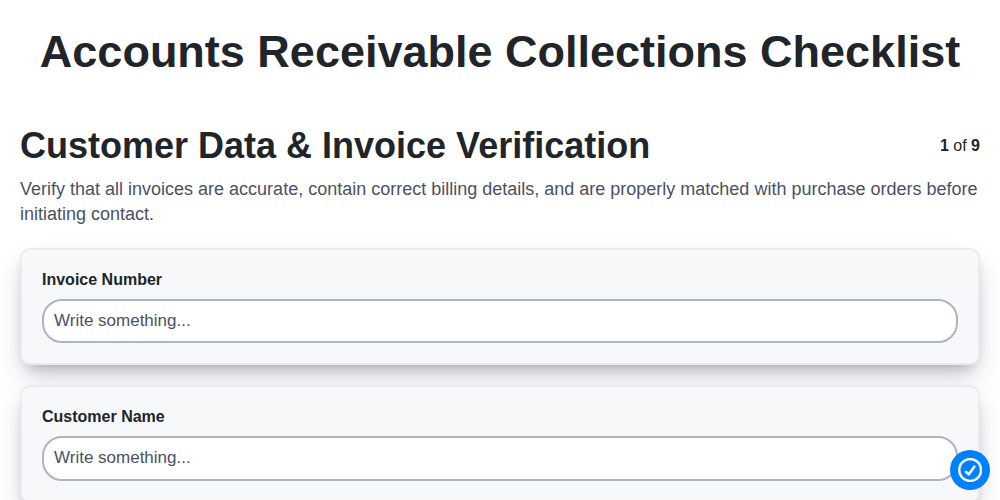
The Ultimate Accounts Receivable Collections Checklist: A Step-by-Step Guide to Streamlining Your Cash Flow
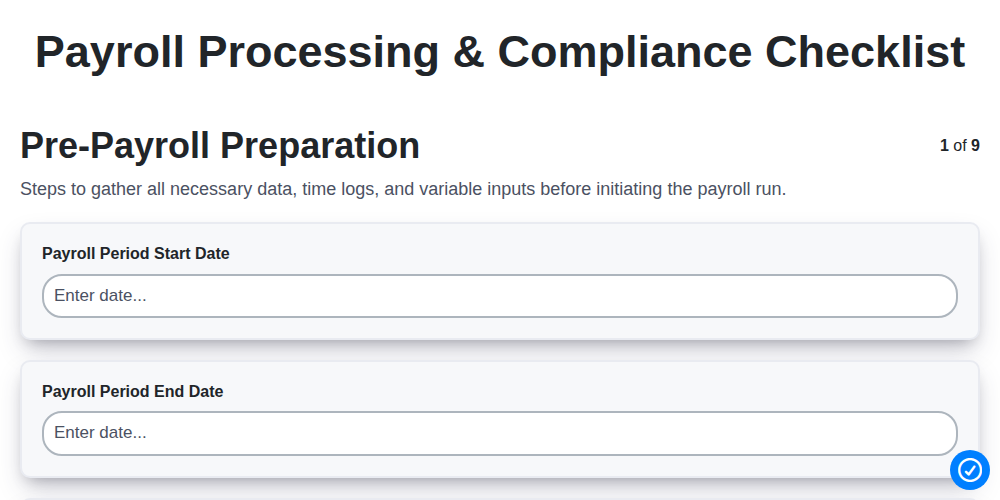
The Ultimate Payroll Processing & Compliance Checklist: A Step-by-Step Guide to Error-Free Payroll
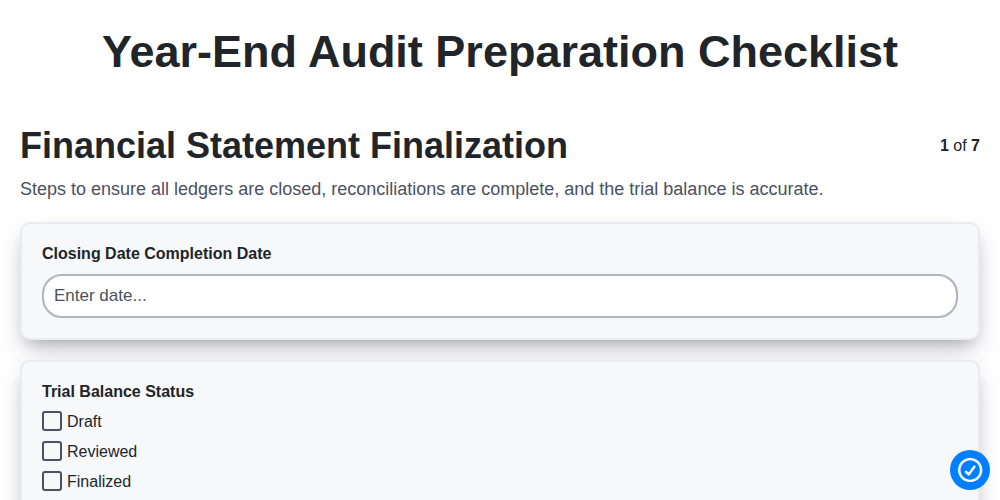
The Ultimate Year-End Audit Preparation Checklist: A Step-by-Step Guide to a Stress-Free Audit
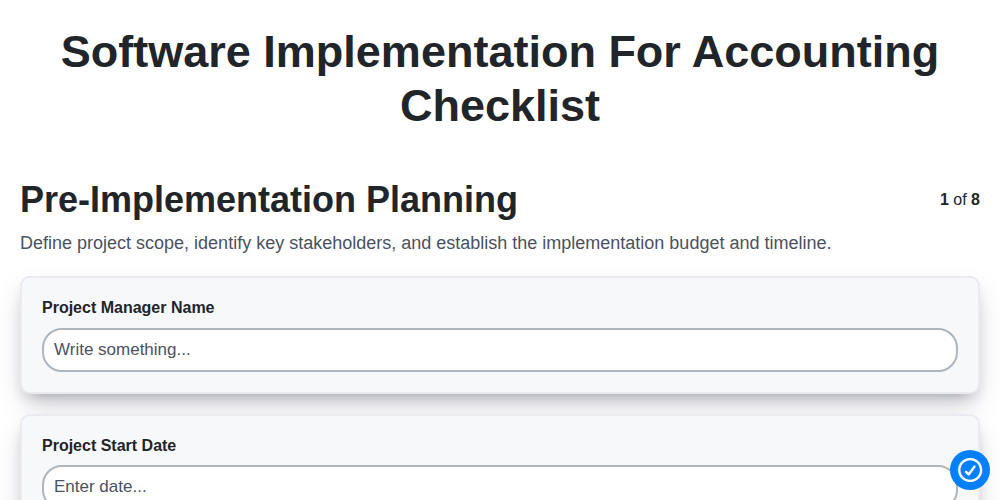
The Ultimate Software Implementation Checklist for Accounting Teams: A Step-by-Step Guide to a Seamless Transition
The Ultimate Inventory Valuation & Audit Checklist: A Step-by-Step Guide to Accuracy and Compliance
Need help with
Accounting Management?
Have a question? We're here to help. Please submit your inquiry, and we'll respond promptly.